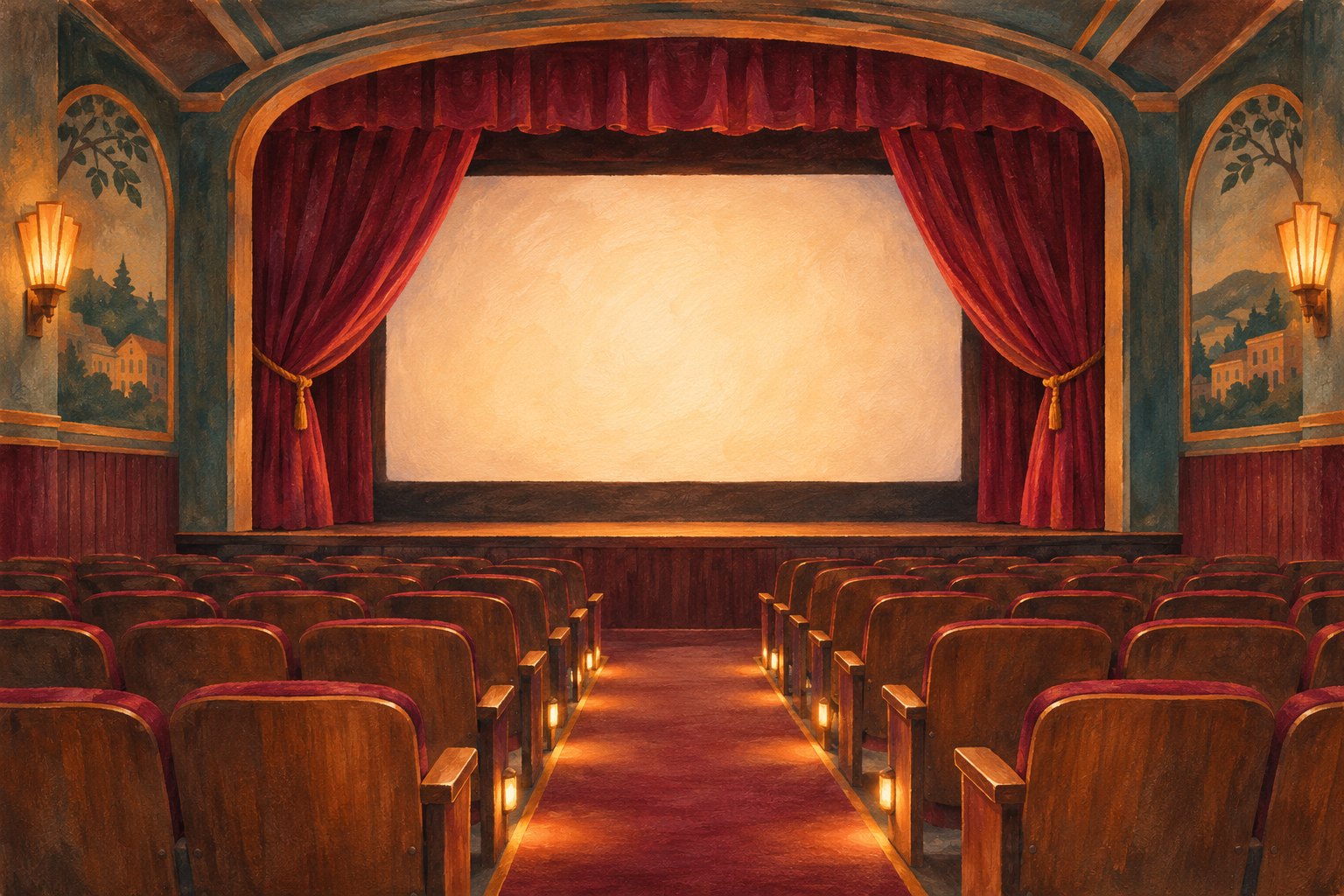
Oregon City’s first movie theater is heading toward another act. Reporting from The Oregonian describes a return to theatrical use across a century of history—a development that gives movie lovers a reason to look beyond the next release and consider the places where entertainment becomes a shared experience.
The prospect is appealing, but its significance deserves more than a sentimental salute. An old theater can preserve a connection to local history while creating something useful for people who have no memories of its earlier life. The strongest case for its return is the possibility of making that connection active again: people entering a room, giving a performance their attention, and leaving with something to discuss.
This is commentary on the reported revival, rather than a review of a film or an account of an attended performance. A confirmed opening date, ticket information, programming schedule, and restoration specifications are not established here. In particular, a building’s history as a movie theater does not by itself establish what its next program will include.
What the return means—and what remains open
The central news is straightforward: a place identified in the reporting as Oregon City’s first movie theater is preparing for renewed theatrical life. That historical connection makes the development noteworthy. It does not establish that every feature of the original venue survives, that it has remained unused for a hundred years, or that regular movie screenings will resume.
Those distinctions matter to anyone hoping to attend. A revived theater might accommodate different forms of performance, and each requires its own practical arrangements. Readers should look for an announced event calendar before assuming that new movie releases, repertory screenings, or live productions are on the way.
My interest in this return begins with the building’s potential as a gathering place. Historic significance can attract a first visit. A clear identity, an enjoyable experience, and reasons to come back are what could turn that curiosity into a relationship with an audience.
Why a room can change how a story lands
For film audiences, the value of a theater extends beyond the size of its screen. A shared screening gives a story a stretch of time during which viewers agree, however imperfectly, to stay with it. A slow scene has room to develop. A character’s hesitation can remain unresolved long enough to become uncomfortable. An ending can leave the audience sitting in silence.
That continuity matters especially when watching through a character’s perspective. In a carefully constructed scene, viewers may know only what the character knows. A glance, an unexplained noise, or a delay before answering becomes evidence. Sustained attention allows those small details to accumulate before a later action changes their meaning.
A theater cannot guarantee attention or make a weak movie stronger. Poor presentation and distracting behavior can undermine the experience. But a well-run screening can protect the conditions that close film analysis depends on: seeing the frame clearly, hearing the dialogue, and following the rhythm without interruption.
If cinema becomes part of the Oregon City venue’s future, that would be a meaningful standard by which to judge it. Architectural charm would be a welcome part of the evening; the film would still deserve the best possible presentation.

The audience brings another layer of interpretation
Watching with strangers can expose differences that solitary viewing leaves hidden. One person laughs at a character’s bravado; another hears insecurity. A sudden shift in the room’s mood can reveal when sympathy has moved, or when a seemingly harmless exchange has begun to feel threatening.
Those reactions are not instructions about what to think. The loudest response does not settle a film’s meaning. Their value is that they make interpretation visible. They remind us that a performance can communicate several things at once, and that people bring different experiences to the same scene.
This is also why conversation after a screening can be more useful than an immediate verdict. Asking which choice changed someone’s understanding of a character often produces a better discussion than asking whether the movie was good. Our commentary on community film screenings and thoughtful discussion explores a related opportunity: using a shared event to sharpen attention to the work itself.
Programming would give the revival its identity
Should film screenings become part of the venue’s plans, the most interesting question would be what connects them. A theater can offer more than a succession of recognizable titles. It can help audiences notice relationships between movies, performances, and ways of telling stories.
For example, a hypothetical series about difficult homecomings could invite viewers to compare how different protagonists respond to familiar places. A comedy paired with a drama might reveal how similar conflicts produce very different emotional effects. These are programming possibilities, not announced plans for Oregon City.
The useful principle is specificity. A short introduction explaining why two films belong together can offer a starting point without prescribing a conclusion. A discussion afterward can return to a particular scene, performance, or editing choice rather than drifting into general praise.
There is a parallel with the pleasure of choosing a film in a neighborhood movie store. In both settings, selection becomes part of the experience. A recommendation has value when it helps someone discover what interests them and gives them a reason to try something unfamiliar.
What prospective visitors should look for
Enthusiasm becomes easier to act on when the practical information is clear. Before making a trip, prospective visitors should confirm the details of the specific event they want to attend:
- The program: Check whether the event is a film screening, live performance, discussion, or another format.
- The schedule: Confirm the date, door time, start time, and expected duration.
- Admission: Look for the full ticket price, reservation requirements, and any age restrictions.
- Access: Check step-free entry, seating arrangements, restroom accessibility, and available hearing or captioning accommodations.
- Presentation: For a movie screening, confirm the advertised version and any relevant language or subtitle information.
These are ordinary audience needs. Clear answers help a historic venue welcome people who might otherwise hesitate to visit. They also allow the character of the building and the quality of the event to become the memorable parts of the evening.
The real achievement would be a second visit
Oregon City’s theater revival carries an appealing sense of continuity, but the past cannot do all the work. A successful return would give the building a role in contemporary life, including for residents who feel no particular attachment to its history.
That is the deeper promise of the curtain rising again. Preservation can keep a place available; thoughtful use can make it matter. The opening celebration may draw people because something old has returned. The more revealing moment will come later, when someone goes back because they enjoyed what happened there—and wants to see what comes next.
Original content by this site's editorial team. Published: November 2, 2026 at 22:31:41 PST (Los Angeles time)