
Onwards and Sideways approaches Parkinson’s through a question that deserves more space in movies about illness: who gets to make the jokes? Writer Paul Mayhew-Archer’s answer begins with the person living through it. Speaking to the BBC, he described using comedy to gently challenge an illness that had become part of his own life. That perspective gives the film’s premise its interest: humor can express agency without pretending that fear has vanished.
Directed by John Madden, the film stars Rhys Ifans as Tony and Laura Linney as Emma, two people diagnosed with Parkinson’s on the same day. Mayhew-Archer told the BBC that the story follows their subsequent five years. His account places companionship and possibility alongside the diagnosis. [BBC interview, syndicated by AOL](https://www.aol.com/articles/parkinsons-film-gently-ribs-monster-072249000.html)
Limited story spoilers follow. This is an analysis of the reported narrative and the writer’s stated approach, rather than a firsthand assessment of the finished film’s performances or filmmaking.
Tony and Emma have lives before they become patients
The published synopsis identifies Tony Evans as a primary-school deputy head and Emma Dretzin as a musician, composer, and single mother of two daughters. Those details give their meeting a useful foundation: each arrives with responsibilities and an identity already formed outside the hospital. Their developing friendship connects two existing lives. [Published film synopsis](https://www.rottentomatoes.com/m/onwards_and_sideways)
For character-centered criticism, that distinction matters. A diagnosis can supply a story’s inciting event, but it cannot do all the work of characterization. Occupation, family, temperament, and personal pride determine what a disruption means. The same news can threaten different things for different people.
My reading of this setup is that recognition becomes the relationship’s most valuable possibility. Another person may understand the fear without requiring a complete explanation. Yet understanding should leave room for disagreement. Sharing a condition does not mean sharing a personality, and a convincing relationship needs space for both.
Tony’s resistance has an emotional logic
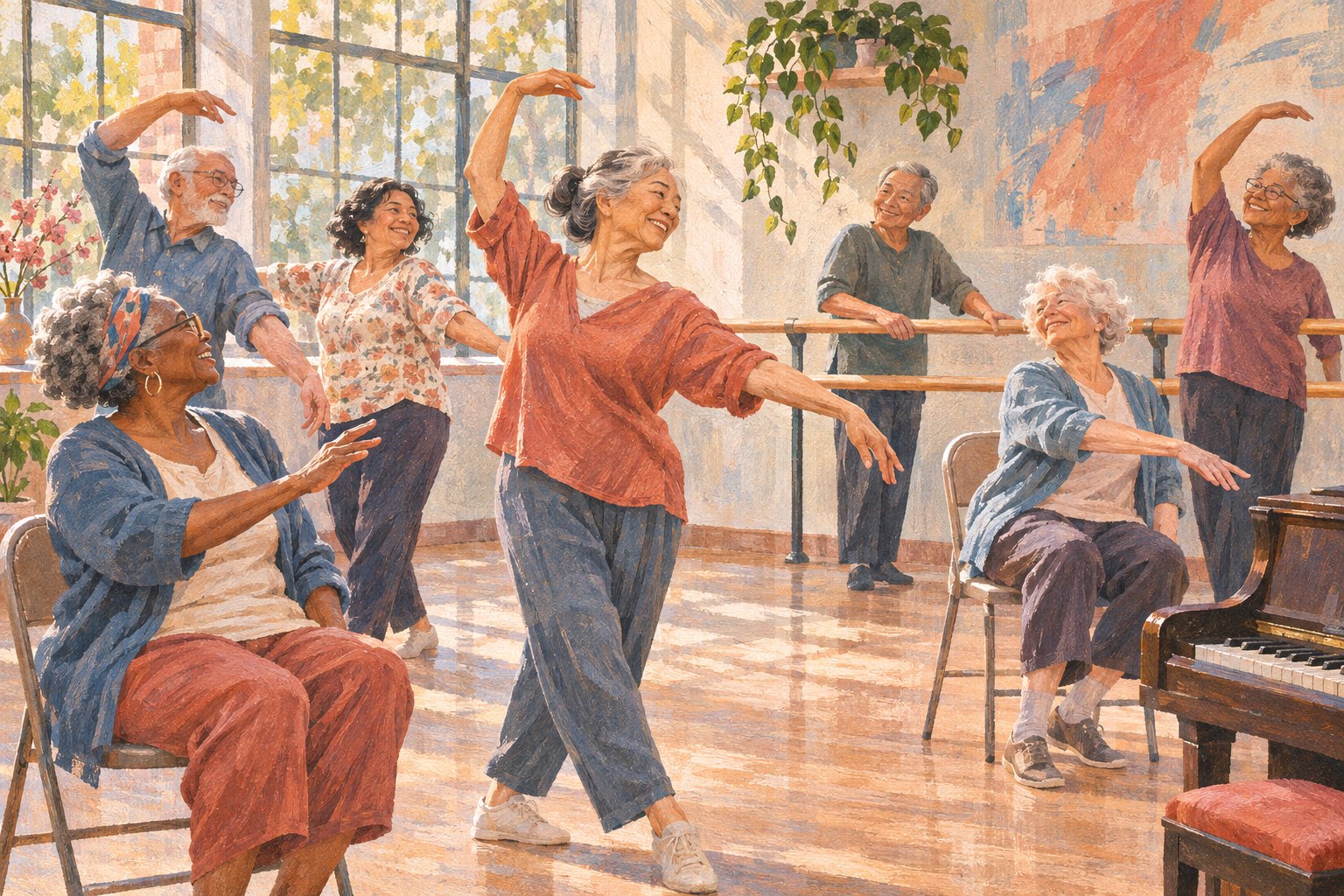
Matthew Creith’s account in TheWrap describes Tony trying to preserve normality, fearing the loss of his teaching job and resisting advice about how to respond to his diagnosis. Emma, meanwhile, joins a ballet group for people with Parkinson’s. These reported choices establish contrasting approaches to uncertainty. [TheWrap’s account of the story](https://www.thewrap.com/creative-content/movies/onwards-and-sideways-review-laura-linney-rhys-ifans/)
Tony’s position invites an interpretation more sympathetic than simply calling him stubborn. Work can be where someone feels competent, useful, and recognized. Accepting help may therefore feel, to a frightened person, like surrendering the identity that made help seem unnecessary.
That does not make resistance wise. It makes it dramatically legible. The distinction is essential: viewers can understand a choice while seeing its limitations. A character becomes interesting when sympathy and frustration coexist.
The same principle shapes our discussion of character and consequences in Pale Horse: a strong premise gains substance when a person’s decisions carry emotional costs. Here, the useful question is what Tony believes he is protecting whenever he resists change.
Emma’s participation should not become an obligation to inspire
Emma’s involvement in a movement group suggests a different relationship to adaptation. As an interpretation of that reported choice, participation can mean accepting company before finding certainty. It can also create a place where being understood does not depend on maintaining appearances.
There is a potential trap in this contrast. Stories sometimes reward the apparently adaptable character with moral superiority, leaving the resistant one to be corrected. That would flatten both people. An outgoing response can coexist with fear; a withdrawn response can conceal considerable effort.
My critical standard here is whether each person retains the right to be difficult. Emma should have room for impatience and private needs. Tony should have room for tenderness that does not arrive only after a lesson. Nobody owes an audience a reassuring attitude.
What “five good years” does to a story
The phrase “five good years,” reported in accounts of the film and Mayhew-Archer’s interview, gives the narrative an immediately understandable pressure. It turns an uncertain future into something the characters may begin counting. Within this discussion, it is the story’s framing, not a medical prediction for readers.
The most revealing word is “good.” Who defines it? Does a good year require independence, professional achievement, pleasure, or connection? Those measures can overlap, but they can also conflict. A difficult period may contain a meaningful relationship without becoming easy.
For me, that tension offers the premise its richest interpretive possibility. A countdown encourages audiences to measure what remains. A relationship asks them to notice what is happening now. The drama can hold both perspectives without suggesting that attention to the present eliminates apprehension about the future.
Humor needs a point of view
Mayhew-Archer’s description of “gently ribbing this monster of an illness” is a statement about his comic approach, not a line that should be attributed to Tony or Emma. Its combination of gentleness and confrontation is revealing. The adjective sets a tone; the image acknowledges something frightening.
My view is that a joke’s ethical center lies partly in who controls it. A character making an observation can become the author of the moment. A character displayed solely for someone else’s amusement can lose that authority. The subject alone does not settle the difference.
Comedy can also make room for emotions that solemn storytelling sometimes tidies away: irritation, embarrassment, impatience, and the absurdity of social expectations. Laughter need not prove that someone is coping well. It may simply be how that person speaks.
Our analysis of humor and control in Gone Girl considers a radically different relationship, but it raises a useful viewing question: whose perspective organizes the moment? In a story about illness, that question helps distinguish intimacy from condescension.
The deeper promise: being known beyond the diagnosis
Onwards and Sideways offers a premise worth taking seriously because its central connection allows illness and ordinary desire to occupy the same story. Affection, attraction, annoyance, and the wish to be useful do not become trivial when circumstances change. They become part of what change threatens—and what people continue to negotiate.
The strongest interpretation of Mayhew-Archer’s approach is that humor protects the freedom to remain a particular person. Someone can need support and still have sharp opinions. Someone can experience fear and still make another person laugh. Neither quality cancels the other.
That is the distinction I would bring to the film: look for moments when Tony and Emma recognize each other beyond the roles of patient, helper, or inspirational example. The meaningful achievement would be a relationship that makes their lives more fully visible, including the parts that refuse to fit a comforting lesson.
Original content by this site's editorial team. Published: November 9, 2026 at 21:16:02 PST (Los Angeles time)