One Eye Open is giving Midwest actors screen time at AMC Theaters, according to KMBC. For viewers encountering the title for the first time, that is the central news: a movie is putting regional performers in front of theatrical audiences. The interesting question is what happens once those audiences settle into their seats and the actors have to hold their attention.
There is a worthwhile story here about the opportunity to be seen. There is also a distinction to preserve between celebrating that opportunity and evaluating the work. A theatrical appearance gives a performance a platform; the performance still has to make a character matter.
This is spoiler-free commentary on the film’s reported theatrical visibility, rather than a scored review. A detailed account of its characters, dialogue, or ending would require verified knowledge of the finished film. The regional casting news alone cannot support those judgments.
What the AMC connection means for viewers
The practical appeal of this news is straightforward: One Eye Open offers a chance to encounter Midwest performers through a theatrical presentation. Someone who follows regional filmmaking may find that reason enough to investigate a screening. Someone with no connection to the region may simply welcome the prospect of discovering unfamiliar faces.
Neither response requires treating the movie as a cause. Curiosity is a perfectly good starting point for choosing a film. It becomes especially useful when it moves attention away from the familiarity of the cast and toward the particulars of what the actors do.
The AMC connection should also be read precisely. It does not, by itself, establish nationwide availability, the number of participating locations, or the length of any engagement. Readers considering a visit should check their local theater’s current listing for the exact title, date, and time. A general announcement is an introduction to the release, not a guarantee of a nearby screening.
Regional actors deserve specific attention
Calling someone a Midwest actor identifies a regional connection. It tells us very little about that person’s range, training, style, or suitability for a role. The label can attract useful attention, but it becomes limiting if the discussion never advances beyond geography.
For One Eye Open, the most valuable response to the casting story would be curiosity about individual performances. Which actor makes a relationship feel lived in? Who can suggest a change of thought without announcing it? Does a supporting performer bring enough specificity to make a brief appearance memorable? These are questions to take into a screening, not conclusions about scenes that have not been established here.
My view is that regional filmmaking receives its fairest treatment when enthusiasm comes with ordinary critical seriousness. Praising performers merely for reaching a theater can unintentionally make their arrival seem more interesting than their craft. Giving them sustained, precise attention takes their work further.
That means allowing room for mixed responses, too. A viewer can appreciate the opportunity represented by a release while finding a particular performance uneven. Another can admire an actor even if the surrounding movie does not fully work. Those distinctions make criticism useful to readers and respectful of the people being discussed.
Watch the characters before judging the cast
An unfamiliar cast offers one possible pleasure: fewer established screen associations. Viewers may arrive without expecting an actor to be the dependable hero, the comic interruption, or the obvious threat. Whether One Eye Open benefits from that possibility depends on the film itself, but it is a productive way to approach the screening.
Start with what each character appears to want. Then notice how the actor handles resistance. A convincing performance often makes the distance between an intention and an action legible: someone wants to speak but hesitates, seeks reassurance but pushes another person away, or agrees before their expression catches up. These are general examples of acting choices, not descriptions of this movie’s plot.
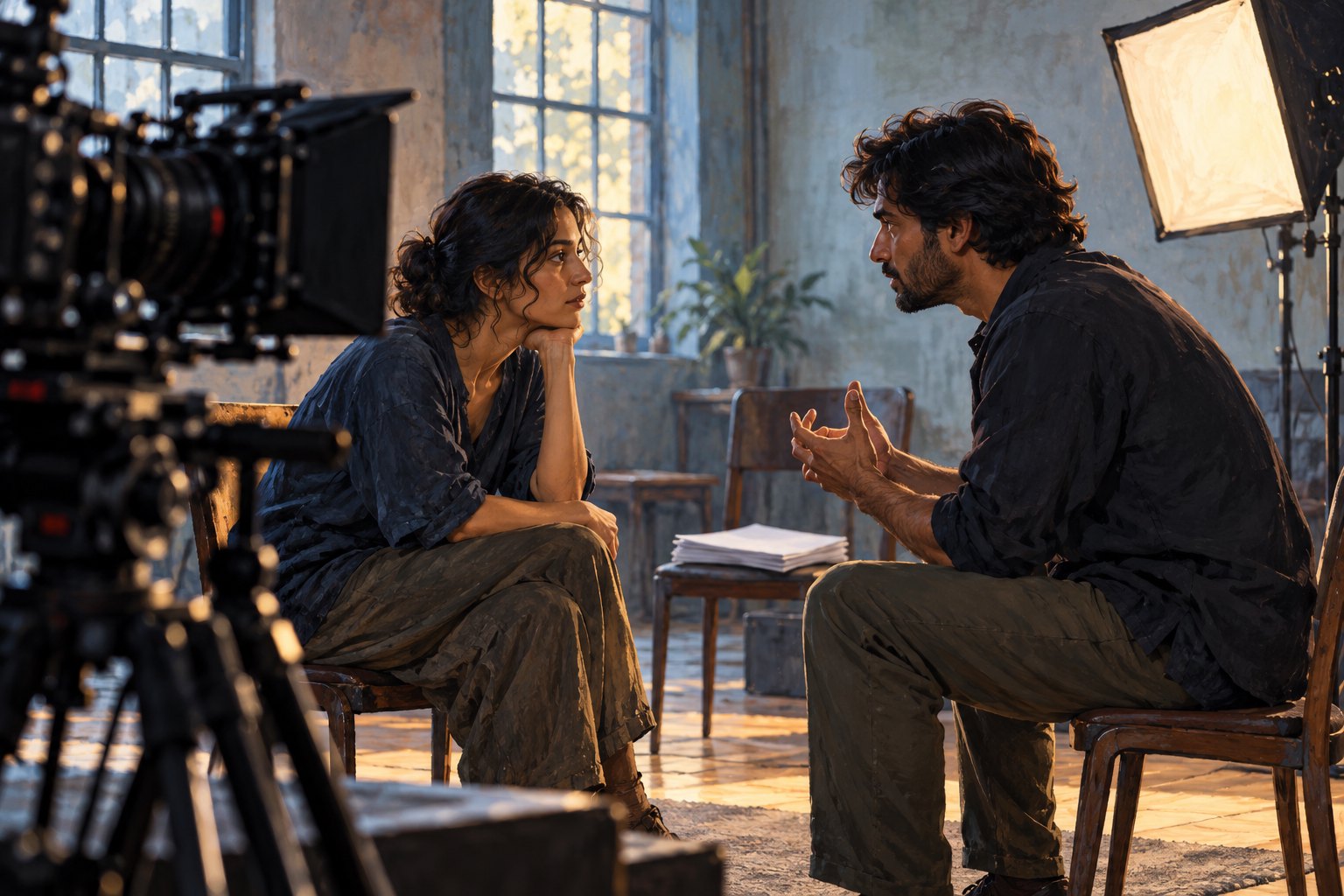
Listening deserves as much attention as speaking. When one performer delivers a line, watch the person receiving it. Does the exchange alter their behavior? Do pauses feel responsive, or merely scheduled? A scene can acquire emotional weight through a reaction that lasts only a moment.
That emphasis on perspective also informs our discussion of character perspective in the Fears to Fathom adaptation. The useful connection is a critical question: how does a film bring viewers close enough to understand someone’s experience? For One Eye Open, the answer should come from watching the characters, rather than assuming the casting story supplies it.
A performance is part of a larger construction
Actors do not determine everything audiences perceive about their work. Framing decides whose reaction we see. Editing determines how long we remain with it. Sound can emphasize a hesitation or crowd it out. Writing establishes whether a choice has a believable foundation.
That matters when assessing a film introduced through its performers. If a character feels thin, the problem may involve limited material as well as delivery. If a relationship feels convincing, the achievement may belong to the actors, the staging, and the cut working together. Good criticism examines those connections before handing out all the credit or blame.
For viewers, a useful test is to identify the moment behind an opinion. Instead of stopping at “the acting was good,” describe what made a change of emotion believable. Instead of dismissing someone as unconvincing, ask whether the difficulty came from the performance, the dialogue, or missing context. Specificity makes a recommendation more helpful than either blanket praise or a vague complaint.
Visibility is an opening, not a verdict
The regional interest surrounding One Eye Open gives it a clear introduction. It cannot establish audience satisfaction, commercial success, or the future careers of its actors. Those outcomes require separate evidence.
A similar distinction appears in our look at how festival recognition shapes expectations for La Bola Negra: the story that brings a film to someone’s attention should lead into an encounter with the work. It should not settle the response in advance.
The deeper significance of the One Eye Open news lies in that encounter. Midwest performers are part of a theatrical offering that invites viewers to discover what they can do. The most meaningful next step is attention that becomes specific: remembering a face, discussing a choice, or recognizing how an actor made a character understandable. That is where a regional visibility story can become a lasting conversation about movies.
Original content by this site's editorial team. Published: October 17, 2026 at 12:34:20 PDT (Los Angeles time)