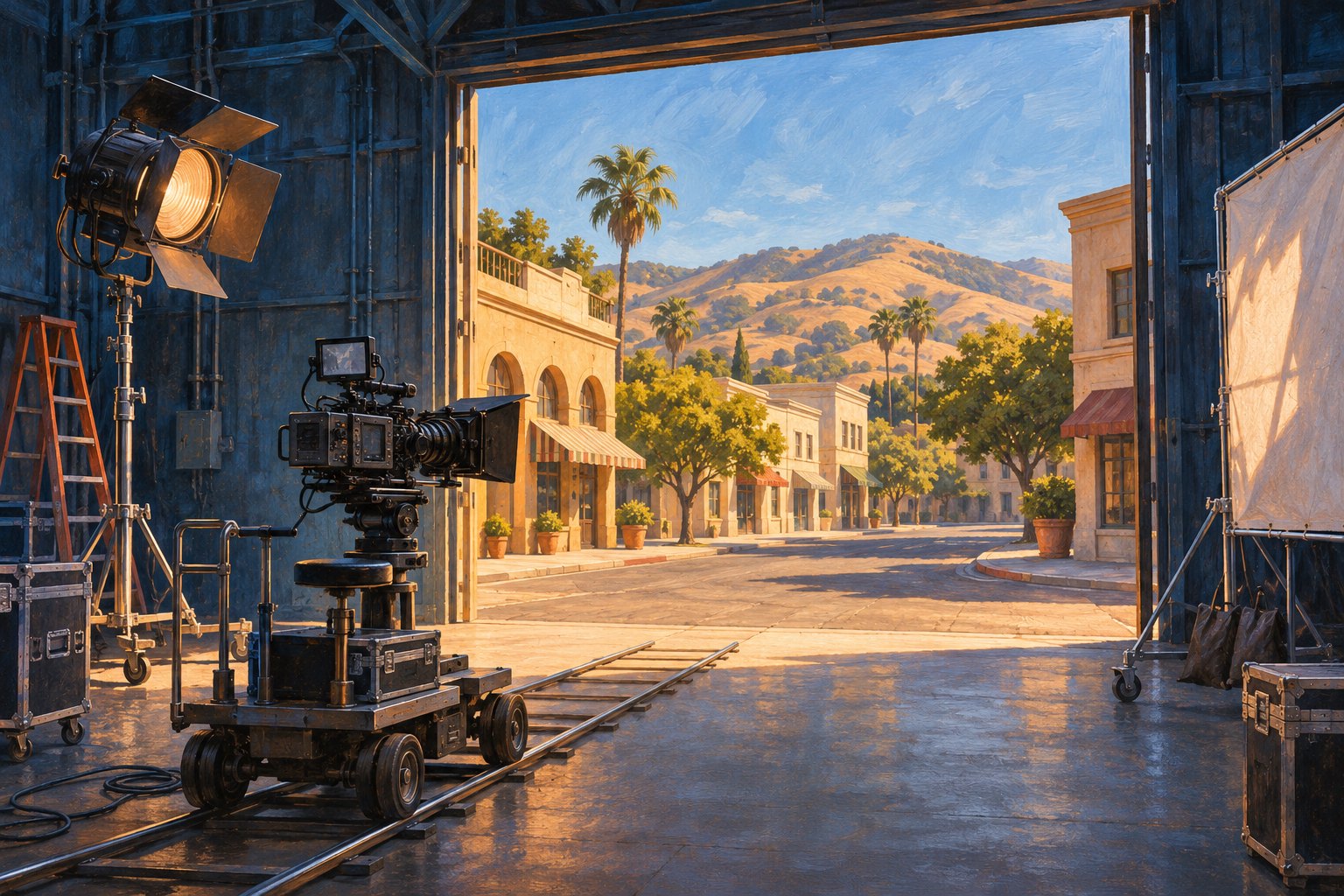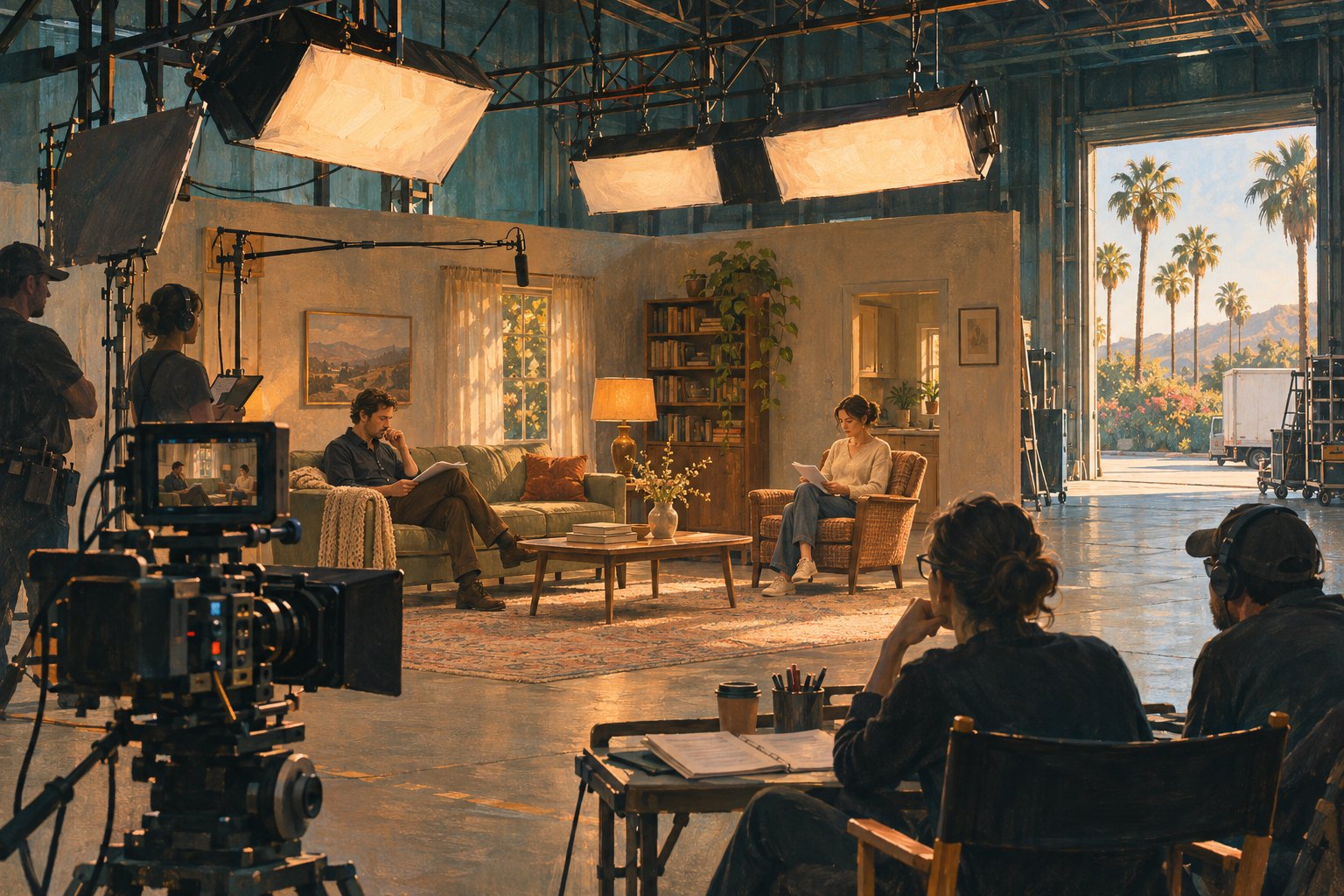
Gavin Newsom has proposed expanding California’s movie and television tax credit to at least $1 billion, according to Variety. For viewers, the announcement raises a question that the dollar figure cannot answer: could additional production support give filmmakers more room to develop the performances we eventually watch?
That is a creative possibility, not a reported provision of the proposal. The announcement alone does not establish an enacted expansion, identify its beneficiaries, or promise longer rehearsals and shooting schedules. Still, it offers a useful reason to examine something film criticism often takes for granted: the labor behind a scene that feels effortless.
My interest is in that gap between financing a production and giving its characters a convincing inner life. A tax incentive can be discussed as an economic instrument. A finished movie must also survive a much less predictable encounter with an audience.
What the proposed expansion does—and does not—tell viewers
The central reported fact is narrow: Newsom is proposing an expansion to at least $1 billion. That figure should not be mistaken for a production budget, a payment to one studio, or a guarantee that particular movies will be made. Nor does the reported proposal establish how any resulting financial flexibility would be used.
It is tempting to imagine a straight line from a larger incentive to a stronger film. But several separate decisions sit between the two. A project would need to qualify under the applicable rules; its financing and production plans would need to come together; its producers would then make choices about resources. None of those choices can be read off the headline.
Our earlier analysis of what would make the proposed expansion meaningful considers the broader stakes. Here, the narrower question is what happens when financial room becomes—or fails to become—creative time.
The character work hidden inside an ordinary scene
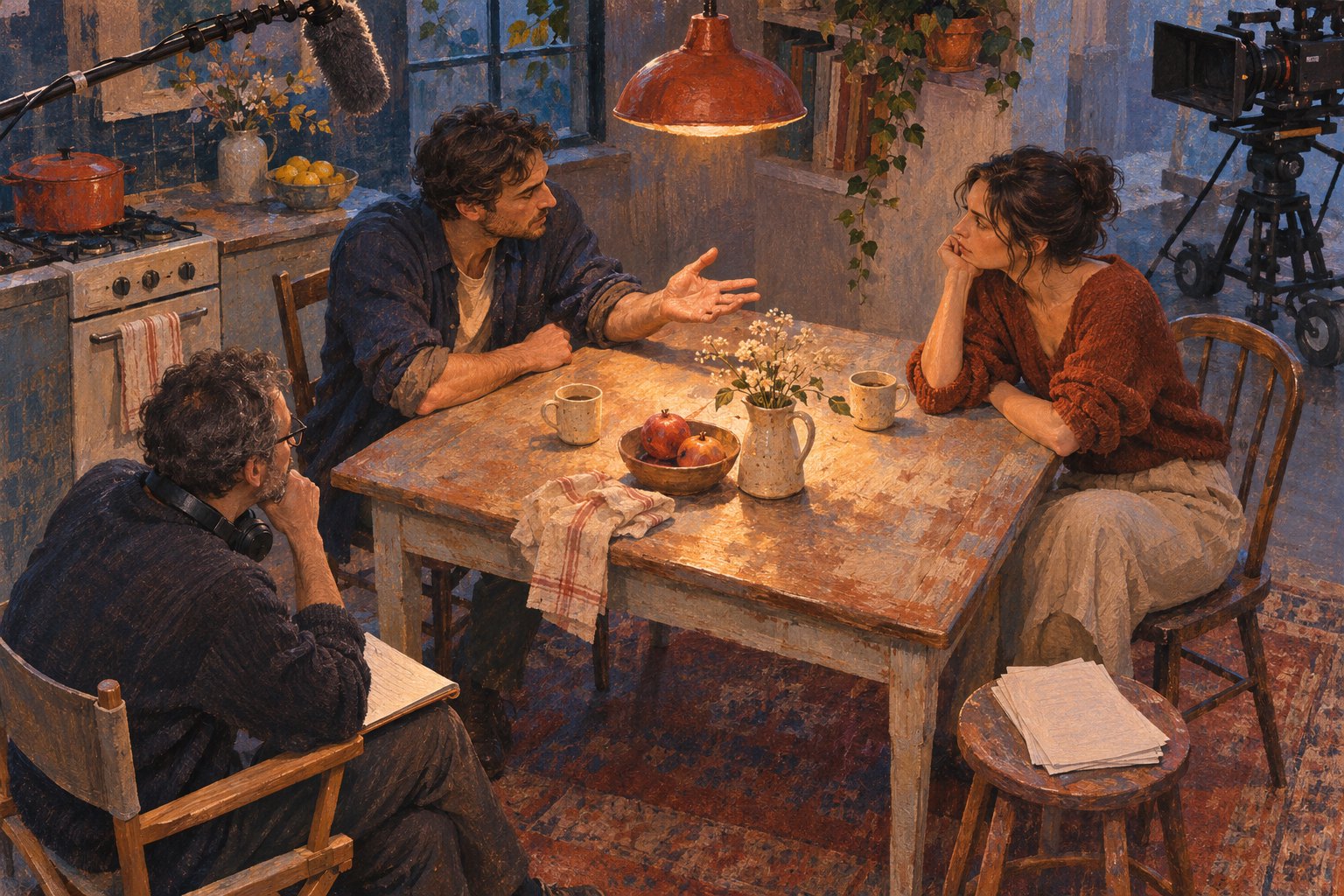
Consider an imagined scene, rather than a moment from an existing movie: two siblings sit at a kitchen table after an argument. One offers coffee. The other declines. On the page, the exchange might occupy only a few lines. Onscreen, it could communicate an apology, a fresh insult, or an attempt to postpone a painful conversation.
From the first sibling’s perspective, the offer might be the only form of tenderness they can manage. From the second’s, accepting it might mean surrendering a grievance before it has been acknowledged. The dramatic action is not the coffee. It is the negotiation neither person can state directly.
Performers and a director have choices to explore: whether the offer comes too quickly, whether the refusal is rehearsed or spontaneous, whether either sibling looks up. Rehearsal can help them test those possibilities. Camera placement, sound, and editing then determine which parts of that negotiation reach us.
This is where production resources become interesting to a critic. Their value is not necessarily visible as spectacle. Sometimes the most valuable result would be a small adjustment that makes a relationship legible without explanatory dialogue.
More financial room is not automatically more rehearsal
There are several plausible ways a production could use additional financial flexibility. It might preserve a planned shooting day, accommodate a difficult setup, or make an otherwise unworkable budget possible. It might also retain the same schedule. These are hypothetical alternatives, not claims about projects connected to Newsom’s proposal.
The distinction matters because getting a film into production and changing how that film is made are different achievements. A project that would otherwise remain unmade could benefit enormously without receiving an extra hour of rehearsal. Conversely, an already viable project could receive support without noticeably altering its creative process.
Nor should rehearsal become a magical explanation for good acting. Some performances thrive on careful preparation; others benefit from discovery in the moment. Repeating a scene can reveal something new, but it can also drain a productive uncertainty. The artistic goal is useful time, directed toward a specific problem.
My preference is for production conditions that let filmmakers recognize the difference. A director should be able to reconsider an emotional beat because it is unclear, rather than simply accumulating takes because more time happens to be available.
Editing decides whose experience becomes the story
The same question continues after shooting. Return to those imagined siblings. An editor could hold on the person offering coffee, emphasizing the risk of reaching out. Cutting instead to the listener could make the scene about the burden of responding. Keeping both in the frame might refuse to give either sibling complete ownership of the moment.
These choices change our relationship to the characters without changing the dialogue. A pause may feel generous in one version and coercive in another. A reaction shot can complicate a seemingly simple line. This is why a memorable sentence is never the whole performance: its meaning also depends on who hears it and what the film lets us see afterward.
Additional resources might allow more exploration of those alternatives. They cannot supply the judgment needed to choose among them. Nothing in the reported proposal establishes additional editing time, and no subsidy can guarantee that a film finds its most persuasive form.
What audiences can judge—and what they cannot
When watching a finished movie, viewers can evaluate whether characters seem to listen, whether emotional shifts feel earned, and whether a scene allows conflicting motives to coexist. Those are meaningful critical observations. They are not reliable evidence of how much rehearsal occurred or whether a tax incentive improved the result.
A hurried-feeling scene may reflect an intentional aesthetic choice. A beautifully sustained performance may have emerged under severe constraints. Inferring a production history from the screen alone risks turning criticism into guesswork.
That boundary also distinguishes this discussion from how filming locations shape the worlds movies create. Here, the concern is the opportunity to explore a scene, wherever its fictional world is set. Both questions require attention to the finished work, rather than assuming its artistic value from its production circumstances.
The creative promise lies in opportunity, not certainty
Newsom’s proposed expansion deserves to be understood first as a proposal, with outcomes still to be established. Its headline amount cannot tell us whether a future performance will be moving, a relationship convincing, or a film worth revisiting.
But the creative question is still worth asking. Movies depend on decisions that can look minor from outside: an actor trying a quieter response, a director changing the distance between two people, an editor staying with the listener. Conditions that make thoughtful decisions possible have artistic value, even when that value resists a simple financial measure.
The strongest hope for additional production support is therefore modest and demanding at once: that it creates opportunities for better work. Whether those opportunities become richer characters will remain the responsibility of the people making the films—and a question audiences answer one scene at a time.
Original content by this site's editorial team. Published: November 2, 2026 at 10:40:11 PST (Los Angeles time)