Neon is developing an anthology movie based on the SCP Foundation online horror forum, according to Variety. The anthology format is the detail that makes this announcement especially interesting: it creates room for several stories, but also demands a reason for audiences to experience them together. A collection of frightening encounters can deliver individual jolts. A carefully arranged collection can make each encounter change the meaning of the last.
For this adaptation, the most promising question is whose experience will organize the horror. Who gets to explain what is happening? Who must act with incomplete information? Whose fear receives the camera’s attention? Those choices could give the film an identity beyond recognition of its source material.
This is a spoiler-free critical preview, not a review of a finished film. The development report provides a basis for discussing the adaptation’s possibilities. It does not provide scenes, performances, dialogue, or an ending to evaluate. The examples below describe potential filmmaking approaches, not announced storylines.
What the anthology announcement actually tells us
The essential news is specific: an SCP Foundation anthology movie is in the works at Neon, drawing on an online horror forum. That establishes the project’s source and intended format. It does not, by itself, establish which stories will appear, how many segments there will be, or whether a recurring character will connect them.
That distinction matters for readers seeking a plot breakdown or release information. This preview does not establish a release date, cast, segment lineup, or running time. Nor can it supply memorable movie quotations or identify Easter eggs without authenticated footage or a finished film. Treating speculation as a scene description would obscure the most useful conversation available now: what this particular form could accomplish.
Our earlier commentary on the production questions surrounding Neon’s SCP Foundation project considered how the movie might get made. The separate question here is how an anthology might work as a viewing experience, especially for someone encountering SCP for the first time.
Each segment needs a person worth following
An anthology has limited time to establish each new set of characters. That makes character selection unusually consequential. A segment cannot assume that a startling premise will automatically create emotional investment. It needs to make somebody’s immediate situation understandable before asking viewers to fear what might happen next.
One useful test is whether a character has a recognizable objective apart from surviving. Keeping a promise, protecting a colleague, or admitting a mistake can give a short story direction without requiring an elaborate biography. These are hypothetical possibilities, but they demonstrate the principle: a threat becomes dramatically specific when it obstructs something that matters to a person.
Competence can also create better suspense than convenient foolishness. Watching someone assess a situation carefully and still discover the limits of their knowledge can be frightening. Watching someone ignore an obvious danger merely to advance the plot often makes the audience feel ahead of the movie. For an SCP anthology, the difference could determine whether uncertainty feels disturbing or arbitrary.
Character perspective should shape more than dialogue. A person accustomed to giving orders might notice departures from routine. Someone with little authority might study the reactions of others before trusting an explanation. The same event could therefore produce two substantially different sequences, even before the filmmaking introduces a supernatural element.
The camera decides whose fear counts
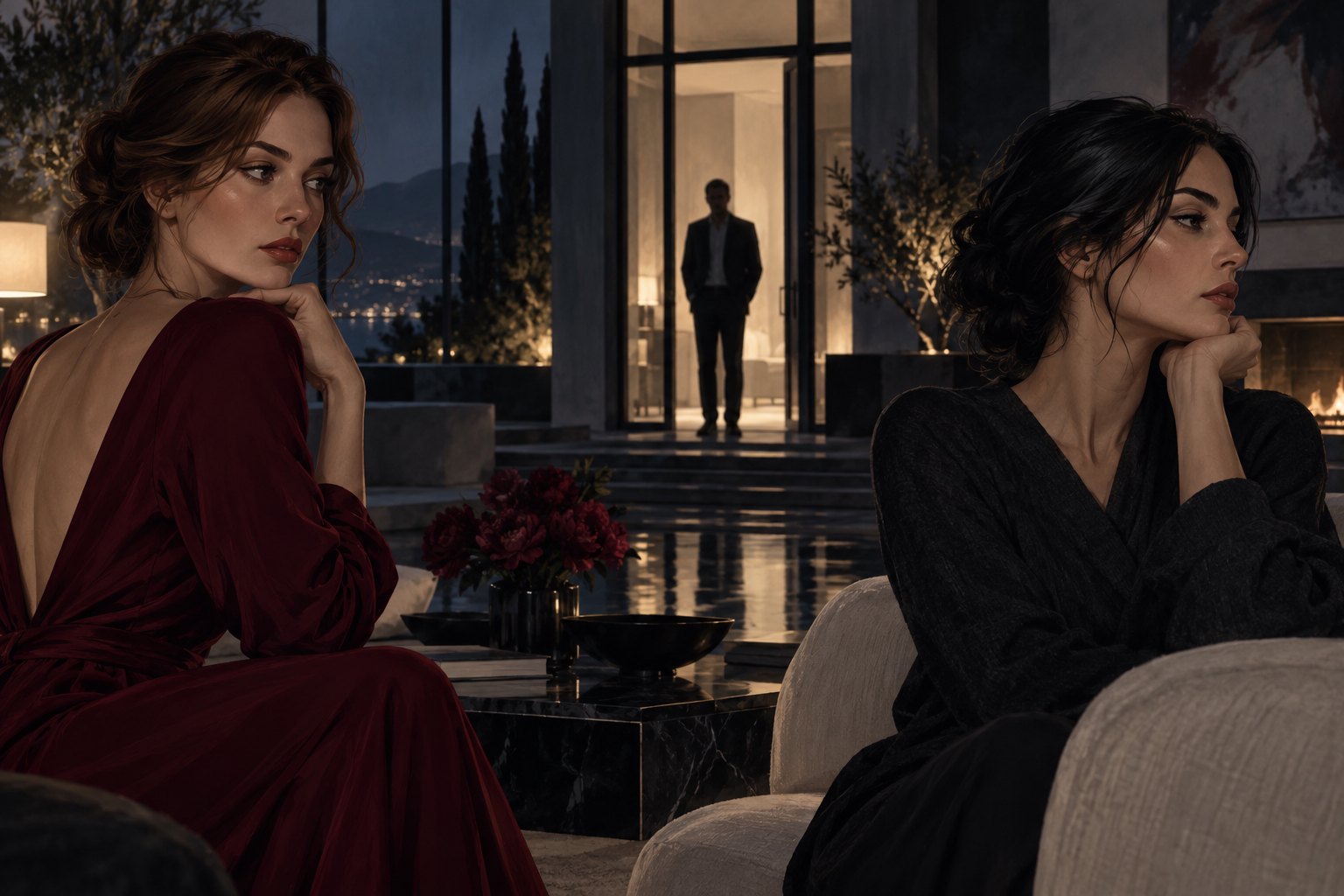
Consider a purely hypothetical observation scene. From one side of a glass partition, the image could emphasize professional caution: people studying something they do not understand. From the other, those same people could appear distant and threatening. Neither angle requires a speech announcing who deserves sympathy. Position, duration, and access to a face can do that work.
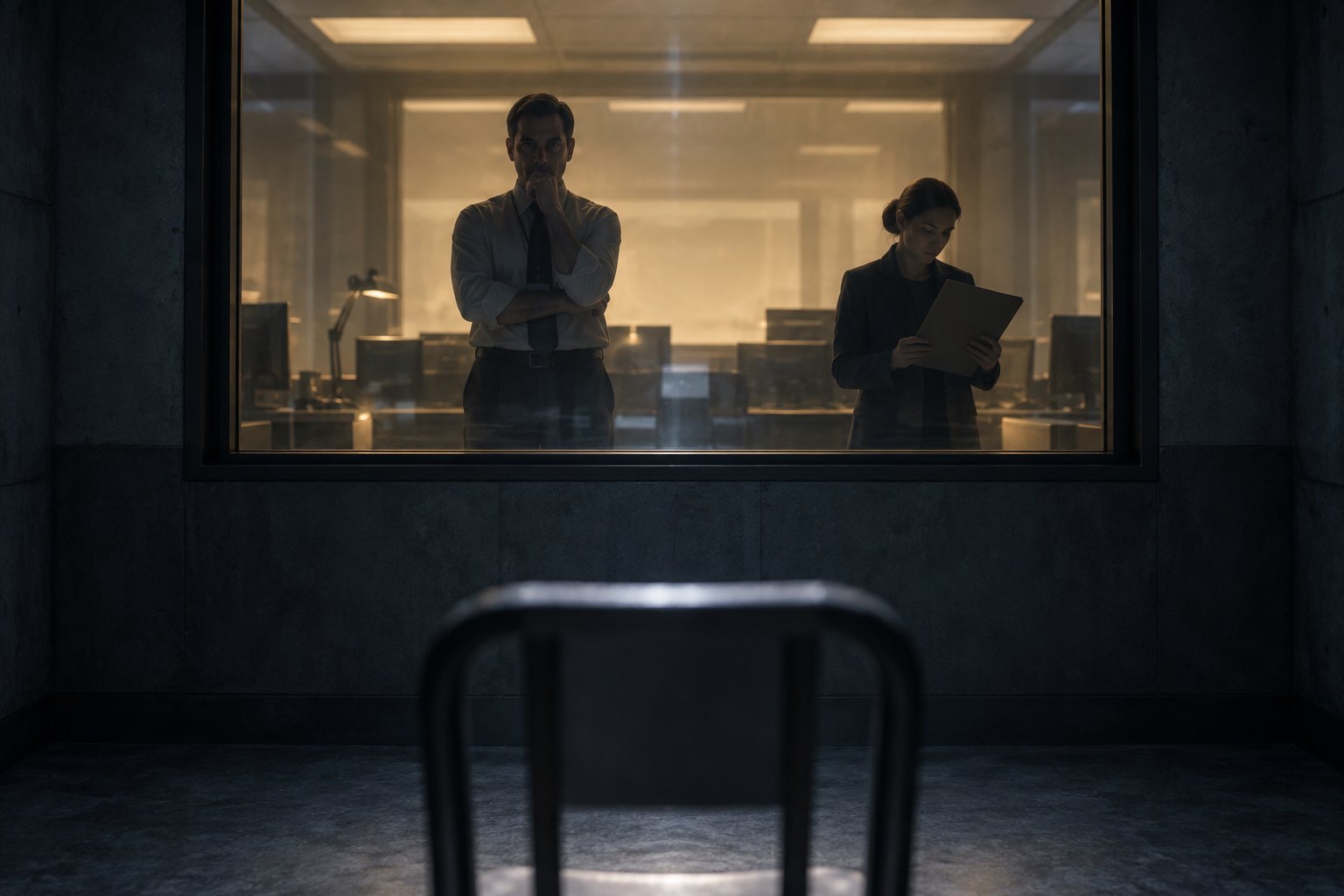
This is where an anthology could earn its length. Separate segments could place viewers in different relationships to knowledge and authority. One might make an explanation reassuring; another might make the act of explaining feel evasive. Those are potential formal choices, not claims about Neon’s plans. Their value lies in letting the audience revise an assumption instead of simply meeting another threat.
My preference would be for those changes to emerge through behavior and framing. A hesitant answer, a delayed reaction, or a shot held after someone leaves can complicate an apparently straightforward exchange. Horror becomes more involving when viewers must interpret human conduct alongside whatever remains unexplained.
Newcomers need consequences before background
An adaptation of an established online property has two audiences to consider: people who recognize its references and people who need the movie itself to teach them how to watch. Trying to satisfy the first group through constant identification can leave the second group listening to explanations instead of experiencing suspense.
A stronger approach would make essential information immediately useful. If a segment establishes a rule, viewers should understand what following it costs and what breaking it risks. They need enough clarity to anticipate a consequence. They do not necessarily need a complete account of the rule’s origin before the scene can begin.
This distinction separates mystery from confusion. Mystery gives the audience a question it wants answered. Confusion leaves the audience unsure which details deserve attention. With multiple segments competing for limited screen time, that difference becomes especially important.
The broader adaptation issue also appears in our discussion of what a movie must add to a story audiences already recognize. Familiarity can bring viewers through the door. Dramatic construction determines whether the screen version gives them a meaningful new experience.
The order of the stories should create an argument
Even strong individual segments can make a tiring feature if they all follow the same rhythm. Introduction, warning, escalation, surprise: repeated without variation, that pattern teaches viewers when to brace themselves. Bigger effects cannot necessarily restore uncertainty once the structure becomes predictable.
Ordering offers another way to build intensity. A relatively direct opening could establish expectations that a later segment complicates. A quieter story could make the audience attentive to small sounds after a more physically aggressive one. An ending could gain force by returning to an earlier concern from a different character’s position.
A connecting narrative, if the film uses one, would face a similar test. It should change how the segments register, rather than merely announce the next installment. The connection might be emotional, visual, or thematic; it need not explain every event. What matters is that the feature accumulates meaning instead of repeatedly starting over.
The deeper possibility: making certainty uncomfortable
The most compelling version of this project, to my mind, would let its different perspectives unsettle one another. A character’s confidence could seem reasonable within one story and troubling when viewed through another. An explanation could solve an immediate problem while leaving its human cost unresolved.
That would give the anthology a purpose beyond variety. Viewers would leave remembering how their own judgments changed: whom they trusted, what they accepted, and which fears they initially overlooked. It is a promising standard for Neon’s SCP Foundation movie, though whether the finished work meets it remains an open question. The opportunity is to make each new story deepen the unease left by the one before it.
Original content by this site's editorial team. Published: September 30, 2026 at 16:19:43 PDT (Los Angeles time)