Nuisance Bear is heading to theaters through MUBI, giving the Sundance-winning documentary a new audience for an uncomfortable question: what happens when an animal’s ordinary movement becomes a problem for people? MUBI’s release announcement lists November 6, 2026, in Los Angeles, followed by December 4 in New York, Canada, and the UK. Those are specific announced openings, rather than a promise of simultaneous availability everywhere. [MUBI’s theatrical announcement](https://letterboxd.com/mubi/story/nuisance-bear-official-trailer-coming-soon/)
Directed by Gabriela Osio Vanden and Jack Weisman, the film received the 2026 Sundance U.S. Documentary Grand Jury Prize. That distinction makes it a release worth following, while leaving the essential critical question open: how does a documentary help us understand a creature whose experience we cannot directly access? [Sundance’s award announcement](https://www.sundance.org/blogs/2026-sundance-film-festival-announces-award-winners/)
This is a spoiler-free critical preview, not a firsthand screening review. The discussion draws on the film’s documented premise and the filmmakers’ stated approach. It does not evaluate unviewed sequences, reveal an ending, or attribute invented dialogue to its subjects.
What Nuisance Bear follows
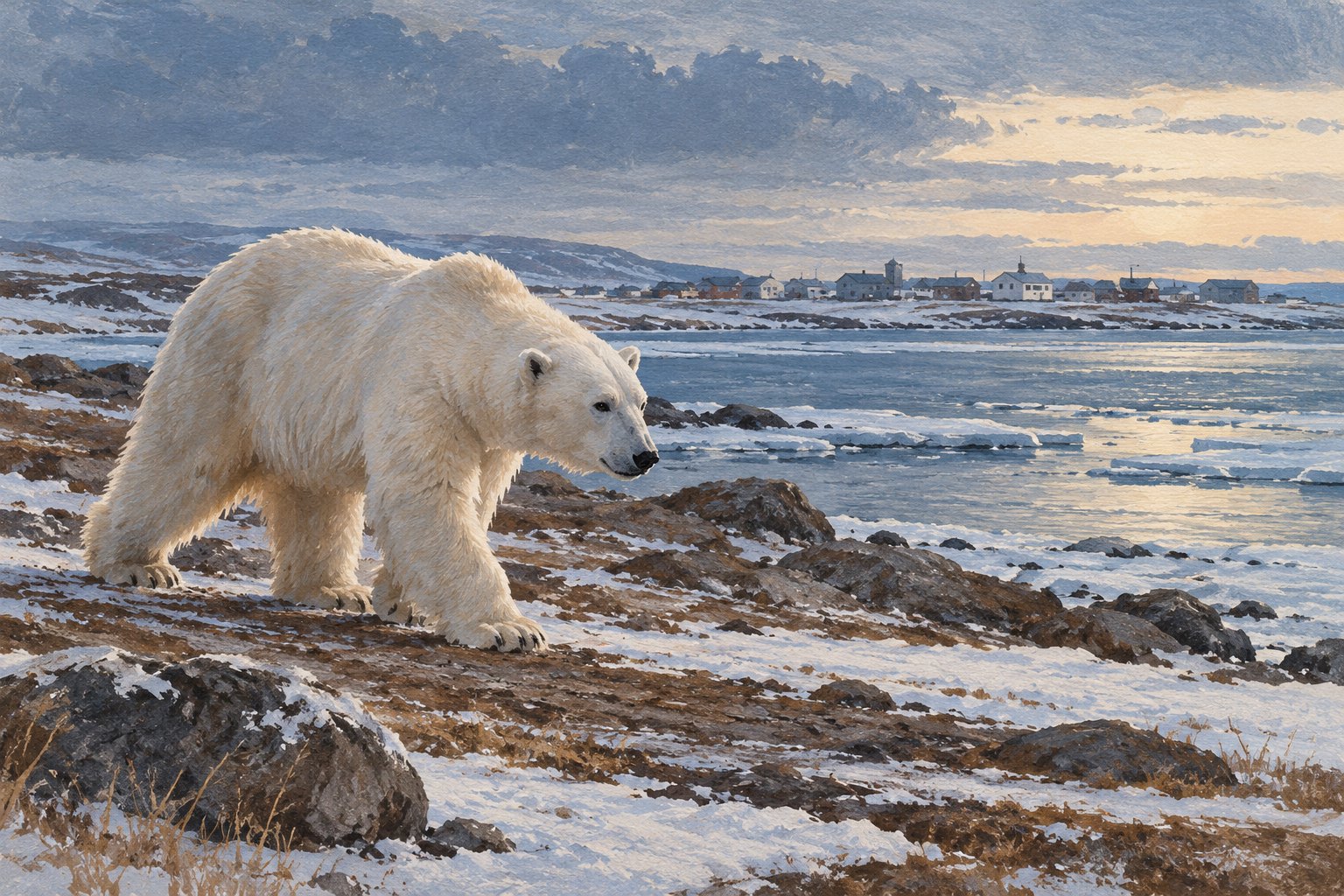
Sundance describes a polar bear navigating tourists, wildlife officers, and hunters as its migration intersects with human activity. The feature returns its directors to Churchill, Manitoba, expanding the inquiry of their earlier short. Its account includes an Inuit narrator and considers animals that people observe, photograph, and redirect. These details establish a story about competing uses of shared space. [Sundance’s film description](https://festivalplayer.sundance.org/sundance-film-festival-2026/play/693db9cd14d339872a44cf0b)
The most interesting dramatic possibility lies in the difference between a route and an intrusion. For an animal, movement can be necessary without carrying any intention toward the people it encounters. For someone responsible for a community’s safety, that same movement can demand intervention. The action acquires different meanings depending on whose needs organize the story.
That makes the premise more demanding than a simple contest between an innocent animal and unsympathetic humans. A useful reading must hold two ideas together: the bear does not recognize our categories of acceptable behavior, and the people encountering it cannot simply abandon their own safety.
The bear as a character, without an invented inner voice
In a Sundance interview, the directors described their approach directly: “We approached the bear as a character with its own agency, logic, and point of view.” This is a statement about their filmmaking intentions, not a line of dialogue from the documentary. It offers a concrete standard against which to consider the film. [The directors’ Sundance interview](https://fest26-wp.festival.sundance.org/blogs/give-me-the-backstory-get-to-know-gabriela-osio-vanden-and-jack-weisman-the-directors-of-nuisance-bear/)
Agency means that the animal’s actions matter to how the story develops. It need not mean giving those actions familiar human motives. A bear changing direction is observable; a bear supposedly plotting revenge is an interpretation that would require a very different kind of evidence. The distinction matters whenever documentary storytelling invites viewers to identify with an animal.
My view is that the strongest approach would allow behavior to remain partly unfamiliar. Empathy becomes more interesting when it does not require turning the subject into a person wearing fur. Viewers can recognize urgency, physical effort, or a blocked path without claiming to know exactly what the bear feels.
For audiences, a productive question is whether an interpretation comes from visible behavior or from the film’s arrangement of images and sound. Both contribute to storytelling. Recognizing the difference helps us appreciate the craft while remaining attentive to what the camera can actually establish.
Tourists, officers, and the unequal stakes of looking
The human roles identified in the synopsis suggest different relationships to the same encounter. A visitor may be seeking an extraordinary sight. An officer may be trying to prevent a dangerous situation. Someone living nearby must continue inhabiting the place after the encounter ends. These are distinct stakes, even when all three people care about wildlife.
That distinction provides a useful guard against easy moral sorting. Admiration does not automatically make an observer harmless, just as intervention does not automatically demonstrate indifference. A fair assessment should examine what people do, the circumstances surrounding their choices, and the consequences the documentary can show.
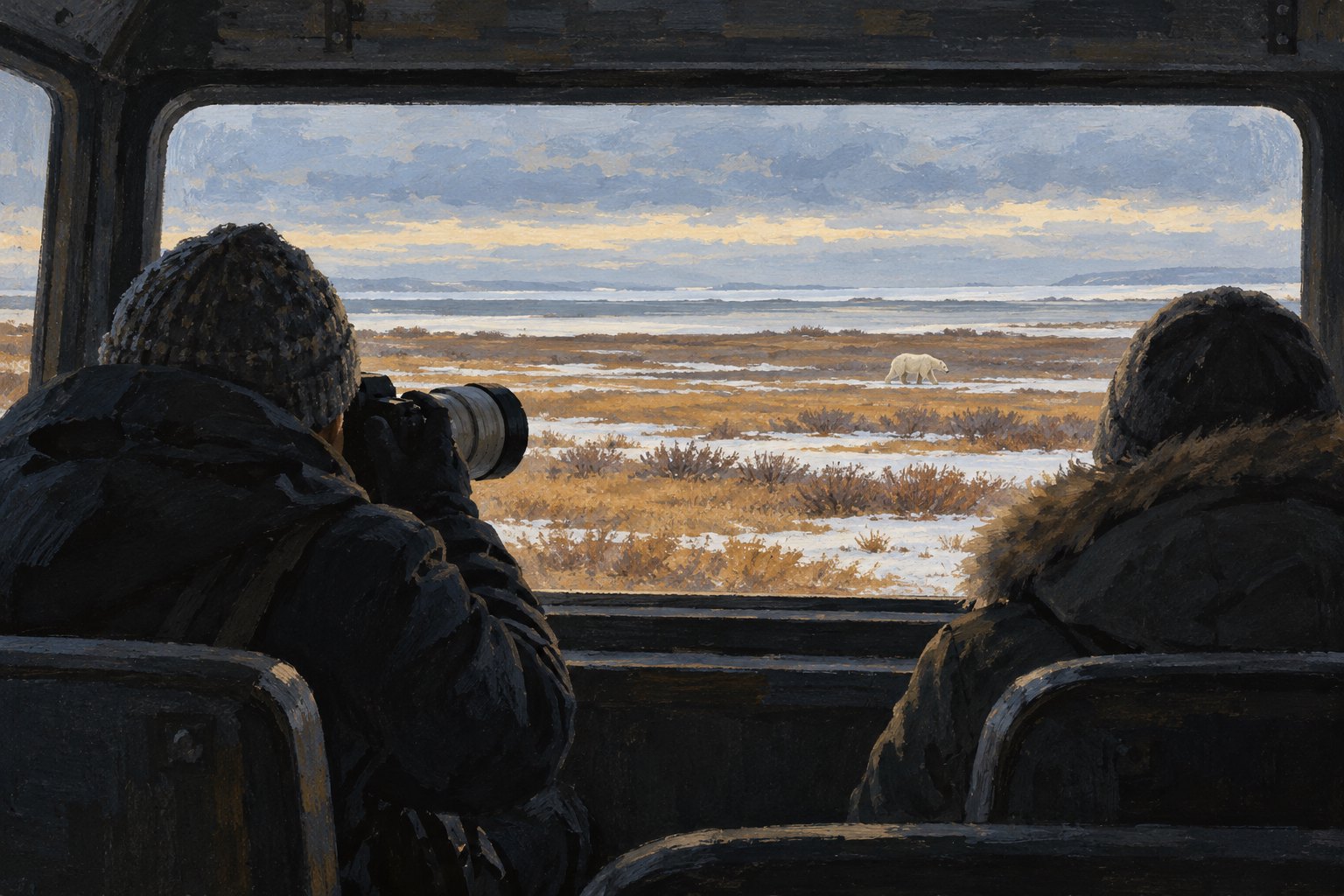
The spectator also belongs in this discussion. A wildlife documentary offers the pleasure of looking at an animal while controlling the conditions under which we see it. Framing can make a landscape appear empty or crowded; editing can make a pause feel peaceful or threatening. Those choices deserve attention alongside the subject’s beauty.
This concern connects with our discussion of the responsibility involved in representing another subject’s experience. The situations are different, but the underlying question travels: how much understanding does an image provide, and how much authority do viewers mistakenly grant it?
What the theatrical announcement means for viewers
The immediate practical takeaway is to check local theater listings against the announced rollout. A Los Angeles opening does not establish nationwide availability, and a theatrical date does not establish when a film will become available through a subscription. Viewers choosing between a cinema visit and watching at home need those separate details.
Our explanation of how distribution announcements translate into viewing options explores that distinction further. For Nuisance Bear, the useful information is the actual engagement available where you live.
Artistically, a theater could be a particularly interesting setting for this subject. A larger image can make it easier to attend to the relationship between a moving animal and the space surrounding it. That is a reason to consider the format, rather than a claim about the film’s visual execution before a screening.
The judgment hidden in the title
The word “nuisance” does considerable work before the documentary begins. It defines something through the inconvenience it causes someone else. Applied to an animal, it places human expectations at the center of the description and makes the animal’s presence sound like a deviation from normal order.
My reading of the title is that it invites us to examine that assumed order. Whose movement counts as ordinary? Who must be redirected? Who has the authority to decide? Asking those questions does not eliminate the need for safety or settle disagreements about wildlife management. It makes the starting assumptions visible.
That is the deeper interpretive promise behind MUBI’s release: an opportunity to consider coexistence as a negotiation among unequal powers. A bear cannot participate in the language used to classify it. The people filming, watching, and managing it can. The most consequential question to carry into Nuisance Bear is whether looking more closely changes how readily we accept that classification.
Original content by this site's editorial team. Published: October 19, 2026 at 17:38:36 PDT (Los Angeles time)