Mountain View’s Century 16 movie theater is set to close, according to NBC Bay Area. For readers looking for the immediate answer, that is the central reported development. The next questions are practical: when audiences can still attend, what happens to existing bookings, and whether moviegoing will eventually return to the location. A closure headline alone does not settle those details.
It also leaves a larger question worth considering: what does a community lose when a familiar place to watch movies stops operating? From a film criticism perspective, the answer extends beyond screen size. A theater helps determine which movies become easy outings, which require advance planning, and which never make it off a watchlist.
What the closure report establishes—and what remains unresolved
NBC Bay Area’s report identifies Mountain View’s Century 16 as a theater that will close. This article does not establish a final operating date, a reason for the closure, or the building’s long-term future. Readers should confirm those details directly before making plans or treating speculation as settled news.
That distinction matters because several different developments can fit beneath the word “closure.” The end of an existing operation does not, by itself, prove demolition, permanent abandonment, a change of operator, or an eventual reopening. None of those outcomes should be inferred here.
Nor can one local announcement explain the health of the entire movie business. Assigning blame to streaming, ticket prices, film quality, or audience behavior would require evidence about this particular operation. The more useful starting point is the experience of the people who use it: whether they can still see the films they want under conditions that work for them.
The real value of a nearby theater is repeatability
My view is that a local cinema’s most easily overlooked contribution is making moviegoing repeatable. A spectacular screening across the region might be worth a special trip. A convenient theater can make an ordinary evening at the movies possible without turning it into an expedition.
Consider two hypothetical viewers. One has a car, a flexible schedule, and the freedom to choose a late show. Another depends on a ride, needs an earlier finish, or has a narrow window between work and other responsibilities. The same change in theater location can be a minor adjustment for the first person and a substantial obstacle for the second.
That is why counting nearby screens is only a beginning. Travel time, actual showtimes, accessibility, admission costs, and the availability of a suitable seat all influence whether another venue works as a replacement. A theater can be geographically close yet difficult to use.
For Century 16 patrons, the meaningful comparison is therefore personal: can another venue support the kind of moviegoing they already enjoy? The answer may differ for a weekend family outing, a solo matinee, and a group trying to meet after work.
Watching characters together changes the experience
A theater does not improve a weak screenplay by making it louder. Its contribution is subtler: it creates a shared stretch of attention in which a character’s decisions can unfold at the filmmaker’s chosen pace.
Imagine a scene built around hesitation. A character is asked a question, looks away, and waits before answering. The dramatic information lies partly in that interval. In an attentive auditorium, the pause can become uncomfortable because everyone must sit through it. There is no private decision to skip ahead or briefly replace the scene with something else.
Audience reactions can also complicate an interpretation. A laugh during an awkward exchange might make a character seem more ridiculous; silence might make the same moment feel painful. Neither reaction establishes the correct reading. But hearing others respond can reveal an ambiguity that a solitary viewing leaves unexplored.
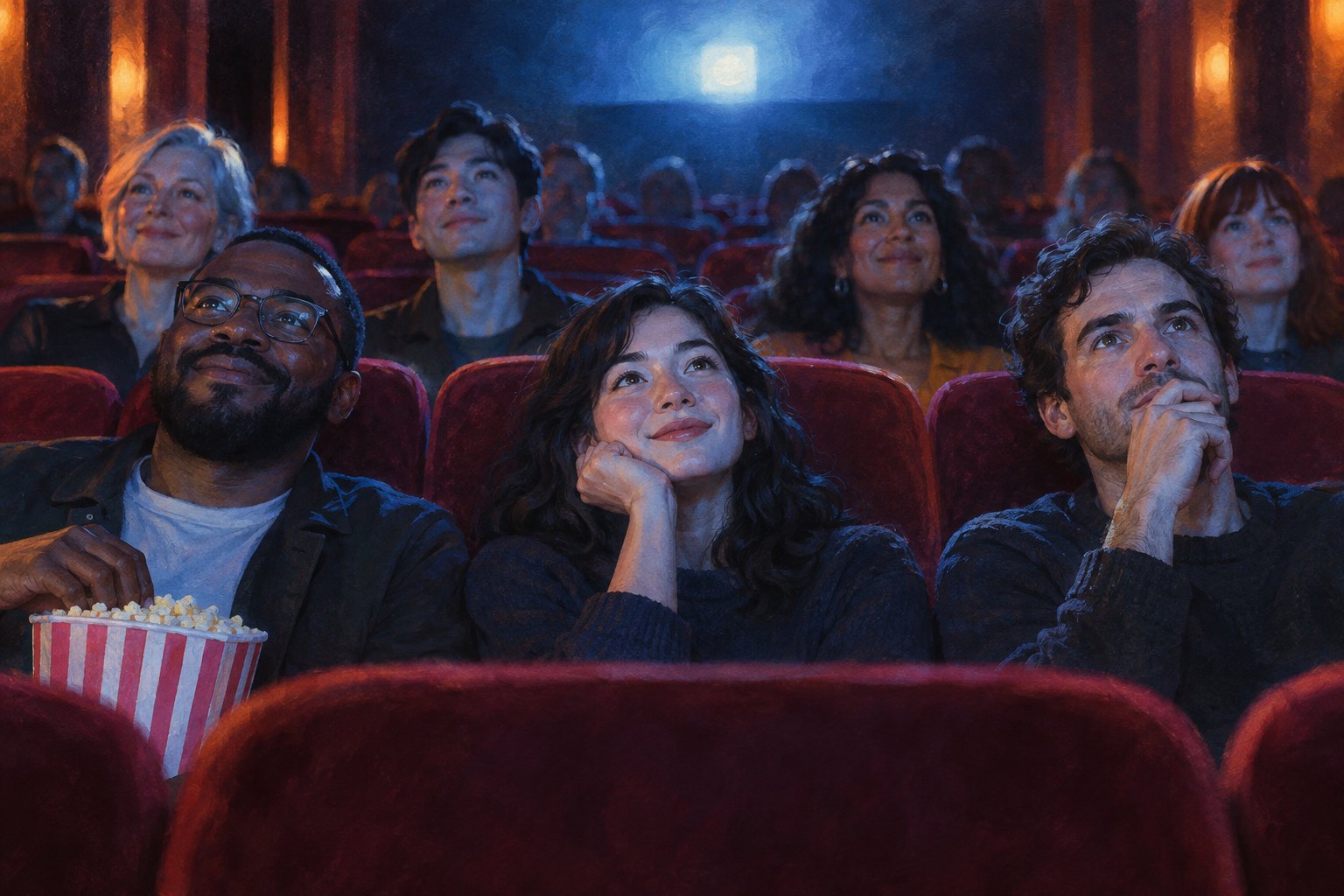
This is one reason a neighborhood theater belongs in a conversation about film analysis. Criticism examines framing, editing, performance, and sound, but those choices reach viewers under particular conditions. Shared attention is one of those conditions. It does not guarantee a great evening, yet it offers something valuable when the room and the movie connect.
Convenience can leave room for discovery
The loss of a convenient venue may also change the kinds of movies a person is willing to try. If attending requires a longer journey or a more complicated plan, an unfamiliar title can become a harder sell. A viewer may save that effort for a movie they already feel confident about.
This is a possibility, not a measured prediction about Century 16’s audience. Still, it helps explain why access matters to film culture. Discovery depends on more than knowing that an interesting movie exists. It also depends on being able to take a manageable chance on it.
Our discussion of building a festival watchlist with room for discovery approaches the same issue from the programming side. Curiosity needs space in a schedule. A usable local theater can help provide it.
There is a related distinction between supporting the making of films and supporting the opportunity to see them. As our commentary on what film investment needs to deliver for audiences and communities considers, production activity is only part of a healthy film culture. The encounter between a finished movie and its audience matters too.
What to check before planning another visit
Anyone hoping to attend Century 16 again should verify the details of the intended visit rather than rely on a general closure announcement. A short checklist can prevent unnecessary travel or confusion:
- Confirm the specific screening. Check the film, date, showtime, and current booking availability before leaving.
- Review existing reservations. Keep the confirmation and ask the ticket seller about any booking affected by an operating change.
- Check passes and credits individually. Do not assume that a ticket, membership benefit, gift card, or promotional credit follows the same rules as another product.
- Compare alternatives by practical needs. Look at transportation, total cost, accessibility features, and return-trip timing alongside the movie schedule.
If a final visit is possible, it need not become a grand farewell. Choosing a movie you actually want to see is a fitting way to value a theater. The building’s purpose is fulfilled by paying attention to what happens on its screen.
A local closure deserves a local measure of its impact
Century 16’s reported closure should not be inflated into proof that cinema is dying. It deserves a more specific assessment: what choices will Mountain View moviegoers have afterward, and how usable will those choices be?
The deeper cultural value of a theater lies in turning private interest into a shared appointment. People arrive with different expectations, spend time inside the same story, and leave with something to discuss. Preserving opportunities for that encounter is a concrete goal. Whatever follows this closure, the most meaningful outcome for audiences will be continued access to films they can afford, reach, and experience together.
Original content by this site's editorial team. Published: September 16, 2026 at 15:35:49 PDT (Los Angeles time)