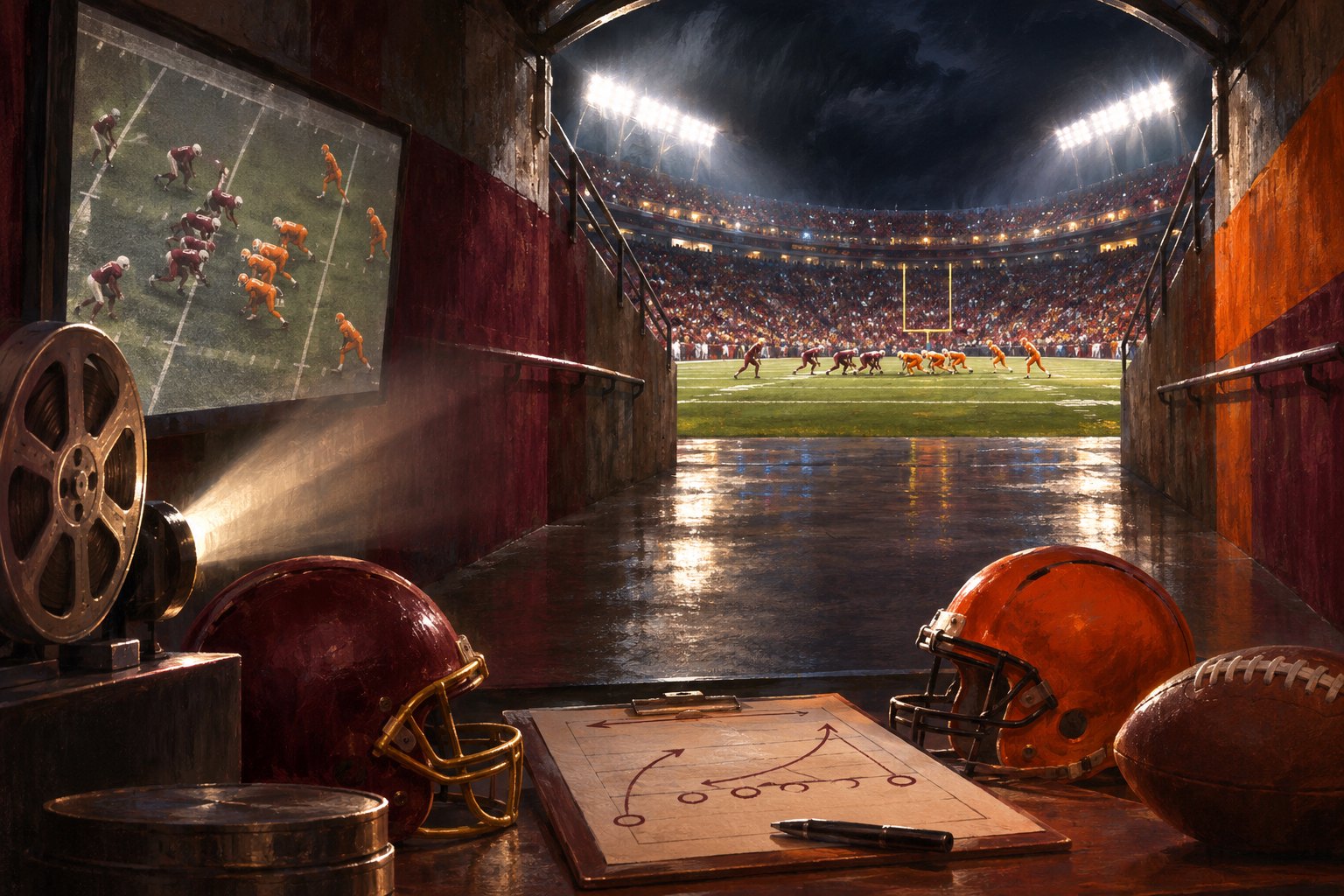
The Washington Commanders’ Raising hail on Monday night football and Bengals film room with Fred brings together two distinct attractions: the excitement surrounding Monday Night Football and the slower work of examining the Bengals on screen. For anyone arriving through the phrase “film room,” the subject is football footage and commentary. Its appeal lies in the possibility of seeing a game more clearly after the initial rush of watching it.
That pairing offers a useful subject for screen criticism. A sporting event can invite immediate allegiance, while a replay asks viewers to reconsider what they thought they saw. The interesting question is whether those impulses can coexist: can a team-centered presentation sustain its enthusiasm while allowing the images to complicate the preferred story?
This is commentary on the program’s announced framing, rather than a review of its individual sequences. The title establishes the Monday night and Bengals film-room subjects, but it does not establish which plays Fred discusses, what he says, or how the footage is edited. Those distinctions matter when evaluating the promise of the format.
What the Title Promises Its Audience
The title moves from a collective invitation to a personal one. Its opening language addresses supporters as a group. The reference to a film room then suggests a more concentrated encounter, and the first-name introduction of Fred makes that encounter sound approachable. One part offers belonging; the other offers guidance.
As an editorial choice, that combination is effective. Football analysis can feel inaccessible when specialist vocabulary arrives before viewers understand the problem being discussed. A recognizable conversational presence can give the audience somewhere to start. The challenge is to make familiarity a doorway into explanation, rather than a substitute for it.
For a viewer deciding what to expect, the distinction is practical. A rallying segment can succeed by building anticipation. A film-room segment needs to leave the audience with something observable: a movement, a spatial relationship, or a decision that becomes easier to recognize the next time it appears. Enthusiasm and understanding are different achievements, even when the same program pursues both.
The Player’s Perspective Changes the Story
Character-focused movie criticism asks what a person wants, what stands in the way, and what information is available when a choice is made. Some of those questions can sharpen our viewing of football. The crucial boundary is that athletes are real people, and footage does not grant access to their thoughts.
Imagine a generic passing play in which the camera follows the ball while a receiver moves beyond the edge of the frame. The viewer sees the throw and its result, but may miss the movement that shaped the decision. A wider replay might reveal an alternative explanation. That is an illustration of what a film room can clarify, not a description of a play in this Bengals segment.
The most useful analysis preserves the difference between visible behavior and inferred intention. A player changes direction: that is observable. Why the player changes direction may depend on an assignment, a communication, or a reaction that the footage cannot establish by itself. A persuasive commentator can propose an explanation while identifying the limit of the evidence.
This is also why the personality interpreting football deserves scrutiny. Our discussion of how character emphasis shapes the football story in Madden approaches a related issue through dramatization: the person placed at the center influences which parts of a sporting world become meaningful. In a film room, the guide similarly directs attention, though the responsibility is explanatory rather than dramatic.
Replay Should Reveal More Than the Result
A replay earns its place when it changes the viewer’s understanding. Showing the same outcome again can intensify excitement or disappointment. Explaining how that outcome developed requires a different use of screen time.
For the Bengals material promised here, a useful viewing habit is to look beyond whoever finishes the play. Notice where space opens, when it closes, and which movements draw other players away. This does not require guessing at a playbook. It begins with describing the relationships actually visible in the frame.
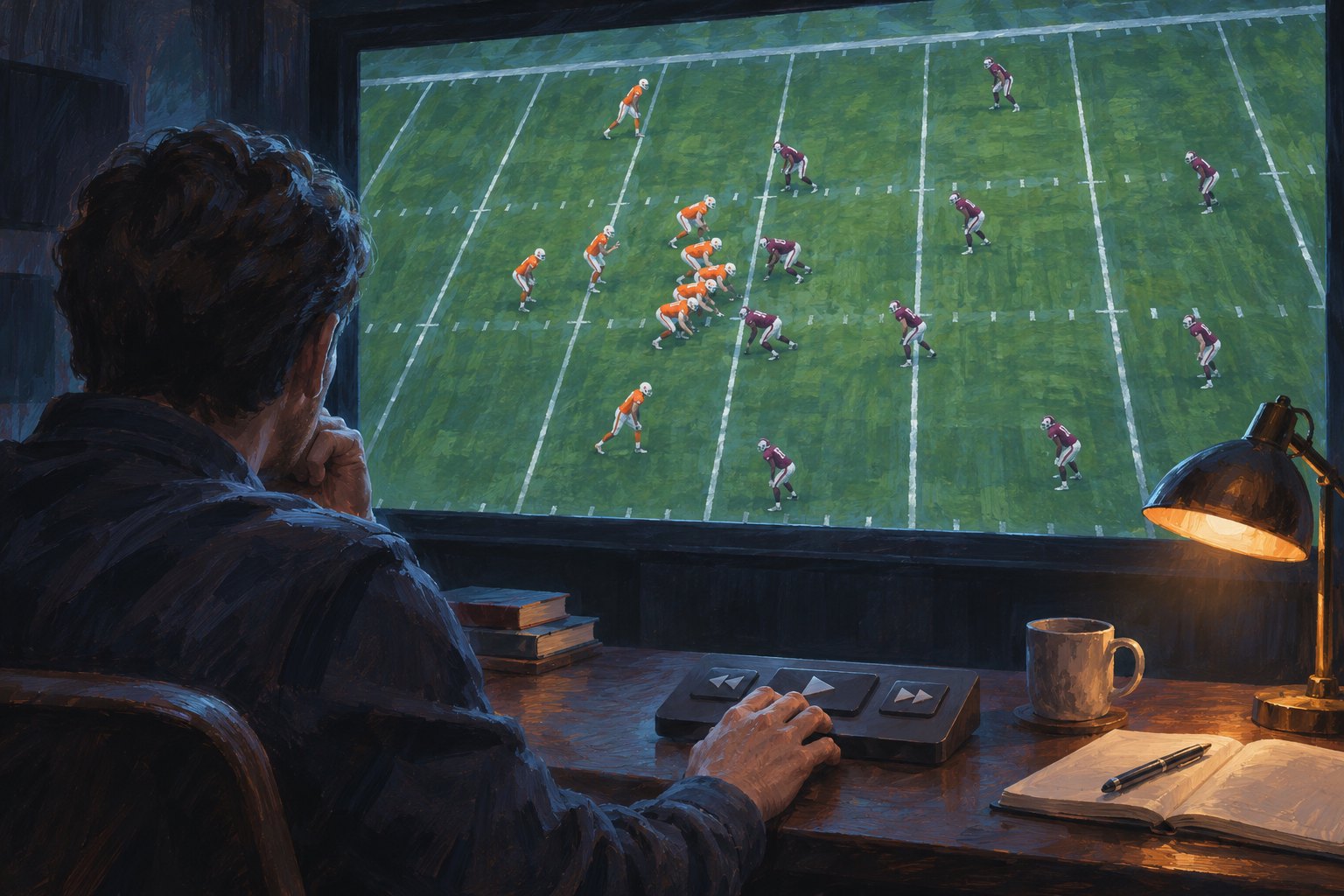
Playback speed matters, too. A frozen frame gives an audience time that the athlete never had. An opening that looks obvious during a pause may have existed only briefly at full speed. Good explanation should help viewers appreciate that compressed decision-making, rather than turn hindsight into proof that every answer was easy.
My standard for a worthwhile breakdown is therefore straightforward: after the explanation, the original-speed footage should become more legible. The viewer should be able to identify the relevant movement without depending entirely on the commentator’s confidence.
Team Loyalty Gives the Commentary a Point of View
The Washington Commanders are the publisher named for this item. That gives the presentation an identifiable institutional perspective. A viewer can enjoy that perspective while still asking how the Bengals are represented within it.
The strongest opponent analysis makes the other side intelligible. If the Bengals appear only as an obstacle in Washington’s preferred narrative, the audience receives an emotional role rather than an explanation. More useful coverage would show what creates difficulty, which responses might address it, and where uncertainty remains. These are standards for assessing the segment, not claims about conclusions it reaches.
Film criticism faces a comparable problem when a charismatic protagonist makes one viewpoint feel complete. Our character-focused discussion of Cliff Booth’s return considers the pull of a central figure’s perspective. With team media, the equivalent question is whether identification leaves enough room to understand everyone else in the frame.
Three Questions to Bring to Fred’s Film Room
- What does the image establish? Separate a visible movement or alignment from an explanation of an unseen assignment.
- What does the replay add? Look for information about timing, space, or another player’s contribution that was difficult to catch initially.
- Does the explanation survive full speed? Rewatch the sequence without the pause and consider how much time the player had to respond.
These questions let less experienced viewers participate without pretending to know every technical term. They also give knowledgeable fans a way to test an argument beyond agreement with its conclusion.
The Deeper Appeal: Learning to Look Again
The most compelling possibility in this Monday night and Bengals pairing is a change in the audience’s role. Spectacle invites a reaction; close analysis invites attention. A viewer can begin with a rooting interest and leave with a more patient understanding of what happened between the moments that usually become highlights.
That is where the film-room premise connects most meaningfully with movie criticism. Both can challenge the first impression by returning to an image and asking what was overlooked. The measure of Fred’s segment should be whether it makes that return worthwhile—whether the audience sees more, recognizes uncertainty, and becomes less dependent on the easiest story about the result.
Original content by this site's editorial team. Published: November 19, 2026 at 15:56:00 PST (Los Angeles time)