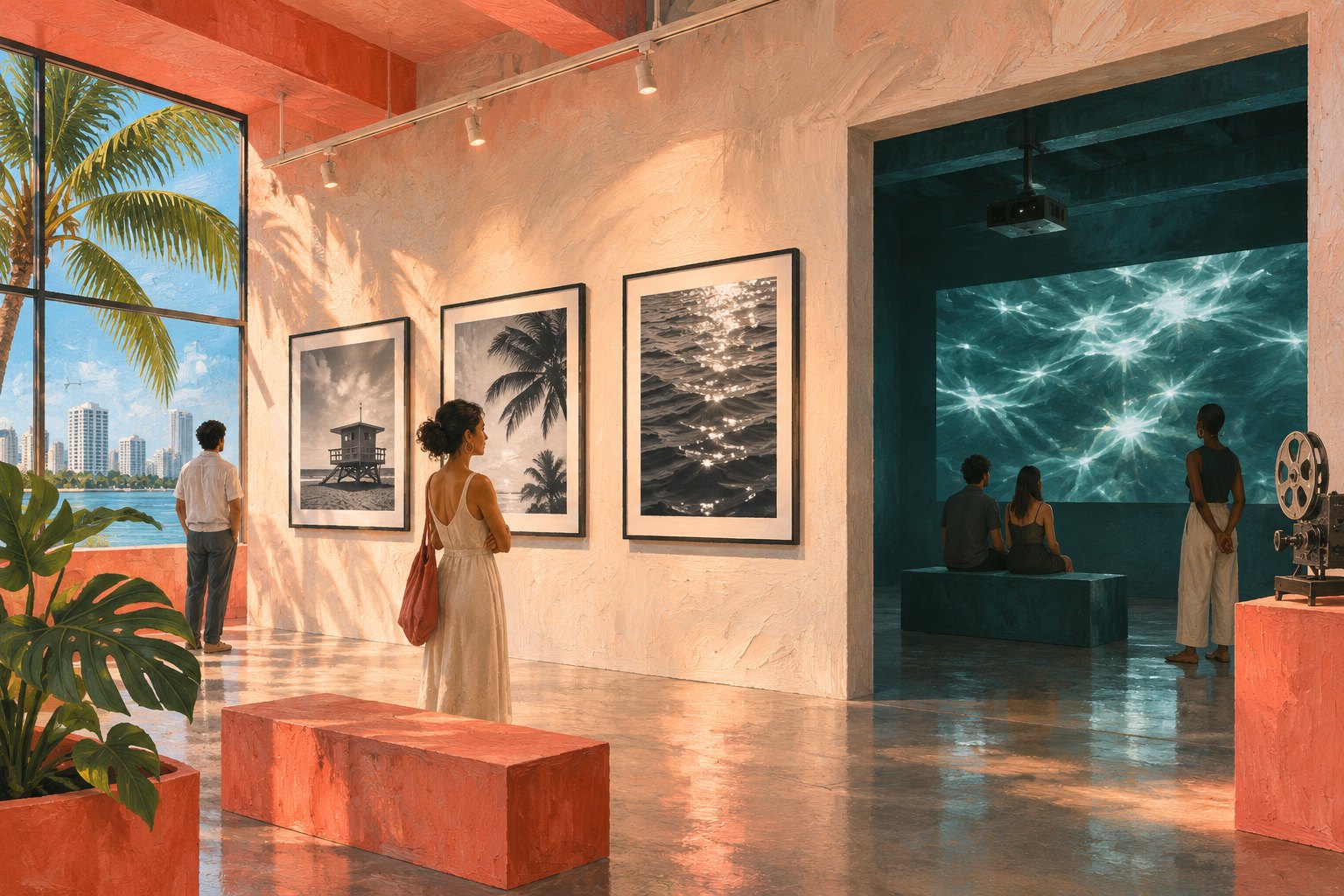
A new Miami art space is set to champion photography, film, and video, according to The Art Newspaper. For movie lovers, that combination offers an appealing possibility: a place to consider how images tell stories across different formats, and how the conditions of watching shape what we understand.
The reported focus establishes the subject of the initiative. It does not, by itself, establish the quality of its exhibitions or the experience visitors will have. The critical question is what happens when still and moving images share a program. Will they illuminate each other’s choices, or simply occupy adjacent rooms?
My view is that the strongest version of this project would help visitors become more attentive viewers. Its value could extend beyond discovering unfamiliar artists to recognizing how a frame, a pause, or an edit changes our relationship with a person on screen.
What the Miami announcement establishes
The central reported fact is straightforward: a new art space in Miami will support photography, film, and video. This article considers that mission rather than reviewing an exhibition or a specific movie. No opening date, address, artist roster, admission policy, or screening schedule is established here.
That distinction matters for anyone hoping to visit. A statement of purpose is a reason to follow a venue’s development; practical arrangements require confirmed visitor information. It also matters critically. An institution’s ambitions deserve attention, but judgments about its achievement should follow encounters with the actual work.
For now, the interesting editorial angle is the relationship among the three forms. Their techniques overlap, while their demands on an audience can differ considerably. A thoughtful program could make those differences visible without treating photography as merely preparation for cinema or video as decoration around it.
A photograph can sharpen the way we read a character
Film criticism often starts with motivation: what does a character want, what prevents them from getting it, and what do they finally choose? Looking closely at photographs offers another useful starting point. Before a person acts or speaks, how has the image positioned them?
Consider a hypothetical portrait of someone standing beside a doorway. A tight crop might emphasize their expression. A wider composition might reveal the distance between them and another person. Neither arrangement automatically tells us what they feel, but each directs our attention toward different evidence.
The same distinction matters in a movie. A close-up can make a reaction difficult to avoid. A distant shot can ask us to search for it. Placing someone at the edge of a composition may suggest exclusion, although that interpretation needs support from the surrounding scene. Framing creates possibilities for meaning; it does not supply a universal code.
A space that brings photographs into conversation with films could encourage this kind of patient observation. The useful question would be how each image organizes a relationship between subject, setting, and viewer. That concern also runs through our commentary on the craft connecting photography and filmmaking.
Moving images ask for time as well as space
The Miami project’s inclusion of film and video raises a practical artistic issue: duration. A photograph allows viewers considerable freedom to choose how long they look and where their eyes travel. A moving image can introduce a gesture, withhold information, or transform a scene while the viewer watches.
Imagine a short work showing a person folding fabric. A few seconds might register as an ordinary household action. A longer passage could reveal hesitation, fatigue, repetition, or unusual care. Those are hypothetical possibilities, not descriptions of an announced exhibition. They illustrate why a brief glance cannot always support a confident interpretation.
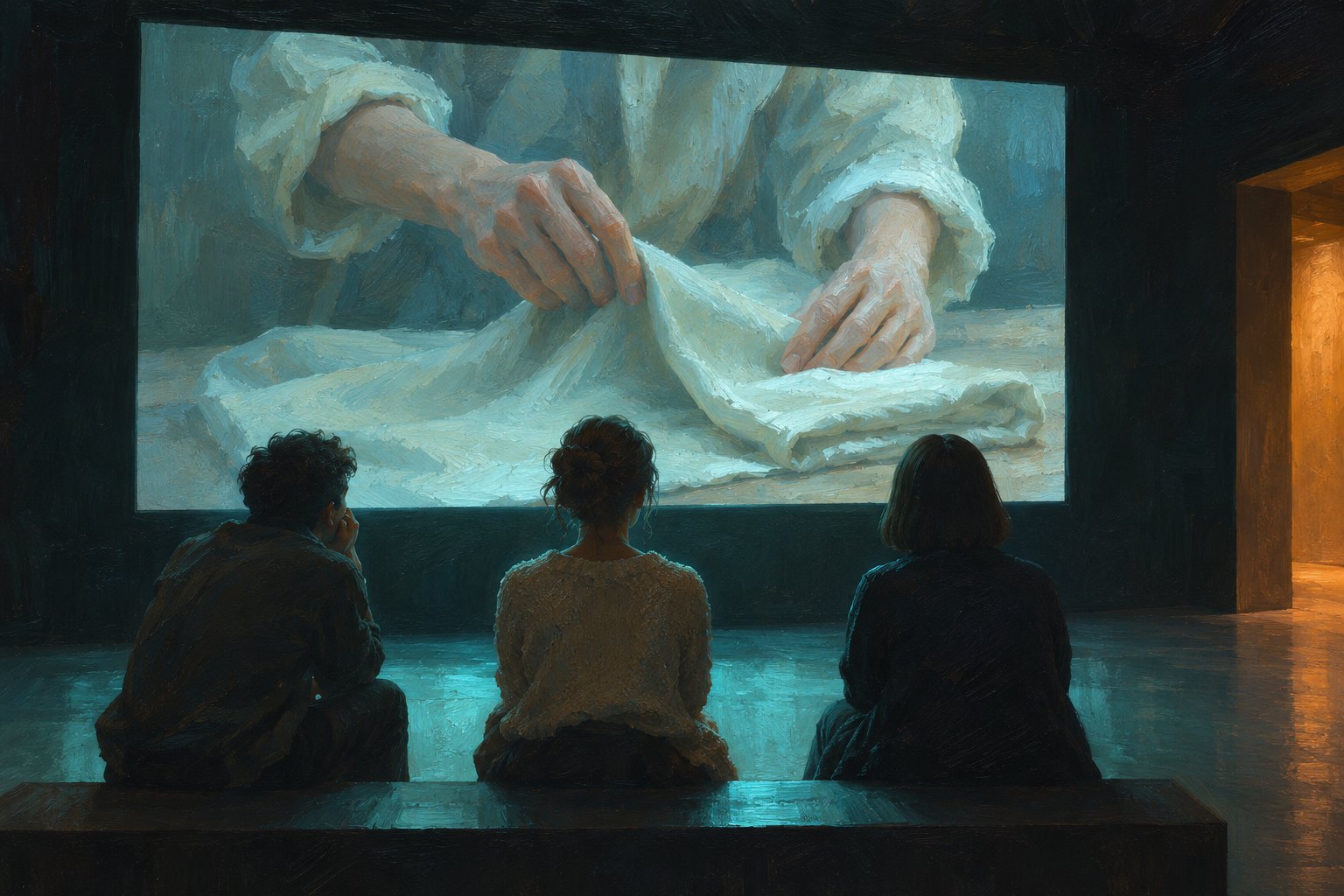
Entering a projection halfway through also changes the encounter. A viewer may see a consequence before its cause, or mistake a recurring action for a conclusion. Sometimes that uncertainty belongs to the work’s design. Sometimes it simply results from arriving late.
This is where presentation becomes part of the criticism. Clearly displayed running times, understandable information about loops or scheduled starts, and somewhere comfortable to sit would help audiences give moving images sustained attention. These are criteria for evaluating the future visitor experience, not claims about facilities already provided.
Sound and scale can change the story
Showing film well involves more than supplying a large screen. Sound carries narrative information: an off-screen movement, a breath before an answer, or a voice that contradicts the apparent calm of an image. If neighboring installations overwhelm those details, the audience receives a different experience.
Scale matters too. A face projected across a wall can feel physically imposing. The same face on a small monitor can invite a closer, more private encounter. Neither presentation is inherently better. The question is whether the chosen format supports the work’s intentions and gives viewers a fair opportunity to engage.
For the new Miami space, these considerations offer concrete measures of success. Can visitors hear what they need to hear? Can they approach or step back without disrupting others? Are captions and other access provisions integrated thoughtfully? An ambitious mission becomes convincing through such ordinary decisions.
The broader issue connects with our discussion of how a new movie theater can broaden viewing choices: cultural variety becomes meaningful when audiences have workable ways to encounter it.
People on screen deserve more than instant interpretation
Bringing photography and moving images together also creates an opportunity to examine how readily viewers assign stories to strangers. A lowered gaze can look like sorrow. Silence can seem evasive. An isolated gesture can appear revealing. Yet these interpretations may exceed what the image actually establishes.
With fictional characters, a responsible reading checks an expression against dialogue, action, and the rest of the film. With documentary subjects, the need for care extends to the relationship between the person and the representation. A compelling image does not give us complete access to someone’s inner life.
A worthwhile exhibition could make that uncertainty productive. Pairings might encourage viewers to reconsider an initial impression rather than reward the fastest emotional conclusion. Context should help explain what we are seeing while leaving room for disagreement grounded in the work.
That is also central to our analysis of trust and participant agency in documentary storytelling. The person on screen should remain more complex than the argument an audience wants to make about them.
What would make the space worth returning to?
The strongest reason to watch this Miami initiative is the possibility of purposeful relationships among works. Sharing a medium or a subject is a beginning. A persuasive exhibition should let visitors discover why the works belong together through the experience of looking.
A useful approach for viewers would be to follow three questions:
- What does the frame reveal or exclude? Look at distance, edges, and the relationship between people and their surroundings.
- What changes over time? Stay long enough to distinguish a developing action from a repeated image.
- What supports my interpretation? Separate visible or audible evidence from the emotions and assumptions you bring to it.
My hope for the new space is that it makes this kind of attention inviting. The deeper promise of bringing photography, film, and video together is an expanded understanding of perspective. Every image offers a position from which to look; every viewer must decide how much that position allows them to know. A program that makes those decisions perceptible would give Miami movie lovers something valuable to carry into their next screening.
Original content by this site's editorial team. Published: November 6, 2026 at 12:31:43 PST (Los Angeles time)