A customer attacked an employee inside a Los Angeles movie theater, according to ABC7 Los Angeles, which reports that video shows the incident. The central concern is straightforward: someone working in a place built for entertainment became the subject of reported violence.
That account warrants attention without embellishment. It also belongs in a conversation about moviegoing. The theatrical experience depends on people who check tickets, serve refreshments, clean auditoriums, and handle complaints. Their working conditions deserve a place alongside discussions of projection quality, ticket prices, and audience etiquette.
This is commentary on a reported real-world incident. The observations below distinguish the limited established account from broader editorial judgments about cinema culture and employee support.
What the report establishes—and what remains unclear
The ABC7 account identifies a movie theater in Los Angeles as the setting, an employee as the person attacked, and a customer as the person carrying out the attack. It also identifies video as evidence of the incident.
Those details do not, by themselves, establish the theater’s identity, what preceded the attack, the employee’s condition, or whether anyone was arrested or charged. Those matters are not established here. Neither a motive nor an explanation for the confrontation should be inferred from the headline.
The distinction matters because readers often encounter a violent incident through a brief description, then fill in the missing sequence. A dispute over tickets, a refusal of service, or an argument about theater rules might sound plausible. None should become part of this account without reporting that supports it.
Missing context is a reason to remain precise. It is not a reason to treat violence against a worker as an ordinary customer-service disagreement.
The employee deserves attention beyond the moment on video
Footage can make an incident visible while leaving the person at its center largely unknown. Viewers may remember a physical confrontation yet learn little about what the employee needs afterward. Repeated circulation can intensify that imbalance: the event becomes more familiar while the worker remains reduced to a few seconds.
We should resist that reduction. An employee’s immediate response does not give an audience reliable access to their thoughts, training, or available choices. It would be unfair to assign them a heroic role, criticize their reaction, or invent an emotional history from an incomplete account.
From an editorial standpoint, the more useful follow-up concerns support. What assistance was available? Was the worker able to step away from the public-facing role? What response followed from management? These are questions worth pursuing, not claims that the theater failed to act.
A person should not have to deliver a dramatic on-camera response for their safety to matter. The importance of this incident rests on the reported attack itself, regardless of whether footage produces a compelling narrative.
Video can document an act without explaining the whole event
The phrase “video shows” carries weight because it points toward something observable. Still, a recording has boundaries. Its starting point, duration, angle, and sound determine which parts of an encounter can be assessed. Without examining those features, a commentator should not claim that a clip supplies a complete timeline.
A careful viewer separates three questions: What is visible? What has reporting independently established? What am I assuming? Keeping those categories distinct makes it harder for speculation to acquire the appearance of evidence.
Our discussion of how documentary access shapes a person’s story explores a related issue: being able to watch someone does not mean having unrestricted knowledge of their circumstances. News footage and documentary filmmaking serve different purposes, but both require attention to what the frame includes and leaves out.
That discipline should also guide sharing. A caption that adds an unverified motive can mislead even when the underlying recording is authentic. Public attention is most useful when it preserves the distinction between evidence and interpretation.
Worker support belongs in the moviegoing conversation
Film culture often describes a theater through the audience’s senses: the size of the screen, the force of the sound, the atmosphere before the lights go down. From an employee’s position, the same building is also a workplace, with responsibilities that continue before and after each screening.
My view is that a good theatrical experience must account for both perspectives. Friendly service cannot reasonably mean requiring a worker to absorb intimidation. An employee who handles a complaint should have a clear route to assistance and a way to disengage when an interaction becomes threatening.
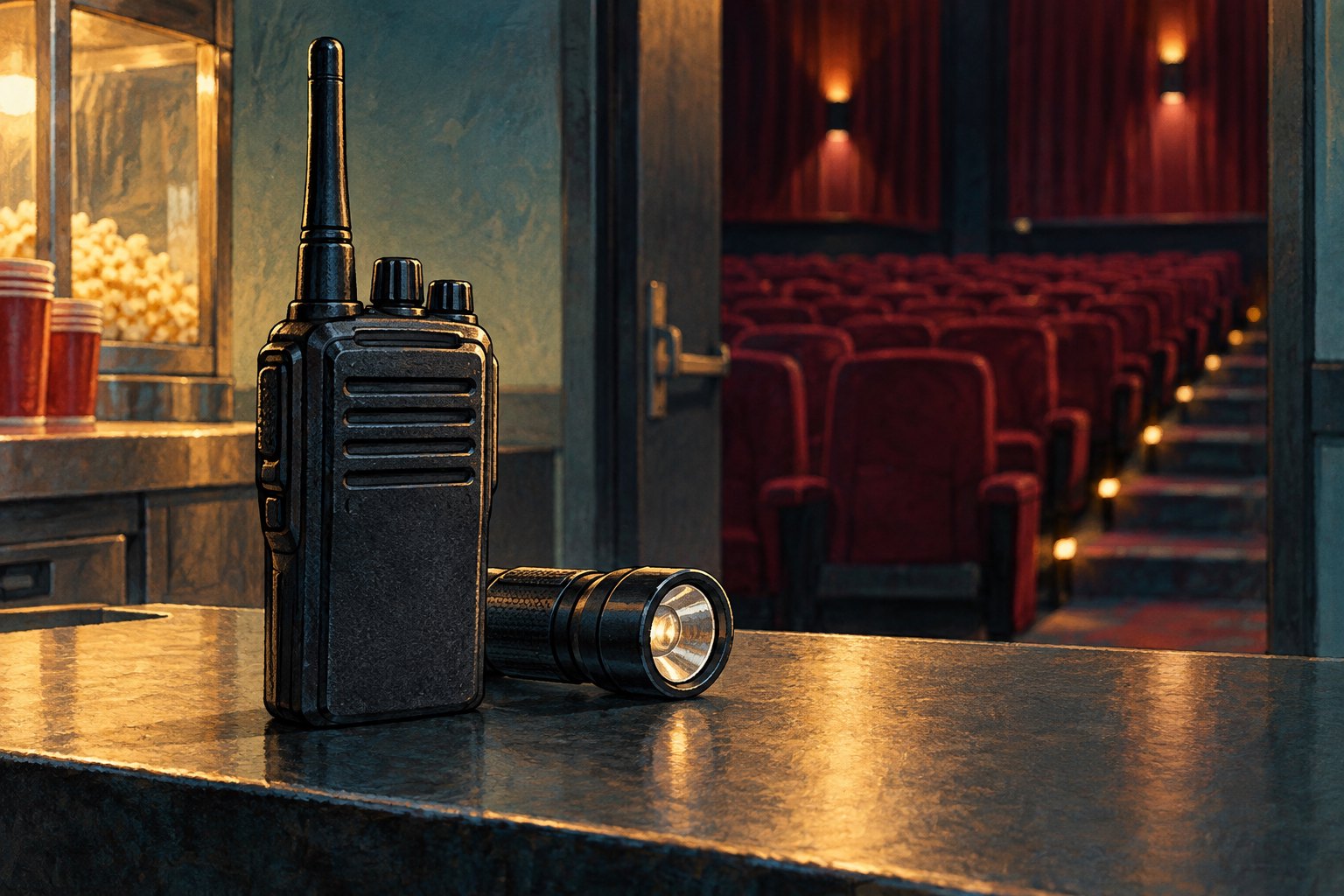
For theater operators, useful questions concern practical arrangements: who responds when help is requested, whether staff know whom to contact, and how an affected employee is supported afterward. Equipment alone cannot answer those questions. A radio has value only within a workable process involving people who can respond.
These are general priorities, not findings about the Los Angeles venue. The limited account does not establish its staffing, procedures, or management response. A fair assessment would require that information before reaching conclusions about institutional responsibility.
What audiences can contribute
Customers have a role in making shared entertainment spaces workable. A disappointing purchase, a seating problem, or disagreement with a policy can justify requesting an explanation or speaking with a manager. None makes the employee handling the interaction an acceptable target for aggression.
After a reported attack, audiences can also exercise restraint online. Avoiding speculative identification, unsupported accusations, and mocking commentary helps keep attention on the incident rather than creating additional targets. The desire for a satisfying explanation should not outrun the available facts.
One reported event also cannot establish that violence is increasing across theaters or that Los Angeles moviegoing is broadly unsafe. Such conclusions require evidence beyond an individual account. Taking this attack seriously does not require turning it into an unsupported claim about an entire city or industry.
A cinema’s values extend beyond the screen
In film criticism, choices and consequences help reveal meaning, as our guide to understanding theme through a character’s hardest choice explains. A real employee, however, should not be treated as a character whose suffering exists to deliver a lesson. Responsibility for a thoughtful response belongs to the people discussing the event and the institutions positioned to act.
The deeper issue is what we include when we say we care about theaters. Preserving cinema involves more than keeping screens illuminated and seats occupied. It also involves recognizing the people whose labor makes a public screening possible.
The reported Los Angeles attack deserves accurate follow-up and concern for the employee. A meaningful response would keep that person’s welfare in view after the video stops attracting attention. Respect for cinema should extend to the people working on the other side of the counter.
Original content by this site's editorial team. Published: October 22, 2026 at 00:01:42 PDT (Los Angeles time)