Lionsgate’s animated John Wick film with Keanu Reeves is officially moving forward, according to Deadline. That gives fans a concrete development to discuss, but an announcement cannot establish how the finished movie looks, moves, or handles its central character. The most interesting question now is what animation can reveal about a world where a polite conversation can leave John with fewer options than a room full of armed opponents.
John Wick: Chapter 2 offers a particularly useful blueprint. Its sharpest idea is that overwhelming physical ability does not guarantee freedom. John can survive extraordinary violence while remaining powerless before an obligation someone else controls. An animated film could make that contradiction visually spectacular—and dramatically uncomfortable.
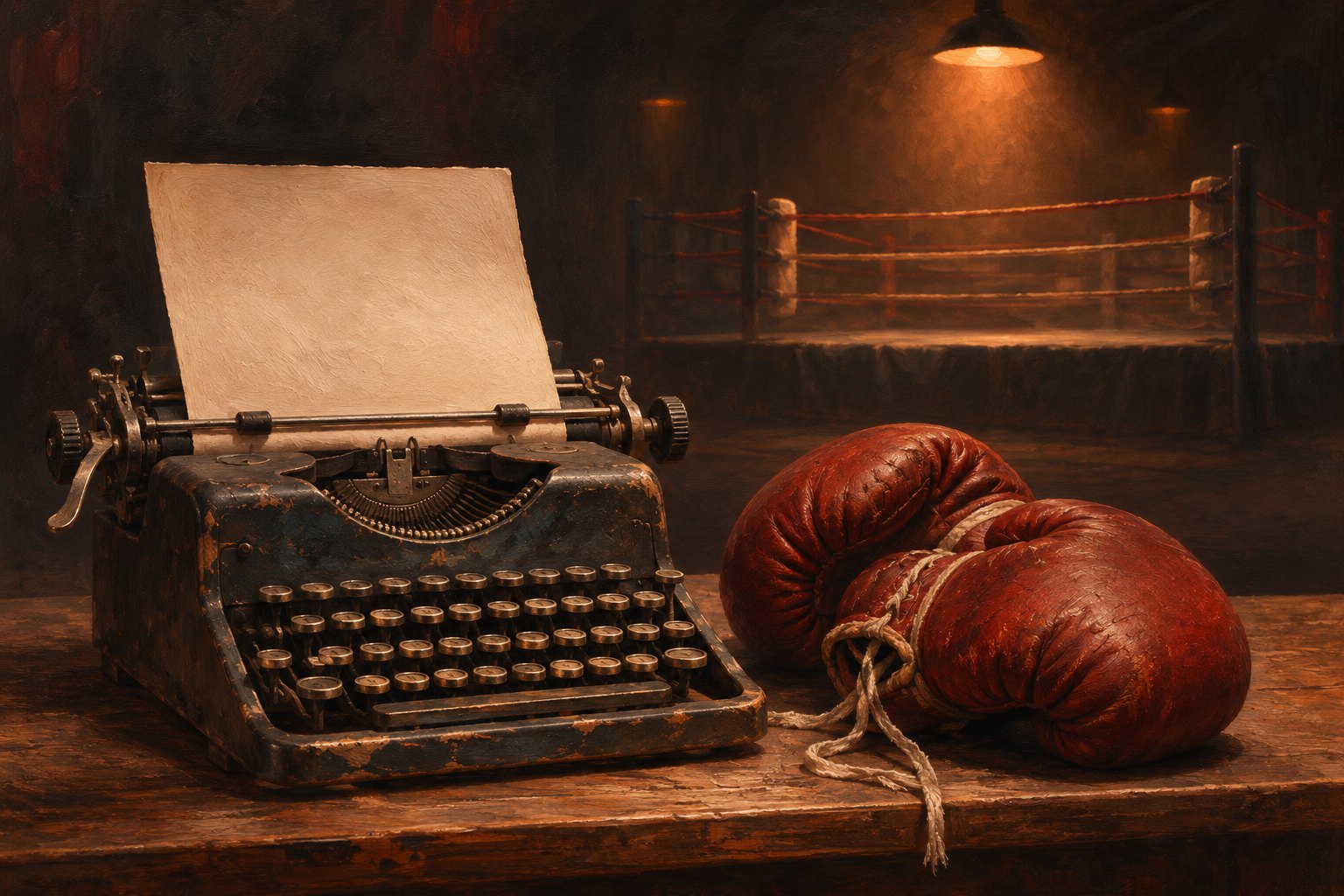
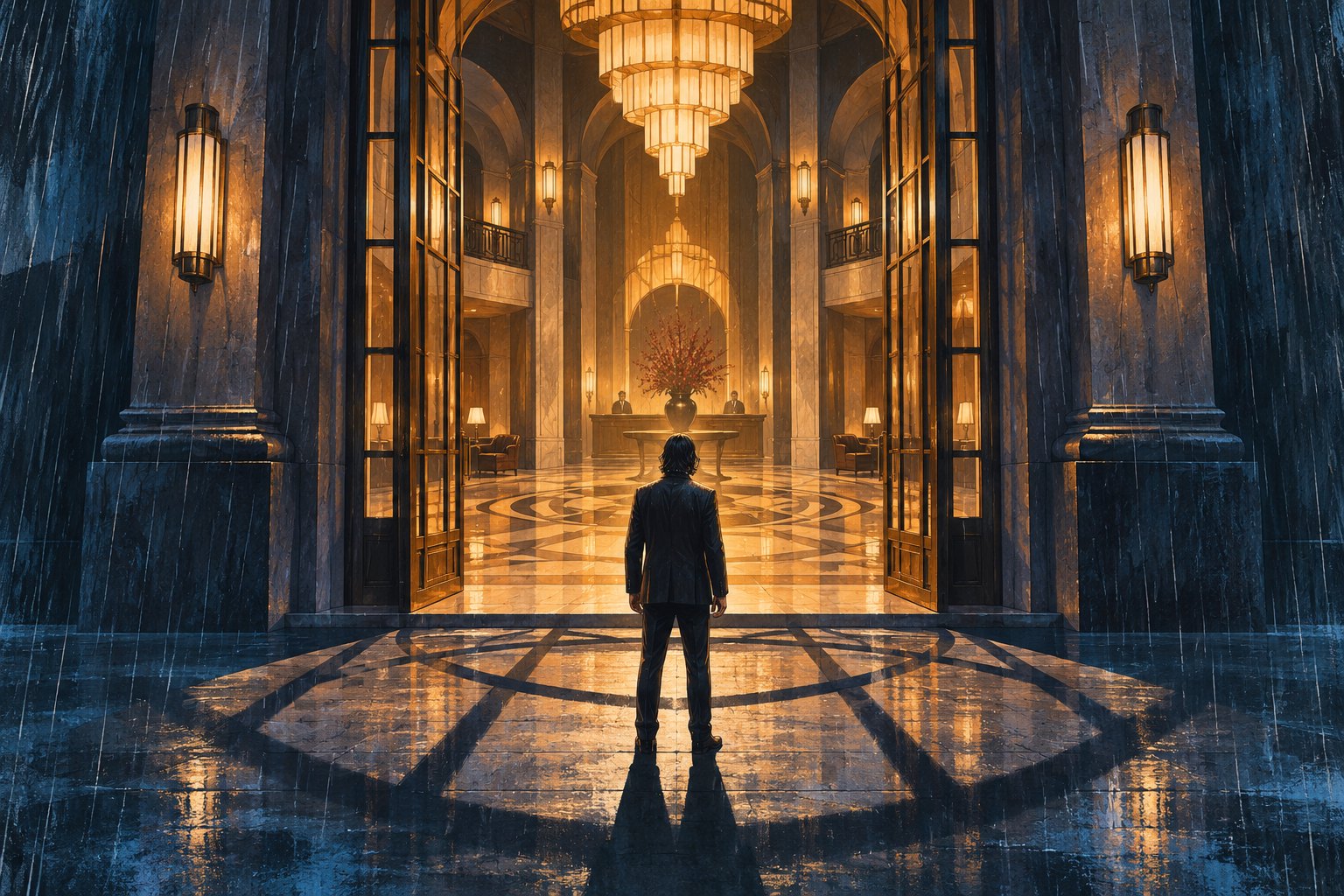
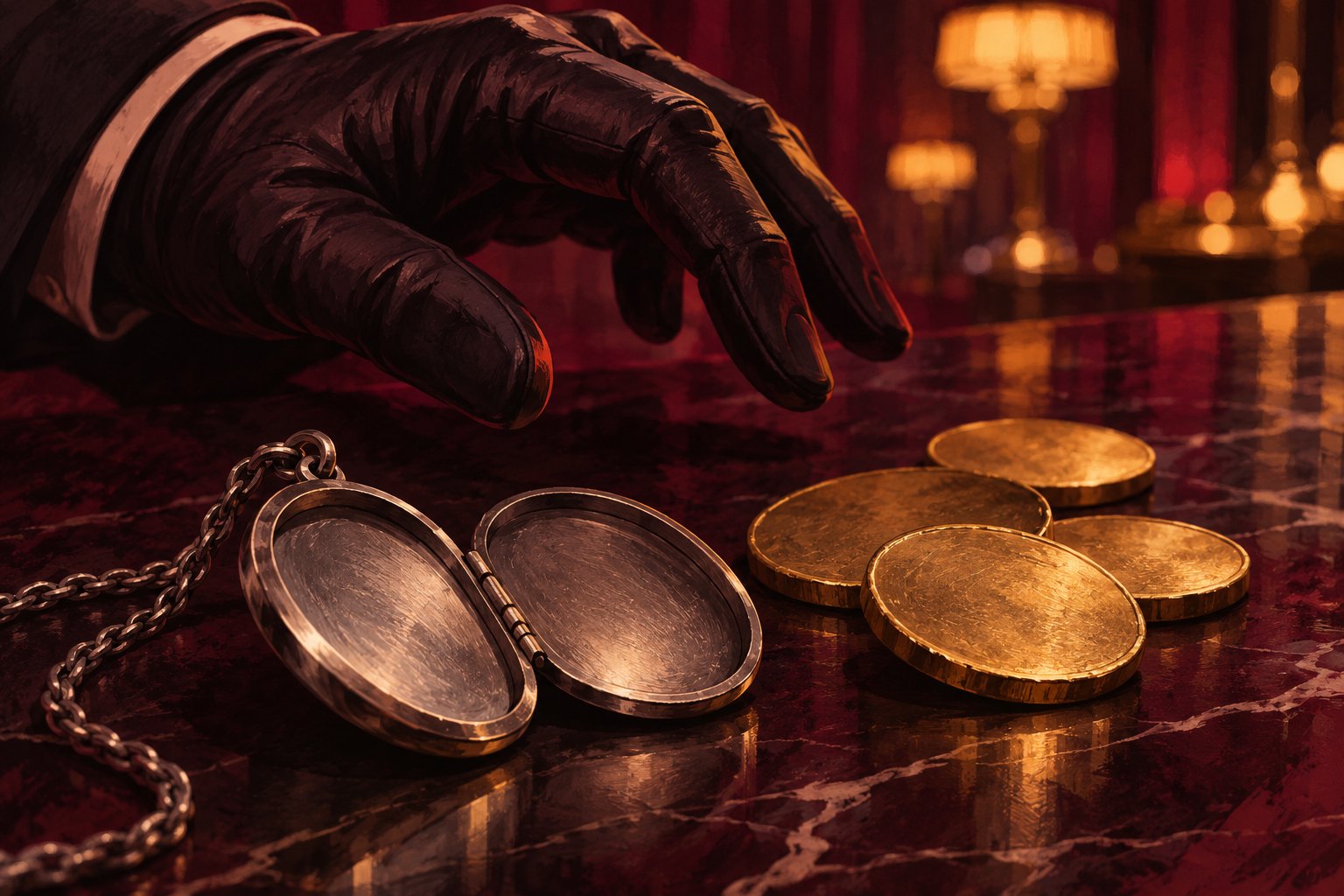
Major spoilers for John Wick: Chapter 2 follow. This is a retrospective review and an argument about creative possibilities, not a review of the forthcoming animated film. The accompanying illustrations are interpretive artwork, not production images.
The marker makes John’s strength irrelevant
In Chapter 2, Santino D’Antonio invokes a marker binding John to a blood oath. John refuses, and Santino destroys his house. Winston subsequently explains that the obligation remains enforceable. Before the next assignment even begins, John has discovered the limit of his retirement: another man still possesses the authority to end it.
“I have no choice?” John asks. The line matters because it strips away the character’s intimidating reputation. Here is someone accustomed to assessing exits, distances, and threats, confronting a problem that tactical intelligence cannot solve. He understands how to win a fight. He cannot negotiate with a system that treats his consent as something already spent.
Reeves’ restraint gives this exchange its weight. John does not need an elaborate speech about entrapment. The small question exposes the distance between how others describe him and what he can actually decide. My reading is that this is where the sequel becomes more than an expansion of the first movie’s combat: it turns exceptional competence into a form of captivity.
Our earlier examination of the man behind John Wick’s legend considered the personal stakes of his return. Chapter 2 adds a different pressure. Even a man who knows what he wants may lack the recognized right to pursue it.
Santino understands power better than he understands John
Santino orders John to kill his sister, Gianna, so he can take her place at the High Table. Afterward, he turns against the assassin he compelled to act. The betrayal exposes an ugly asymmetry: John’s obligation is binding, while Santino treats his own responsibility as something he can manipulate.
From Santino’s perspective, this arrangement makes practical sense. Why confront a dangerous person directly when established customs can put that person to work? His power depends on making domination look like a legitimate transaction. The marker gives his demand the appearance of order.
That makes him an effective antagonist. He does not merely underestimate how many opponents John can defeat. He mistakes a person for a resource whose behavior will remain predictable under sufficient pressure. He understands the protection offered by institutions but fails to respect the anger those institutions help him create.
The result is a productive tension for viewers. We want John to escape coercion, yet the task he performs inflicts irreversible harm on someone else. His lack of freedom does not make the consequences disappear. The film becomes more interesting when we hold both truths together instead of allowing the protagonist’s suffering to settle every moral question.
Winston’s civility is both shelter and enforcement
Winston states that “every marker must be honored.” His explanation is calm, which makes it more chilling. He does not need to sound personally cruel for the requirement to be cruel in its effects. Friendship gives John access to an explanation; it does not give him an exemption.
That distinction makes Winston essential to the film’s atmosphere. He gives the underworld manners, continuity, and apparent legitimacy. Through him, an audience can understand why its participants value rules: predictable boundaries make an otherwise murderous environment navigable.
“Without them, we’d live with the animals,” he says. It is a memorable defense of civilization from someone administering a society organized around killing. The contradiction is not simply a joke about elegant criminals. It invites us to ask what these rules actually protect. They regulate violence without necessarily preventing exploitation.
I find Winston most compelling when his affection and authority cannot be neatly separated. His concern feels meaningful precisely because it operates within limits. He can soften an encounter while still helping preserve the structure that makes John vulnerable. Courtesy becomes emotionally ambiguous: reassurance and control can sound remarkably alike.
The ending turns sanctuary into a trap
Santino eventually shelters at the Continental. John kills him there despite the hotel’s prohibition. Winston then declares John excommunicado, granting him an hour before the exclusion takes effect.
The ending works because the hotel’s protection has become intolerable to John. A boundary that can shelter him can also shelter his tormentor. The rule remains consistent while its emotional meaning changes completely.
John’s decision is therefore both satisfying and disastrous. He finally acts outside the terms imposed on him, but the act costs him access to the infrastructure that makes survival possible. The film refuses an easy equation between defiance and liberation. Saying no can be necessary without making what follows safe.
This is also why the sequel’s elaborate world matters most when it changes a decision. A hotel, a ritual, or a token earns its place through consequences. Without that connection, mythology risks becoming a collection of attractive objects.
What animation could make visible
The animated film has an opportunity to express these power relationships through composition. A commanding figure can become small beneath an immense ceiling. Repeated doorways can suggest access while leaving a character enclosed. A brief pause over an object can communicate more dread than another exchange of threats.
Those are creative possibilities, not descriptions of the announced movie. Their value lies in making the audience feel a restriction before someone explains it. Animation can shape architecture, timing, and movement around a character’s perception without losing the clarity that an action scene needs.
The important test would still be cause and effect. Can we understand what John wants, what prevents him from getting it, and how each choice changes his position? Stylization becomes dramatically useful when it sharpens those relationships. Endless visual invention alone cannot supply them.
A related question runs through our discussion of the human stakes behind continuing a major film franchise: spectacle gains meaning from the lives and choices it puts under pressure.
The deeper story is who gets to say no
My strongest takeaway from Chapter 2 is that its underworld confuses enforceable obligations with moral authority. Santino can make a valid claim within that system while using it for a reprehensible purpose. Winston can defend stability while maintaining an arrangement that denies John meaningful autonomy.
That gives the animated John Wick film a richer challenge than inventing an unprecedented feat of violence. It can explore the gap between being feared and being free. The franchise is at its most compelling when John’s remarkable abilities bring that gap into focus: everyone recognizes what he can do, while very few people accept his right to stop.
Original content by this site's editorial team. Published: November 5, 2026 at 19:37:04 PST (Los Angeles time)