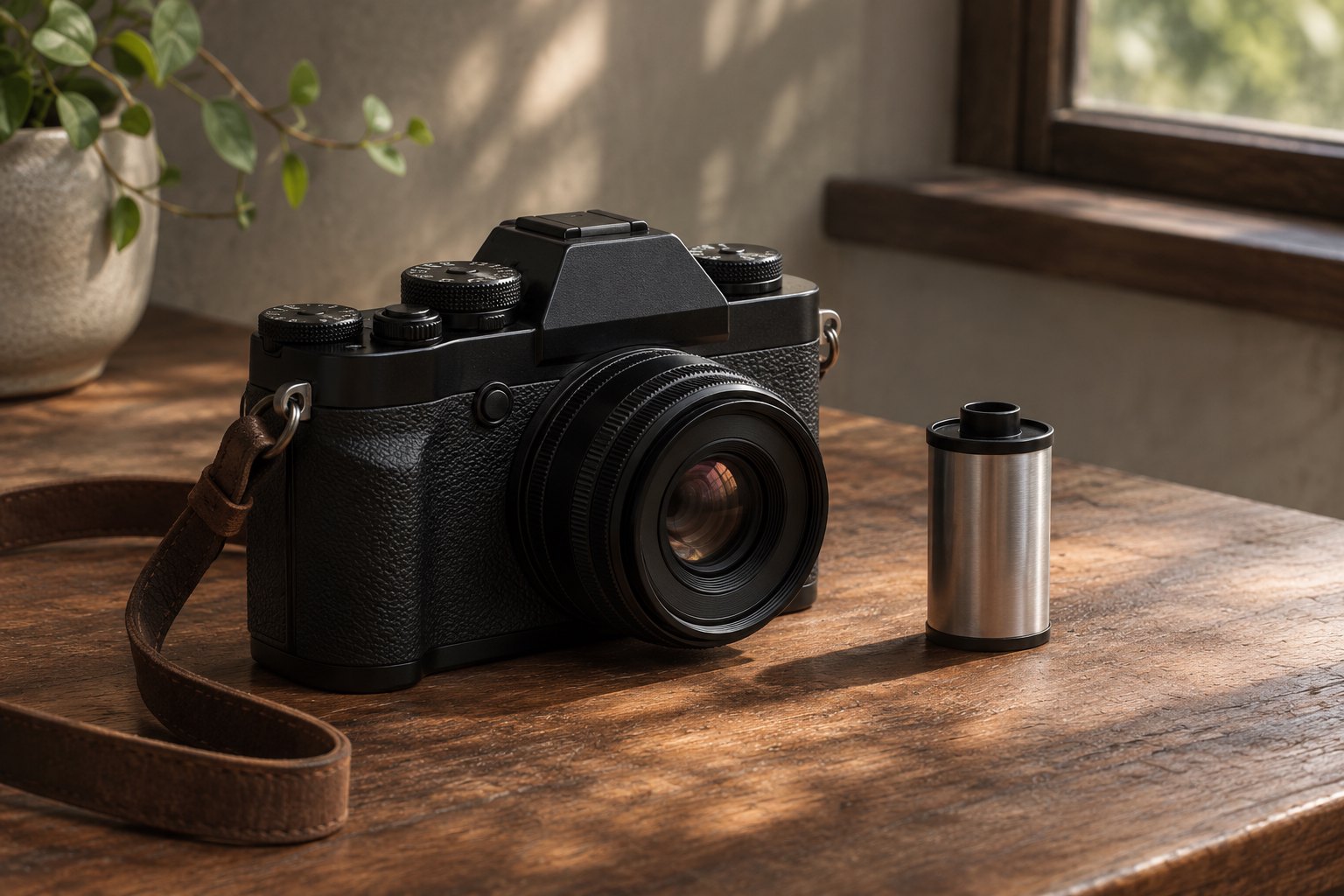
Limiting a Nikon Zf to 24 exposures means treating a photography session as a finite set of decisions: make each picture count, let mistakes consume their share, and stop when the allowance runs out. The attraction is straightforward. A boundary can make the moment before pressing the shutter feel consequential again.
The premise of Fstoppers’ “Limiting a Nikon Zf to a 24-Exposure Film Roll” also invites a useful conversation about cinema. Although this is a photography exercise rather than a movie, it raises a question central to visual storytelling: what makes an image necessary? My view is that the limit becomes worthwhile when it sharpens that question, rather than simply making the photographer reluctant to shoot.
What the 24-exposure limit actually changes
For a practical version of this challenge, treat 24 as a self-imposed capture budget. It is a rule for the photographer, not a claim about a dedicated camera feature. Each exposure spends one opportunity, whether the result is excellent, repetitive, mistimed, or unusable.
That distinction matters. Taking hundreds of pictures and selecting 24 afterward is an editing exercise. Stopping after 24 asks you to edit your intentions before you know the results. You have to judge whether a changing expression, a different distance, or an unexpected arrangement deserves another frame.
The restriction borrows the idea of a finite roll without reproducing the entire experience of photographic film. It does not, by itself, create a particular texture, color response, or emotional atmosphere. Its most interesting effect is behavioral: it gives hesitation and commitment something tangible to negotiate.
A frame needs a reason beyond looking cinematic
For movie lovers, the temptation is to approach this challenge as a hunt for cinematic-looking photographs. Find dramatic light, isolate a face, add some empty space, and hope the picture suggests a larger story. Those choices can be effective, but atmosphere alone does not establish dramatic purpose.
Consider a hypothetical photograph of someone waiting in a cafe. A wide composition might emphasize the empty room around them. A closer view might direct attention toward their expression. A detail of their hands could suggest tension, although the viewer would still need context to understand it. These are alternative storytelling decisions, not successive upgrades in image quality.
With only 24 exposures, the productive question becomes specific: what will another picture help the viewer notice? If the answer is merely that the lighting looks attractive, you may already have what you need. If a gesture changes the apparent relationship between two people, another exposure may earn its place.
This is also a useful habit for film analysis. Instead of praising a shot only because it is beautiful, ask what its framing lets us understand about a character. Our discussion of Spielberg’s emotional storytelling and the endurance of movies approaches that broader connection between images and feeling.
How to try the challenge without turning it into a ritual
The following rules are a suggested exercise, not an account of how the published Nikon Zf challenge was conducted. Keep them simple enough that your attention stays on the scene.
- Define one session. Choose a walk, a location, or a short period of time. Give the exercise a clear endpoint.
- Count every exposure. Test pictures and accidental releases use the allowance. Deleting a photograph does not restore a frame.
- Make individual captures. Avoid letting a burst spend several opportunities before you have made another conscious decision.
- Choose your review rule beforehand. You might postpone playback until the end, or allow checks for focus and exposure. Either approach is defensible; be consistent.
- Stop at 24. If something remarkable happens afterward, notice the frustration. That reaction is part of what the restriction reveals.
Keep technical complexity manageable. The point is to examine your decisions, so there is little benefit in adding unfamiliar settings merely to make the experience harder. Likewise, do not impose the exercise on an assignment where someone needs dependable coverage. Use it where missed photographs are an acceptable cost of learning.
Build relationships between pictures
A single successful photograph can satisfy the challenge, but a sequence offers a richer test. Try photographing one place through changes in distance and attention. Establish its surroundings, observe an interaction, and look for a detail that alters your understanding of the wider scene.
Do not assign every exposure a rigid function. A predetermined list can make you collect illustrations of an idea you already have, overlooking what is actually happening. Leave room for surprise, including pictures whose purpose becomes clear only when you review them beside others.
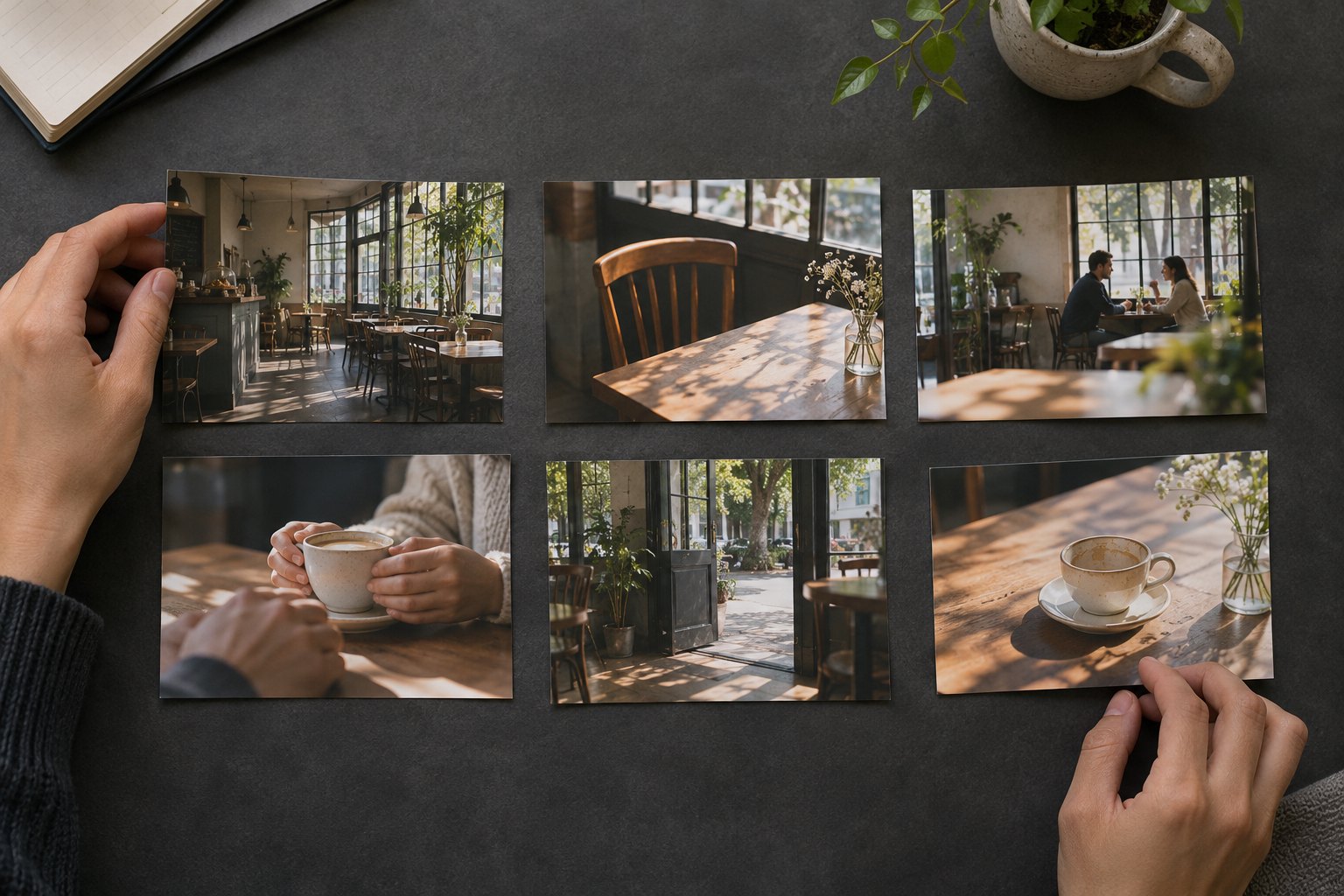
Afterward, arrange a small selection in different orders. An empty chair before a portrait may suggest anticipation; the same chair after it may suggest departure. Those meanings are interpretations created by the relationship between images. They are not evidence of what the photographed person actually experienced.
That distinction is essential when borrowing lessons from cinema. A fictional sequence can establish motives through performance, dialogue, and surrounding scenes. A still photograph often leaves those motives unknown. Strong visual storytelling requires awareness of both what an image communicates and what we are projecting onto it.
Where the filmmaking comparison reaches its limit
Twenty-four still photographs are not a substitute for a moving-image scene. Duration, movement, sound, and performance introduce decisions this exercise cannot reproduce. Nor does a small shooting allowance prove that minimal coverage is always the best way to make a film.
A second take may discover something the first never offered. Additional coverage can give an editor a necessary transition or preserve a revealing reaction. The lesson to carry into filmmaking is to understand why another shot is needed, rather than treating additional shooting as a failure of discipline.
That awareness belongs alongside the practical collaboration discussed in our article about students learning through a feature-film production. An individual constraint can train attention; a production also has to serve the people, performances, and continuity that make the scene work.
Judge the decisions, not just the keepers
When reviewing the 24 exposures, resist reducing the session to a success percentage. One ambitious failure may teach you more than several competent repetitions. Ask where you waited productively, where you hesitated too long, and where a second image added information rather than reassurance.
Look especially at the pictures you almost did not take. Did the budget help you recognize something worth committing to, or did it encourage safe compositions? Scarcity can sharpen attention, but it can also make experimentation feel wasteful. A useful exercise should expose that tension.
The deeper appeal of limiting a Nikon Zf to 24 exposures is the opportunity to examine what you consider worth keeping. The final frame makes that judgment unusually visible. You cannot preserve every possibility, so you must choose one. The strongest outcome is not necessarily a roll of flawless photographs. It is a clearer understanding of why you raised the camera at all.
Original content by this site's editorial team. Published: November 13, 2026 at 11:27:28 PST (Los Angeles time)