Laika’s first PG-13 film, a Brad Bird neo-noir and an animated Alzheimer’s memoir offer three distinct reasons to reconsider what audiences expect from animation. As grouped in Variety’s coverage, they bring age classification, genre and personal testimony into the same conversation. Their most interesting connection is the possibility of stories that ask viewers to live with fear, uncertainty and emotional contradictions.
Calling that an animation revolution is tempting. My view is that the more useful question concerns the characters: does the filmmaking give their experiences a shape that another approach might struggle to express? A darker image can attract attention. A carefully developed perspective can change how we understand someone.
This is spoiler-free film commentary on the projects’ reported directions, rather than a screening review of the completed films. It does not assess unverified scenes, endings or dialogue.
Laika’s PG-13 milestone changes expectations, not the definition of quality
The first PG-13 designation in Laika’s feature output is an immediately understandable milestone. It challenges the reflex that treats an animated production as an automatic family selection. For viewers deciding what to watch, that distinction has practical value: the medium alone tells you little about the experience a film offers.
However, an age classification cannot establish emotional sophistication. Greater intensity may serve a character’s story, or it may simply make the surface more intimidating. The critical question is what happens between the frightening moments. Does a character remember being hurt? Does fear alter a relationship? Does the next decision carry the weight of the previous one?
Those questions matter because spectacle can make danger feel strangely disposable. A beautifully constructed threat may be exciting for a moment, then disappear from the story’s emotional accounting. A more persuasive film lets consequences persist. Courage becomes interesting when someone has a specific reason to hesitate.
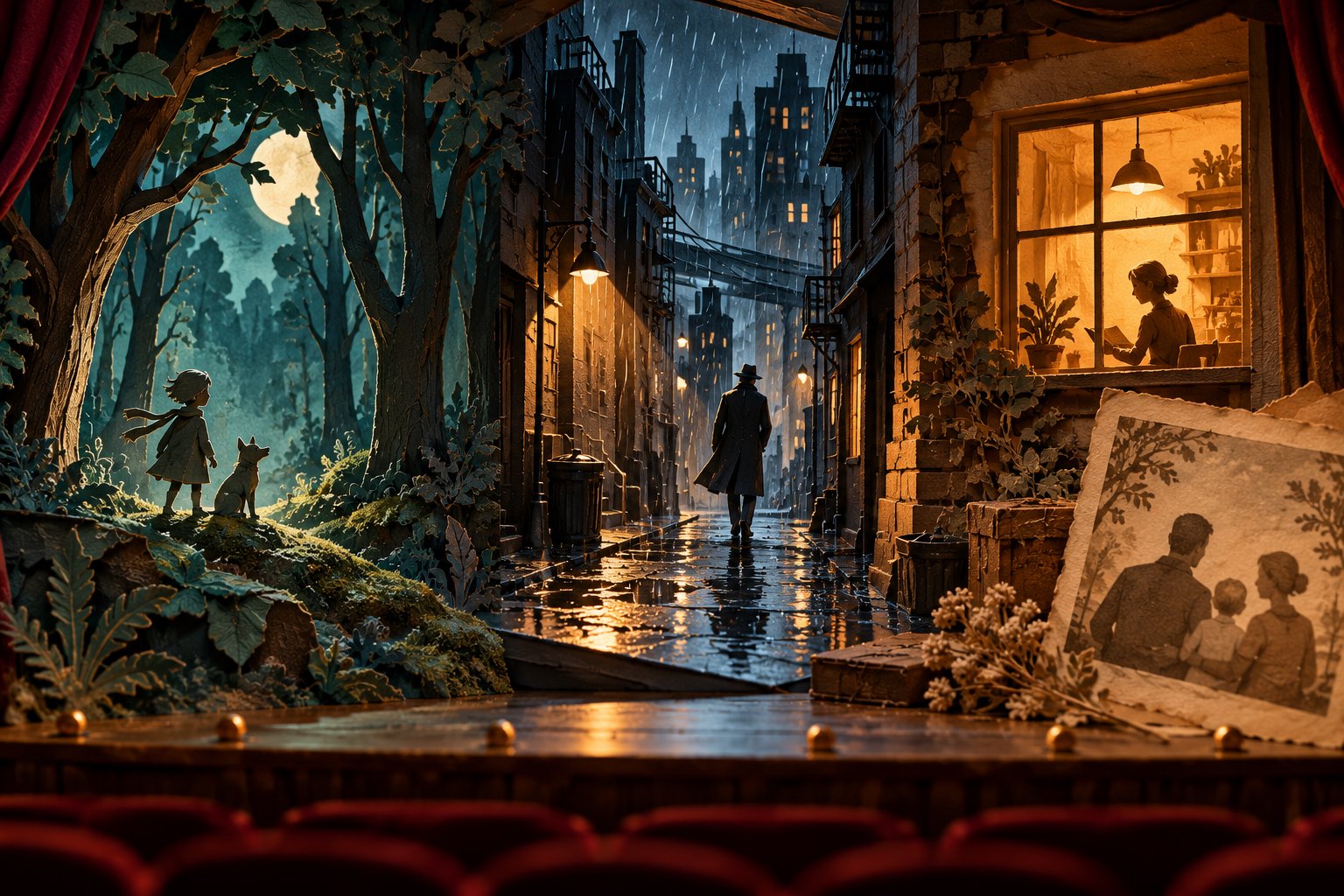
Our earlier exploration of Wildwood’s use of Portland as a doorway into fantasy considers the relationship between familiar surroundings and extraordinary danger. The broader issue here is how that relationship shapes audience identification. A strange world becomes emotionally legible when we understand what entering it costs a character.
For me, that is a better measure of maturity than the severity of an individual image. A film earns its darkness when the darkness reveals something about responsibility, attachment or choice.
Brad Bird’s neo-noir raises a question about trust
The neo-noir description attached to Brad Bird’s project points toward a different set of possibilities. As a critical framework, noir invites attention to compromised knowledge: what a person believes, what they overlook and what they would prefer never to discover. Those possibilities are more revealing than a checklist of shadows, rain and ominous architecture.
Animation gives a filmmaker precise control over how a world directs our attention. A color contrast can make someone appear trustworthy. An exaggerated silhouette can encourage suspicion. Repeated visual patterns can establish a sense of order that a later composition unsettles. These are expressive tools, though their presence alone would not guarantee a compelling mystery.
The character test is whether uncertainty becomes personal. A protagonist who lacks information faces a puzzle. A protagonist whose self-image depends on believing the wrong thing faces a more difficult problem. Discovery may require embarrassment, sacrifice or the abandonment of an identity that once felt secure.
That distinction provides a useful way to approach Bird’s reported genre direction without assigning it an invented plot. Watch for the relationship between seeing and understanding. Does visual ingenuity help us inhabit a limited perspective? Does new information change the meaning of an earlier choice? Or does the design remain more expressive than the people moving through it?
My preference is for genre filmmaking in which revelations have an emotional afterlife. Solving a mystery can deliver satisfaction; recognizing why someone resisted the solution can deliver insight.
An Alzheimer’s memoir asks who gets to remain a person
An animated Alzheimer’s memoir brings a different kind of vulnerability into the conversation. Its subject raises questions about memory, family and the limits of understanding another person’s experience. Animation can give those questions visual form without requiring every image to function as a literal record of an event.
That freedom also demands care. An image of fragmentation may communicate disorientation, but it can become reductive if the person experiencing it exists only as a symbol of loss. Characterization needs room for preferences, humor, irritation and relationships that cannot be summarized by a diagnosis.
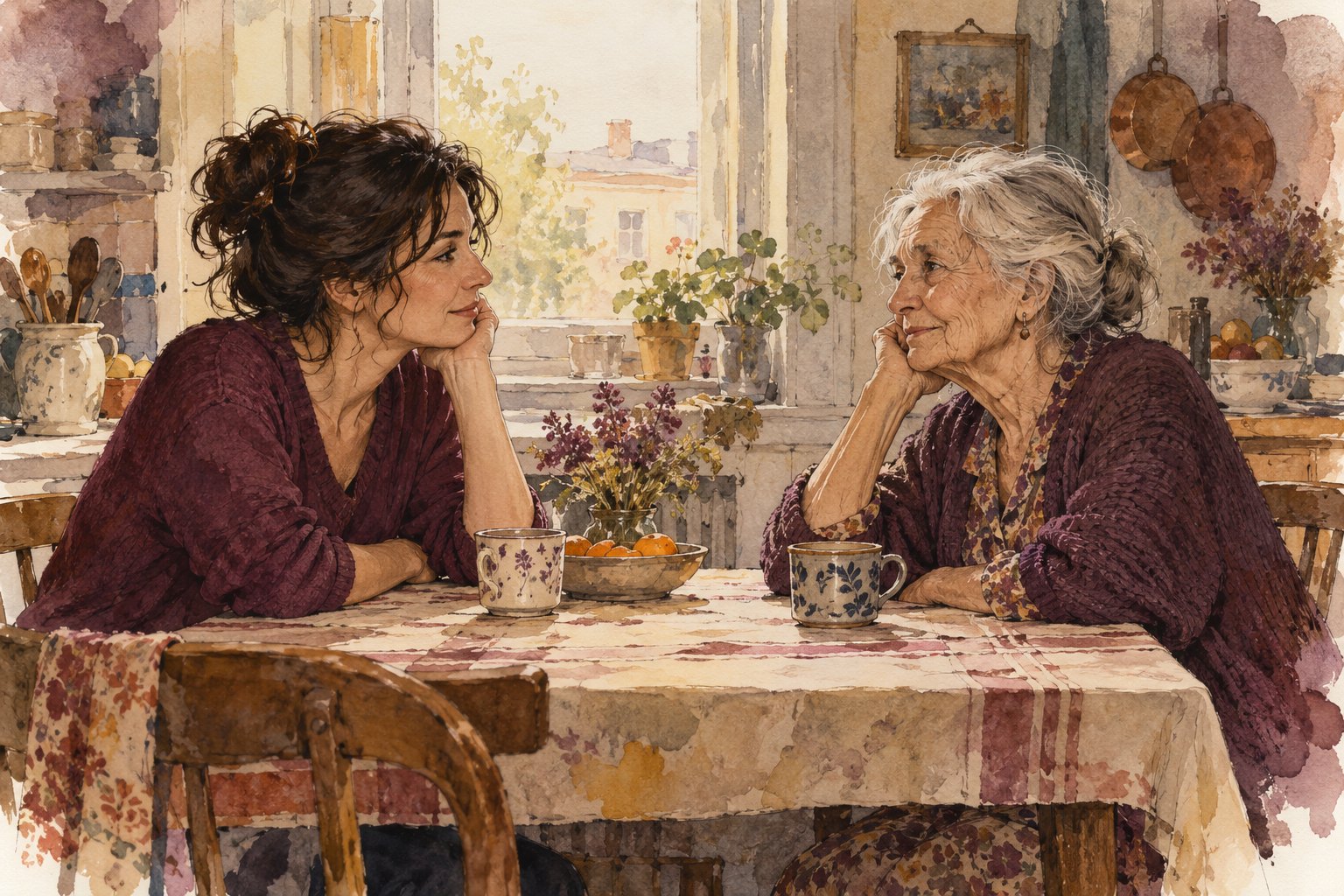
Perspective is especially consequential in memoir. Remembering someone involves selection: one exchange stays vivid while another becomes difficult to reconstruct. A film can acknowledge that unevenness through its form. But an expressive image should not imply that one relative’s interpretation gives complete access to another person’s inner life.
Caregiving also offers dramatic tensions that deserve more than an inspirational resolution. Love can coexist with impatience. A familiar routine can provide comfort while becoming exhausting. Those are possibilities for characterization, not claims about particular scenes in this memoir. Their value lies in allowing people to remain complicated.
Our discussion of Tangles and animation’s approach to Alzheimer’s examines the expressive promise of this subject. Placed beside fantasy and neo-noir, the memoir also helps clarify the breadth of adult storytelling: an intimate exchange may demand as much emotional attention as an elaborate confrontation.
Three useful tests for animation’s adult ambitions
These projects should not have to meet an identical standard of tone. Fantasy, neo-noir and memoir make different promises. Still, three questions can help viewers distinguish meaningful ambition from an impressive presentation:
- Does the style establish a perspective? The images should help us understand how a character experiences the world, beyond demonstrating how much work went into building it.
- Do consequences survive the next scene? Fear, betrayal and grief become dramatically substantial when they affect later behavior.
- Can characters exceed the film’s central idea? A person should have qualities that complicate their role as a hero, investigator, caregiver or symbol.
These tests also resist the assumption that maturity requires constant solemnity. Humor can expose defensiveness. Warmth can make separation painful. Wonder can explain why someone continues despite danger. Emotional range gives difficult material somewhere to breathe.
The deeper change is permission to be specific
The most promising interpretation of this grouping is that animation can accommodate increasingly distinct expectations. A PG-13 fantasy, a neo-noir and a memoir need different rhythms, different relationships with uncertainty and different forms of closure. Their shared medium need not flatten those differences.
My judgment is that the real creative opportunity lies in specificity: a fear belonging to one character, a deception that exploits one particular weakness, a remembered gesture whose meaning depends on a shared history. When animation makes those details tangible, its expressive freedom becomes emotionally necessary. That is the achievement worth looking for beyond the milestone, the genre label and the serious subject.
Original content by this site's editorial team. Published: October 23, 2026 at 05:43:45 PDT (Los Angeles time)