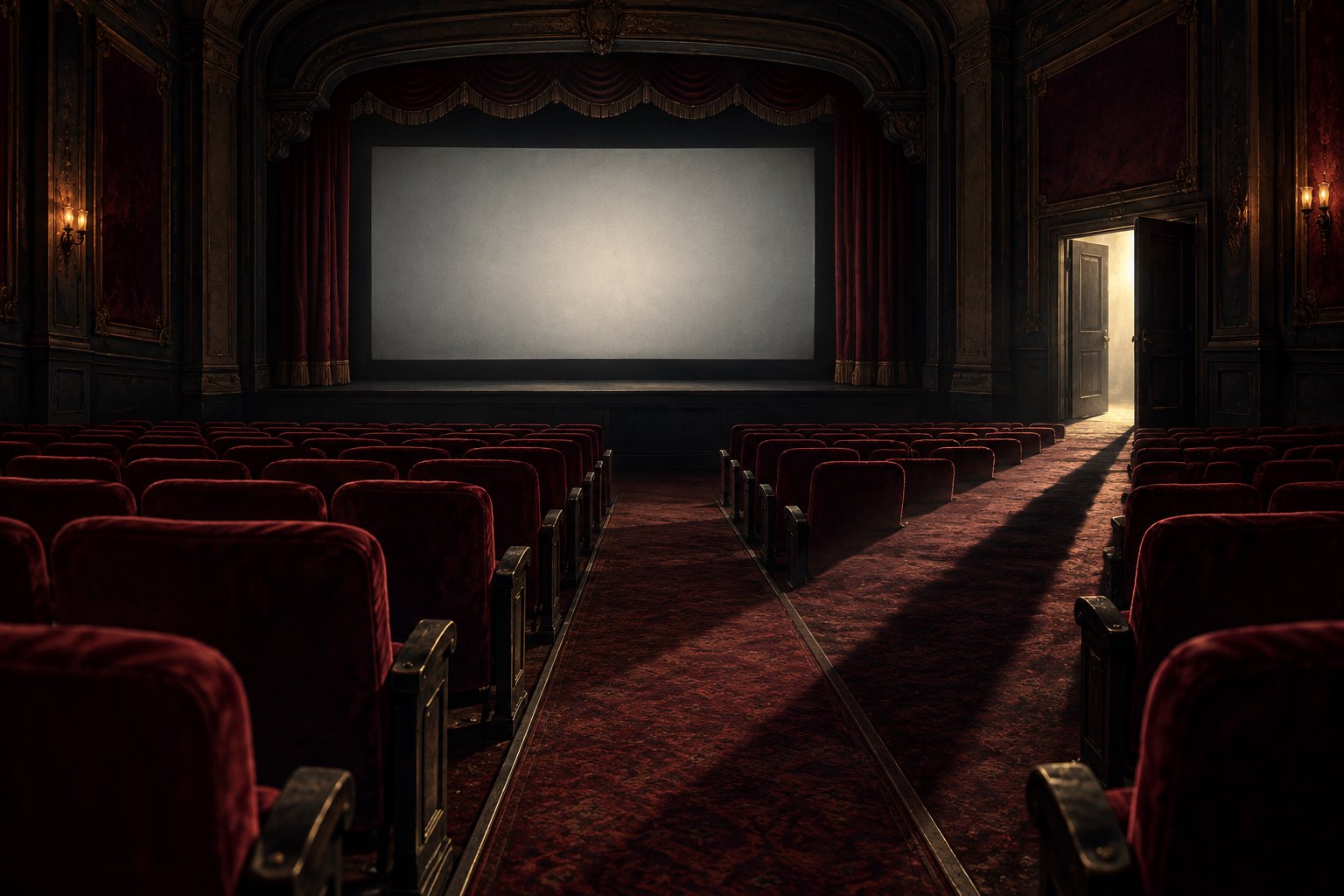
The Thing takes the top spot on this scary scale because it makes recognizing another human being feel impossible. Alien follows with its fusion of bodily invasion and workplace betrayal, while Halloween and Psycho turn ordinary streets and roadside hospitality into traps. All four remain effective, but they attack different defenses.
This is a subjective ranking of four horror classics, from unsettling to overwhelming, based on sustained tension, identification with the characters, and the unease that survives the ending. It is not a ranking of artistic importance. A viewer frightened most by stalking could reasonably put Halloween first.
Major spoilers follow for all four films, including deaths, revelations, and endings.
How the Scary Scale Works
A startling cut can make you jump without making you care. More durable horror gives a character an understandable plan, then reveals why that plan cannot guarantee safety. Return the money. Protect the children. Follow quarantine rules. Find out who is infected. These are sensible goals; watching them fail is the source of dread.
- For psychological unease: choose Psycho, with its shifting loyalties and sudden violence.
- For stalking suspense: choose Halloween, which makes empty space feel occupied.
- For claustrophobia and bodily invasion: choose Alien, whose violence arrives in concentrated bursts.
- For graphic transformations and paranoia: choose The Thing, the most physically gruesome selection here.
4. Psycho (1960): The Terror of Losing Your Place in the Story
Alfred Hitchcock initially ties our anxiety to Marion Crane, played by Janet Leigh. She steals money from her employer, leaves town, and arrives at the Bates Motel carrying the fear of discovery. Her problem appears to have a solution: she can return what she took. That possibility matters because it gives the story a future we can imagine.
Then Norman Bates offers dinner and conversation. Anthony Perkins makes his awkwardness disarming without making it comfortable. When Norman says, “We all go a little mad sometimes,” Marion can hear an acknowledgment of her own impulsive mistake. The audience will eventually hear something much darker in the same sentence.
Marion decides to return the money, but the shower murder destroys the expected relationship between remorse and survival. Doing the right thing cannot protect her from a danger she has not recognized. The scene frightens through its violent fragmentation, yet its deeper cruelty is narrative: the person whose future we have been considering suddenly has none.
Norman’s cleanup then redirects our attention toward whether the evidence will disappear. Hitchcock makes practical curiosity disturbingly easy to confuse with sympathy. My reservation is the late explanatory speech, which gives the mystery a tidiness the images do not need. The final view of Norman restores the chill. Fourth place reflects the film’s intermittent attack, not a lack of power.
3. Halloween (1978): Laurie Sees the Danger Before She Understands It
John Carpenter’s Halloween places Laurie Strode, played by Jamie Lee Curtis, inside a familiar routine of school, friends, and babysitting. Michael Myers appears within that routine before Laurie can make sense of him. The unsettling question is initially whether an ordinary observation deserves an extraordinary response.
Carpenter makes that uncertainty visual. Doorways, sidewalks, and the space behind a character demand inspection. Michael’s stillness gives the viewer work to do: every apparently uneventful composition becomes a search. The film does not need constant attacks because looking itself has become stressful.
Laurie’s responsibility for the children makes the final pursuit especially effective. She cannot think only about her own escape. Her improvised defenses feel like urgent responses by someone with limited time and tools, rather than demonstrations of invulnerability. Curtis preserves the effort involved in staying functional while terrified.
Even intervention cannot deliver a clean resolution. After Loomis shoots Michael and he falls from the balcony, his disappearance removes the reassurance a visible body would provide. The neighborhood remains recognizable, but its safety is gone.
That corruption of familiar geography also offers a useful companion to our discussion of how Wildwood turns a recognizable city into threatening fantasy. Here, however, the houses barely need to change. Our attention does.
2. Alien (1979): Ripley Is Right, and That Does Not Save Everyone
Ridley Scott’s Alien makes Ellen Ripley’s judgment central to its horror. When Kane returns with an organism attached to his face, she insists on quarantine. Ash admits the returning party anyway. The disaster is especially frustrating because a credible precaution existed and someone overrode it.
Sigourney Weaver’s Ripley earns our investment through practical decisions. Her caution creates friction, but the film gradually exposes the danger of treating agreeableness as a qualification for leadership. She has to assess a threat while operating inside a command structure that does not reliably protect the crew.
The chestburster sequence turns apparent recovery into catastrophe. A shared meal briefly restores the rhythms of working life before Kane’s body becomes the site of an attack nobody knows how to stop. Later, the ship’s industrial passages make the creature difficult to distinguish from its surroundings. The environment that supports the crew also conceals their predator.
Ash’s revelation adds a different violation: the company’s priorities make the crew expendable. “You have my sympathies” becomes a vicious imitation of concern from someone who has helped deny them a fair chance.
I place Alien above Halloween because its threats converge on Ripley from multiple directions: the creature, the ship’s confinement, and institutional betrayal. Her eventual escape provides a release, but reaching it requires abandoning any assumption that authority and survival share the same objective.
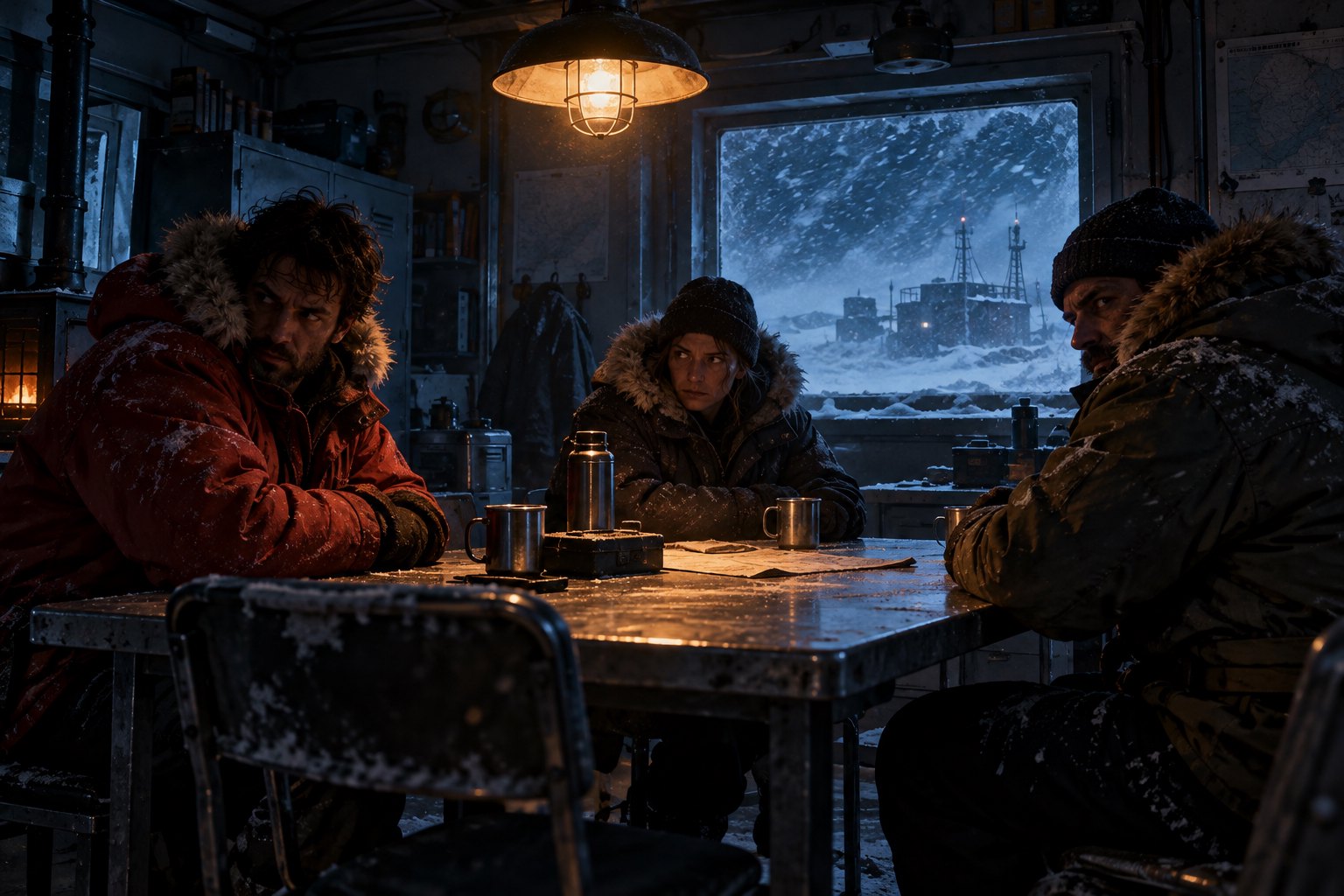
1. The Thing (1982): Survival Requires Trust That Nobody Can Offer
Carpenter’s The Thing traps an Antarctic research team with an organism capable of imitating other life forms. Its most punishing idea is that familiarity has stopped being useful evidence. A colleague can look recognizable while representing an entirely different danger.
Kurt Russell’s MacReady becomes a leader through action, but decisive behavior does not settle the question of whom to trust. His blood test offers a concrete procedure: expose individual samples to heat and look for a defensive response. The scene is frightening before anything happens because the restrained men must surrender control to someone they cannot confidently trust.
The grotesque transformations make the uncertainty physical. Bodies that appeared stable become unstable; a medical emergency can conceal another threat. Yet the quieter exchanges give those eruptions their force. Without the suspicion between attacks, the effects would be astonishing demonstrations. With it, every face becomes a problem.
The ending refuses the relief that Alien eventually grants. MacReady and Childs remain together beside the burning station, without a definitive answer about each other. Treating a disputed visual clue as proof would weaken what the scene accomplishes: it leaves recognition unresolved.
That is why this film tops my scale. The characters need cooperation to survive, but the evidence necessary for cooperation is never secure enough. Even successful action cannot restore the social world they depended on.
What These Classics Are Really Taking Away
Each film removes a different source of reassurance. Marion loses the future promised by correcting her mistake. Laurie loses confidence in familiar surroundings. Ripley discovers that professional authority can serve an inhuman objective. MacReady loses the ability to establish who is standing beside him.
These stories work because fear changes the meaning of relationships. A host, a neighbor, a colleague, or a fellow survivor becomes difficult to read. That question of who gets trusted also runs through our character-focused analysis of belonging and suspicion in Wicker, although its fairy-tale premise approaches the problem differently.
A Television Detail Worth Catching
In Halloween, the evening’s television viewing includes The Thing from Another World, the 1951 film that precedes Carpenter’s own adaptation of the underlying story. It is a pleasing connection between two entries here, and it also serves the scene: fictional danger flickers inside the house while an actual threat moves outside.
The strongest horror does more than reveal something frightening. It teaches us to distrust something that previously seemed dependable. On that measure, The Thing has the cruelest final advantage: after the monster has shown itself, another human face can still be the most frightening image in the room.
Original content by this site's editorial team. Published: October 23, 2026 at 03:20:02 PDT (Los Angeles time)