A moviegoer using a phone during a film was pepper-sprayed in Los Angeles, according to police, The Guardian reported. The incident brings a familiar irritation into a much more serious discussion: what happens when someone treats a breach of theater etiquette as permission to intimidate or hurt another person?
Our view is straightforward. Audiences deserve a screening without unnecessary distractions. They also deserve to feel safe among strangers. Protecting the first expectation cannot come at the expense of the second.
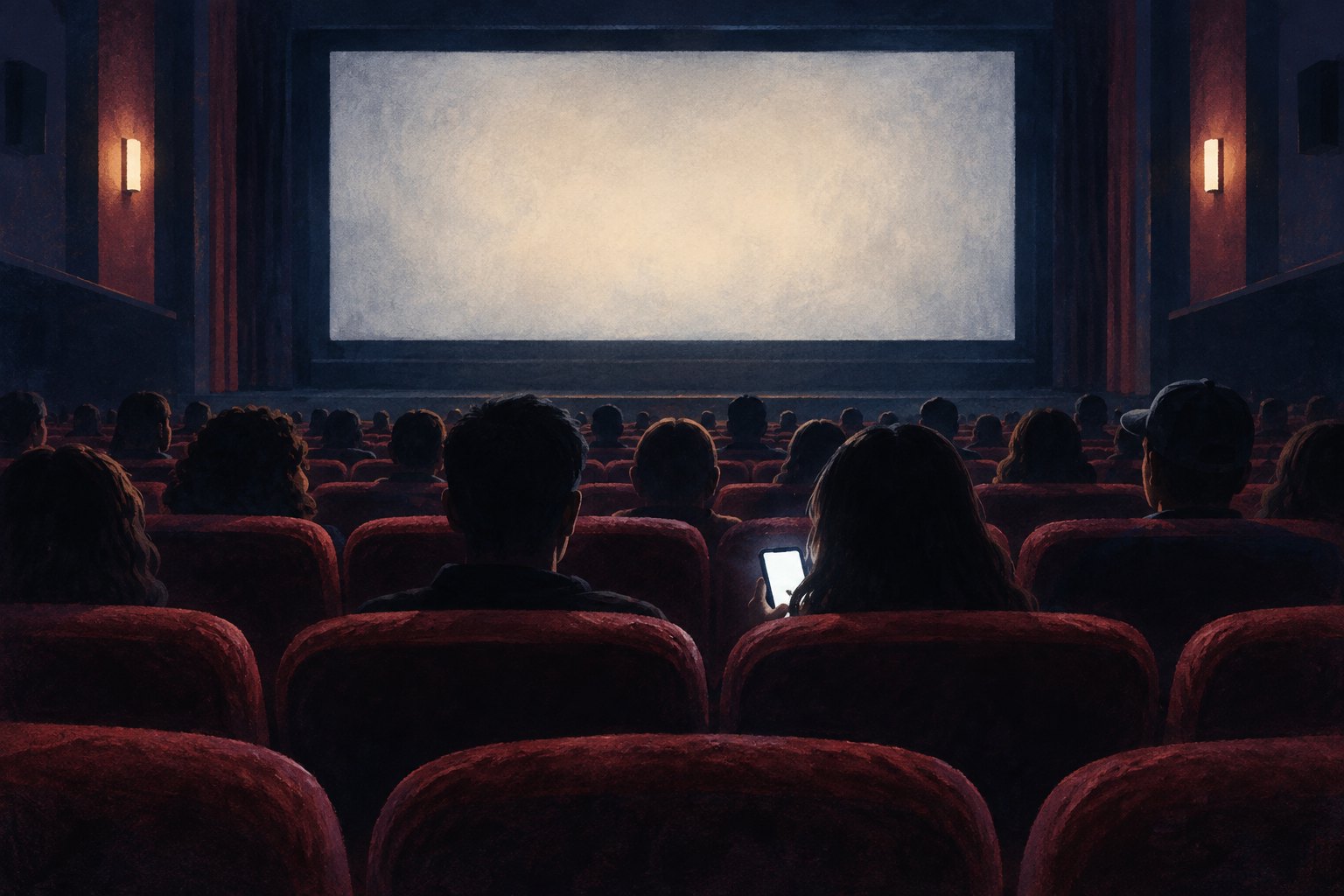
This is commentary on moviegoing culture, not a review of the film being screened. The illustrations depict fictional settings rather than the reported incident.
What the report establishes—and what it does not explain
The central reported fact connects phone use during a screening with an alleged pepper-spray incident. That does not, by itself, explain why the phone was being used, what each person perceived, or the full sequence of their interaction. Those distinctions matter when discussing responsibility.
It is tempting to imagine the missing scene: a bright screen, a warning, a dismissive response, rising anger. But a plausible sequence is still an invented one. A responsible discussion should not assign dialogue, intentions, or personality traits to people on the strength of a headline.
There is also no basis here for declaring that movie audiences as a whole have become more dangerous. One reported incident warrants attention on its own terms. It cannot establish a nationwide trend, and it should not turn every ordinary visit to the movies into a source of dread.
Why a small screen can interrupt a big performance
Phone complaints are not necessarily expressions of cinematic snobbery. A film asks viewers to follow a particular arrangement of images, sounds, and pauses. When a nearby device lights up, it introduces another point of attention into that arrangement, one that the filmmaker did not choose.
Consider what character-focused viewing requires. An actor may hesitate before answering, glance toward an empty doorway, or let a smile disappear while someone else speaks. These moments can change our understanding of a relationship without announcing their importance. Looking away briefly can mean missing the detail that makes a later decision feel earned.
The interruption can also outlast the light itself. A viewer may begin anticipating the next notification instead of following the scene. In a suspense film, that competes with tension. In a quiet drama, it can break the intimacy that a performance has patiently established.
None of this makes an irritated audience member the owner of the room. It explains why consideration matters. The same respect for other people's experience that supports putting a phone away should also govern how someone responds when another patron fails to do so.
The audience is part of the experience
A theater is a shared environment, and shared does not mean perfectly silent or completely predictable. Laughter, surprise, and the occasional rustle belong to ordinary moviegoing. The useful distinction is between participating in a screening and repeatedly drawing attention away from it.
Context matters as well. A neighborhood outdoor screening carries different expectations from a quiet indoor presentation. Our discussion of Cars as a film for a neighborhood screen explores how a communal setting can become part of a movie's appeal. The presence of other people can enrich the experience even when it makes the environment less controlled.
That is worth remembering before defining a good audience only through prohibitions. We go to theaters partly because a joke can become funnier when a room responds together. Shared attention is valuable because it creates connection, not because it gives the most demanding viewer authority over everyone else.
Frustration does not confer authority
The troubling idea in discussions of theater disputes is that a sufficiently annoying patron deserves whatever happens next. That reasoning substitutes satisfaction for proportion. Disliking someone's behavior does not make every response to it acceptable.
It also erases everyone nearby. A person who wants to follow the movie may suddenly have to monitor an argument instead. The room's attention shifts from fictional stakes to uncertainty about the people sitting within reach. Whatever the original distraction, intimidation creates another problem.
Our editorial judgment is that responsible film culture should resist celebrating that escalation. Loving movies should make us attentive to other people's perspectives. It should not encourage a fantasy in which the most aggrieved ticket holder becomes an unofficial enforcer.
How to handle a distracting phone without escalating
The practical goal is to restore a workable viewing environment. Winning an argument, extracting an apology, or proving that everyone else agrees is unnecessary to that goal.
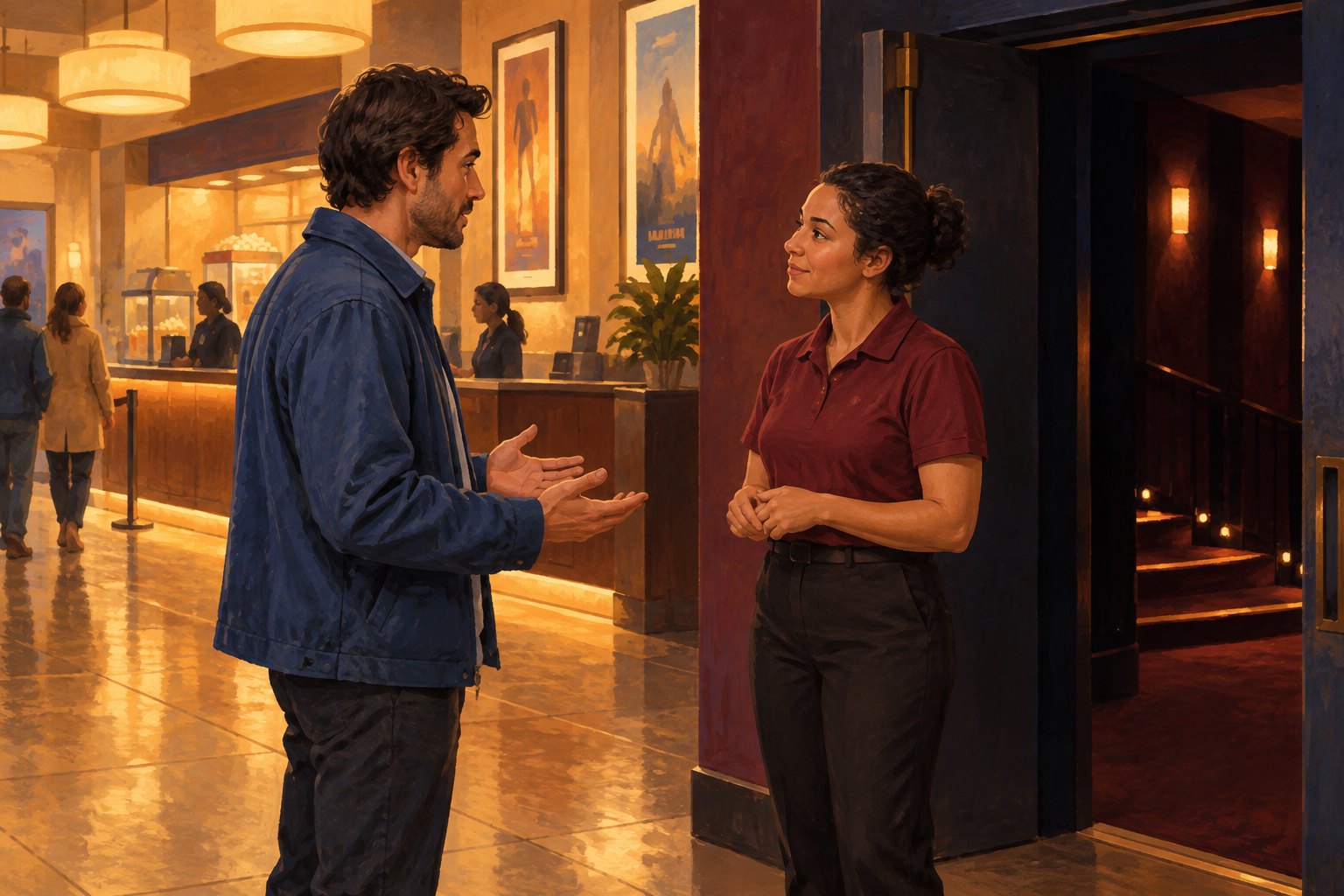
- Keep any request brief and specific. If you feel comfortable speaking, ask for the screen to be put away. Avoid insults or guesses about the person's motives.
- Do not keep arguing. If the response is hostile or the behavior continues, disengage. Repeated exchanges can become more disruptive than the original problem.
- Give staff useful information. Describe the auditorium, approximate seat location, and behavior you observed. A concrete report is easier to act on than a general complaint about the audience.
- Ask about practical options. Depending on the circumstances, staff may be able to address the disruption or discuss another seat or screening. Do not assume a particular remedy is guaranteed.
- If you need your own phone, consider those around you. Handle avoidable messages before the feature and step outside for an extended exchange when feasible.
These are general suggestions, not a reconstruction of what anyone in the Los Angeles incident did. Patrons should not have to confront strangers to demonstrate that a disruption bothered them.
What theaters should make easier
Exhibitors have a role beyond playing a reminder before the feature. A policy is more useful when audiences understand how to report a problem and can find someone able to respond. Clear expectations should be paired with accessible assistance.
Policies also need room for legitimate accessibility needs. A patron cannot reliably determine another person's circumstances from a few seats away. Staff should be equipped to distinguish an accommodation from avoidable disruption without requiring customers to publicly explain private information.
Industry conversations often focus on how many movies theaters will receive. As our analysis of what studio output promises would protect for audiences argues, commitments deserve scrutiny in practical terms. The same principle applies inside the auditorium: a promise of a good night at the movies needs support in the actual customer experience.
Attention depends on trust
The deeper issue raised by this report is the trust involved in sitting together in darkness. We agree to give a story our attention while allowing strangers to share the space around us. That arrangement works through restraint, consideration, and a reasonable expectation that problems can be handled without intimidation.
Phones can weaken that shared attention. Threatening behavior can make it impossible. A theater that protects the pleasure of watching a film must take both concerns seriously, while keeping the difference in their severity clear. Respect for the movie begins with respect for the people watching it.
Original content by this site's editorial team. Published: September 23, 2026 at 08:50:03 PDT (Los Angeles time)