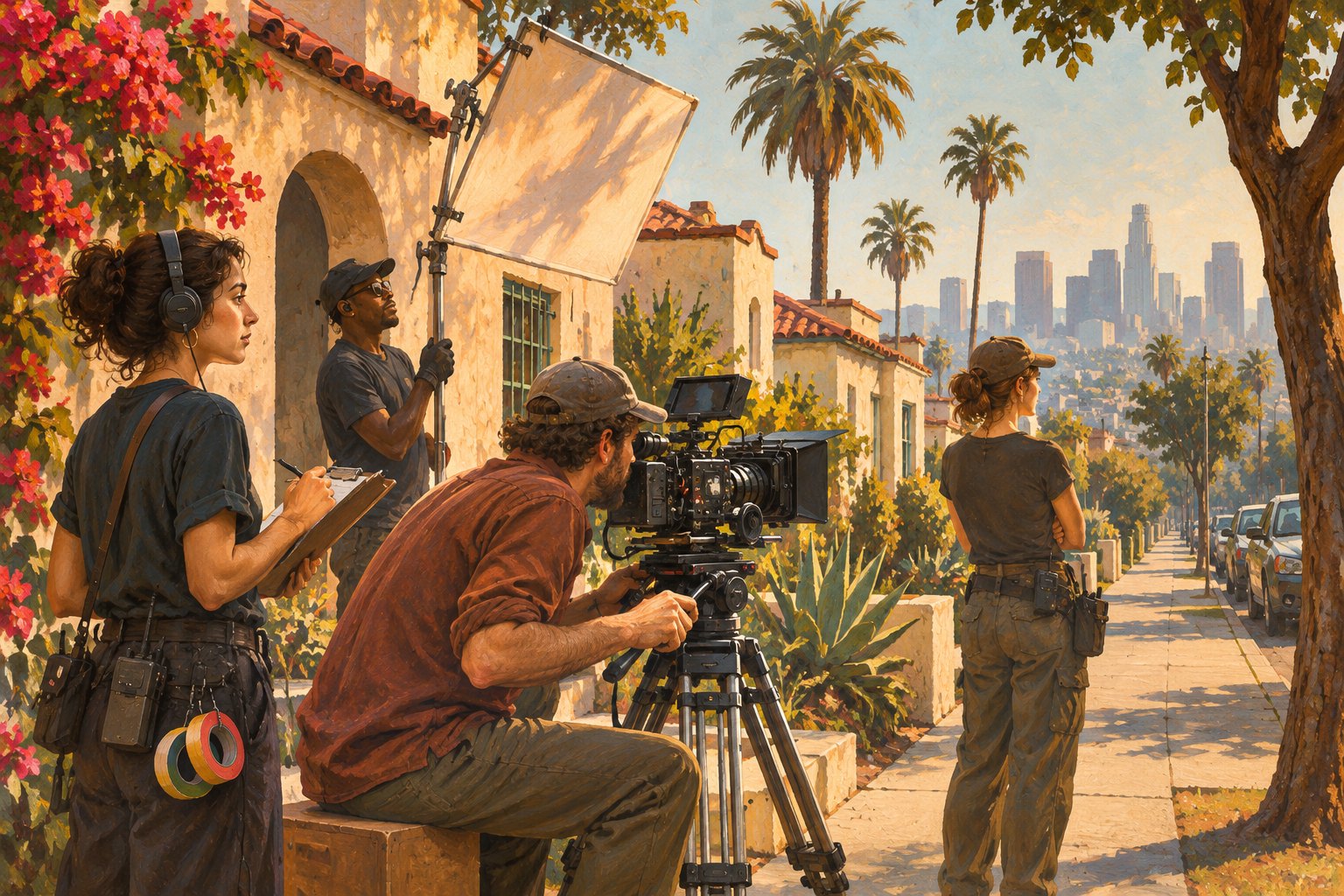
Los Angeles is extending a program offering lower film permit fees through 2027, according to NBC Los Angeles. For filmmakers considering a shoot in the city, the immediate significance is the continuation of an opportunity to reduce a production expense. For moviegoers, the more interesting question is what that opportunity might help put on screen.
A permit does not supply a compelling character or fix a weak screenplay. But the practical ability to film somewhere can affect how a story unfolds: which spaces characters occupy, how they move through them, and whether their surroundings feel specific enough to suggest lives beyond the scene.
The extension is the reported development; its creative and economic effects remain questions to evaluate. There is no basis here for claiming a particular savings amount, universal eligibility, or an increase in jobs. The case for paying attention is more grounded: production costs help determine which creative choices remain possible.
What the extension tells filmmakers—and what it does not
The announcement concerns a program offering lower film permit fees. That distinction matters when interpreting the news. An extension gives the program a longer horizon, but it should not be read as a promise that every production, location, or filming activity receives a discount.
Nor should a lower permit fee be confused with a lower total shooting bill. A location decision also involves the practical demands of equipment, staffing, transportation, sound, access, and scheduling. A reduction in one expense can be useful while leaving the larger financial calculation difficult.
For anyone developing a project, the sensible response is to investigate whether the program fits the proposed shoot before building a budget around it. Four questions make that investigation more useful:
- Does the production qualify under the program’s current terms?
- Which specific fee receives the reduction?
- What other location-related expenses would remain?
- What dates and filming activities does the approval actually cover?
Those are verification questions, not statements about particular restrictions. They help turn a promising announcement into an informed production decision. The phrase “through 2027” should also prompt a check of the exact end date rather than an assumption that every date that year is covered.
Why a location belongs in a conversation about character
In film criticism, setting becomes meaningful when it changes our understanding of a person. An attractive street can establish atmosphere. A street that determines whom a character encounters, what they avoid, or how far they must travel can become part of the drama.
Consider a hypothetical scene in which someone returns home after losing a job. A broad driveway and an empty house might suggest isolation within comfort. A narrow entrance opening directly into a shared kitchen might make privacy impossible. Neither location automatically produces a better scene. Each gives the actor a different set of physical and emotional circumstances.
The important detail is the relationship between the person and the space. Does the character belong there? Are they performing confidence for a neighbor? Can they reach their room without answering a question? These small spatial facts can communicate pressure before dialogue explains it.
That is why location decisions deserve attention beyond their postcard value. Our discussion of why Philadelphia matters to the Sylvester Stallone story approaches a related critical question: how a city can contribute to a screen portrait. For Los Angeles, the opportunity is to preserve room for equally particular relationships between people and place.
Where a smaller expense could change a creative decision
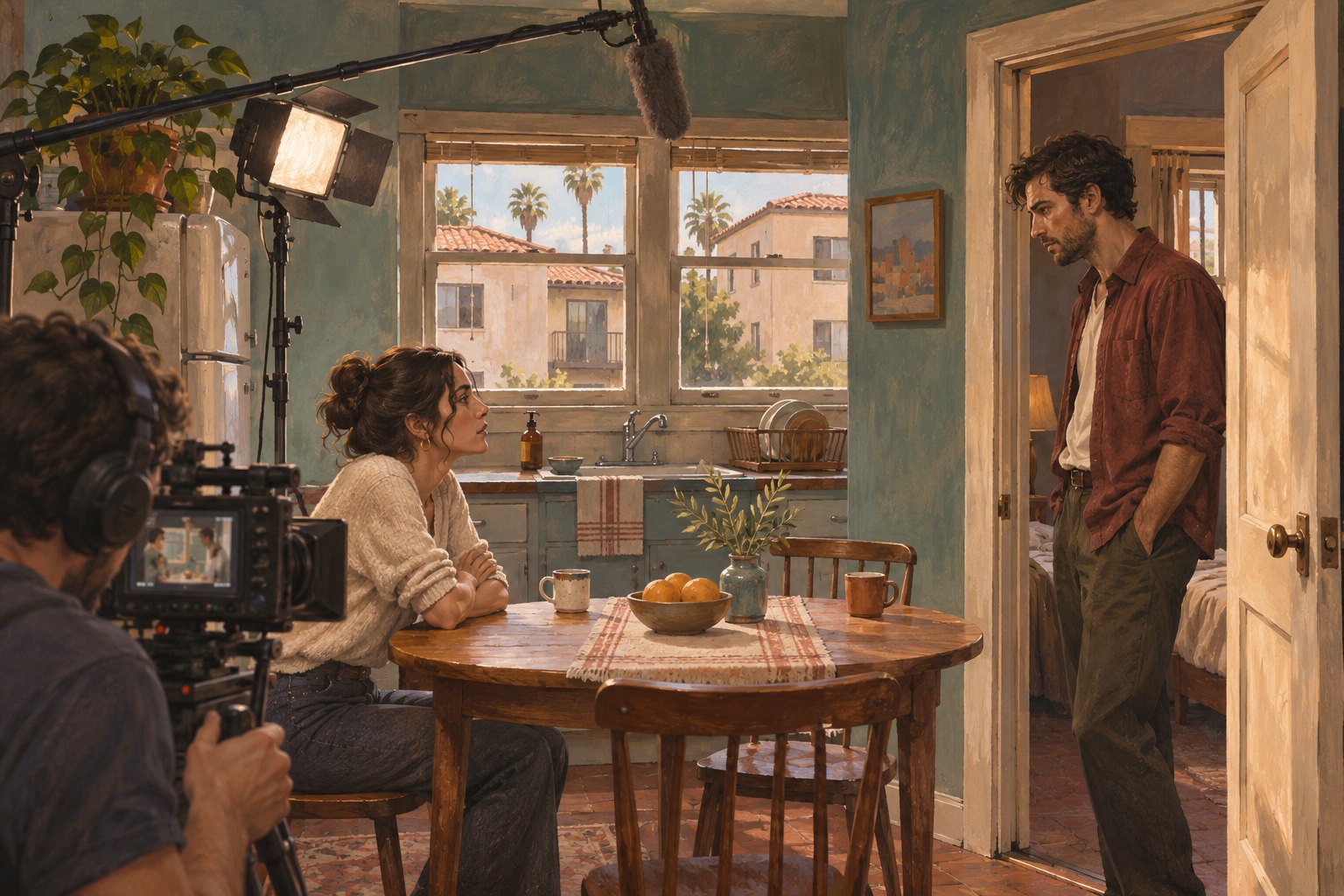
The strongest potential argument for reduced permit fees concerns decisions near the edge of affordability. Imagine a fictional production comparing two locations. One fits the character’s circumstances precisely; the other is easier to afford but requires rewriting the scene. If a fee reduction closes that gap, it could help preserve the original dramatic intention.
That is a possible mechanism, not an established outcome of this extension. Savings might instead reduce an existing budget shortfall or make no difference to the location choice. Without evidence from participating productions, it would be premature to claim that the policy has already delivered more distinctive films.
Still, the possibility is worth taking seriously. Production constraints can shape a movie long before a reviewer sees it. A scene may become an interior conversation because moving between locations is impractical. A neighborhood encounter may disappear because the production cannot accommodate another setup. Viewers experience the finished choices without necessarily seeing the alternatives that were abandoned.
My view is that a useful film policy should expand workable choices. That does not require assuming that expensive filmmaking is better. It means allowing a filmmaker to select a location because it serves the story, with fewer decisions determined solely by an avoidable cost.
Los Angeles needs more than recognizable scenery
For audiences, the creative promise is not simply more palm trees or another distant skyline. Recognizability and specificity are different achievements. A familiar landmark tells us where a story takes place; a carefully observed room can tell us how someone lives.
When watching a Los Angeles-set film, look at the distance between its glamorous spaces and its ordinary ones. Does a character experience the city as opportunity, routine, exclusion, or shelter? Does the film make that experience visible through movement and framing, or merely announce it in dialogue?
A doorway can divide people who appear emotionally close. A wide shot can reveal that someone who seems powerful in conversation occupies very little space. A walk between buildings can give an actor time to shift from public composure to private exhaustion. These are opportunities a location offers, though filmmakers must still recognize and develop them.
Reduced fees cannot guarantee such attention. The editorial argument is that access to a wider range of usable spaces could make it easier to pursue. The resulting film must still earn its meaning through performance, direction, sound, and editing.
What would make the program a meaningful success?
A useful evaluation would connect the program to decisions and experiences, rather than treating the extension itself as proof of impact. Participation would be worth measuring, but participation alone would not establish that productions filmed in Los Angeles because of the reduced fees.
More revealing evidence would include whether qualifying filmmakers changed their location plans, whether the reduction mattered within their full budgets, and whether the process was understandable enough to use. Accounts from smaller productions could help explain benefits that a headline total might miss.
The surrounding community belongs in that assessment too. A successful shoot depends on a workable relationship with the people who live and work nearby. Affordability for filmmakers should coexist with clear communication and consideration for everyday access.
Our analysis of what it takes to build a lasting local film culture raises a related test: whether an initiative supports useful, durable opportunities beyond its announcement. Los Angeles deserves the same patient scrutiny.
The creative value lies in the choices that survive
The extension is worth watching because seemingly modest production expenses can sit between an idea and its execution. Its ultimate value will depend on who can use it, how much it matters to their decisions, and what work becomes possible as a result.
For film lovers, the deeper issue is whose experience of Los Angeles reaches the screen. A city becomes dramatically convincing through specific lives: where people wait, what they can afford, whom they encounter, and which doors remain closed to them. Lower permit fees could help filmmakers retain some of those details. The measure of success will be the opportunities preserved—and, eventually, the scenes that make those opportunities matter.
Original content by this site's editorial team. Published: November 2, 2026 at 17:16:03 PST (Los Angeles time)