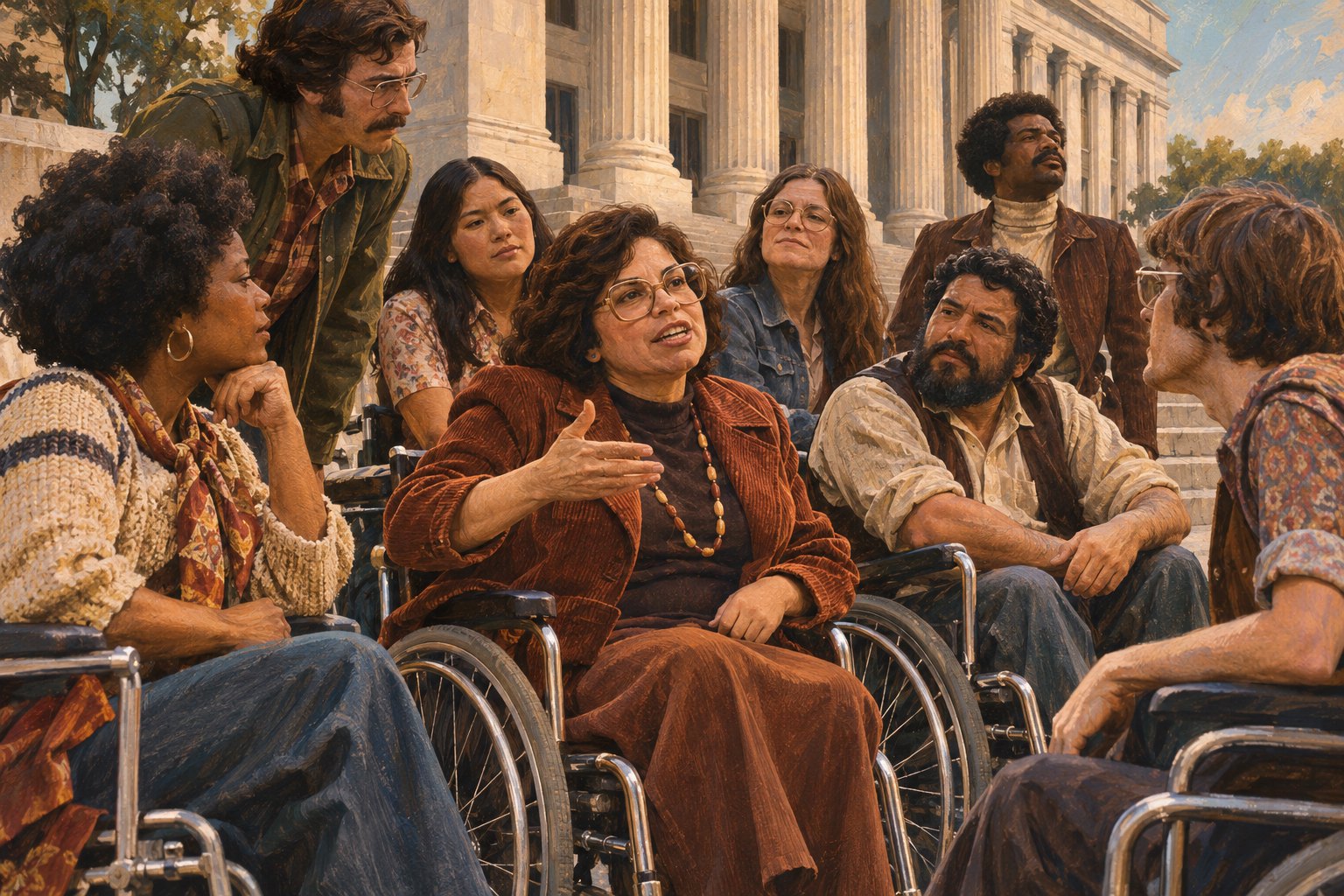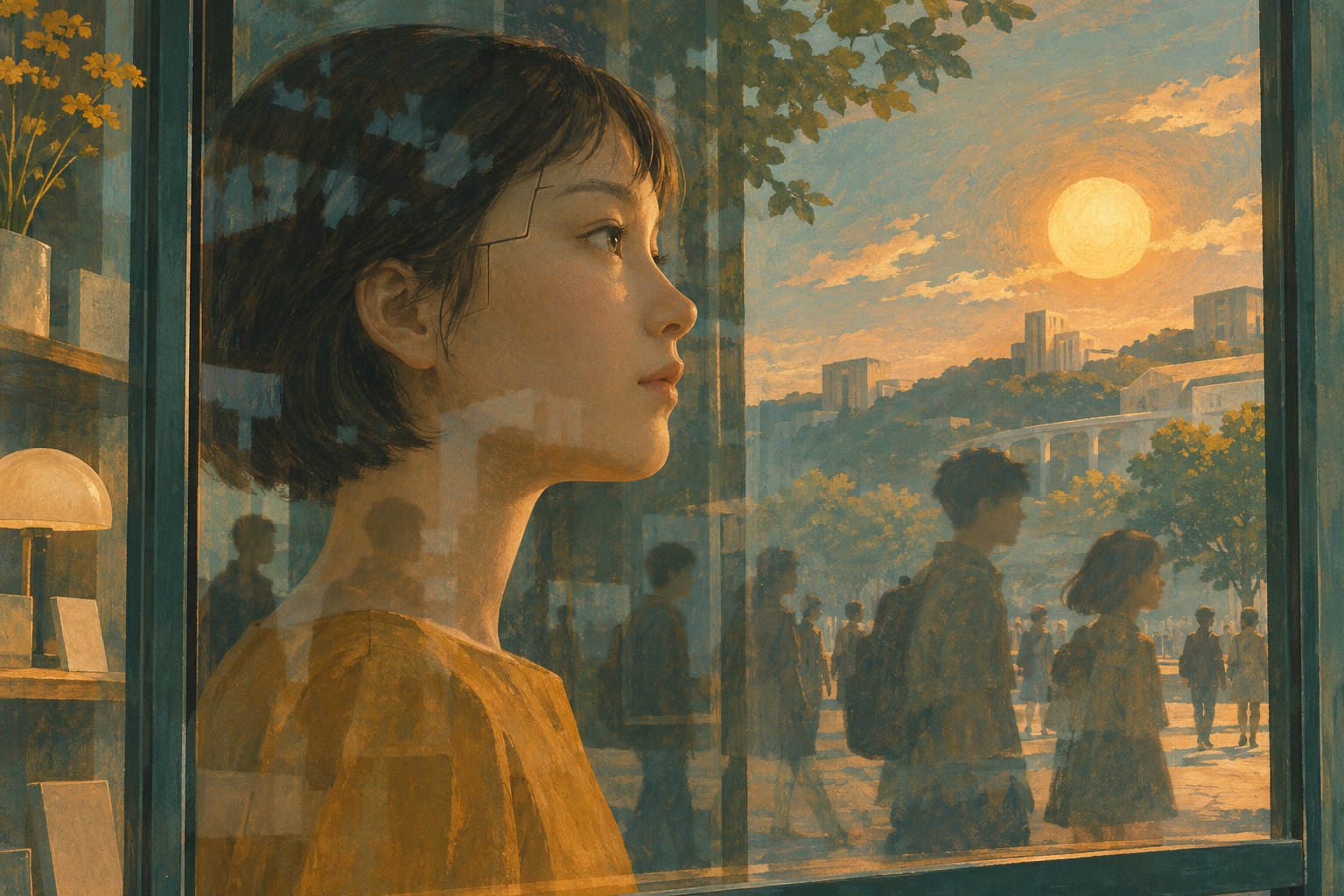
Klara and the Sun contains a more unsettling question than whether a machine can feel love: can people accept affection without turning its giver into something useful? Klara wants a home. Josie wants companionship she can choose for herself. Josie’s mother wants protection against further loss. Those desires overlap, but they do not mean the same thing. Their differences give this adaptation its most compelling territory.
Taika Waititi directs the adaptation of Kazuo Ishiguro’s novel, with a screenplay credited to Waititi and Dahvi Waller. Jenna Ortega plays Klara, Mia Tharia plays Josie, and Amy Adams plays her mother. The central relationship brings an Artificial Friend into a family already shaped by grief. Those credits and the basic premise are confirmed in [Sony Pictures’ film overview](https://www.sonypictures.com/movies/klaraandthesun).
Spoiler note: This analysis discusses the setup, Josie’s illness, and the characters’ competing needs without revealing the ending. Quoted dialogue below appears in the promotional trailer; the discussion does not treat trailer footage as evidence of the finished film’s overall pacing or editing.
Klara: The Unequal Bargain Behind Companionship
Klara’s situation makes affection inseparable from selection. She is an Artificial Friend waiting to be purchased, so finding someone who wants her also means finding someone with power over her future. What looks like the beginning of a friendship is simultaneously a transaction. That contradiction deserves attention before any larger debate about artificial consciousness.
From Klara’s perspective, being chosen promises belonging. From a customer’s perspective, choosing involves judging suitability, price, and whether a newer model might be preferable. Neither side needs to lie for their understanding of the encounter to differ completely. The emotional danger resides in that mismatch: Klara can understand acceptance as permanent while the people accepting her retain the option of reconsidering.
My reading is that her devotion becomes most interesting when it raises questions about the terms of her welcome. Does she belong because she exists as a distinct presence, or because she improves somebody else’s life? A companion whose place depends on being helpful cannot easily separate kindness from the work of remaining wanted.
This also creates a demanding acting problem. Ortega’s character must be legibly artificial without becoming merely a collection of unfamiliar gestures. The distinction matters because an audience can find a robot charming while overlooking her vulnerability. Enjoying Klara’s differences is only the first step toward taking her perspective seriously.
Josie: Choosing a Friend Is an Act of Independence
Josie’s insistence on Klara gives the relationship a necessary element of resistance. Her mother questions buying an older robot, but Josie insists on her choice. In the trailer’s shop exchange, she calls Klara “She’s special.” The manager immediately answers, “And she’s on special!” The wording is documented in [Kirkus Reviews’ account of the trailer](https://www.kirkusreviews.com/news-and-features/articles/sony-drops-trailer-for-klara-and-the-sun-film/).
That exchange compresses the story’s conflict into a joke. Josie recognizes a particular companion; the manager recognizes an opportunity to sell inventory. The same word becomes an expression of affection and a pricing category. The humor has an uncomfortable implication: a commercial system can accommodate the language of love without changing how it treats the loved object.
For Josie, choosing Klara also establishes a small territory of personal authority. Her health and family circumstances make other people’s concern unavoidable. Choosing a friend allows her to express a preference that does not have to be justified as the safest, newest, or most efficient option.
That is why a character-centered interpretation should resist reducing Josie to the person Klara must help. Illness can dominate a narrative until the person experiencing it becomes a destination for everyone else’s emotions. Josie’s preferences, impatience, and capacity to connect matter independently of her medical vulnerability.
Our discussion of how choices bring screen characters to life offers a useful companion principle: a character becomes specific through decisions. Here, Josie’s choice of Klara matters because it expresses an attachment that product specifications cannot explain.
A Mother’s Fear Can Turn Care Into Control
Josie’s mother occupies the difficult space between protecting a child and trying to eliminate uncertainty. Sony’s synopsis identifies both family loss and a strained mother-daughter relationship. Those circumstances make her caution understandable, while leaving its consequences open to criticism.
From her perspective, practical judgment can feel like a duty. A newer companion may appear more dependable. Emotional distance may feel safer than another attachment. Yet protective reasoning can also crowd out the wishes of the person being protected. Josie’s choice becomes inconvenient precisely because it cannot be settled through a straightforward calculation of advantages.
The most productive interpretation allows the mother’s love and her controlling impulses to coexist. Grief need not make every decision wise to make it intelligible. Likewise, understanding her fear does not require accepting that fear as the governing principle of Josie’s life.
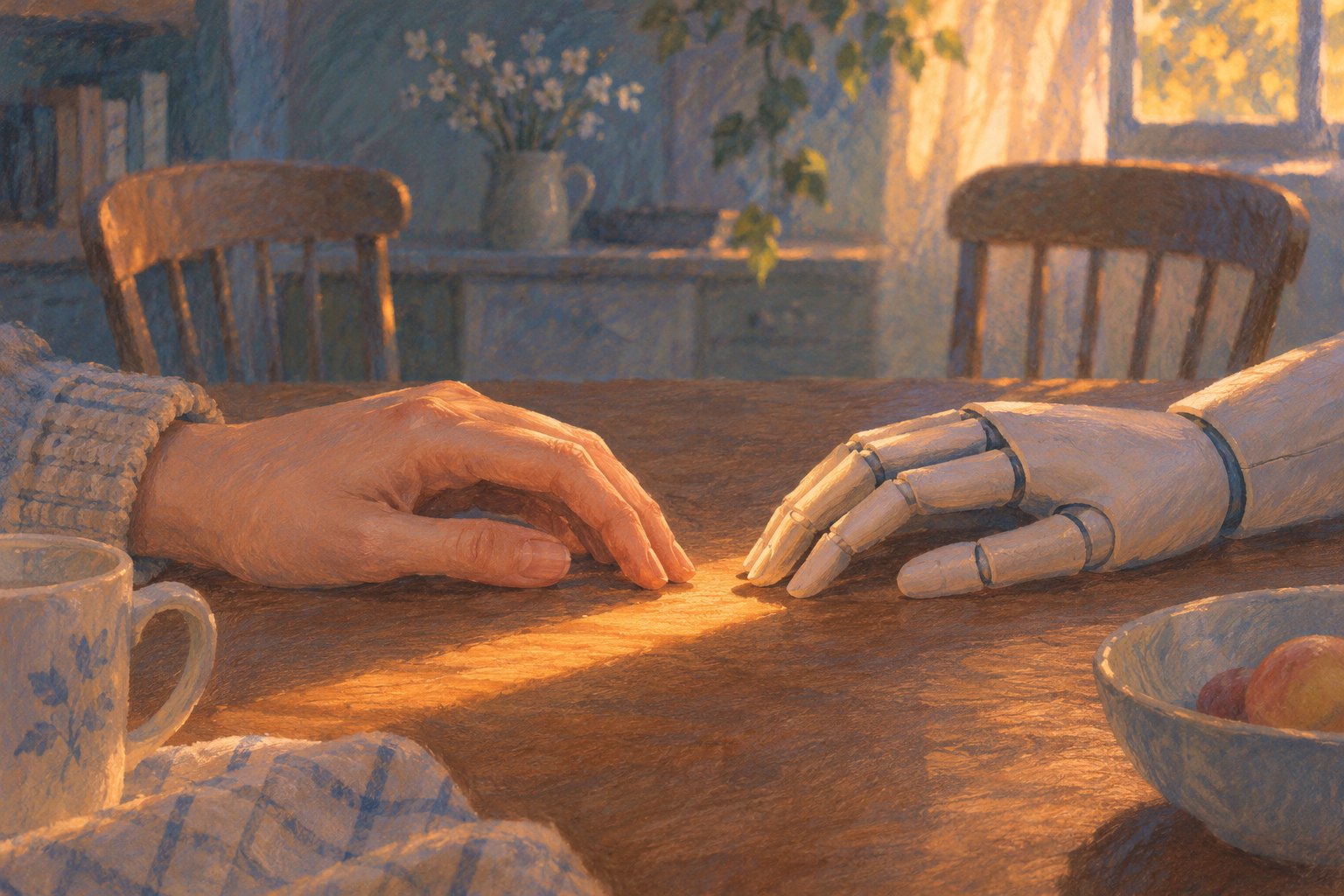
The Sun Gives Klara a Language for Hope
Klara’s attachment to the sun links her artificial existence to a recognizable human response to helplessness. Faced with suffering, she seeks an order that might make intervention possible. In the trailer, her appeal includes the words “Please show me the way.” The request is simple; the need beneath it is not.
I read that appeal as an attempt to turn concern into action. Klara does not merely register that a family is hurting. She wants a route from understanding their pain to relieving it. Her belief supplies that route, even when her interpretation of the world is limited.
There is an important distinction between recognizing the limits of a belief and dismissing the person who holds it. An audience can understand more than Klara does while still taking her commitment seriously. The adaptation’s central tonal challenge is preserving that respect when her innocence also supplies comedy.
What an Adaptation Must Preserve Beyond Plot
Transferring events from a novel to a screen does not automatically preserve their emotional effect. Prose can make a reader inhabit the gap between a narrator’s observations and their meaning. Film must establish that gap through performance, framing, sound, duration, or some combination of them.
For Klara, the crucial distinction is between watching someone misunderstand and experiencing the world through that person’s partial understanding. The first position gives the audience superiority. The second can produce tenderness, uncertainty, and discomfort together. A successful adaptation needs a way to let viewers know more without encouraging them to care less.
This is why formal choices belong in a discussion of humanity. Our analysis of how editing shapes a viewer’s relationship with characters approaches the same underlying issue from a very different film: what viewers feel depends partly on where a movie places them in relation to another person’s experience.
The Deeper Question: Does Care Create an Obligation?
The richest interpretation of Klara and the Sun begins with reciprocity. Asking whether Klara’s affection is authentic keeps the burden of proof on her. Asking what humans owe someone who cares for them shifts attention toward the family and toward the audience.
That shift matters. Someone can offer comfort without fully understanding another person. Someone can understand another person extremely well and still treat them badly. Intelligence, emotional fluency, and ethical conduct do not automatically arrive together.
Klara’s desire to help therefore presents a harder question than whether she can convincingly imitate humanity. It asks whether being cared for creates responsibilities that cannot be canceled when the caregiver becomes inconvenient. For me, that is the story’s strongest critical lens: belonging becomes meaningful when it survives beyond usefulness.
Original content by this site's editorial team. Published: November 2, 2026 at 23:10:43 PST (Los Angeles time)