
Kenyon Sadiq’s influence on the Jets offense is the subject of the team’s Inside Kenyon Sadiq’s Impact on the Jets Offense | Film Breakdown. Its central question is worth examining: what does a player change about an offense, including on plays when the ball goes somewhere else? A useful answer requires more than a collection of impressive finishes. It requires showing how positioning, timing, and defensive reactions connect.
This is football film study, where “film” means game footage rather than a scripted movie. The available description establishes the subject and the New York Jets as publisher, but it does not establish the featured plays, narration, or tactical conclusions. This article therefore examines the breakdown’s premise and offers a viewing framework; it is not a firsthand review of its individual sequences or a verdict on Sadiq’s performance.
What Does “Impact” Actually Mean?
Impact can describe several different things. A player may finish a play successfully, help create the opportunity, or influence how the defense allocates its attention. Those contributions can overlap, but they are not interchangeable. A reception shows who completed the catch. It does not, by itself, explain why the passing opportunity existed.
For a Sadiq-centered breakdown, the most useful editorial task is to connect the individual with the larger action. Where does he begin? What happens after the snap? Which defender responds, and what space becomes available? Those questions turn a broad claim about influence into something viewers can inspect.
The distinction also protects against overstating a player’s importance. If a defender moves toward Sadiq, that movement could reflect an individual matchup, a general coverage responsibility, or a reaction to another offensive player. The footage must help distinguish those possibilities before the commentary credits him with creating an opening.
Follow Sadiq, Then Widen Your Attention
Watching one player through an entire play can reveal work that a ball-following broadcast angle makes easy to miss. For viewers approaching the Jets segment, following Sadiq from his starting position through the end of each sequence is a sensible first step. The second step is to watch the same action while following the nearest defenders.
That shift in attention matters because offensive movement is relational. A route has meaning partly because of where other receivers travel and how defenders respond. A block matters in relation to the runner’s path and the timing of contact. Isolating a player helps identify his movement; widening the frame helps explain its consequence.
These are observation methods, not claims about particular Sadiq plays. Without the relevant sequences, there is no sound basis here for assigning him specific routes, blocks, or coverage effects. The value of the framework is that it gives viewers a way to test the explanation against what they can actually see.
Separate the Visible Action From the Inferred Assignment
A camera can show a player changing direction. It cannot automatically establish whether that change was prescribed, improvised, or triggered by a defensive look. Similarly, a defender trailing a receiver does not tell the whole story of the coverage.
The strongest analysis names that boundary. It can describe visible leverage, distance, and timing confidently while treating an unknown assignment as an interpretation. For Sadiq, that distinction would make any assessment more credible: explain what his movement accomplishes on screen before claiming to know every instruction behind it.
Editing Can Explain a Play—or Preselect Its Meaning
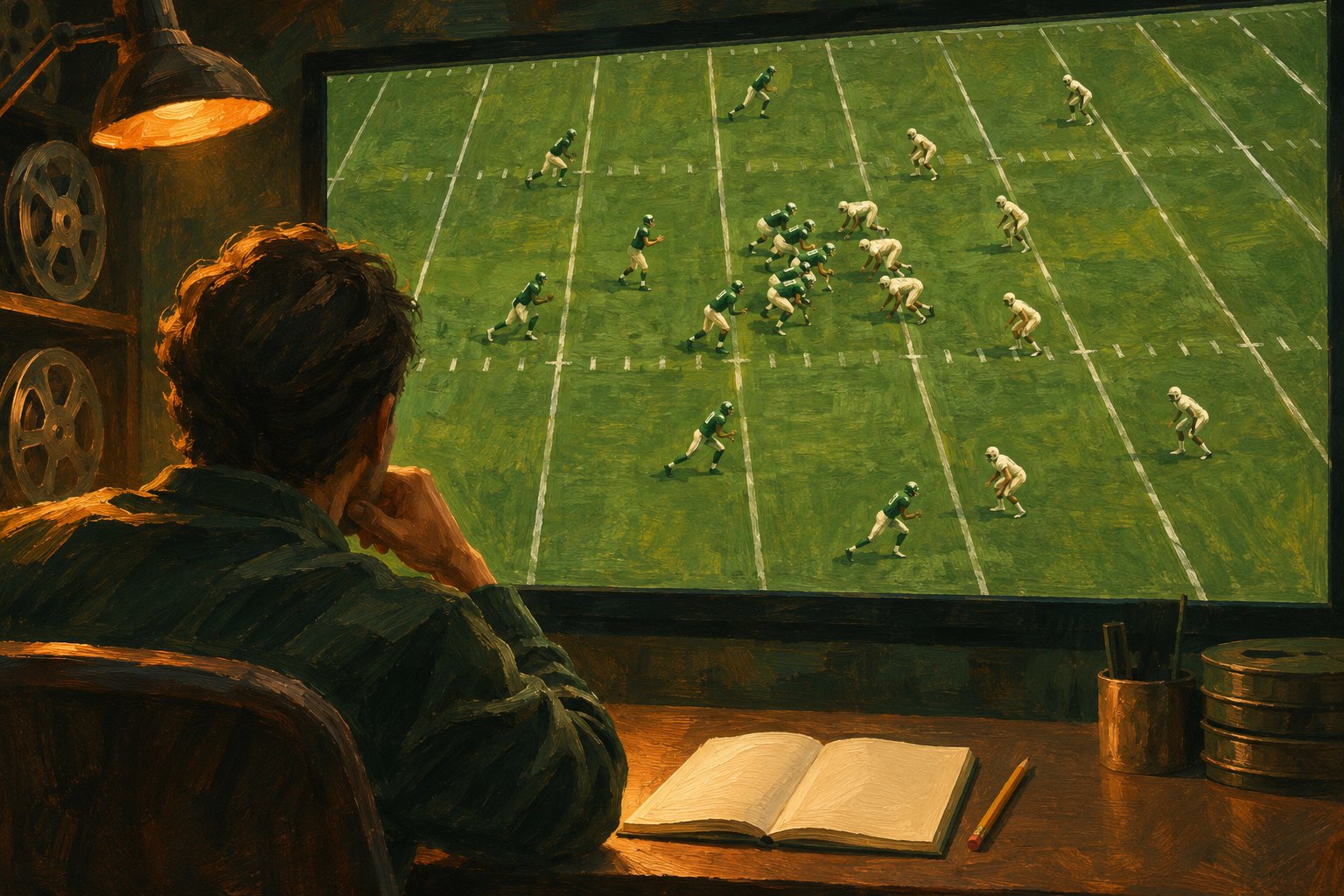
Football analysis and screen criticism share an interest in how images direct attention. A close view can make an individual action vivid while hiding the movement that made it possible. A wider view can clarify relationships while making a small technical detail harder to see. Neither perspective is sufficient for every question.
Repetition is useful when each replay adds information. One pass might establish the full action; another might isolate the relevant defender; a pause might identify the instant an opening appears. Replaying the same successful finish without adding context creates emphasis, but it does not necessarily create understanding.
This resembles the viewing problem discussed in our commentary on documentary perspective and editing: recorded events still reach audiences through selection and arrangement. A sequence can be authentic while the argument built around it remains incomplete.
My critical preference is for analysis that preserves enough of a play’s beginning and aftermath to make its reasoning checkable. A freeze-frame should help explain a moving relationship, not substitute for one. Applied to the Jets’ Sadiq premise, that means showing the connection between his action and the offensive opportunity rather than letting a spotlight around him do the argumentative work.
A Practical Way to Watch the Breakdown
Viewers do not need a complete playbook to ask precise questions. A few repeatable observations can make a player-focused segment more useful:
- Locate Sadiq before the snap. Notice his position relative to teammates and nearby defenders without assuming the formation reveals the entire play.
- Watch his first movement. Observe direction, pace, and any contact. Keep description separate from guesses about intent.
- Track the defensive response. Identify who moves, when the movement begins, and whether another offensive action could explain it.
- Reconnect him to the ball. Ask how his movement relates to the eventual throwing lane, running path, or finish.
- Check the scope of the conclusion. One sequence can illustrate a contribution. Establishing a recurring tendency requires more evidence.
That final step is particularly important. A selected successful play can demonstrate what happened on that occasion. It cannot establish how consistently the same advantage appears, how defenses adjust, or whether the action remains effective in other situations.
Read the Team’s Perspective With Clear Expectations
The New York Jets are the publisher of the Sadiq breakdown. That gives the piece an identifiable institutional perspective. It does not automatically make the analysis unreliable, but it makes the distinction between explanation and endorsement worth keeping in view.
A constructive question is whether the segment earns its central claim through visible cause and effect. Does it show the defensive response? Does the camera include the relevant space? Does the explanation acknowledge other contributors? Those standards allow viewers to appreciate useful team-produced analysis without treating its focus as a complete performance assessment.
The broader critical habit also applies to fiction. Our analysis of how visual details communicate power in The Devil Wears Prada considers how meaning emerges through relationships within a frame. Football footage demands a different kind of factual caution, but looking beyond the most conspicuous figure remains valuable.
The Deeper Question: Who Makes an Opportunity Possible?
The most interesting idea behind a Sadiq-focused film breakdown is that contribution and visibility are not the same thing. The player who finishes an action is easiest to remember. The work that enables the finish may be distributed across several people and several moments.
That is the standard this premise invites: make Sadiq’s contribution legible within the Jets offense, with enough surrounding evidence to show its scale. A persuasive breakdown should leave viewers able to explain a relationship they previously missed. Its lasting value would be a sharper understanding of how an opportunity develops—and a better eye for the next play.
Original content by this site's editorial team. Published: November 12, 2026 at 14:33:41 PST (Los Angeles time)