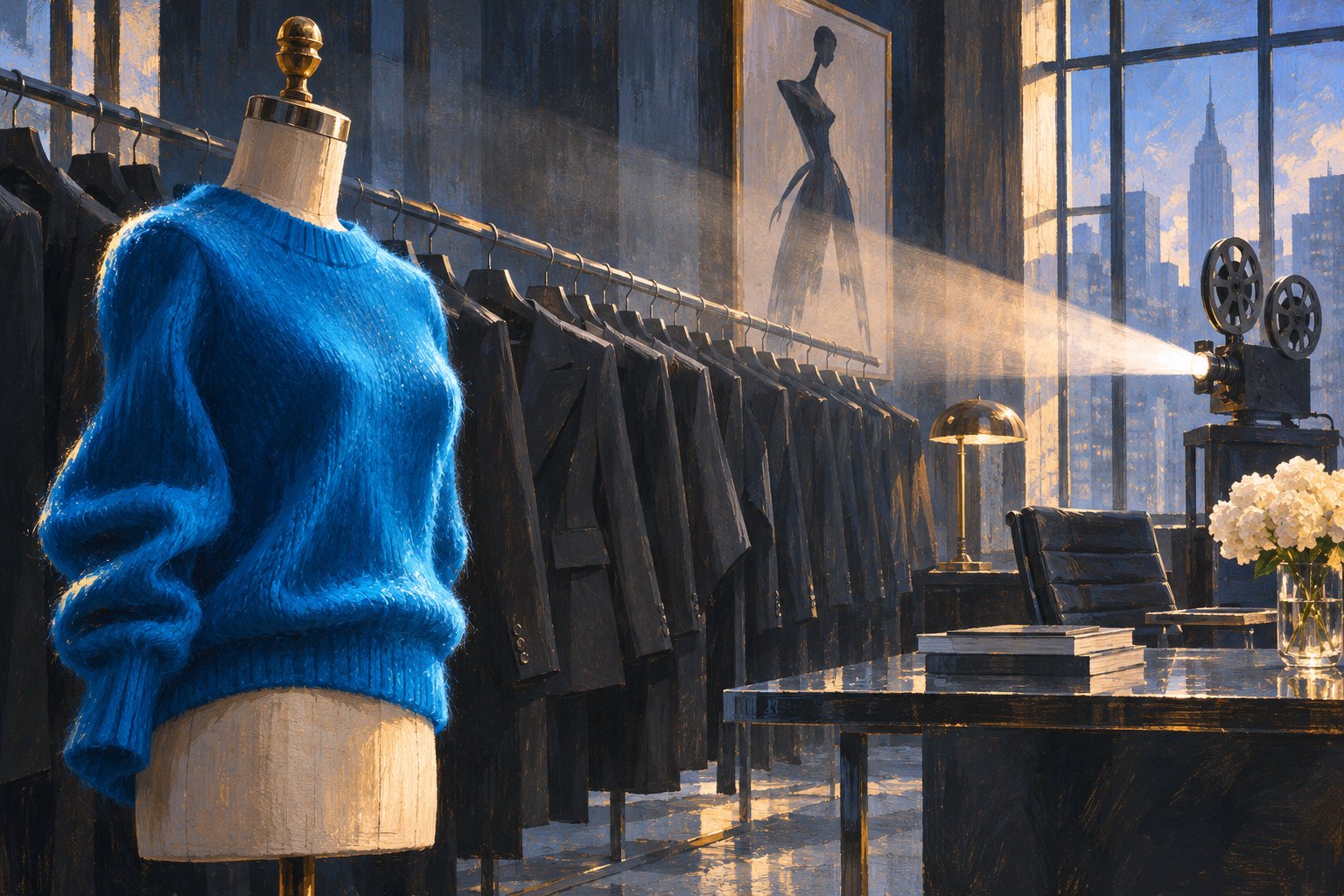
When film meets fashion, the clothes can tell us who belongs, who commands attention, and who is still learning the rules. The Devil Wears Prada takes that relationship seriously because its characters do. A sweater becomes an argument about cultural influence; a new wardrobe becomes an entrance ticket; impeccable presentation conceals an increasingly uncomfortable bargain.
David Frankel’s 2006 comedy-drama, written by Aline Brosh McKenna, remains an especially revealing example of fashion serving character. Its strongest insight is that appreciating beautiful work and accepting a destructive workplace are separate decisions. Andy Sachs spends much of the movie confusing them.
Spoiler warning: This review discusses the original film’s major character turns and ending.
Andy’s mistake is assuming she stands outside fashion
Andy, played by Anne Hathaway, wants to become a journalist. Working for Miranda Priestly at Runway magazine appears to offer a difficult but useful route toward that ambition. She arrives with confidence in her intelligence and little curiosity about the professional culture she hopes to use as a stepping-stone.
That combination makes her sympathetic without making her entirely right. Andy deserves decent treatment. She also needs to recognize that unfamiliar work can involve expertise she has not bothered to understand. The film becomes more interesting whenever it allows both propositions to remain true.
Hathaway’s performance makes Andy’s early defensiveness legible. Her awkwardness is partly discomfort and partly a protective claim to superiority: if fashion is trivial, failing to fit in cannot really count as failure. Her changing attitude therefore matters more than any individual outfit. Learning to look carefully is a genuine professional improvement, even when the institution teaching her is cruel.
This is also why costume belongs in serious film analysis. A character’s wardrobe can express a belief before dialogue names it. Andy initially wears her distance from Runway’s values; later, looking comfortable within its world makes that distance harder to maintain.
The cerulean speech wins an argument—and exposes a hierarchy
When Andy reacts dismissively to a discussion of accessories, Miranda turns her attention to Andy’s blue sweater. Her explanation traces its color through a chain of fashion decisions, challenging the idea that Andy’s apparently ordinary clothing exists outside the industry.
The scene works because it changes the scale of the conversation. Andy sees an object. Miranda sees a system of production, selection, imitation, and consumption. Suddenly, the person who thought she was observing nonsense discovers that she has missed the structure underneath it.
Yet Miranda’s command of the subject should not settle every question the scene raises. Expertise gives her a persuasive explanation; it does not automatically justify public humiliation. My reading is that the sequence invites admiration for her knowledge while making the pleasure of watching her dominate someone slightly uncomfortable.
Meryl Streep makes that imbalance almost physical. Miranda rarely needs the vocal energy everyone else expends around her. Her quiet delivery forces other people to concentrate, anticipate, and retreat. The familiar dismissal, “That’s all,” closes more than a conversation. It announces who gets to decide when a conversation has served its purpose.
The makeover makes the audience part of Andy’s problem
With Nigel’s help, Andy learns to dress for Runway. The transformation is pleasurable to watch: new silhouettes, greater assurance, a sense that she can finally move through the office without apologizing for occupying space.
That pleasure is essential to the film’s argument. If success looked wholly miserable, Andy’s attachment to it would be difficult to understand. Instead, the movie lets us enjoy her growing fluency. We want her to be capable, admired, and comfortable in her own body.
The trap is treating all those improvements as proof that the surrounding demands must be worthwhile. Looking the part can help someone enter a room without giving that person meaningful control over what happens there. Andy’s appearance changes faster than her ability to set boundaries.
The montage also reveals a tension in the film itself. Its glamorous imagery can make conformity look like personal liberation. That tension strengthens the drama when the story later asks what Andy has purchased with her availability. Fashion is an expressive resource here, but institutional approval remains conditional.
Emily and Nigel show two versions of belonging
Emily, played by Emily Blunt, understands the office’s rules and invests intensely in the rewards they promise. Her anticipated Paris trip gives that investment a concrete destination. When Andy takes her place, professional advancement becomes painfully personal.
Blunt’s sharp comic timing keeps Emily from becoming merely an emblem of workplace suffering. Her impatience is funny, but beneath it sits the anxiety of someone whose distinction must continually be defended. Andy’s rise threatens the story Emily has told herself about what endurance will eventually earn.
Nigel’s relationship with fashion reaches deeper. Stanley Tucci gives him the authority of someone who genuinely loves the creative world he inhabits. His support helps Andy recognize that the magazine contains talent and meaning as well as vanity.
That makes Miranda’s decision to divert the James Holt opportunity away from him especially damaging. Nigel has understood the culture, contributed to it, and remained loyal. None of those achievements protects his future when someone more powerful needs a bargaining chip.
His disappointment exposes the limit of the workplace’s promise: excellent work may be necessary for advancement without being sufficient. The same question of who gets to define success runs through our analysis of ambition and dignity in Rocky. Recognition becomes unstable when another person controls its terms.
Miranda is compelling because understanding her does not resolve her
Miranda’s weary private moments complicate the imposing image she maintains at work. They reveal someone who experiences loss and anticipates judgment, rather than an authority figure who exists only to punish assistants.
Streep makes those glimpses moving without turning them into an acquittal. Vulnerability can explain a person’s defenses while leaving the consequences of their decisions intact. Miranda’s capacity to suffer does not erase Nigel’s disappointment or Andy’s exhaustion.
Her dry response to a predictable editorial suggestion—“Florals? For spring? Groundbreaking.”—also demonstrates why people value her judgment. She can identify creative complacency instantly. The unresolved question is whether her standards require the human cost she treats as inevitable.
That distinction between understanding a character and accepting her account of herself also informs our reading of authority and denial in The Others. Strong performances let competing truths remain visible.

The ending asks Andy to choose what competence is for
In Paris, Miranda recognizes aspects of herself in Andy. The comparison disturbs Andy because she can no longer explain every compromise as something imposed on her. Her decisions have helped her succeed, and other people have absorbed some of their costs.
Walking away and throwing her phone into the fountain makes the break visible. The gesture rejects permanent availability, but the deeper change concerns responsibility. Andy has to acknowledge her participation before she can choose differently.
The ending offers a comparatively gentle landing, including Miranda’s favorable professional recommendation. That generosity makes the exit easier than it might be outside a comedy-drama. It also preserves the film’s affection for its characters: leaving does not require Andy to pretend she learned nothing or that Miranda possesses no admirable qualities.
For me, this is why the film’s meeting with fashion is serious. Clothes give its characters ways to communicate, create, and belong. The danger emerges when belonging becomes a reason to abandon judgment. Andy’s eventual achievement is learning to value a world without granting it unlimited authority over her life.
Original content by this site's editorial team. Published: November 12, 2026 at 10:29:24 PST (Los Angeles time)