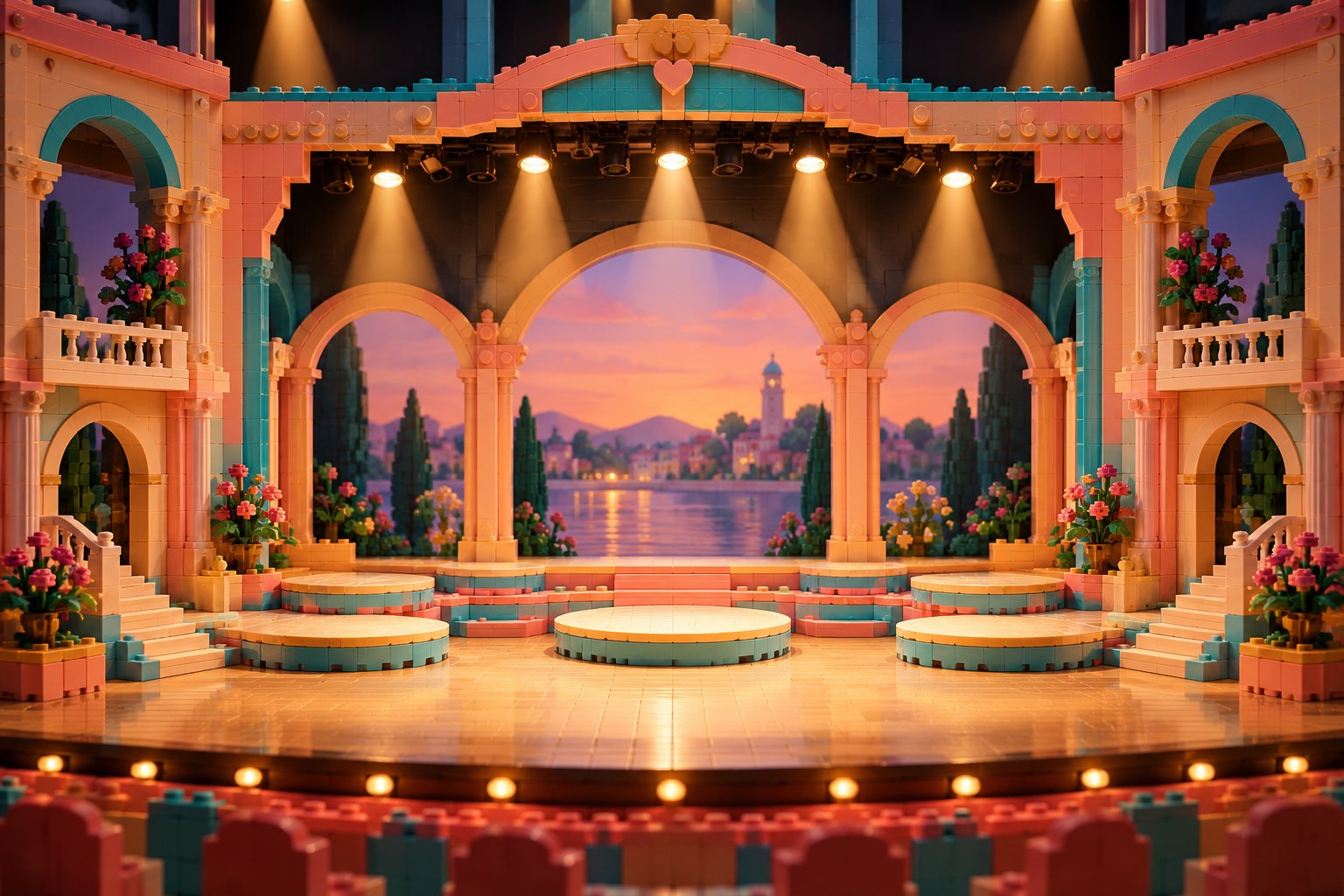
Kenny Ortega’s involvement in producing LEGO Friends’ Heartlake the Musical, the subject of a Variety report, brings together two ideas with an appealing creative connection: building something and performing something together. Both require individual contributions to become part of a larger design. For a musical carrying the Friends name, that connection offers a more interesting starting point than colorful scenery alone.
The immediate attraction is clear: a familiar play world becomes the basis for musical storytelling. The harder question is what that transformation means for the people inside the story. Can friendship become a process the audience understands through choices, disagreements, and cooperation? That is the most useful lens through which to consider Ortega’s involvement.
This is spoiler-free commentary on the project’s creative premise, not a review based on a screening. It makes no claims about specific scenes, performances, dialogue, or the ending. A detailed verdict on those elements would require the finished film; memorable lines and hidden references should likewise come from verified viewing.
What Ortega’s producing involvement tells us
The reporting establishes a connection between Ortega and the musical’s production. It does not, by itself, establish how every creative decision was made or how successfully the film works. A producer’s name can help frame audience expectations, but it cannot substitute for examining the movie.
That distinction matters especially with musicals, where viewers often associate the finished result with a single creative personality. What appears effortless on screen depends on many interdependent decisions: the relationship between music and dialogue, the staging of bodies, the clarity of a character’s intention, and the moment an editor chooses to leave a face.
For Heartlake the Musical, the useful question is therefore what kind of dramatic experience the production supports. Does the musical format allow characters to express competing wants? Does it make cooperation visible? Does the world feel open to its inhabitants’ imagination? Those are standards for assessing the film, rather than conclusions that can be drawn from its producing credit.
A building toy suggests a distinctive way to think about character
A toy-inspired film has an unusual opportunity: it can borrow a way of playing as well as a recognizable appearance. Building involves trying a combination, discovering that it does not work, and deciding what to change. That process offers a strong metaphor for relationships, provided the storytelling gives it emotional consequences.
Consider the difference between a character who joins an already harmonious group and one whose arrival changes how that group operates. The first can receive a welcome without affecting anything. The second has preferences, limitations, and ideas that other people must accommodate. The second situation offers more substantial drama because belonging requires a response from everyone.
This is a hypothetical distinction, not a description of Heartlake’s plot. It identifies what would make the connection between construction and friendship satisfying. A character should contribute more than a special talent that happens to solve a problem. Their presence should influence the group’s understanding of what it wants to build.
The same principle applies to visual design. An attractive environment can establish a mood, but a meaningful environment reflects what characters do within it. Places become memorable when they carry experiences: a disagreement, a risky first attempt, an act of generosity. Recognition gets an audience through the door; accumulated feeling gives the location value.
Friendship becomes interesting when preferences collide
The word “friends” promises warmth, but warmth does not require constant agreement. Some of the most recognizable conflicts in stories for younger audiences arise from modest differences: who chooses the activity, whose idea gets heard, or whether someone feels comfortable joining in.
Such conflicts work because the stakes belong to the characters. A seemingly small disappointment can matter deeply to the person experiencing it. Treating that feeling seriously gives a family film emotional scale without requiring an enormous threat.
My critical preference is for friendship stories that allow more than one person to have a reasonable position. If every disagreement comes from a single obviously selfish character, reconciliation becomes predictable. When two friends want understandable but incompatible things, cooperation requires thought. Someone may need to listen differently, revise a plan, or accept an imperfect result.
That also makes an ensemble worth watching. Supporting characters should retain interests that exist beyond helping the central figure feel accepted. A group becomes convincing when its members could each describe the same experience differently.
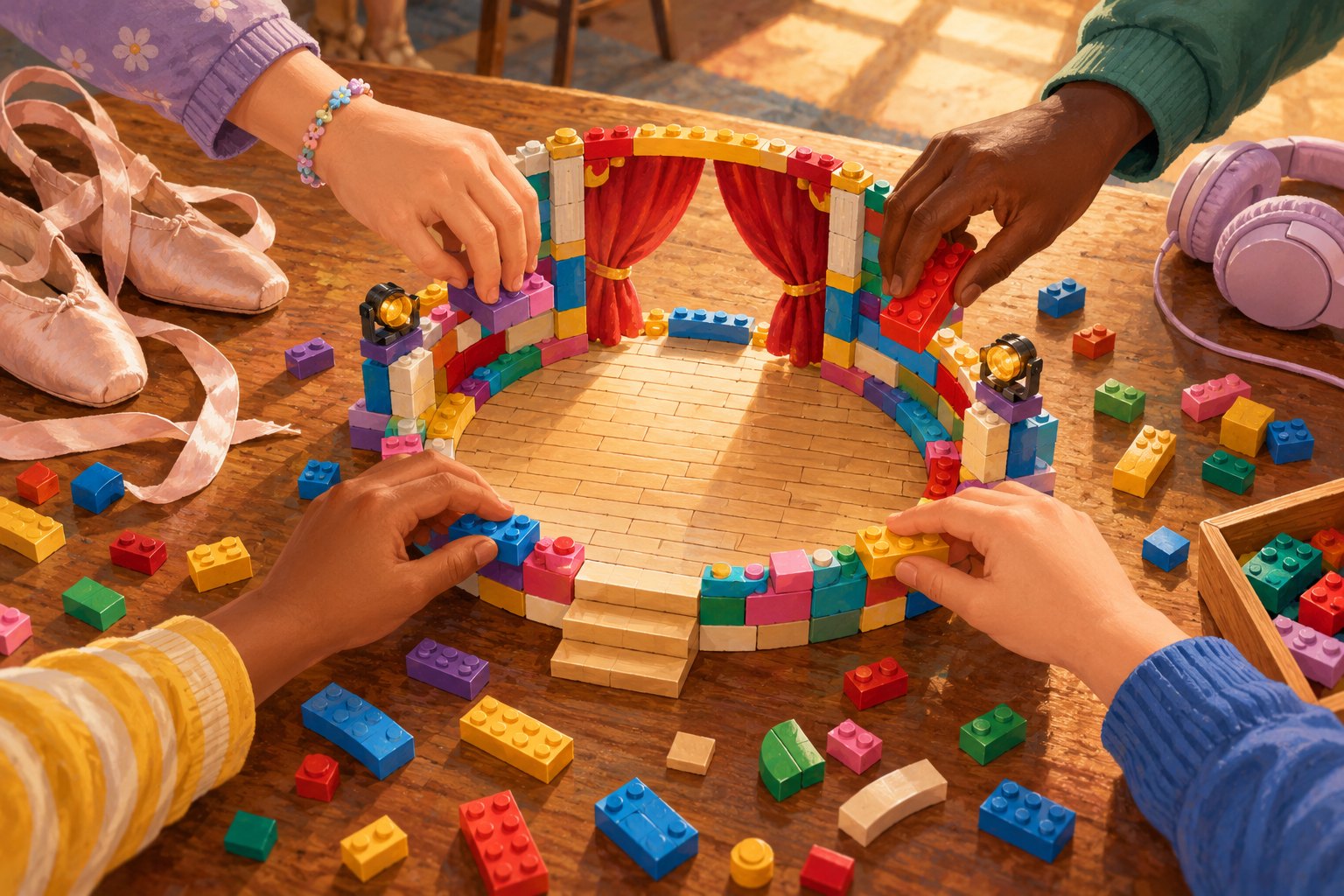
Choreography can show who belongs—and on whose terms
Musical staging gives these questions a physical form. Distance, direction, and timing can communicate relationships before dialogue explains them. A performer who watches from the edge of a formation occupies a different dramatic position from one who confidently sets its pace.
Yet joining the formation is not automatically a complete emotional resolution. There is a meaningful difference between learning to participate and being required to become indistinguishable from everyone else. A friendship musical can explore that distinction by allowing individual movement, hesitation, or initiative to remain visible within a shared performance.
This is where the project invites a broader question about ensemble storytelling: does togetherness make room for difference? Perfect synchronization can deliver pleasure, but a small adjustment made for another person can carry its own dramatic force. The audience understands that someone noticed someone else.
Our discussion of how musical numbers can change relationships explores a related principle. For Heartlake, the particularly promising possibility is physical cooperation: the way a group shares space can express the values that its dialogue names.
What viewers should look for beyond the colorful premise
A fair assessment of the finished film should begin with character agency. Who makes decisions? Who is allowed to be wrong? Whose contribution changes the outcome? These questions help distinguish a story about friendship from one that simply decorates its action with friendly behavior.
Clarity matters, too. A young viewer should be able to understand why someone feels excluded or why a choice is difficult. That does not require characters to explain every emotion. A held reaction, an interrupted gesture, or a change in attention can make a feeling legible without flattening it.
Finally, spectacle deserves to be evaluated on its own terms without becoming the only measure. An energetic sequence may be enjoyable even when it contributes little to character development; recognizing that pleasure is part of honest criticism. The next question is whether the film creates something that remains after the excitement passes. Our commentary on spectacle and lasting dramatic impact considers that distinction in another adaptation context.
The deeper promise: a world its characters can help shape
The most compelling interpretation of Heartlake’s premise is that friendship resembles a shared construction whose design remains open. Each participant brings something, and the result changes because they were there. Under that interpretation, belonging involves influence as well as acceptance.
That is a worthwhile standard for a LEGO Friends musical. It asks the film to respect the imaginative activity associated with building: making choices, revising them, and discovering possibilities with other people. Ortega’s involvement makes the project a subject of interest; only the film itself can demonstrate whether that promise becomes convincing drama.
What would make the musical linger, in my view, is the sense that its characters have helped create the community they inhabit. A cheerful group picture can celebrate friendship. A story that shows how each person changed that picture can give the celebration meaning.
Original content by this site's editorial team. Published: October 21, 2026 at 10:45:31 PDT (Los Angeles time)