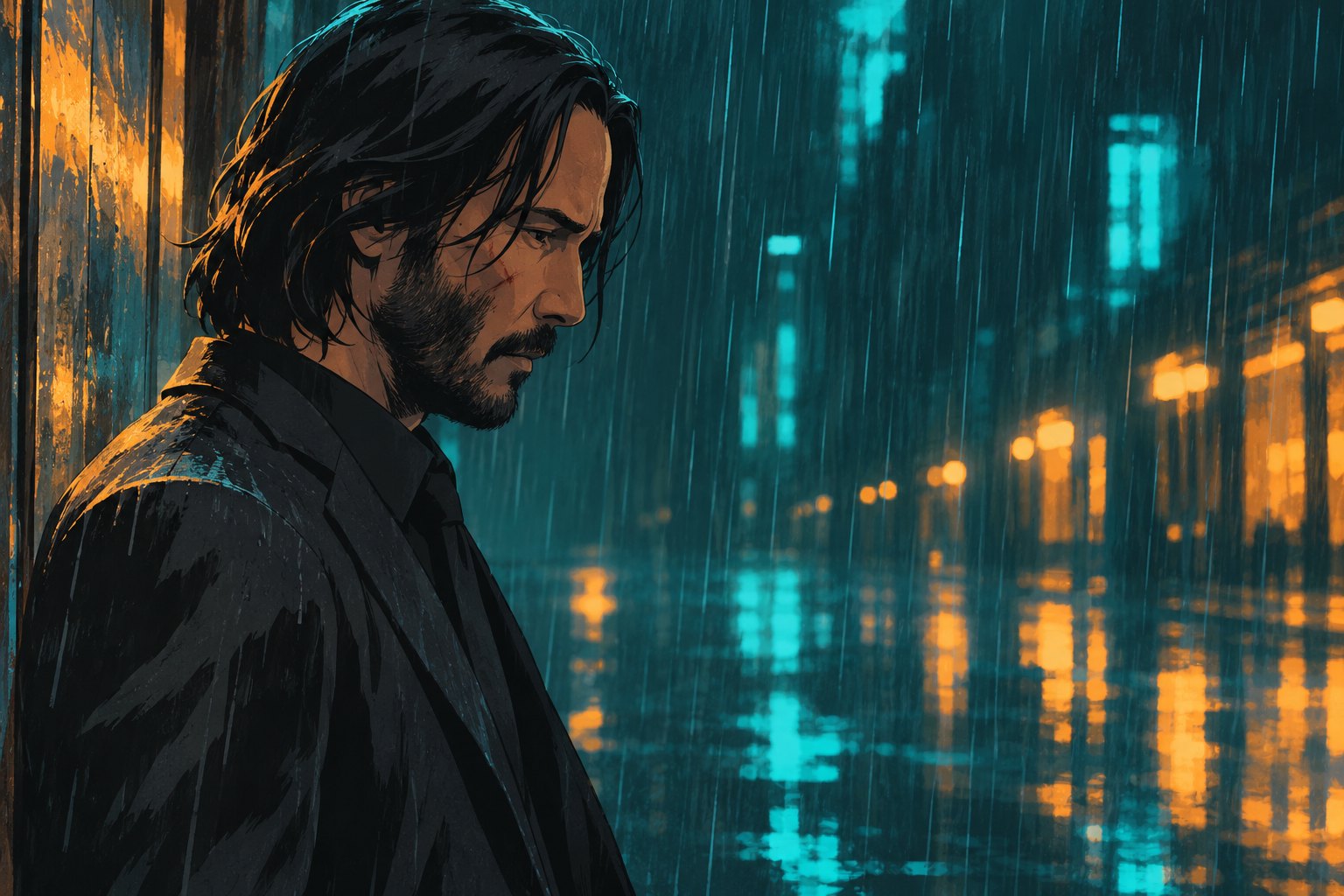
Keanu Reeves is set to return as John Wick in an animated prequel movie, according to Variety. The prospect immediately invites thoughts of elaborate fights and a younger version of the feared assassin. But the most compelling reason to revisit John’s past is emotional: somewhere before the first film, a man exceptionally good at killing decided he wanted a different life.
That contradiction remains the character’s strongest asset. An animated return could give his legend extraordinary visual scale, but its dramatic value will depend on whether the person inside that legend still matters.
This is a critical preview informed by the original John Wick, not a review of the animated film. Major spoilers for the first movie follow. The reported return establishes the subject of this discussion; the creative possibilities below are interpretation, not descriptions of confirmed prequel scenes.
John’s grief gives the original film its force
The first John Wick establishes an essential imbalance: its protagonist knows how to survive violence but struggles to survive loss. After Helen’s death, the puppy she arranged for him to receive gives his days a modest purpose. Daisy needs attention, food, and companionship. Those needs offer John a way to participate in life when withdrawal would be easier.
When Iosef and his companions invade his home, steal his car, and kill Daisy, they destroy more than something he loves. They interrupt the fragile routine through which he might have learned to live with grief. John later describes the puppy’s gift as an opportunity to “grieve unalone.” That strange, tender phrase explains the film more effectively than any tally of its action sequences.
My reading is that John’s revenge feels emotionally persuasive because the film first establishes his capacity for care. His violence is frightening precisely because we have seen another version of him. The story gives us enough access to his tenderness that his return to killing registers as a loss, even while the choreography makes it thrilling.
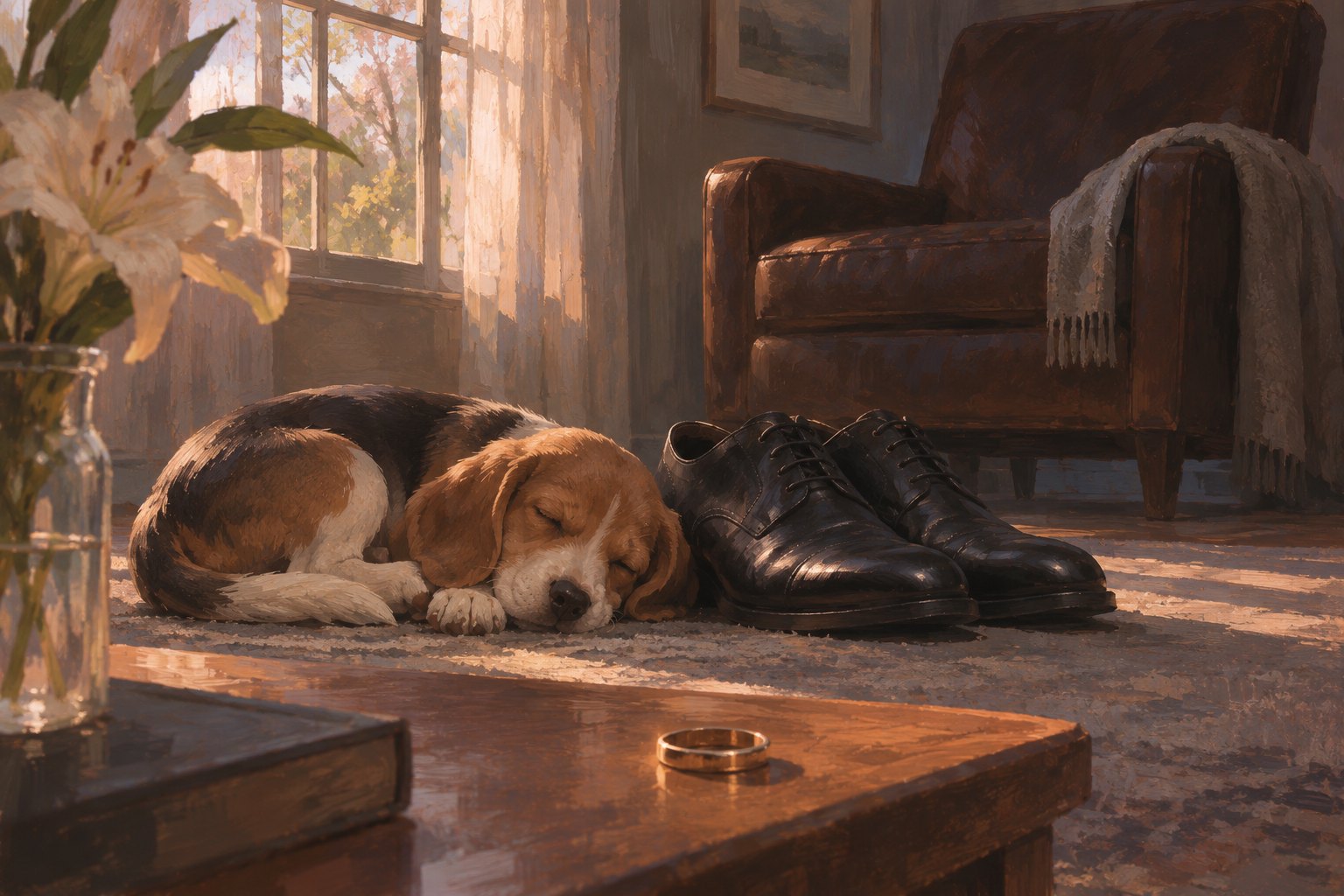
A prequel has an opportunity to approach that conflict from the opposite direction. It could make the audience understand why ordinary companionship would become worth leaving an entire identity behind. That is a more demanding emotional assignment than demonstrating that John was always dangerous.
Viggo’s fear creates a legend before John proves it
One of the original film’s sharpest choices is to let Viggo explain John’s significance to Iosef. The son sees a man whose possessions he wants. The father recognizes someone whose abilities helped establish his own power. Their disagreement is about knowledge as much as arrogance: Iosef has inherited an intimidating world without understanding how it was built.
Viggo’s description of John as a man of “focus, commitment, sheer will” sounds almost admiring. Yet the admiration carries terror. He knows these qualities cannot simply be switched off once they threaten his family.
The scene also makes John’s departure from that world intriguing. Viggo recalls giving him an “impossible task” as the price of leaving. In the original film, the assignment works through omission. We see what remembering it does to Viggo, which allows the audience to imagine something larger than a single flashback could easily contain.
That is an important distinction for any exploration of John’s past. Showing more does not automatically reveal more. A sequence could explain exactly how he defeated a room full of opponents while telling us very little about what freedom meant to him. The valuable revelation would be the choice underneath the feat.
Reeves makes silence part of the character
Reeves’ performance gives John a useful division between physical certainty and emotional difficulty. In combat, his decisions become visible through movement: he changes position, closes distance, and responds to immediate threats. In conversation, feeling often seems harder to organize.
That contrast helps the original film avoid making competence synonymous with confidence. John can navigate danger with astonishing precision while remaining unable to repair the central damage in his life. His famous declaration, “I’m thinking I’m back,” is satisfying, but it also marks the return of an identity he had worked to escape.
Animation could preserve that tension through pauses, posture, and the relationship between a voice and a drawn expression. A lowered gaze might carry as much meaning as a spectacular movement across the frame. These are possibilities of the medium, not predictions about the film’s eventual visual style.
Reeves’ return matters because familiarity can make small changes legible. A less guarded delivery or a moment of uncertainty could suggest a different stage in John’s life without requiring a speech explaining his psychology.
Helen should matter as a person
The original film largely presents Helen through John’s memories and the consequences of her absence. That limited perspective suits a story about bereavement: he keeps returning to traces of a relationship he cannot recover.
A story set earlier would face a different challenge if it brings their relationship into focus. Helen would need desires, judgments, and boundaries of her own. Treating her simply as the reward awaiting a successful assassin would reduce the relationship that gives the first film its emotional weight.
Nor would affection alone explain John’s transformation. Choosing a shared life requires habits that his profession hardly encourages: trust, patience, vulnerability, and responsibility without control. Watching him struggle with those demands could reveal something that another demonstration of perfect aim cannot.
That connection between intimacy and change also shapes our character analysis of Good Will Hunting. In very different genres, both stories make extraordinary ability less interesting than the difficulty of allowing another person to matter.
Action needs resistance, even in animation
The original John Wick makes action readable by keeping attention on bodies, spaces, and immediate objectives. John’s effectiveness is exciting because we can follow the problems he solves. His injuries also matter: mastery does not spare him pain.
An animated film could expand the visual vocabulary considerably. Exaggerated perspective, expressive color, or abrupt shifts in rhythm could communicate how an encounter feels as well as what happens. But those freedoms would be most useful if the audience still understood distance, effort, and consequence.
My standard would be simple: each major action sequence should change our understanding of John or alter the cost of what he wants. Escalation becomes dramatically thin when the only difference between encounters is the number of opponents.
The same concern informs our discussion of the human stakes behind continuing Godzilla’s story. Spectacle earns its lasting impact through the lives and choices it puts under pressure.
The deeper story is about escaping usefulness
Seen through John’s perspective, the original film is about grief forcing a return to familiar behavior. Seen through Viggo’s, it is about a former instrument of power becoming uncontrollable. The distance between those viewpoints explains why the character remains compelling: other people value the very capabilities he once tried to stop using.
That gives an animated prequel a rich question to explore. What does it take for someone valued primarily for violence to believe he deserves an ordinary future? His reputation may secure obedience, but it cannot provide the intimacy he wants.
The strongest version of this return would make leaving feel like John’s most consequential ambition. Audiences already understand why people fear him. Understanding why he wanted to become someone else could make the legend hurt again.
Original content by this site's editorial team. Published: November 5, 2026 at 17:14:35 PST (Los Angeles time)