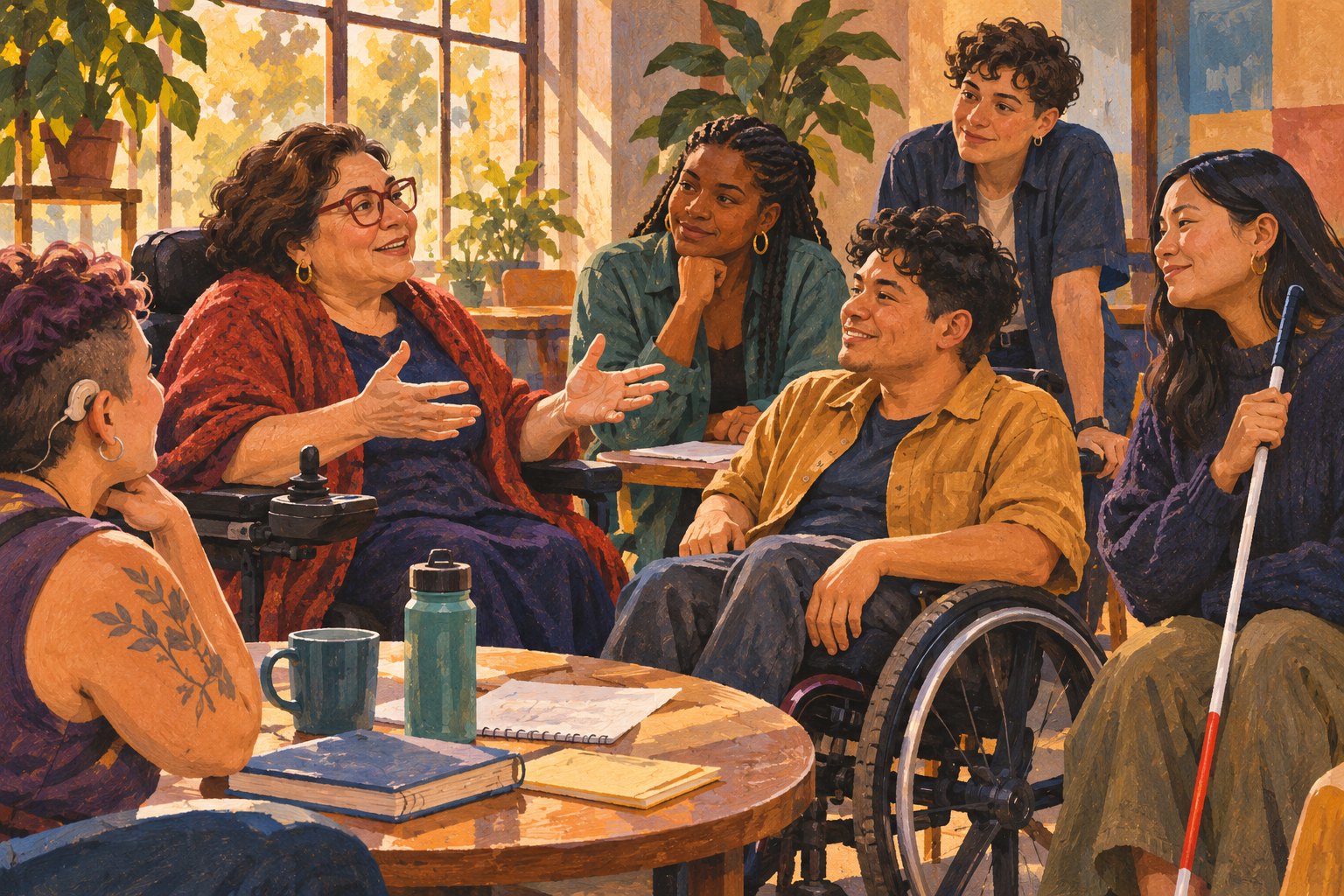
Judy Heumann’s legacy continues through younger disabled people who understand access as something they can demand. NPR’s reporting on a new generation of disability rights activists makes that continuity tangible: members of Judy’s League describe finding renewed determination in her story. For movie viewers seeking to understand the organizing behind that inheritance, Crip Camp: A Disability Revolution remains a compelling starting point.
Directed by Nicole Newnham and former camper Jim LeBrecht, the 2020 documentary connects life at Camp Jened with the disability rights movement. Its strongest insight, in my reading, is that political confidence grows through relationships. Before people can sustain a public demand, they need opportunities to recognize one another’s experiences—and to imagine daily life arranged differently.
Spoiler note: This retrospective discusses the documentary’s personal stories, protest sequences, and broader historical trajectory.
Jim LeBrecht Makes Belonging the Starting Point
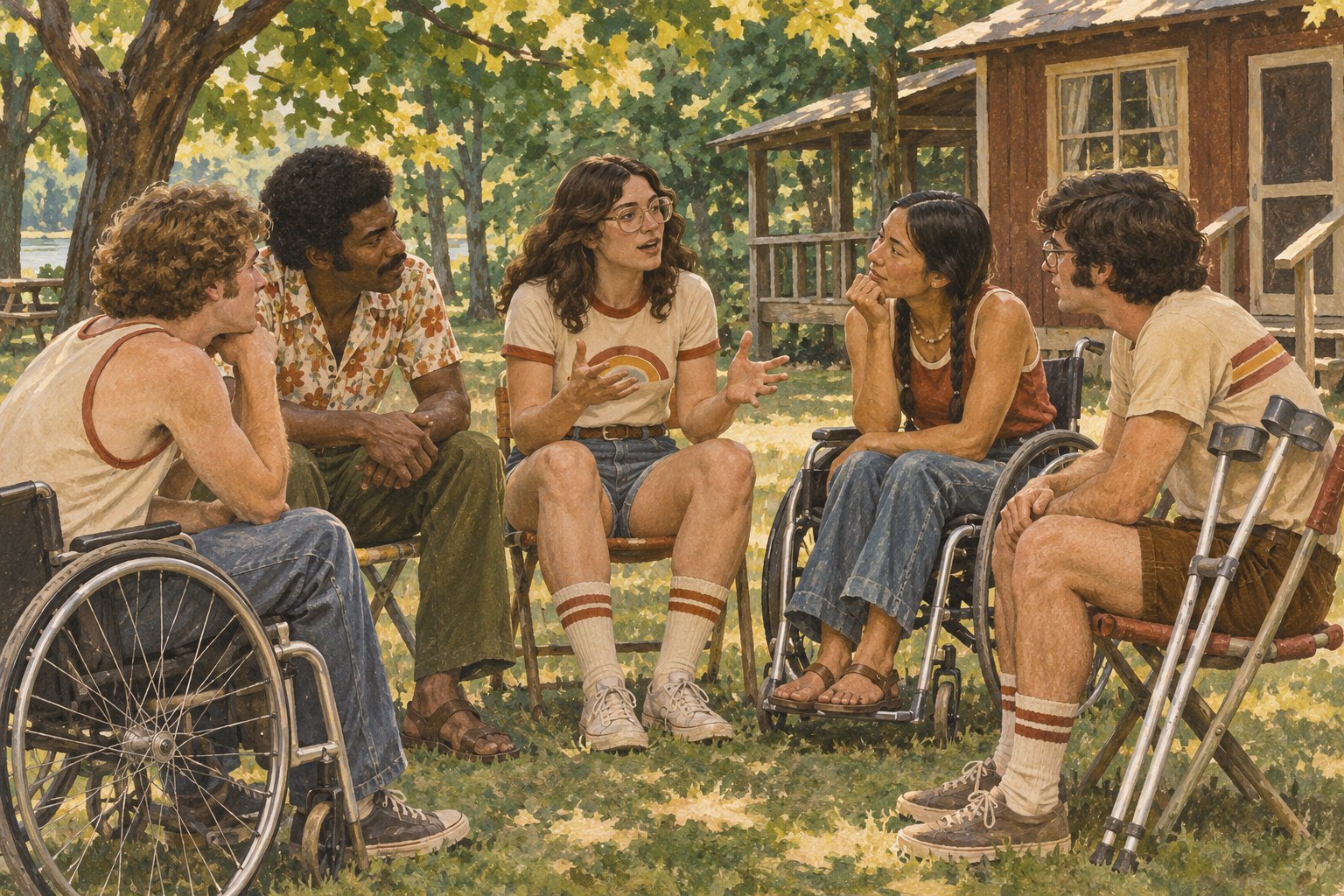
LeBrecht supplies an unusually effective perspective because he is both a filmmaker and someone whose life belongs to this history. His childhood footage introduces a person navigating his surroundings. Later, the camp offers another kind of environment: one in which disabled young people can socialize, experiment, and develop relationships without continually having to justify their presence.
That transition gives the film its emotional foundation. Viewers encounter exclusion through its effect on a young person’s possibilities. The question becomes how much of someone’s life is spent negotiating permission to participate.
The camp sequences also establish stakes that a conventional biography might rush past. Friendship, attraction, boredom, and pleasure all matter. The young people have lives worth defending before they become historically significant. Their later activism gains force because the documentary has already shown something of what unrestricted participation could feel like.
This is where LeBrecht’s involvement carries particular weight. His memories help determine what deserves attention. The perspective invites the audience to value experiences that a more distant account might treat as background. A related question runs through our discussion of the lived memory behind Hello Maggie!: whose understanding of an experience shapes its screen presentation?
Heumann’s Leadership Begins With Taking People Seriously
Heumann’s recollection of a child asking, “Are you sick?” exposes how quickly an ordinary encounter can become an act of classification. The question places her outside the other child’s understanding of everyday life. In the film’s larger argument, such moments help explain why deciding for oneself becomes a political concern.
Her emergence as an organizer is powerful because the documentary connects that concern to practical behavior. Conversations require attention. People need room to express preferences and objections. The camp’s discussions about parents, for example, give young people authority over accounts of their own lives.
Those exchanges provide a useful way to watch Heumann. Her leadership is not simply a matter of being the most forceful person in a room. It involves recognizing that other people’s judgments belong in the room at all. The film makes listening consequential: someone who is repeatedly spoken for needs more than a sympathetic audience.
Later, her frustration with official “non-answers” brings the same principle into a confrontation with authority. An official can acknowledge a speaker without addressing a demand. Heumann recognizes that distinction. Her persistence makes the distance between being heard and securing a commitment dramatically visible.
Denise Sherer Jacobson Broadens the Meaning of Freedom
Denise Sherer Jacobson’s presence helps prevent the documentary from becoming an orderly procession of admirable public achievements. Her accounts encompass sexuality, assumptions about disability, and the possibilities opened by a motorized wheelchair. These experiences belong to the film’s political argument because they concern who gets to direct an adult life.
Her discussion of mobility is especially revealing. A wheelchair can expand someone’s choices. From that perspective, independence involves the equipment and support that make decisions actionable. The meaningful question is whether a person can go where they want and pursue the relationships they choose.
The film benefits from letting its participants be candid and funny. Humor changes the relationship between subject and spectator: the audience must respond to personalities, including their appetite for pleasure and their impatience with condescension. Solemn admiration would offer a narrower encounter.
This attention to personhood also makes a useful companion to our discussion of approaching screen stories through the people at their center. A social issue becomes more legible when a film gives individual desires enough space to complicate it.
The Protest Sequences Turn Community Into Strategy
As the documentary moves toward the 1977 Section 504 sit-in, its earlier scenes acquire additional meaning. Familiarity and mutual recognition become resources for collective action. The film shows people working together under pressure, making participation itself part of the organizing challenge.
That movement from camp to protest is the documentary’s strongest structural choice. The two settings illuminate each other. The audience can understand why a shared experience of belonging would make exclusion elsewhere increasingly intolerable.
Heumann’s memorable declaration, “I’m very tired of being thankful for accessible toilets,” expresses the emotional cost of having basic access treated as an exceptional favor. The line is blunt, specific, and difficult to sentimentalize. Gratitude cannot substitute for the ability to move through public life.
My reservation concerns the apparent neatness of the historical progression. A documentary that follows a recognizable community toward major victories can encourage viewers to imagine a more unified movement than any broad struggle actually contains. The filmmakers’ own accompanying statement acknowledges that this is one story among many. Keeping that limitation in mind strengthens the film: its intimacy becomes a perspective rather than a claim to completeness.
What Younger Activists Bring to the Story
NPR’s interviews concern younger activists responding to Being Heumann, a separate dramatization of Heumann’s life. Kaleigh Brendle describes renewed resolve, while Ellana Crew emphasizes the importance of seeing disabled people represented as humorous, sexual, and romantic adults. Those responses offer a useful contemporary lens for revisiting Crip Camp.
The connection is particularly clear around ordinary life. What might look like a small detail to an outside observer can carry enormous significance for someone accustomed to barriers. A friendship, a private decision, or an unremarkable trip can reveal what access makes possible.
The younger generation also changes the meaning of a historical victory on screen. Viewers who inherit its benefits can recognize both its achievement and its limits. Their continuing demands make the ending less comfortable, but more useful. The film becomes material for thinking and organizing rather than an occasion to congratulate the past.
A Legacy Measured in Other People’s Choices
Crip Camp is most persuasive when it shows people discovering that their experiences deserve a collective response. Its deeper subject is the relationship between self-understanding and public action: recognizing a shared barrier changes what a person can imagine asking for.
That is why the film remains valuable alongside reporting about Heumann’s successors. Her legacy can be understood through the choices other people gain the confidence and practical means to make. The documentary’s lasting achievement is to connect those choices to friendship, pleasure, argument, and sustained work. It leaves viewers with a demanding measure of progress: whether disabled people can determine the shape of their own lives.
Original content by this site's editorial team. Published: November 15, 2026 at 03:19:03 PST (Los Angeles time)