Joseph and Vanessa Winter, the directors behind Deadstream, are set to helm Future Me, according to Variety. The announcement gives viewers a new project to follow from filmmakers whose earlier work found an especially uncomfortable connection between entertaining an audience and losing control in front of one.
The reason to be interested goes beyond recognizing their names. Deadstream builds its horror around a character with a clear, embarrassing need: he wants people to watch him again. That need shapes his decisions before the supernatural threat takes over. It is a useful starting point for considering what the Winters might bring to another film, without assuming that Future Me will repeat their previous approach.
This is commentary on the directing announcement, with a character-focused look back at Deadstream—not a review of Future Me. Mild spoilers for Deadstream’s premise and character dynamics follow.
What the Future Me announcement establishes
The central reported development is straightforward: Joseph and Vanessa Winter will direct Future Me. Their connection to Deadstream supplies context for that appointment. It does not, by itself, establish the new film’s tone, visual format, performances, or quality.
Those distinctions matter because a director’s previous success can quickly become an imaginary trailer in the audience’s mind. Someone who enjoyed the Winters’ combination of comedy and horror might begin expecting the same balance here. Someone drawn to their use of recording technology might anticipate another story told through cameras. Neither expectation should be mistaken for a confirmed creative decision.
For now, the most productive question is what their demonstrated strengths could contribute. Our discussion of how a director announcement shapes expectations for House of Night approaches a similar issue: an appointment becomes meaningful through the choices it enables, while the finished work still has to earn its audience’s confidence.
Deadstream starts with a character who needs witnesses
In Deadstream, disgraced internet personality Shawn Ruddy attempts to recover his following by livestreaming a night in an abandoned haunted house. Joseph Winter plays Shawn, making the film’s central performance part of the directors’ broader construction of the experience.
Look at that setup from Shawn’s perspective. The house is initially valuable because it can provide a spectacle. Spending the night there is a means of restoring his public identity. Fear becomes something he can package, present, and potentially turn into renewed attention.
My reading is that this motivation gives the premise its strongest dramatic advantage. Shawn has a reason to put himself in danger that makes emotional sense for this particular person. It need not be sensible to us. His priorities explain why an obvious warning might feel, to him, like an opportunity.
That is also why dismissing him as merely foolish misses part of the joke. A performer can understand how to attract viewers while making terrible decisions about what deserves to be performed. Competence in one area can deepen a character’s vulnerability elsewhere. Knowing how to hold an audience does not mean knowing when to stop.
The camera makes his problem harder
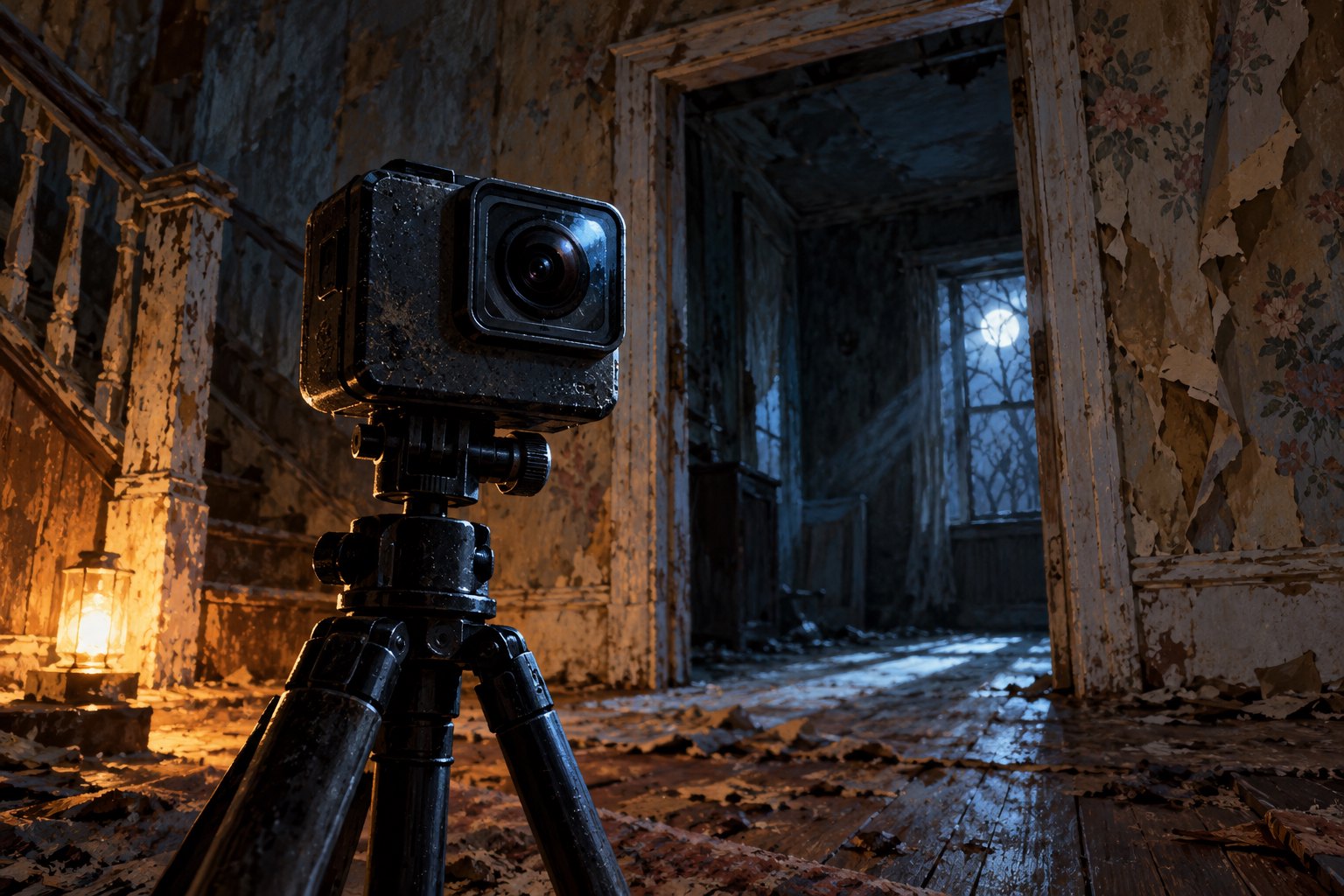
The recording device in this kind of story has two jobs. It gives the viewer access to events, and it gives the protagonist someone to perform for. In Deadstream, that second function is crucial to understanding Shawn.
He enters the situation wanting to influence how others perceive him. Once the danger becomes real, the same public exposure carries a different meaning. Being seen can no longer guarantee that he controls what the audience sees. A comeback performance becomes a record of vulnerability.
For me, this is the film’s most interesting comic tension. The impulse to maintain a persona can survive long after circumstances have made that persona useless. A character can be frightened and still care about looking foolish. Those competing concerns create room for laughter without requiring the threat to disappear.
The livestream’s audience also complicates the idea of solitude. Shawn can be physically isolated while remaining socially exposed. His viewers occupy a separate position: they can respond to an event without sharing its immediate physical consequences. That gap between participation and responsibility gives the format more weight than a simple excuse to keep a camera running.
What the Winters could carry into a different story
The transferable strength here is an ability to connect a character’s desires to the way a movie presents information. Shawn wants attention; the film’s format keeps attention present as a pressure. The storytelling method and the personal weakness reinforce each other.
For Future Me, the interesting possibility is that the Winters could find an equally specific relationship between character and form. That is an expectation about their craft, not a claim about the new film’s plot. A conventional visual approach could serve that purpose just as effectively as an unusual one.
Three questions will be useful when there is finished material to assess:
- What does the central character want? A clear desire makes the consequences of a decision easier to understand.
- What does that desire prevent the character from recognizing? A blind spot can create suspense before any overt threat arrives.
- How does the filmmaking restrict our understanding? Framing, performance, sound, and withheld information can make us share a character’s uncertainty.
These are also performance questions. As our analysis of the character qualities a James Bond screen test should reveal argues, a compelling screen presence depends on recognizable thought and behavior. A memorable appearance helps, but choices under pressure tell us who someone is.
The creative challenge is to earn a new response
There is a possible limitation in the very quality that makes Deadstream distinctive. Building a film around an abrasive personality asks viewers to spend sustained time with someone they may dislike. The character’s unpleasantness can sharpen the satire, but it can also make the experience exhausting. Whether that balance works is a matter of taste, not a test of whether someone understands the joke.
That makes the Winters’ next directing assignment interesting as an opportunity for variation. They need not reproduce Shawn’s personality or his relationship with an audience to preserve their command of discomfort. A quieter character, a different rhythm, or a less comic approach could reveal other aspects of the same filmmaking intelligence. None of those possibilities is a prediction.
Why this directing choice deserves attention
The deeper reading of Deadstream is that visibility and control are separate things. Shawn pursues one as though it will deliver the other. Watching that assumption fail gives the haunted-house premise a human vulnerability beneath its spectacle.
That is the strongest reason to follow Joseph and Vanessa Winter into Future Me. Their earlier film demonstrates how a personal need can become the mechanism that tightens a story around its protagonist. The new project will have to establish its own characters, stakes, and identity. The directing announcement is promising because it puts filmmakers with that demonstrated instinct in position to do so.
Original content by this site's editorial team. Published: October 22, 2026 at 20:49:29 PDT (Los Angeles time)