Joe Bob Briggs has launched Coney Island Pictures, with a Basket Case movie among its projects, according to Variety. For anyone who remembers the original, that announcement raises a question more interesting than how a new production might render its creature: will it understand the brothers?
Frank Henenlotter’s Basket Case, released in 1982, builds its horror around Duane Bradley and Belial, formerly conjoined twins whose surgical separation leaves their emotional dependence intact. Its enduring strength, in my reading, is the collision between a reasonable desire for independence and a loyalty already corrupted by violence. The basket makes an irresistible hook. The relationship gives that hook teeth.
Spoiler warning: This review discusses the original film’s central revelations, sexual violence, and ending. It does not assess the announced film or assume that its story will follow the original.
What the Coney Island Pictures announcement means for viewers
The reported launch and the attached Basket Case project provide a reason to revisit the material. They do not, by themselves, tell us how a finished movie will look or feel. A familiar title can promise recognition without guaranteeing that the filmmakers will preserve the qualities that made it memorable.
That distinction matters especially here. Reducing Basket Case to a grotesque creature emerging from an ordinary container would preserve its advertising premise while losing its dramatic engine. The original repeatedly asks us to reconsider who needs protection, who exercises power, and whether those answers can change within one relationship.
It is the same useful distinction explored in our commentary on why a horror role depends on character: anticipation becomes more meaningful when it concerns choices and relationships, rather than simply the promise of frightening imagery.
Duane: a sympathetic face concealing active complicity
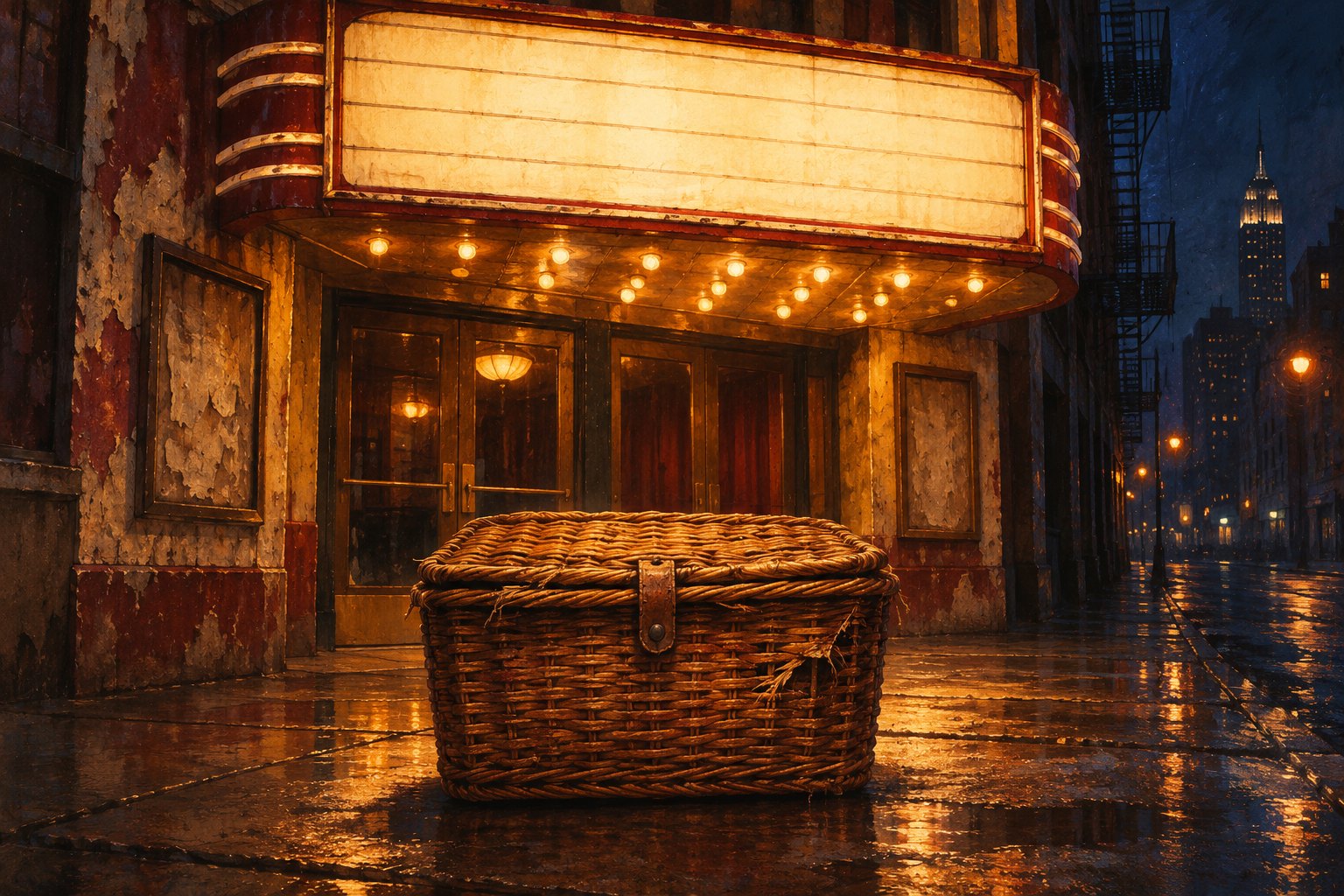
Duane arrives in New York carrying the wicker basket that houses Belial. Kevin Van Hentenryck’s youthful appearance makes Duane seem vulnerable before we understand what he is doing. His uncertainty invites a protective response. Henenlotter then complicates that response by revealing the brothers’ revenge mission against the doctors responsible for separating them.
Duane is no accidental passenger in this violence. He helps make it possible. That distinction gives the film more bite than a simple story about a decent young man burdened by a dangerous sibling. His tenderness toward Belial and his responsibility for other people’s suffering coexist.
The recurring question, “What’s in the basket?”, therefore operates on two levels. It is a comic invitation to reveal the monster, but it also asks what Duane carries into each apparently innocent encounter. People see an awkward stranger. They cannot see the private agreement governing his behavior.
My favorite aspect of this characterization is its refusal to make gentleness proof of goodness. Duane can be shy, lonely, and capable of affection while still participating in terrible acts. His eventual wish for an ordinary life does not erase the choices that brought him to the city.
Belial: abandonment becomes a claim of ownership
The childhood backstory makes Belial’s rage understandable without making his later actions defensible. Their father treats him as disposable; Duane rescues him after the separation. For Belial, his brother is more than family. Duane represents survival in a world that has already decided he should not exist.
From that perspective, independence can register as another threatened abandonment. Yet the film pushes the relationship beyond protective attachment. Belial increasingly behaves as though having needed Duane gives him permanent authority over Duane’s future.
“I’m not deserting you!” is a crucial protest because it exposes the argument beneath the attacks. Duane wants time and experiences that belong to him. Belial interprets that separation as betrayal. Their shared history has left them without a workable language for boundaries.
The basket expresses that contradiction beautifully. It is shelter, concealment, transportation, and confinement. Duane protects Belial by carrying him, but the arrangement also gives Duane access to a public life from which Belial is excluded. Neither brother occupies a simple position of total power or helplessness.
Sharon exposes the limits of their loyalty
Duane’s developing relationship with Sharon, played by Terri Susan Smith, introduces a possibility that revenge cannot accommodate: a future organized around someone else. Their outing to the Statue of Liberty gives his desire for freedom an unusually direct visual setting. Meanwhile, Belial’s telepathic awareness makes even emotional privacy precarious.
The unsettling point is that Duane cannot simply leave the room and become another person. His attachment follows him. The film turns the familiar anxiety of disappointing a loved one into a literal intrusion across physical distance.
Sharon also exposes a limitation in the storytelling. She matters enormously to Duane’s imagined future, but she receives less room to exist beyond that function. Belial’s fatal sexual attack on her makes this imbalance especially disturbing. Her suffering must be recognized as violence against her, rather than treated merely as the event that finally breaks Duane’s patience.
For me, this is where the film’s emotional force and exploitation tactics clash most sharply. Its account of possessiveness is incisive; its treatment of the woman caught inside that struggle is considerably narrower. Both judgments belong in an honest assessment.
Why the roughness helps—and where it does not
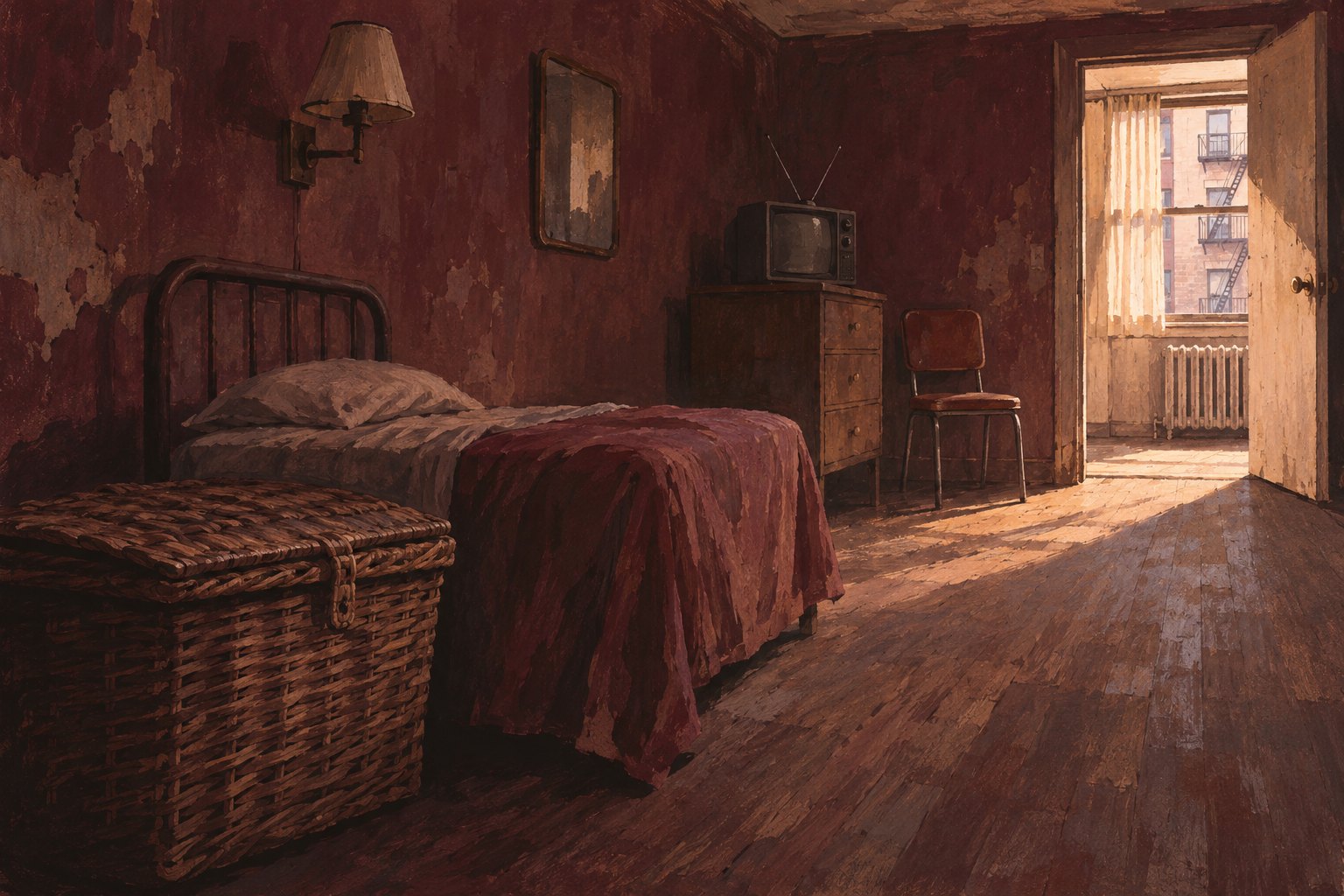
Basket Case works through abrupt shifts between absurdity, tenderness, and ugliness. The shabby hotel environment makes privacy feel temporary. A closed door offers little reassurance when the brothers’ conflict can erupt at any moment.
The creature effects have a conspicuous physicality. Belial occupies space as an unruly object with weight and texture, and his exaggerated movement can be funny before it becomes threatening. I find that instability more expressive than seamless realism would necessarily be. The audience is never allowed to settle comfortably into one response.
That does not make every awkward moment an artistic triumph. Some performances and transitions are blunt, and viewers seeking sustained naturalism may struggle with the tonal jumps. But the handmade quality supports a world in which emotional pressure regularly bursts through ordinary behavior. Our discussion of how unusual filmmaking methods create meaning offers a related question: what does a technique make us feel?
The ending turns attachment into a trap
The brothers’ final struggle sends them through the hotel window and into a fall. Their inability to establish a livable distance becomes physical catastrophe. The relationship that kept Belial alive now threatens to destroy them both.
The deeper horror, to my mind, is the belief that suffering together creates an unlimited debt. Duane helped save his brother, then helped enable his violence. Belial was denied dignity, then denied other people their autonomy. Injury explains the bond’s intensity; it cannot justify everything done in its name.
That is the challenge the new Basket Case project brings into focus. A memorable creature can draw attention, but these incompatible needs sustain the story: the need to belong, the need to leave, and the terror of believing that another person cannot have a future without taking yours away. The original remains worth watching because it makes those needs painfully difficult to disentangle.
Original content by this site's editorial team. Published: November 16, 2026 at 12:05:03 PST (Los Angeles time)