
Deadline has launched its Contenders Film Los Angeles streaming site, bringing a new destination into the conversation around its film event. For movie fans, the announcement raises a practical question: how can watching people discuss filmmaking help us see the movies themselves more clearly?
The launch is the confirmed news. It does not, by itself, establish a catalog of full-length movies, access requirements, regional availability, or how long individual videos will remain available. Viewers should check those details before planning a viewing session. The editorial opportunity is easier to identify: use the occasion to think more carefully about the distance between a filmmaker’s explanation and a viewer’s experience.
This is spoiler-free commentary on the launch and on approaching film-event coverage, rather than a review of a particular movie or an assessment of individual sessions.
Start by separating access from discovery
A streaming-site announcement can mean several things to someone scanning film news. They might expect complete features, recorded conversations, selected clips, or a live broadcast. Those formats serve different purposes, and the word streaming alone cannot tell readers which experience they will get.
That distinction matters because hearing about a film and watching it create different kinds of knowledge. A conversation can introduce a creative problem, illuminate a working relationship, or suggest something worth noticing. Only the finished movie lets us assess how those choices operate across an entire story.
For readers arriving at Deadline’s Contenders Film Los Angeles coverage, the useful first step is therefore simple: identify what a particular listing offers. Check its description for the subject, participants, and format. If you want to discover something to watch, look for a clear account of the dramatic premise. If you have already seen the movie, a discussion of a specific creative decision may be more rewarding.
Listen for the character’s problem
My preferred way into a filmmaking conversation is through character. Broad themes can sound impressive while revealing very little about what happens on screen. Describing a film as an exploration of grief, ambition, or belonging does not yet explain why a particular scene moves us.
A more revealing question is what the central character wants in that scene—and what prevents them from asking for it honestly. Someone seeking forgiveness may argue about a practical inconvenience. Someone afraid of abandonment may insist on being left alone. These are hypothetical examples, but they illustrate the kind of dramatic detail worth listening for.
When a performer describes a role, pay attention to whether the explanation identifies a playable action: persuading, concealing, testing, resisting. Those verbs offer a way back into the performance. They suggest where to look for a hesitation, a change of posture, or a sentence delivered with unexpected force.
Our discussion of why a horror role hinges on character approaches a related issue: a premise becomes emotionally compelling through the person who must live inside it. Film-event commentary is most useful when it helps make that connection more precise.
Ask how the camera changes your allegiance
Character analysis also involves decisions beyond acting. A camera can keep us beside one person while making another difficult to read. An edit can give us information a protagonist lacks. A sound can alert us to something outside the frame before anyone on screen notices it.
For a hypothetical kitchen-table argument, consider the difference between holding both people in a wide shot and cutting repeatedly to one person’s reactions. The wide shot might emphasize their physical distance or allow us to choose where to look. The reaction shots might make one person’s distress the scene’s emotional center. Neither approach is automatically better; each creates a different relationship with the audience.
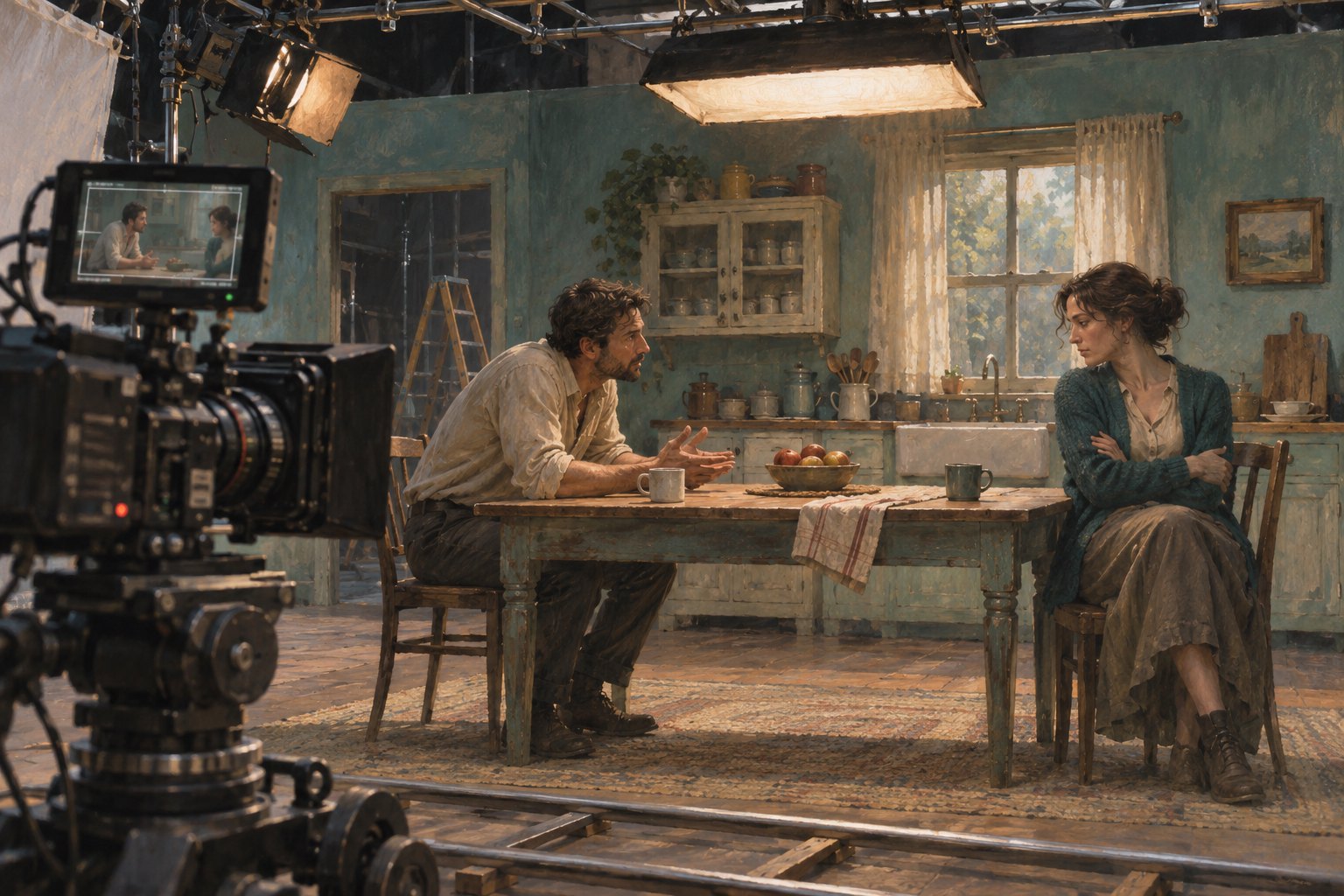
If a creative conversation touches on framing, editing, or sound, connect the technique to that relationship. What does the audience know? Whose uncertainty do we share? When are we invited to understand someone without excusing them?
This is also the useful distinction behind our commentary on what unusual filmmaking tools contribute to storytelling. Learning how an image was achieved becomes criticism when we ask what the image makes us feel or understand.
Let explanations sharpen your judgment
A thoughtful account of a difficult shoot can increase our appreciation of the labor behind a film. It can also make us reluctant to admit that a scene did not work for us. That is an understandable response, but effort and dramatic effect deserve separate consideration.
The same applies to intention. A director might describe an unresolved ending as an invitation to participate. A viewer might experience it as an interruption before the central conflict has developed sufficiently. The explanation is useful evidence about the goal; it does not settle whether the movie achieves it.
A productive response holds both observations together. Identify the intended effect, then examine the choices that support or weaken it. Perhaps the ambiguity grows naturally from a character’s divided loyalties. Perhaps the film withholds information without giving that absence emotional weight. Specificity makes either judgment fairer.
For me, that is the strongest potential value of coverage surrounding the Contenders launch: a reason to revisit a choice, question an initial reaction, or articulate why a moment remains unconvincing.
Handle dialogue and spoilers with care
For an unfamiliar film, even a conversation about an actor’s favorite scene can reveal a turning point. Viewers who value discovering a story without advance knowledge should check descriptions and spoiler notices, and consider saving detailed character discussions until afterward.
After watching, memorable dialogue offers another route into analysis. The important question is not simply whether a line sounds quotable. Ask who says it, who hears it, and what changes because it has been spoken. A declaration can be sincere, defensive, manipulative, or several things at once.
Delivery matters just as much. A pause before a familiar phrase may expose uncertainty; a response withheld can change the meaning of everything that preceded it. When comparing a discussion with the movie, return to the actual exchange rather than relying on an isolated quotation.
A practical way to use the launch
To make a viewing session worthwhile, keep the process manageable:
- Choose one question. Focus on a performance, a relationship, or a formal choice that interests you.
- Check the listing. Establish the available format and any access conditions before assuming what you can watch.
- Notice one concrete explanation. A specific decision is more useful than a string of general compliments.
- Return to the film when available. Test the explanation against the scene and its place in the larger story.
- Keep your own response. New context can change your judgment, but agreement is not an obligation.
The most valuable result is a closer second look
Deadline’s Contenders Film Los Angeles streaming-site launch is an occasion to engage with the conversation around movies. Its deeper value for an individual viewer will depend on what that conversation sends them back to notice.
A character exists through the accumulated evidence of the film: choices, gestures, contradictions, and consequences. An explanation outside the movie can direct our attention toward that evidence. The rewarding moment comes when we return to the screen and discover something there—a withheld glance, an uncomfortable silence, an act of generosity we initially misread—that makes the character more fully human.
Original content by this site's editorial team. Published: November 16, 2026 at 11:22:44 PST (Los Angeles time)