Jessica Rothe and Christopher Landon have worked out a story for a third Happy Death Day movie, according to Rothe’s comments reported by Deadline. The phrase “broke the third movie” describes developing the story; it does not, by itself, establish a production start or release date. For viewers waiting to revisit Tree Gelbman, the creative possibility is exciting because her previous adventures left more to explore than the mechanics of repeating a birthday. [Deadline’s report, syndicated by Yahoo](https://malaysia.news.yahoo.com/happy-death-day-jessica-rothe-142931022.html).
The strongest argument for another installment is Jessica Rothe’s ability to make that repetition feel cumulative. Tree remembers what everyone else forgets. Each reset leaves her with more knowledge, more exhaustion, and eventually more responsibility. Looking back at the first two movies, their most interesting question becomes clear: what does surviving mean when staying alive cannot give you everything you want?
Major spoilers follow for Happy Death Day and Happy Death Day 2U, including their endings. Discussion of a third film’s creative possibilities is criticism, not a description of its undisclosed story.
The first movie makes familiarity dangerous
In Happy Death Day (2017), directed by Landon and written by Scott Lobdell, Tree wakes in fellow student Carter’s dorm room on her birthday. Her initial response is dismissal. The day’s people and obligations register as irritations until a masked attacker murders her and the morning starts again. Repetition turns her casual disregard into a practical disadvantage: she has been moving through a world she barely observes.
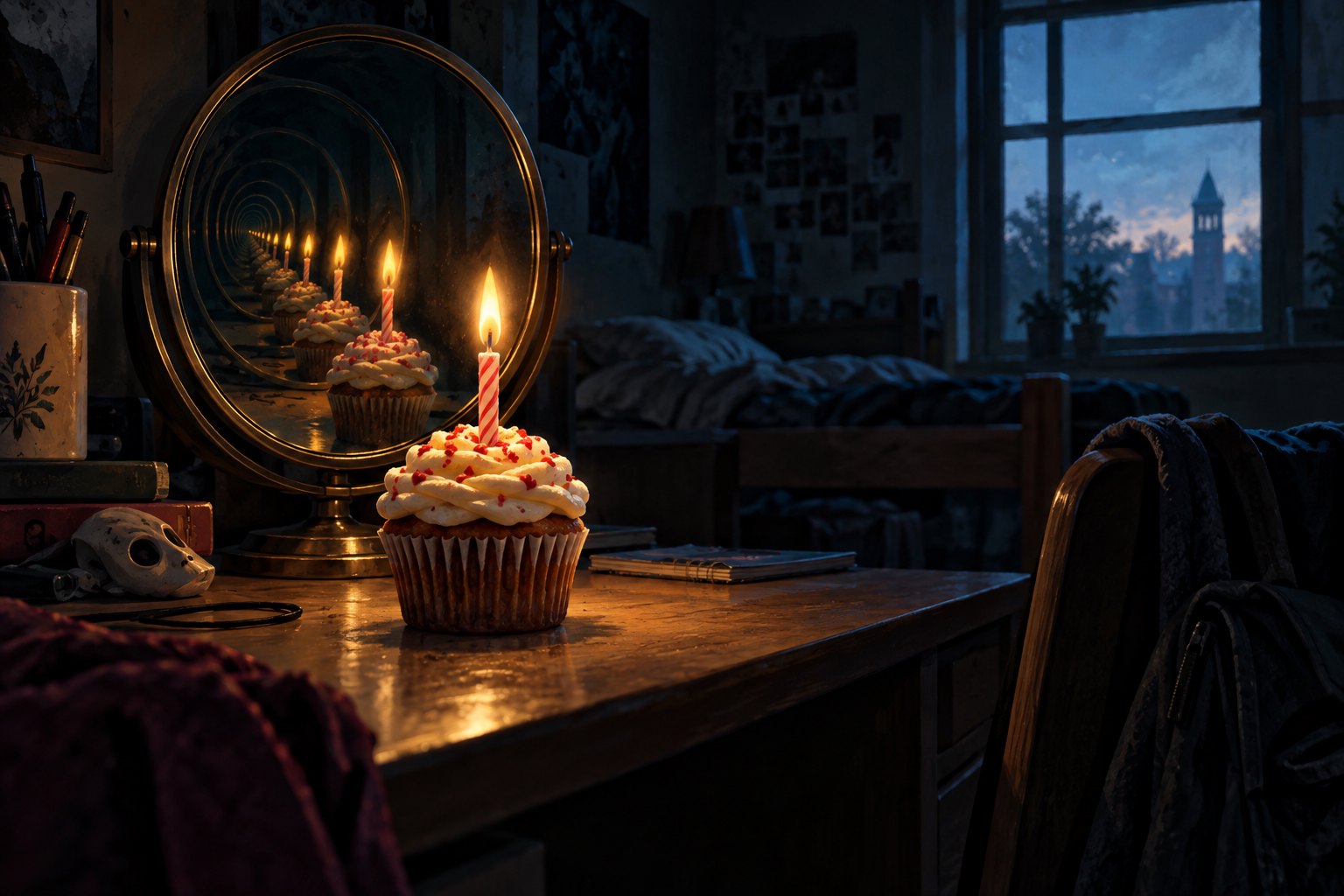
The poisoned cupcake makes that idea concrete. Tree initially throws away her roommate Lori’s birthday offering. Later, believing she has defeated her killer, she eats it—and wakes back inside the loop. The discarded object was crucial all along. Lori’s apparent kindness concealed the threat. The ending rewards Tree for comparing experiences rather than simply becoming more effective at fighting. [The original film’s plot and credits](https://en.wikipedia.org/wiki/Happy_Death_Day).
As a mystery, this is satisfyingly compact. A modest prop becomes evidence without needing a lengthy explanation. As character writing, it is more complicated. Tree’s inattentiveness matters, but her unpleasant behavior does not make her responsible for someone else’s violence. The film works best when her growth feels like an opportunity she claims, rather than a punishment she deserved.
Carter gives Tree someone to take seriously
Carter’s value extends beyond being the nice guy waiting beneath Tree’s defenses. He helps her think through the loop, treating her impossible experience as a problem worth engaging with. Their relationship develops through cooperation. For Tree, being believed becomes part of being safe.
The imbalance between them is essential. She accumulates shared experiences that he cannot retain. A conversation that feels like a continuation to her can be a first encounter for him. Rothe makes that discrepancy playable: irritation gives way to shorthand, then to attachment. The romance grows inside the same mechanism that keeps preventing it from moving forward.
This is where watching how a character listens becomes especially useful. Tree’s development is visible in whose words she allows to interrupt her certainty. Her attention changes before her circumstances do.
My reservation about the original is that its brisk transformation can make emotional repair look unusually efficient. Yet Rothe supplies resistance. Her comic frustration keeps Tree from becoming a blandly grateful heroine. She can become more considerate while retaining the sharp edges that make spending another morning with her entertaining.
Happy Death Day 2U gives escape an emotional cost
Happy Death Day 2U (2019), written and directed by Landon, expands the premise into a parallel reality. Carter’s roommate Ryan and a scientific experiment become central to the explanation. Tree finds herself in a world where Carter is dating Danielle—and where her mother is alive. The altered relationships make a familiar setting emotionally unfamiliar. [The sequel’s synopsis and credits](https://www.rottentomatoes.com/m/happy_death_day_2u).
That last change is the sequel’s best idea. The first film asks Tree to get out. The second gives her a reason to stay. An escape route is no longer automatically a happy ending; it can also be a departure from someone she desperately wants back.
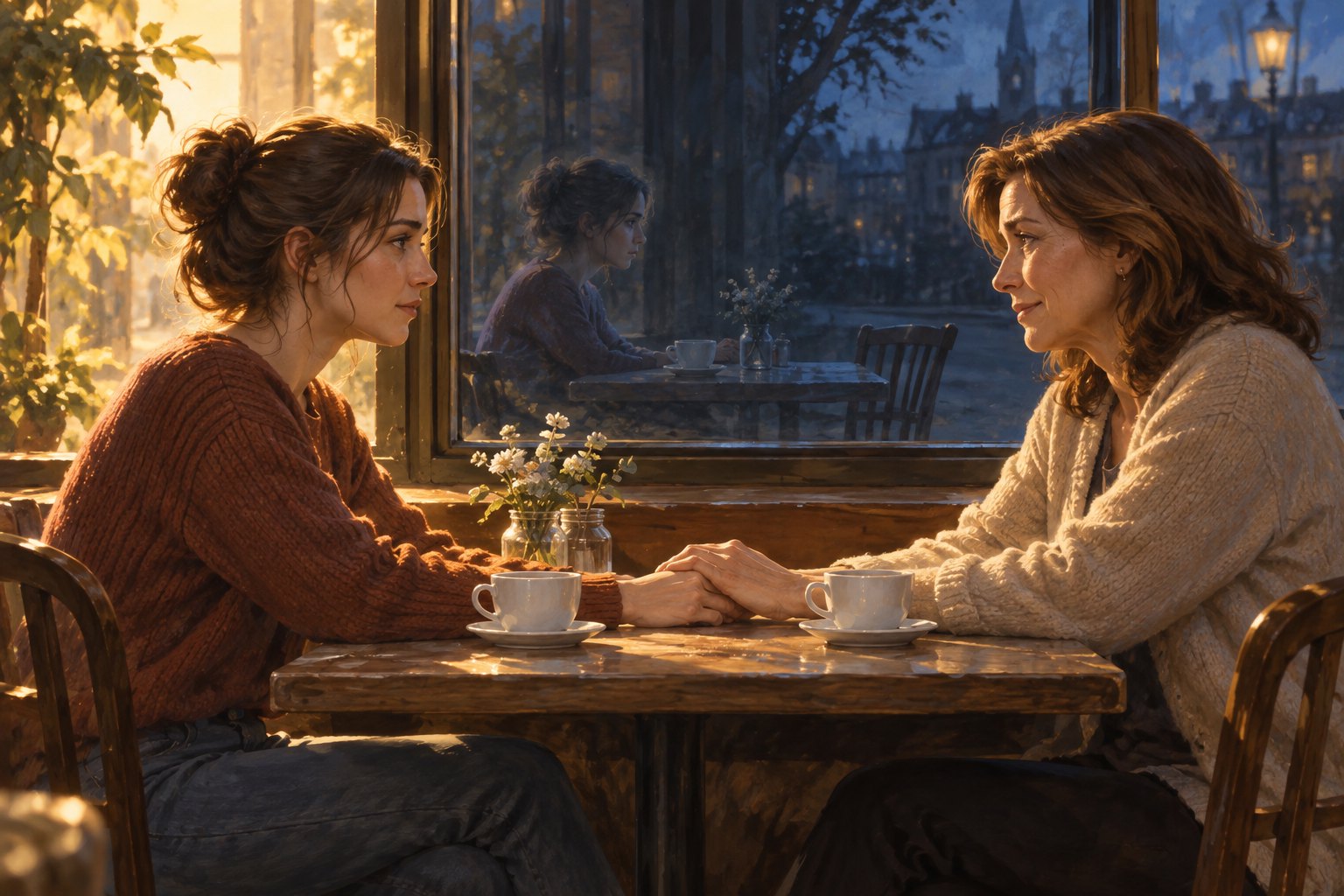
Tree’s observation, “People say ‘I love you’ all the time,” begins a conversation about how absence changes ordinary language. Rothe’s emotional task here is almost the reverse of her comic work. Instead of racing ahead because she knows what happens next, Tree wants to remain inside a moment. Her mother cannot fully understand the weight of that moment, which makes the exchange more painful. [Dialogue documented in Plugged In’s review](https://www.pluggedin.com/movie-reviews/happy-death-day-2u-2019).
For me, these scenes justify the sequel’s larger premise. Parallel worlds become useful because they give grief a tangible temptation. Tree can sit across from someone she lost. The science fiction matters most when it changes what she can bear to choose.
The sequel is moving, even when its argument is debatable
Tree ultimately chooses to return to her original reality. The film presents that decision as an acceptance of her own life, including the experiences that changed her. But the emotional interpretation deserves scrutiny: wanting to remain with a living parent is not automatically a refusal to grow.
The alternate world also contains real relationships and people worth protecting. Treating it merely as an attractive detour would flatten the very emotional stakes that make the sequel interesting. Tree’s choice can be meaningful without becoming a universal lesson about what anyone experiencing grief should do.
Her mother’s advice, “Each day is a chance to be a better person,” offers a more flexible reading. It directs attention toward conduct rather than toward choosing the supposedly correct universe. Tree’s growth lies in taking other people’s lives seriously wherever she finds herself. The line is recorded in the same [discussion of the film’s mother-daughter scenes](https://www.pluggedin.com/movie-reviews/happy-death-day-2u-2019).
Structurally, I find the sequel less elegant than the original. Its scientific problem-solving, murder plot, broad comedy, and family drama compete for emphasis. The machinery sometimes demands attention just when the relationships become most absorbing. Still, that unevenness accompanies a worthwhile ambition: Landon makes the second movie emotionally different instead of relying entirely on recognition.
What a third film needs to preserve
Rothe’s involvement in developing another story matters because these films depend so heavily on the continuity of Tree’s personality. A new premise should account for what she has already learned. Returning her to the same initial selfishness would make the previous movies feel disposable.
The useful creative test is whether a new situation challenges her changed priorities. Can she help without controlling? Can she accept another person’s decision when she believes she knows the consequences? Those are possibilities suggested by the existing films, not claims about Landon and Rothe’s plans. They follow the principle explored in our look at why the character should come first: a returning performer needs a specific dramatic task.
The deeper meaning: a repeated day still leaves a history
The first Happy Death Day remains, in my judgment, the stronger construction; Happy Death Day 2U takes the more affecting emotional risk. Together, they distinguish a reset from an erasure. The world can return to its starting position while Tree carries everything forward.
That is what makes another film worth considering. Tree’s defining achievement is learning to care despite knowing how easily experience can disappear for everyone else. A third movie would earn its place by making that care difficult in a new way—and allowing her next choice to matter as much as her next escape.
Original content by this site's editorial team. Published: September 14, 2026 at 19:35:50 PDT (Los Angeles time)