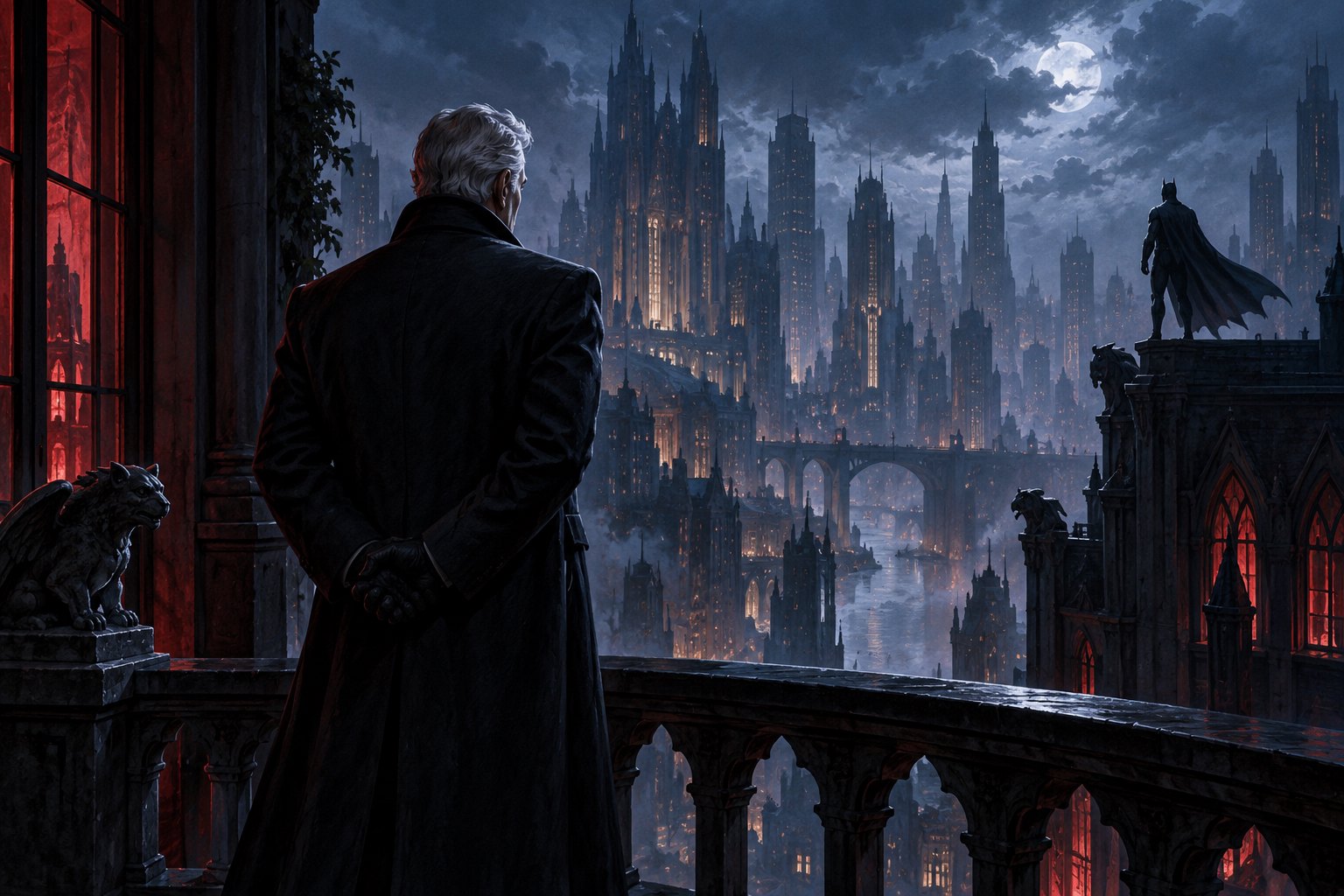
James Gunn’s comments about Batman Beyond have fans asking for Michael Keaton to return, according to HOLA. The attraction is easy to understand: an older Bruce Wayne offers a former Batman actor something more substantial than another entrance in the cape. It offers a character who must confront the possibility that his most important contribution now belongs behind someone else.
That enthusiasm needs one clear qualification. The reported comments and fan response do not, by themselves, establish a production greenlight or a casting agreement. Keaton’s involvement should be treated as a possibility audiences are advocating, rather than a role he has accepted. What follows is an assessment of that creative proposition, not a review of a completed film.
Why the Keaton idea has dramatic weight
The basic Batman Beyond relationship gives this conversation its substance: Terry McGinnis is the younger Batman, while an elderly Bruce Wayne connects him to the identity’s history. The appeal of casting Keaton therefore extends beyond recognizing a familiar face. His presence could make the distance between being Batman and teaching Batman immediately legible.
My view is that Keaton’s most useful quality for this hypothetical role would be restraint. An older Bruce should not need to announce his authority every time he enters a room. A pause before answering, an impatient glance, or a refusal to explain himself could suggest someone accustomed to making decisions alone. Those choices would give a younger actor something to resist.
Recognition could also complicate the audience’s loyalties. Viewers arriving primarily for Keaton might instinctively assume that Bruce knows best. A strong adaptation could use that assumption to make Terry’s independence harder won. The veteran’s familiarity would become part of the dramatic problem: how does a new Batman earn trust when everyone already has an emotional investment in his predecessor?
That is a richer reason to bring an actor back than the pleasure of seeing him framed beside familiar equipment. The casting would need to produce tension, surprise, and vulnerability after the initial applause subsides.
Bruce Wayne’s challenge would be surrendering control
Viewed from Bruce’s perspective, a succession story can be frightening. The mission continues, but his ability to determine every action has diminished. Experience remains useful; physical presence and direct control no longer function in the same way. A film could explore how easily concern for a successor becomes an insistence that the successor obey.
This is where an older Bruce could become difficult in an interesting way. Advice may be correct and still be delivered cruelly. A warning may protect Terry while undermining his confidence. The screenplay would need enough patience to let those contradictions exist without resolving every disagreement through a reassuring speech.
Keaton would be an appealing choice if the role allowed Bruce to be wrong. A character whose judgments are always vindicated becomes a source of instructions. A mentor who misreads another person has to listen, revise his assumptions, and reveal something about himself. Those are playable changes, and they would give a return emotional purpose.
For that reason, the most revealing moment in a potential adaptation might be quiet: Bruce hearing Terry’s decision, recognizing that it differs from his own, and allowing it to stand. This is a proposed dramatic direction, not a description of an announced scene.
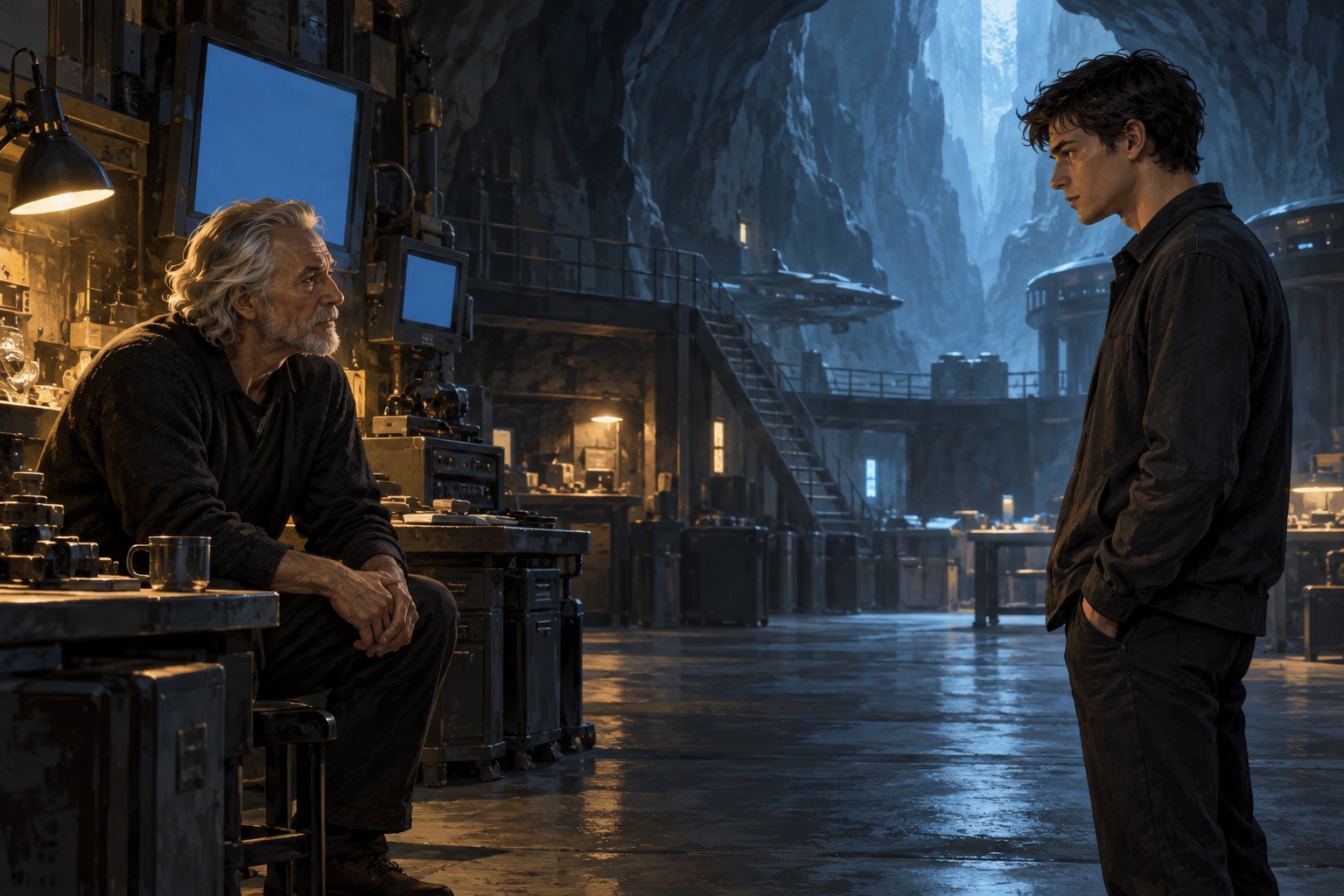
Terry McGinnis needs more than the veteran’s approval
The danger in the Keaton conversation is that Terry becomes an accessory to Bruce’s comeback. A younger lead cannot carry a succession story if his primary function is to admire the returning star. He needs desires, judgments, and relationships that remain compelling when Bruce leaves the scene.
From Terry’s perspective, inheriting Batman should involve competing pressures. There is the practical responsibility of protecting people, the burden of a reputation he did not create, and the personal question of how much of himself the role demands. A film would gain depth by allowing those pressures to pull in different directions.
The distinction matters in action sequences, too. Terry’s choices should reveal how he thinks. Who receives his attention first? When does he improvise? What makes him disregard an instruction? A fight can establish a character’s priorities through movement and timing, without stopping for an explanation afterward.
Our discussion of how character gives screen combat meaning addresses a related problem: visual scale becomes more engaging when the audience understands the decisions inside it. For Batman Beyond, that principle would help Terry become a protagonist rather than a demonstration of upgraded technology.
The crucial casting question would therefore involve the pair. Could the younger performer hold the screen during a disagreement with Keaton? Could both actors make mutual respect emerge gradually? Chemistry here should include friction. Immediate affection would remove much of the relationship’s potential.
A future Gotham should change the story
The future setting offers another test of the idea. New architecture and advanced equipment can establish a visual identity, but they become dramatically useful when they change what the characters understand about their city. Bruce’s experience should remain valuable without providing a complete answer to every new problem.
A thoughtful adaptation could make Terry’s familiarity with contemporary life a form of expertise. Bruce might recognize a recurring pattern of exploitation while Terry understands how it operates among the people around him. Their partnership would then depend on exchanging knowledge, giving both characters something necessary to contribute.
Visually, I would favor contrasts that express their different relationships to Gotham: spaces Bruce remembers as they once were, and spaces Terry experiences without that memory. Such choices could suggest the passage of time through perspective rather than exposition. These are possibilities for an adaptation, not claims about its design or story.
Familiar lines and Easter eggs would need a purpose
There is no verified screenplay here to evaluate, so assigning memorable dialogue or hidden references to a prospective film would create false expectations. The useful critical question is what a callback would accomplish. A familiar phrase could express affection, defensiveness, or a character’s inability to move forward; recognition alone would give it a much shorter life.
The same applies to objects from Batman’s past. If a returning prop changes how Terry understands Bruce, it can carry narrative meaning. If the camera pauses merely to invite recognition, it risks interrupting the younger character’s story. An Easter egg should reward attention without becoming a prerequisite for emotional involvement.
As our commentary on how enthusiasm shapes expectations before a screening explores, an exciting association can influence how audiences approach a film. It cannot establish the film’s achievements in advance.
The strongest return would make room for a successor
The deeper promise of Batman Beyond lies in a difficult idea about legacy: preserving a mission may require accepting that another person will practice it differently. Through Bruce, that becomes a question of trust. Through Terry, it becomes a question of whether respect for a predecessor leaves enough room for independent judgment.
Keaton could give that conflict considerable emotional force. But the best argument for his return is also a limit on how the film should use him. Bruce would need enough presence to make the inheritance meaningful, while Terry would need enough freedom to make its future uncertain. A successful adaptation would leave audiences invested in the young man who carries the story forward.
Original content by this site's editorial team. Published: October 15, 2026 at 17:57:16 PDT (Los Angeles time)