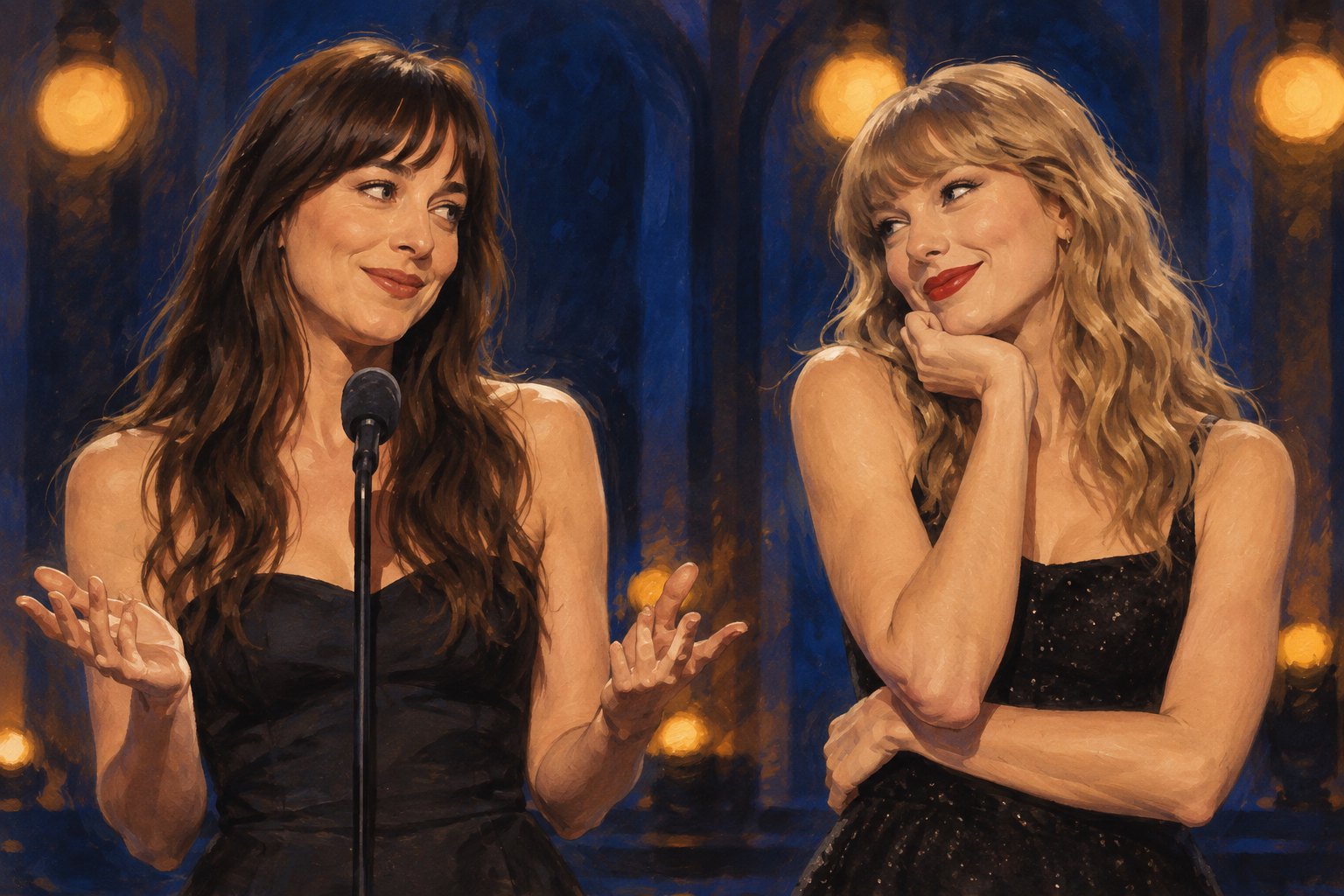
Yes—Saturday Night Live has a new episode scheduled for Saturday, October 3, 2026, with Dakota Johnson hosting and Turnstile as the musical guest. NBC lists the broadcast at 11:30 p.m. Eastern and 8:30 p.m. Pacific, with a simultaneous live stream on Peacock. Johnson’s appearance is her third hosting engagement; Turnstile’s is the band’s first appearance as musical guest.
That pairing offers two separate reasons to tune in: an actor returning to the demands of sketch comedy and a band introducing itself to the show’s audience. For viewers arriving through Johnson’s film work, the interesting question is how effectively the sketches give her characters something to want, defend, or conceal. For music fans, it is how the performance translates into a television setting.
This is a spoiler-free viewing guide and critical preview, not a review of the completed broadcast. The performance discussion below identifies what to watch for without assigning the episode a verdict.
The October 3 SNL lineup at a glance
- New episode: Yes, scheduled for October 3, 2026.
- Host: Dakota Johnson.
- Musical guest: Turnstile.
- Television: NBC.
- Live streaming: Peacock.
- Start time: 11:30 p.m. Eastern, 10:30 p.m. Central, 9:30 p.m. Mountain, and 8:30 p.m. Pacific.
The date matters when searching for the episode afterward. A page that says “tonight” can remain searchable long after the broadcast. Use October 3, 2026, together with Johnson’s name to distinguish this appearance from earlier hosting visits. The host and musical guest are separate bookings: Johnson leads the comedy portions, while Turnstile occupies the musical guest slot.
Dakota Johnson’s real test is inside the sketches
A returning host brings recognition, but recognition alone cannot sustain a scene. The opening reaction may belong to the celebrity; the next several minutes belong to the character. An effective sketch gives the host a specific position within its small world, whether that means controlling a conversation, misunderstanding an obvious problem, or refusing to acknowledge an increasingly embarrassing situation.
For Johnson’s October 3 appearance, that is the most useful lens to bring to the comedy. Watch whether a scene establishes what her character believes before demanding a laugh. A ridiculous statement becomes more interesting when someone has a reason to insist on it. Without that reason, the performer can end up delivering disconnected punch lines instead of building a person whose behavior keeps producing them.
This is where a character-focused approach to film criticism also helps with television comedy. Ask who holds power at the beginning, who challenges it, and what changes by the end. A sketch might last only a few minutes, but those shifts can give it the same basic dramatic satisfaction as a much longer scene.
Listen to the reactions between the jokes
One useful viewing exercise is to watch Johnson when another performer is speaking. Does her reaction prepare the next joke? Does she let an uncomfortable pause develop? Does a change in expression reveal that the character understands more—or less—than everyone else assumes?
Those details help distinguish participation from simply occupying the center of the frame. My preference is for hosting performances that make the surrounding cast sharper. A guest who gives another actor room to land a joke can contribute more to an episode than one who dominates every exchange.
Celebrity expectations can make that harder to judge. The same distinction between reputation and evidence underlies our discussion of why prominent praise should lead to closer criticism. Familiarity is a reason to pay attention; the actual performance still needs to earn the response.
Turnstile gives the music its own point of interest
Turnstile’s first appearance as musical guest makes the music more than an incidental part of the booking. NBC identifies the group as a hardcore rock band. That establishes a broad musical context, but it does not tell viewers which songs will be played or how the performances will be staged. A lineup announcement should not be mistaken for a confirmed set list.

For a first-time listener, the most useful question is whether the television performance makes the band’s musical relationships understandable. Can you follow the rhythm section? Does the vocal remain distinct? Do the camera choices help you see the musicians responding to one another, or do they interrupt that sense of connection?
Those are criteria for assessing the broadcast, not claims about how this appearance turned out. They also avoid reducing an unfamiliar act to an immediate thumbs-up or thumbs-down. A performance can make a strong impression through tension, movement, texture, or interplay before a viewer knows any song titles.
The approach resembles the curiosity we encourage in our guide to finding discoveries beyond familiar names in a festival lineup: give the less familiar part of the program enough attention to establish its own terms.
How to judge the episode beyond its biggest moment
A memorable entrance or widely shared joke can become shorthand for an entire SNL episode. It is useful to separate that immediate excitement from the construction of the comedy. Recognition produces one kind of audience response; a carefully developed reversal produces another.
When watching Johnson’s sketches, consider three questions:
- Is the premise clear? You should be able to identify the unusual situation or behavior without needing an explanation afterward.
- Does the scene develop? Repetition works best when each return changes the pressure, the stakes, or your understanding of a character.
- Does the ending follow from the setup? A conclusion feels stronger when it uses what the scene has established instead of merely stopping the action.
These questions also help when a sketch does not match your sense of humor. You can recognize a precise performance or a well-built escalation without finding every line funny. Conversely, one joke that makes you laugh does not necessarily mean the surrounding scene works.
Watch the full episode if you want the fuller picture
For the live broadcast, the practical choices are NBC and Peacock. Check the dated episode listing when looking for the program later, and confirm playback availability in your account rather than assuming an individual clip represents the complete show.
A full viewing lets you assess contrast: how the host moves between characters, how the musical segments change the pace, and whether the evening sustains its comic ideas. Clips are useful for revisiting a performance, but they cannot establish the consistency of material left outside the selection.
The deeper appeal of this October 3 pairing is the possibility of seeing familiar and unfamiliar performers under the same constraints of a television variety show. Johnson’s characters need to become persuasive quickly; Turnstile’s music needs to communicate within a compact appearance. The rewarding question is how much each can reveal within that limited space. The announced lineup supplies the invitation. The scenes and performances supply the answer.
Original content by this site's editorial team. Published: October 3, 2026 at 21:37:02 PDT (Los Angeles time)