Godzilla Minus Zero is not a casual recommendation for young children. Its American R rating identifies violent content and bloody imagery, giving parents a concrete reason to pause before treating it as another monster adventure. For teenagers, suitability depends on their comfort with disturbing injuries, disaster imagery, and grief—not simply their enthusiasm for Godzilla.
The more useful question is what your child expects to enjoy. A viewer anticipating enormous creatures trading blows may respond very differently when the story asks them to consider the people living beneath those battles. Familiarity with a monster does not automatically prepare someone for the suffering surrounding it.
Content advisory: This guide discusses officially described violence and bereavement, including a child’s death, without identifying the characters involved or revealing the ending. It offers parental guidance and thematic interpretation, rather than a firsthand assessment of every scene.
What the rating establishes—and what it cannot tell you
The Motion Picture Association lists Godzilla Minus Zero as R for “some violent content/bloody images.” That wording matters: the concern is the depiction of harm. Parents should not assume that a fantastical setting makes the imagery mild, or that a child who enjoys monster toys will enjoy seeing bodies damaged onscreen.
A rating is still a broad category. It cannot tell you whether your child will be more upset by an injury, a frightened civilian, or someone mourning a loved one. Read content descriptions with your child’s particular sensitivities in mind. The relevant comparison is their response to similar material, not the number of action movies they have watched.
The content concerns parents should know
Monster violence includes bodily damage
The British Board of Film Classification describes bloody creature combat involving severed limbs and decapitation, followed by fantastical regeneration. It also identifies humans being crushed and attacked with fire. These are more specific concerns than a general warning about action or peril.
Regeneration may reassure a viewer who understands that a creature can recover. It does not necessarily soften the immediate experience of watching an injury. Children who distinguish easily between imaginary monsters and real animals may still find visible bodily damage unpleasant.
The consequences extend to civilians
The classification guidance also identifies injured casualties, burned bodies, unusual bodily growths, and the aftermath of the atomic bombing of Hiroshima. Emotional material includes bereavement involving a child. Parents with concerns about any of those subjects have good reason to preview the film before arranging a family screening.
My judgment is that these warnings deserve more weight than the promise of spectacular combat. A monster fight gives viewers a visible opponent to follow. Human suffering can leave a different kind of impression because it connects the fantasy to recognizable vulnerability.
Why the family perspective changes the viewing experience
The officially announced premise returns to the Shikishima family in 1949, two years after Godzilla Minus One. That establishes an important emotional starting point: people attempting to recover are confronted with another calamity. The premise is about the interruption of ordinary life as much as the arrival of an extraordinary threat.
From a family’s perspective, recovery means more than rebuilding structures. It means trusting that tomorrow will resemble today, that loved ones will return, and that a home can remain safe. A renewed disaster threatens those expectations. That is an interpretation of the announced setup, rather than a claim about an unverified character decision.
For younger viewers, this distinction matters. Adults can appreciate a story about fragile security while maintaining some distance from it. A child may focus on a simpler, more immediate question: can the grown-ups keep everyone safe? The emotional demands of that question can exceed those of watching a creature smash a building.
Our examination of the human stakes behind Godzilla Minus Zero explores the broader storytelling expectations surrounding the sequel. For parents, those stakes also help explain why character investment can make a monster movie harder to watch.
Does enjoying Godzilla Minus One mean a child is ready?
It provides useful context, but it is not a guarantee. Ask what your child remembers about the earlier film. If the answer centers on the creature’s appearance and the action, they may be approaching the sequel with different expectations from someone who remembers the fear and family relationships.
Also distinguish finishing a movie from feeling comfortable afterward. Did they ask repeated questions about death? Avoid bedtime? Want reassurance about a parent’s safety? Those reactions are more informative than whether they stayed in their seat.
There is no need to turn readiness into a test of courage. A child can be a devoted Godzilla fan and still prefer a different kind of Godzilla story. Choosing to wait preserves that enthusiasm rather than asking them to prove it.
A practical family viewing decision
- For young children: My recommendation is to choose another film. The confirmed injury and bereavement warnings make this a poor default introduction to kaiju cinema.
- For older children: An adult preview is the most useful next step, especially when death, bodily injury, or endangered families are established sensitivities.
- For teenagers: Discuss the specific content beforehand. Interest in serious disaster stories may be a better guide than enthusiasm for action alone.
- For any uncertain viewer: Make leaving an acceptable option before the screening begins. Do not wait until someone is distressed to negotiate it.
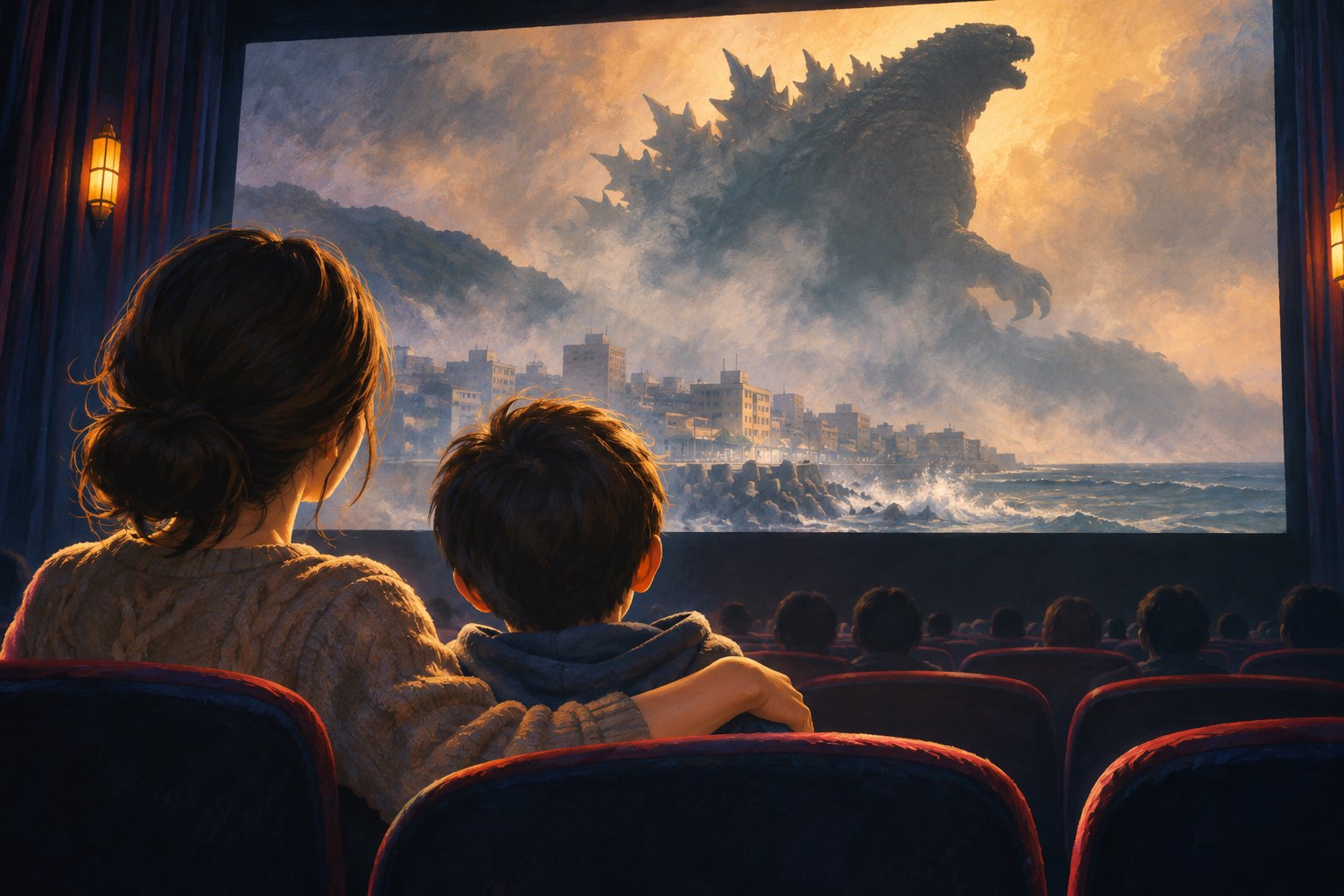
Consider the viewing environment separately from the story. A large screen and powerful theatrical sound can make an already uncomfortable image harder to disengage from. Waiting for a home-viewing option, when available, allows pauses and conversation; it does not change the underlying content.
What to discuss afterward
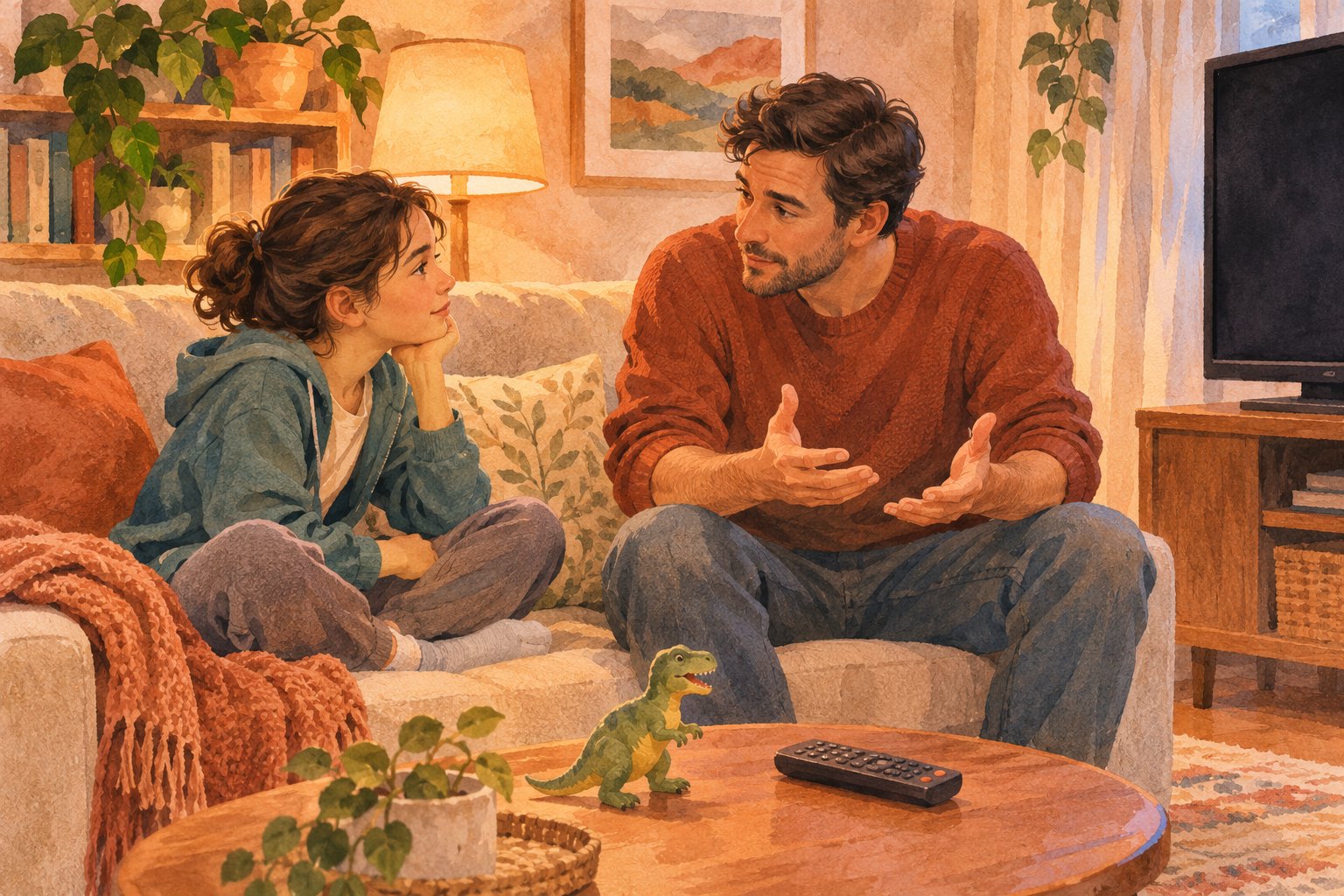
Start with an open question: which moment stayed with you? That gives a child room to mention something an adult might have overlooked. Avoid assuming that the largest monster or most dramatic battle was the hardest part.
If they bring up frightened characters, discuss the difference between feeling fear and failing to act. If they focus on loss, acknowledge that sadness can remain even when a story moves forward. Explain the distinction between fictional creatures and the real historical suffering the film references without turning the conversation into an unsolicited history lesson.
The shared experience matters too. As our commentary on watching frightening movies together considers, company can create space for discussion. It should also make it easier for someone to say that they have had enough.
The deeper issue: spectacle has human consequences
The most meaningful way to approach this family-viewing question is to take the human stakes seriously. When a disaster story acknowledges injury and grief, destruction stops being merely an impressive visual effect. Viewers are invited to consider what survival costs and what recovery requires.
That can be valuable material for a ready teenager and an overwhelming experience for a younger child. Artistic seriousness does not create an obligation to watch before someone is prepared.
My recommendation: treat Godzilla Minus Zero as a mature viewing choice, with an adult preview for uncertain families. The deciding factor should be readiness for its human suffering as well as its monster violence. Loving Godzilla is a reason to be interested; it is not, by itself, a reason to buy a child a ticket.
Original content by this site's editorial team. Published: November 5, 2026 at 20:15:13 PST (Los Angeles time)