
Hexed has a family problem more interesting than its magical premise: what happens when a mother’s idea of keeping her daughter safe prevents that daughter from understanding herself? Disney’s animated witch adventure has attracted sharply different responses, including a disappointed verdict from The Guardian. Yet its mother-daughter conflict gives that disappointment a specific focus. A story about discovering extraordinary abilities must also make the person discovering them feel particular.
This critical reading draws on the officially described premise and published accounts of the film. Spoilers follow for the setup, character conflicts, and broad themes of the resolution. The question is whether Billie’s journey offers meaningful independence, or merely exchanges parental restrictions for the familiar obligations of a fantasy heroine.
Billie’s powers turn a family disagreement into a crisis
Disney identifies Billie, voiced by Hailee Steinfeld, as an impulsive teenager whose emerging magic takes her from suburbia into the witch realm of Hexe. Her cautious mother, Alice, voiced by Rashida Jones, joins her there. Fawn Veerasunthorn and Jason Hand direct, with Josie Trinidad co-directing.
James Mottram’s Radio Times review supplies an especially revealing detail: Billie’s powers emerge when a bracelet her mother requires her to wear comes off. As a storytelling device, that bracelet makes an abstract parenting conflict tangible. Alice’s rules do more than limit where Billie goes. They interfere with what she knows about her own capabilities.
From Billie’s perspective, this changes the meaning of ordinary teenage frustration. Being misunderstood is painful; discovering that an adult has withheld an explanation for your difference can feel like a deeper betrayal. The bracelet invites us to reconsider earlier disagreements as an imbalance of knowledge. Mother and daughter have not been arguing with access to the same facts.
That does not automatically make every impulsive decision Billie takes an act of justified resistance. A persuasive coming-of-age story needs room for two truths: a teenager can deserve greater freedom and still lack the judgment to use it well. The stronger reading of Billie begins in that uncomfortable overlap.
Alice’s protection comes with a cost
Alice is potentially the film’s most complicated character because her motives and methods need separate consideration. Fear can explain why a parent conceals something without making the concealment harmless. Likewise, love does not guarantee that the person receiving it experiences it as care.
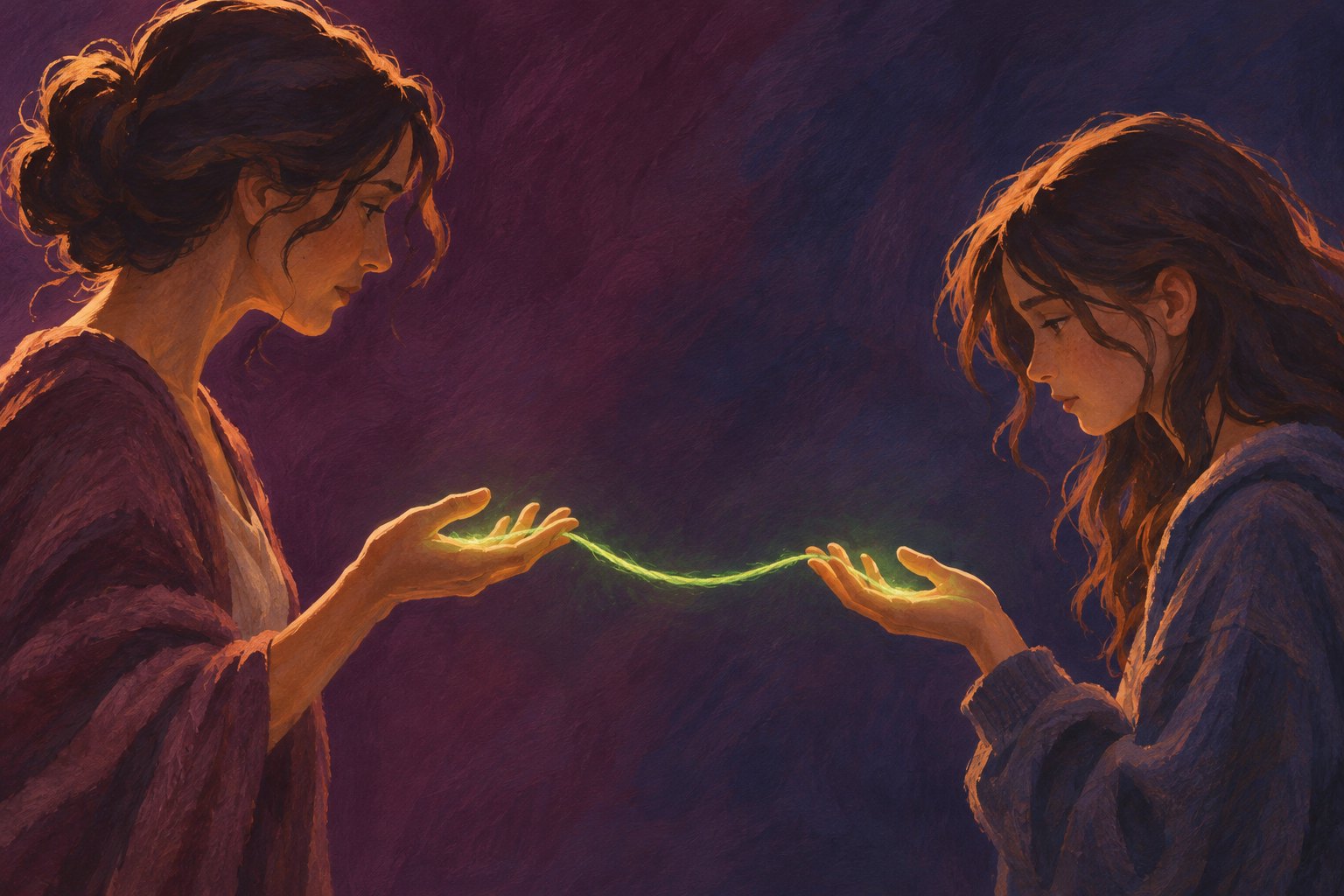
My reading of the central relationship is that Alice’s real challenge involves relinquishing authority over Billie’s self-understanding. Traveling beside her daughter creates an opportunity to discover who Billie is when she is allowed to act. But physical proximity alone cannot repair the trust damaged by secrecy. That requires a change in how Alice listens.
The distinction also matters in our analysis of parental approval in Focker-in-Law: concern becomes controlling when a parent treats another person’s independence as a problem to solve. Hexed gives that familiar struggle an unusually concrete magical expression.
Hexe makes belonging sound suspiciously conditional
According to Radio Times, Billie is introduced to Hexe as a “safe haven for folks with your condition.” That wording carries an intriguing contradiction. A refuge offers acceptance, while “condition” makes difference sound like something requiring management.
For Billie, a magical community should offer relief from being treated as a problem. But the existence of a community does not guarantee freedom within it. An outsider can finally find people who resemble her and still discover that they expect obedience. This is where the fantasy premise can extend the family conflict rather than merely interrupt it.
Queen Celeste, voiced by Jodie Foster, embodies a more overt form of authority. Disney describes her as determined to preserve her rule over Hexe. Read alongside Alice’s caution, Celeste’s possessiveness creates a useful distinction: protecting someone and protecting one’s position can look similar from the perspective of the person being restricted.
The characters should not be treated as morally interchangeable. Instead, their juxtaposition raises a harder question for Alice: how can she demonstrate that her authority serves Billie’s needs when Billie has so little say in its exercise?
Why the comedy needs more than a colorful companion
Billie and Alice receive reluctant help from Beef Roger Crummchuk, the magical three-eyed cat voiced by Walton Goggins. One joke quoted by Radio Times has him mourning an exploding appliance: “That microwave had a family.”
The line works on the page because it gives a disposable object an absurd emotional history. It also suggests why a supporting character can become memorable quickly: a distinctive response reveals a personality more efficiently than an explanation of magical rules.
That creates a demanding standard for the leads. If a cat’s peculiar priorities are easier to describe than the heroine’s particular desires, the balance of characterization becomes a problem. Billie needs wants that extend beyond escaping restriction and discovering that she matters. Those are useful foundations, but they are shared by countless fantasy protagonists.
Our discussion of enjoyable moments versus a satisfying whole offers a relevant test. A funny exchange can justify itself immediately. An adventure earns its emotional conclusion through the choices connecting those exchanges.
The disappointing verdict is not the only reading
The Guardian’s negative assessment is one critical response, not evidence of universal failure. TheWrap’s Amelia Emberwing offers a substantially warmer interpretation, emphasizing the mother-daughter relationship and the film’s treatment of harmful family patterns.
These reactions suggest different priorities. A viewer seeking inventive fantasy may find familiar narrative machinery difficult to overlook. Another viewer may attach greater value to how a family film handles boundaries and responsibility. Neither response can be settled by pointing to the presence of witches, jokes, or an emotional message.
My reservation is structural: a conflict about trust can lose specificity when it becomes a struggle over who controls an entire realm. Larger stakes do not necessarily deepen smaller ones. The decisive emotional question remains whether Billie and Alice relate differently after their experience, not simply whether they survive it.
The deeper question: Who gets to define Billie?
TheWrap reads the resolution as refusing to excuse family mistreatment through kinship alone. That interpretation gives Hexed a potentially valuable destination. Reconciliation should depend on changed behavior; being related cannot substitute for accountability.
Seen this way, Billie’s journey is about authorship of the self. Her mother has information about her identity. A ruler has reasons to fear her potential. A new community offers a language for understanding her abilities. Each can influence her without earning the right to determine her future.
That is the most compelling lens through which to approach Hexed, and the clearest measure of its ambitions. Magical freedom matters when it produces meaningful choice. Beneath the witch adventure lies a sharper proposition: growing up requires being recognized as someone whose life cannot remain another person’s protective project.
Original content by this site's editorial team. Published: November 25, 2026 at 11:47:00 PST (Los Angeles time)