Henry Winkler says his name was left off Scream’s poster because the studio associated him too strongly with the Fonz, his character from Happy Days. In his recollection, that association threatened the horror film’s tone. The explanation concerns how the movie was sold, but it invites a closer look at what his performance actually contributes: Principal Arthur Himbry’s death helps turn a crowded teenage party into the setting for an intimate nightmare.
Winkler’s account should be understood as his recollection of the decision, rather than proof that advertising his involvement would have weakened the film. On screen, his small role does something remarkably efficient. Himbry condemns the students’ appetite for cruelty, becomes a victim himself, and then becomes an attraction for the very audience he tried to discipline.
Major spoilers follow for the original 1996 Scream, including its ending and the killers’ identities.
Beyond the missing name on the poster
Directed by Wes Craven and written by Kevin Williamson, Scream repeatedly asks what happens when people encounter violence through expectations borrowed from entertainment. Winkler’s casting belongs to that conversation, but his character has a purpose beyond the pleasure of recognizing an actor.
Our earlier examination of Himbry’s familiar face and the film’s treatment of trust considers that recognition. A different question is more revealing here: what changes in the story because Himbry dies?
The answer is both practical and moral. News of his death draws partygoers away from Stu Macher’s house. Their departure reduces the crowd surrounding Sidney Prescott, while their eagerness to see the body exposes how little distance separates their entertainment from someone else’s suffering.
Himbry recognizes cruelty, then speaks its language
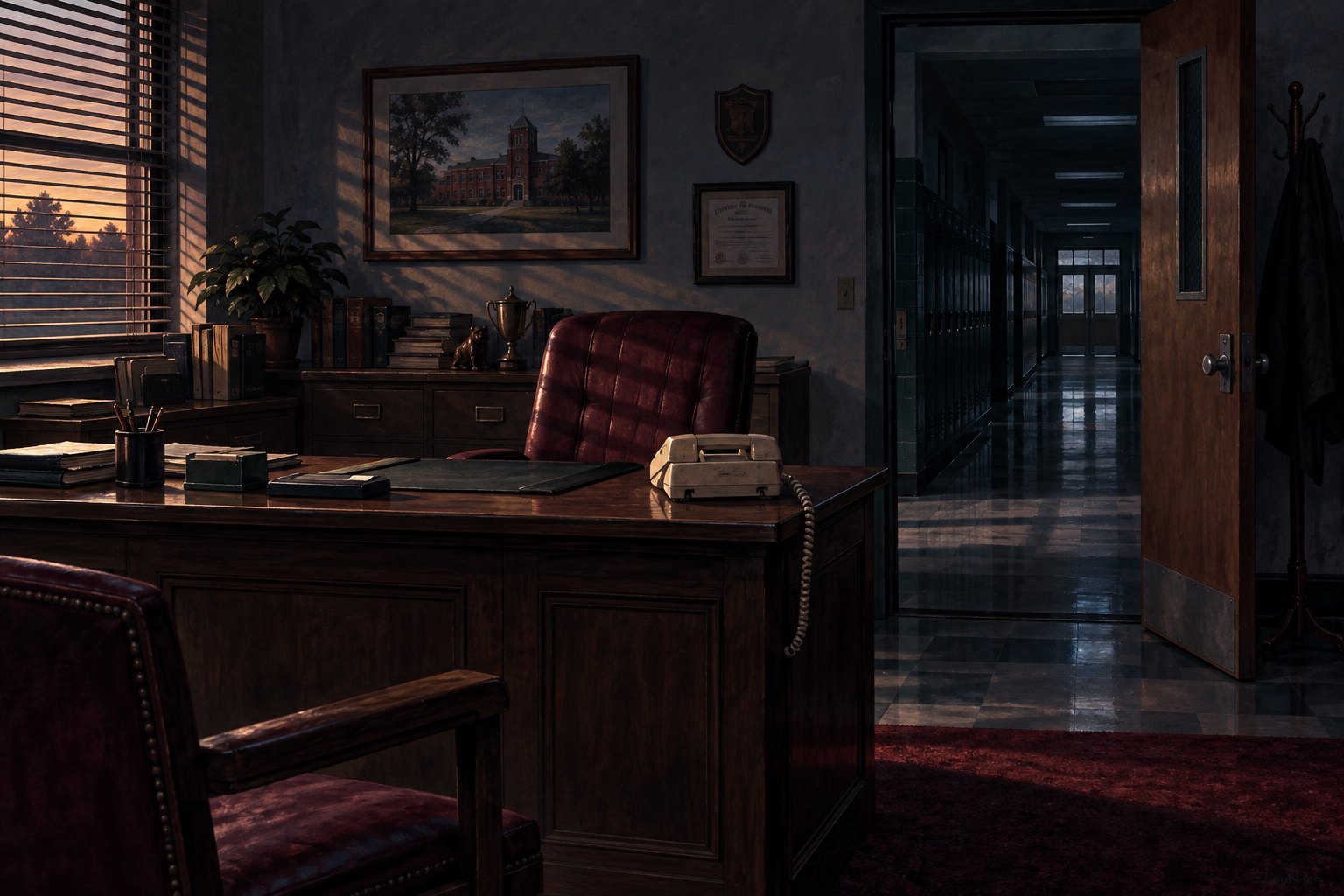
Himbry’s confrontation with the students wearing Ghostface costumes establishes his central objection. Two young people have been murdered, yet the disguise has already become a tool for amusement. His students can recognize the image without acknowledging the deaths behind it.
Winkler gives the reprimand an abrasive force. Himbry is furious, and the scene does not soften him into a perfectly composed representative of adult wisdom. He expels the pranksters and answers their objections with a grotesque description of retaliatory violence.
That excess makes the scene interesting. His underlying complaint is reasonable: exploiting a killing to frighten classmates is cruel. His language, however, reproduces the brutality he condemns. He wants the students to feel the horror they have made into a joke, and he reaches for a horrifying image to make his point.
In my reading, this is the character’s strongest complication. Himbry understands the failure of empathy around him, but his authority offers no persuasive remedy. He can punish a behavior. He cannot make his students care. The film later tests that distinction with merciless precision.
The murder matters most when the news reaches the party
Ghostface kills Himbry at school. Later, at Stu’s house, a telephone call brings the report that his body has been found hanging from a goalpost on the football field. The announcement—“They found Principal Himbry dead”—changes the direction of the evening.
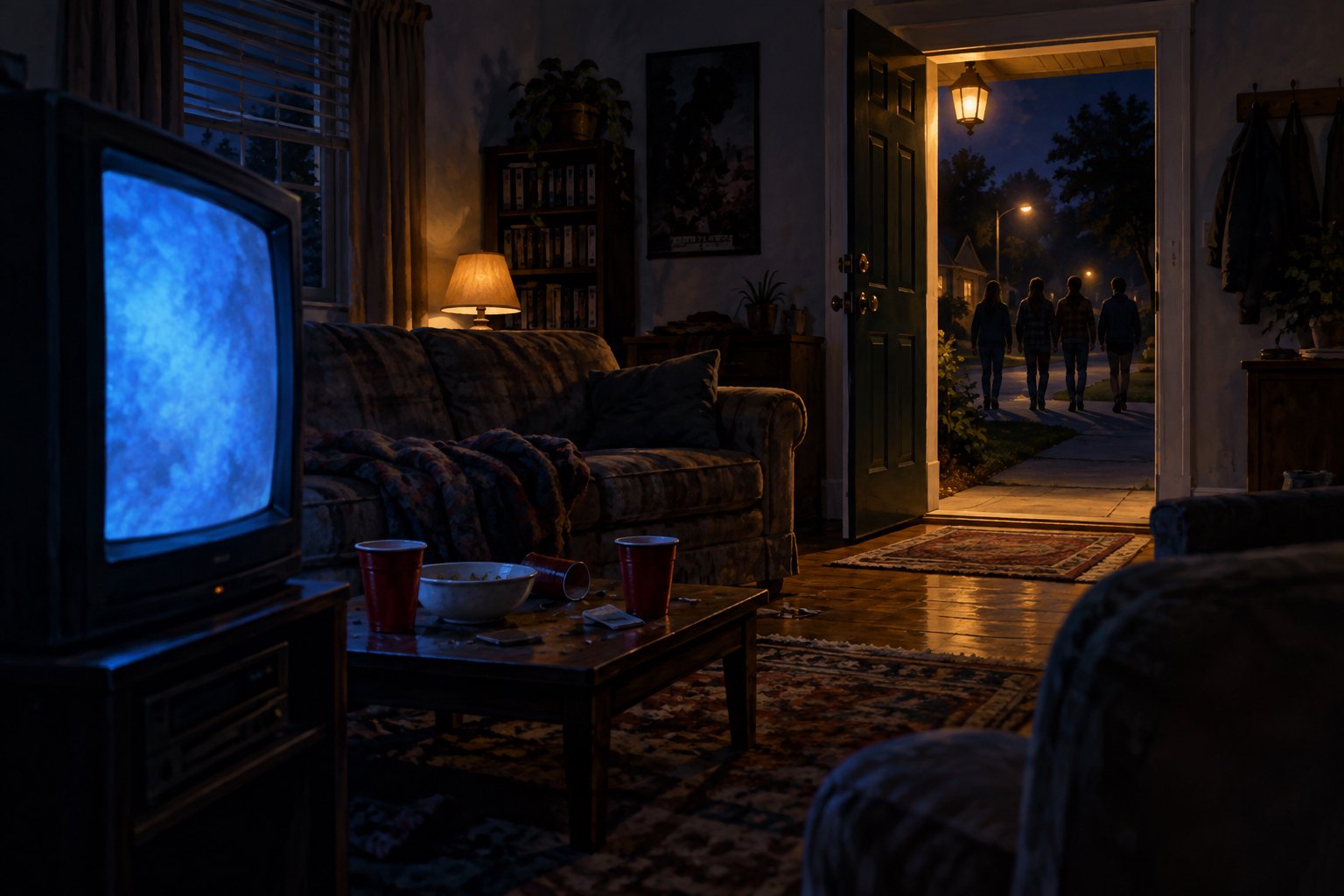
The departing teenagers do not organize a rescue or retreat to safety. They want to look. Himbry’s death becomes an opportunity to witness something extraordinary, and their excitement supplies the scene’s ugliest note.
Craven does not need an extended speech about desensitization. He makes it a decision with consequences. The students leave the house because the real corpse promises a stronger sensation than the horror movie playing inside it. Their curiosity physically rearranges the story.
This is why Himbry’s role rewards attention beyond his screen time. His absence keeps producing effects. He first tries to stop students from treating murder as a spectacle; after his death, that same impulse sends them rushing toward his body. The reversal is vicious without requiring an elaborate explanation.
Randy knows the conventions; the crowd follows its appetite
Randy Meeks approaches the evening through movie knowledge. His rules promise that familiar patterns can make danger legible. Even the ordinary phrase “I’ll be right back” becomes a warning sign when interpreted through his genre expertise.
Yet the party’s response to Himbry shows a problem that no checklist resolves. Recognizing a horror convention does not necessarily produce sympathy, judgment, or restraint. These young people understand the pleasures of frightening entertainment. That understanding does not prepare them to respond decently to a murdered person.
The sequence also changes the house’s emotional scale. A busy gathering offers movement, witnesses, and the impression of company. Once the crowd disperses, the remaining rooms feel more exposed. This is a useful companion to our discussion of how horror turns available space into vulnerability: here, the building stays the same while its apparent protection drains away.
My judgment is that this transition is one of the original film’s sharpest pieces of construction. An act of collective callousness performs the practical work of tightening the thriller. The plot advances because the characters reveal what interests them.
Sidney must survive other people’s versions of her life
The finale makes Billy Loomis and Stu’s ambitions explicit. They intend to control both the violence and the explanation left behind, framing Sidney’s father and presenting themselves as survivors. Their confidence depends on treating other people as parts in a story they own.
Himbry’s fate belongs to this larger pattern of reduction. To the partygoers, he becomes something to see. To the narrative machinery of the murders, he becomes useful. The audience has briefly encountered an angry, imperfect person, then watches everyone else process him as an event.
Sidney’s resistance matters because she refuses that reduction. When she turns the telephone back on her attackers and asks, “Are you alone in the house?”, she appropriates their method. She makes them experience uncertainty instead of merely administering it.
The satisfaction comes from watching control change hands. Sidney does not win simply by possessing superior trivia. She observes, improvises, and acts while the killers become trapped in their own expectations. Himbry never gets that opportunity, which gives his smaller story a bleakness the triumphant passages cannot erase.
The Easter egg beside Himbry’s office
During the school sequence, Craven appears as Fred, a janitor wearing a red-and-green striped sweater—a reference to Freddy Krueger and A Nightmare on Elm Street. It is a compact joke placed near an impending murder.
The cameo demonstrates why the film’s balance is more complicated than the poster decision suggests. Recognition can produce amusement without permanently disabling fear. The viewer enjoys spotting the reference; the sequence then continues toward Himbry’s death. Familiarity is something Craven can interrupt.
A small role with an uncomfortable afterlife
Scream gives Himbry limited interiority, and that is a real limitation of the part. We do not spend enough time with him to understand a life beyond the school. Nevertheless, Winkler makes his anger substantial enough that the later response to his death feels pointed.
The deeper disturbance is the speed with which a person becomes material for other people’s excitement. A principal protests that his students have lost their compassion; soon, they treat his murder as an evening’s diversion. The film implicates their appetite while inviting us to examine our own.
Winkler’s poster story concerns the management of audience expectations. Himbry’s story concerns what audiences choose to value. His name could be absent from the advertising, but the consequences of his death remain embedded in the film’s most unsettling turn: the moment curiosity empties a room and leaves Sidney in greater danger.
Original content by this site's editorial team. Published: September 20, 2026 at 09:08:17 PDT (Los Angeles time)