Grimes is set to make her feature film debut in a production described as fully AI-generated, lending both her likeness and her real voice, according to PEOPLE. That combination is the announcement’s most interesting detail. It brings a human vocal contribution into a screen appearance shaped by generative technology, raising a question that matters well beyond technical novelty: how will those elements work together as a performance?
For viewers, the distinction is essential. An AI-generated image of a performer and that performer’s own voice are different creative ingredients. Neither the recognizable face nor the production method tells us whether the resulting character will be compelling. This is a spoiler-free analysis of the announcement, not a review of the finished film. Without a verified basis for discussing specific scenes, dialogue, or a complete character arc, an artistic verdict would be premature.
What the Grimes announcement actually establishes
The reported news supports three central points: this is being presented as Grimes’ feature film debut, the movie is described as fully AI-generated, and her participation includes her likeness and real voice. Those details establish the unusual form of her involvement. They do not, by themselves, explain how every part of the movie was made.
In particular, the phrase fully AI-generated should not lead readers to assume that her spoken contribution is a synthetic voice. The report specifically identifies her real voice. Nor does that broad label tell us who shaped individual expressions, selected takes, determined movement, or assembled a scene. A production description is not a complete account of creative responsibility.
It also cannot establish the quality of the result. Calling something an experiment describes a creative undertaking; calling it a breakthrough requires evidence. The fair starting position is curiosity, with judgment reserved for the work itself.
A recognizable likeness is only the beginning of a character
Grimes’ likeness gives the project an immediate point of recognition. Audiences can bring associations with a public figure into a movie before that figure’s character has done anything. This can generate interest, but it also creates a dramatic challenge: the film must give viewers reasons to care about the person inside the story.
From a character-focused perspective, the useful questions are concrete. What does this person want from another person? What are they unwilling to admit? What changes when they encounter resistance? These are criteria for evaluating the eventual performance, not claims about its plot.
A face can be visually distinctive while conveying little about intention. Conversely, a restrained expression can become absorbing when the audience understands what a character is struggling to conceal. The meaningful measure is whether appearance helps communicate that struggle.
Our discussion of the character stakes behind Keanu Reeves’ animated John Wick return approaches a related problem: recognition attracts attention, but a story needs emotional reasons to sustain it. The production methods are different; the demand for a legible inner life remains useful.
Why her real voice matters
A vocal performance does more than deliver a script. Timing can suggest reluctance. A change in emphasis can turn apparent agreement into a challenge. A breath can make confidence sound rehearsed. These small decisions help viewers infer what a character means beyond the literal words.
That is why the announcement’s reference to Grimes’ real voice deserves attention. It identifies a human element that could give the screen presence specificity. It does not guarantee that the acting will succeed, or establish how extensively the recording may be edited. It does make the relationship between sound and image central to any eventual review.
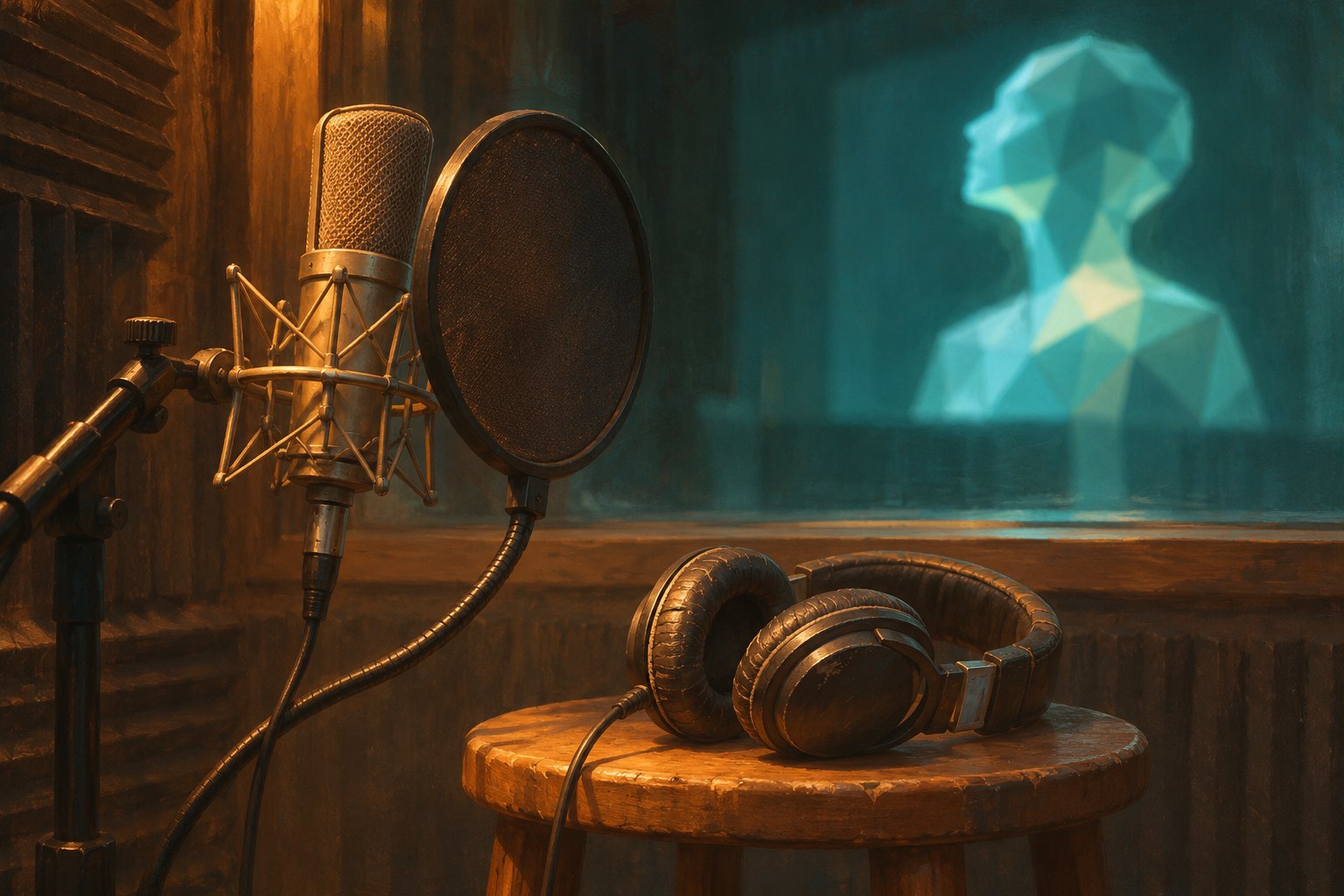
The decisive issue will be how the image responds to the voice. If a delivery suggests hesitation, does the body preserve that uncertainty? If the speaker is trying to hide an emotion, does the face reveal too much? These are hypothetical examples of performance choices, not descriptions of footage from the movie.
Sound and image need not match literally at every moment. A calm expression paired with a strained voice can be dramatically effective. What matters is whether the tension feels intentional and belongs to the character, rather than leaving the viewer unsure what emotion the scene is communicating.
The most revealing moments may be the quiet ones
A visually elaborate production can draw attention through individual images. A feature also needs relationships that remain understandable as scenes unfold. For this project, my critical interest would be in the quieter exchanges: how a character listens, waits, interrupts, or changes approach after hearing something unwelcome.
Listening is particularly revealing because a character’s presence continues when another person speaks. The audience needs some sense that the exchange has affected them. That response can be subtle, and it does not require photographic realism. It requires expressive choices that make the interaction readable.
Editing carries part of that responsibility. Holding a reaction longer can invite scrutiny; cutting away can withhold information. The finished performance therefore belongs to more than a face or a voice in isolation. It emerges through their arrangement in time.
This is also why there are no purported memorable lines here. A quotation becomes meaningful through delivery, context, and consequence. Inventing dialogue would manufacture precisely the evidence needed to judge the acting. An honest review must wait until those details can be assessed.
What viewers should look for beyond the technology
The announcement provides a reason to follow the movie, but it is not yet a viewing recommendation. When evaluating more substantial material, three questions should help keep attention on the filmmaking:
- Can you understand the character’s immediate objective? A scene should offer something more specific than the opportunity to recognize Grimes.
- Do voice, expression, and editing support an intelligible emotional progression? Changes in mood should feel connected to the interaction.
- Does the visual approach contribute meaning? An unusual image is more rewarding when its form helps express the story’s perspective.
These standards leave room for stylization, strangeness, and experimentation. They do not require every film to imitate conventional live action. They ask the movie to make its choices matter to the viewing experience.
As with our analysis of what the Killing Time ensemble must deliver, casting news is a starting point for discussing dramatic potential. It cannot substitute for an assessment of the finished work.
The deeper question is what makes a screen presence feel alive
Grimes’ announced involvement brings likeness and performance into unusually sharp focus. Recognition tells an audience whose appearance they are seeing. Acting helps them understand whose experience they are following. A successful film can connect those forms of attention until the celebrity becomes a character with particular desires, limitations, and relationships.
My view is that the project’s most worthwhile artistic possibility lies in that connection. Its technology may provoke the first conversation, but its treatment of human intention will determine whether there is a lasting second one. Grimes’ real voice gives that question a concrete center. The finished movie must show what it can build around it.
Original content by this site's editorial team. Published: November 5, 2026 at 22:40:04 PST (Los Angeles time)