KATSEYE and Kylie Jenner are among the names featured in coverage of the 2026 Victoria’s Secret Fashion Show, alongside attention to Gigi Hadid’s sequined wings and appearances associated with Nicole Kidman and Law Roach. For readers looking for the stars, those names provide an immediate starting point. They also suggest why this event invites a broader reading: its appeal brings together several kinds of celebrity within one visual spectacle.
From a film-commentary perspective, the interesting question is how that ensemble directs our attention. A familiar face can make an image feel significant before we have examined its composition, clothing, or setting. The pleasure of recognition is real. So is the possibility that recognition becomes a substitute for looking.
This is an analysis of the event’s celebrity framing and visual language. A fashion show has no fictional plot to summarize, and its participants’ private thoughts cannot be read from a photograph. Its images nevertheless offer plenty to discuss through the same close attention we bring to costume, framing, and screen presence.
Who Is Featured—and What the Coverage Establishes
The reporting offers several distinct routes into the show:
- KATSEYE and Kylie Jenner: USA Today places both names at the center of its star-focused coverage.
- Gigi Hadid: coverage specifically highlights her sequined wings, giving viewers a concrete costume detail to consider.
- Nicole Kidman and Law Roach: Vogue includes both in its coverage of the event’s stars.
- The wider production: Page Six emphasizes runway moments, while The Hollywood Reporter covers red-carpet and backstage photographs.
These categories matter because they describe different experiences of the same occasion. Inclusion in a celebrity gallery does not, by itself, establish whether someone performed, walked the runway, or attended as a guest. Nor does a striking photograph establish the quality of a complete performance. A useful reading keeps the person, the setting, and the activity in view together.
KATSEYE and Kylie Jenner: Two Ways Into the Same Spectacle
Placing KATSEYE and Jenner together gives the coverage a broad frame. Even before individual pictures enter the discussion, the pairing encourages readers to approach the event through more than one familiar name. The show becomes a meeting point for audiences whose interests may overlap only partially.
For someone arriving through KATSEYE, attention may begin with the group and then expand toward the surrounding fashion imagery. A reader arriving through Jenner may follow the opposite route, starting with an individual celebrity appearance and discovering the larger ensemble. These are possible viewing habits, rather than claims about how either audience actually behaved.
The cinematic parallel is an ensemble cast. Recognizable performers can help viewers enter a complicated world quickly, but recognition alone cannot make its parts cohere. The relationships among entrances, visual motifs, and changes of emphasis still have to do the work.
My critical preference is for coverage that allows each participant a distinct presence. When every image is presented as another interchangeable star sighting, the event loses texture. A group portrait, an individual entrance, and a costume detail deserve different kinds of attention.
That movement between audiences also informs our discussion of pop storytelling within a film-centered event. Familiarity brings viewers through the door; the setting gives that familiarity a new meaning.
Gigi Hadid’s Wings Give the Eye Something Specific
The reported detail of Hadid’s sequined wings is especially useful because it moves the conversation from celebrity identification toward design. Wings alter a figure’s outline. Sequins create a surface that responds to illumination. Together, those elements invite attention to scale, texture, and the relationship between a person and the space around them.
Those are principles of visual construction, not a claim to have assessed every angle of Hadid’s appearance. A still photograph can show the silhouette and catch reflected light. It cannot fully convey how the costume moves, how long an entrance lasts, or how the surrounding presentation changes its effect.
In cinema, an elaborate costume becomes dramatically interesting when it affects our perception of the wearer. It can suggest authority, vulnerability, distance, or transformation. Runway imagery offers a related pleasure, although assigning a specific emotional meaning requires care. A large silhouette might look commanding to one viewer and overwhelming to another.
The stronger critical question is therefore how the design organizes attention. Does the eye travel toward the face, the outline, or the sparkling surface? That question produces a more revealing discussion than simply declaring an outfit unforgettable.
Red Carpet, Runway, and Backstage Tell Different Stories
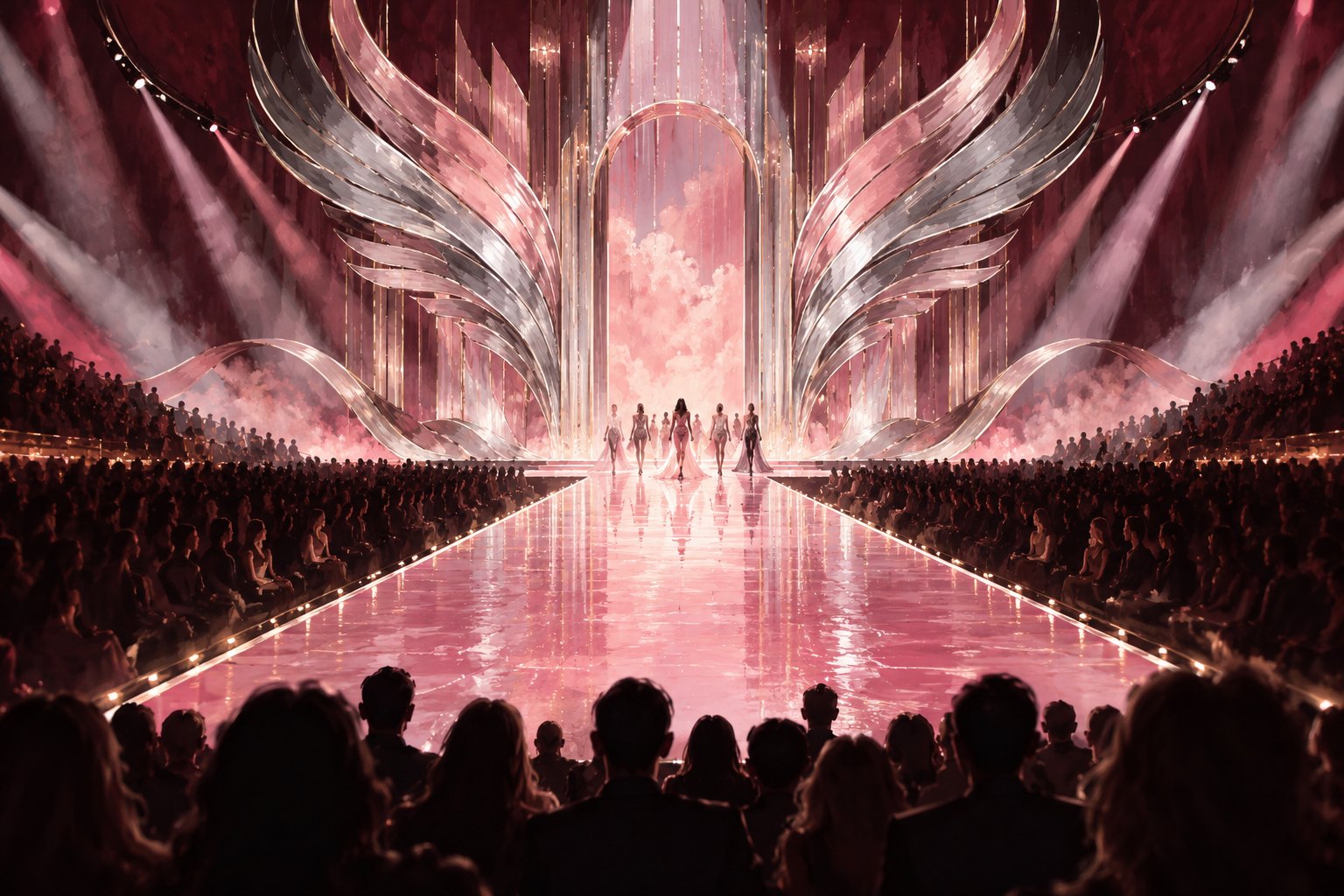
The range of coverage around this show makes its separate visual spaces worth distinguishing. Red-carpet photographs generally emphasize arrival and presentation. Runway images emphasize a look in the context of display. Backstage photographs can introduce preparation, proximity, and the people or materials surrounding a finished appearance.
Each setting encourages a different relationship with the viewer. Arrival imagery invites recognition. Runway imagery invites appraisal. Backstage imagery often invites a feeling of access. None automatically provides a complete account of the person being photographed.
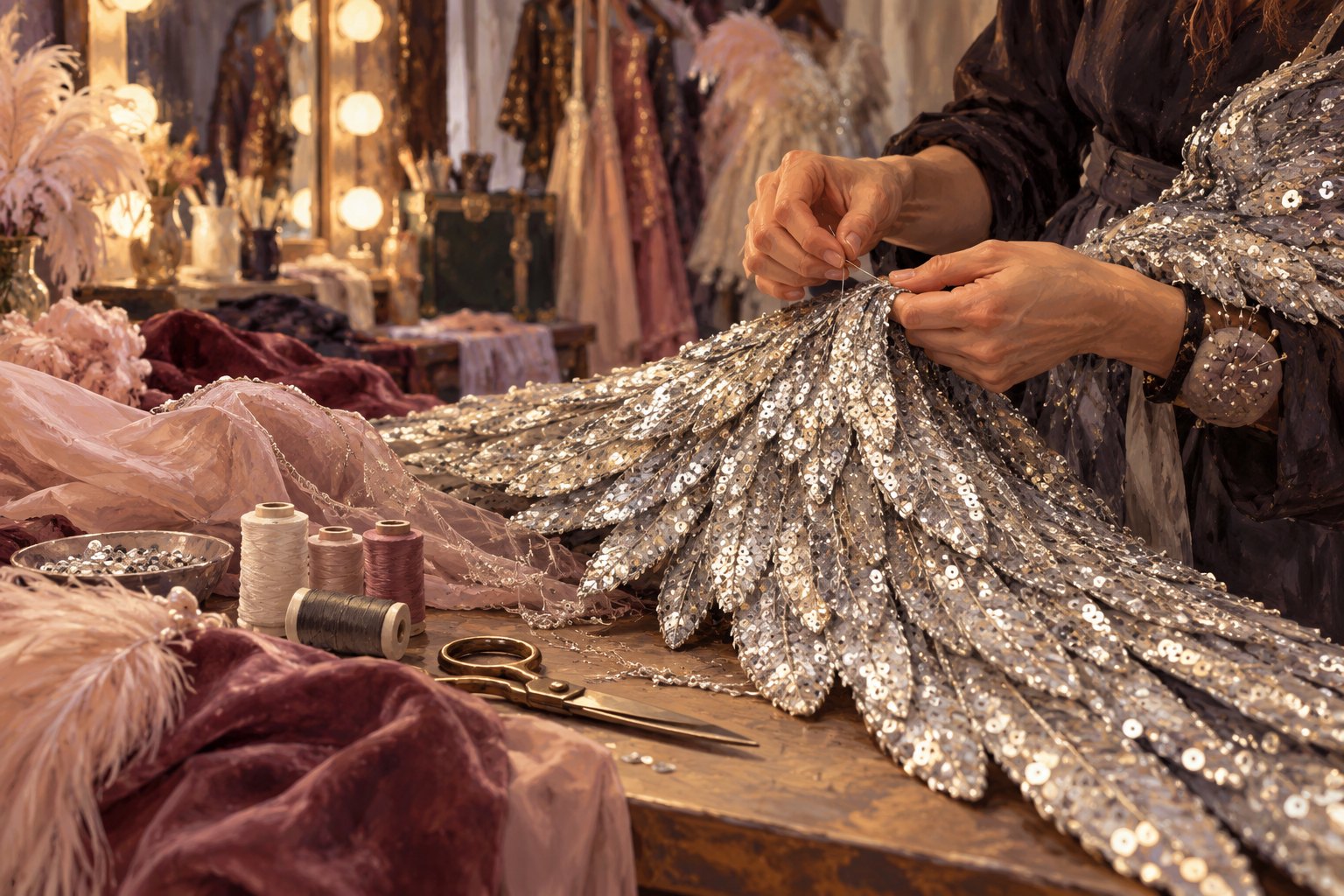
That apparent access deserves particular attention. A preparation photograph can reveal a practical detail while remaining carefully framed. Its value lies in what it actually shows: a garment being adjusted, a workspace, a moment between public appearances. It does not need to become evidence of a hidden personality to be interesting.
Nicole Kidman and Law Roach’s inclusion in star coverage further broadens the ensemble. Yet a name alone tells us little about the specific image. The caption and setting should guide interpretation before assumptions about status, relationships, or reactions take over.
How to Look Beyond the Celebrity Caption
A more rewarding way to browse the show’s imagery begins with three simple questions:
- Where is this happening? Identify whether the picture belongs to arrival coverage, the runway, or preparation. The setting changes what the image can tell you.
- What is visibly doing the work? Look at posture, garment shape, lighting, background, and spacing. Describe those features before assigning an emotion or a story.
- What would require motion or context? Timing, choreography, musical delivery, and interactions need more evidence than an isolated frame provides.
This approach leaves room for delight. It simply makes that delight more specific. You might discover that the appeal lies in a silhouette rather than a famous face, or that an apparently intimate picture works because of its composition. The same habit strengthens the way we connect screen images to our own experiences.
The Ensemble Is the Larger Story
My reading of this celebrity framing is that the Victoria’s Secret Fashion Show offers multiple invitations to look. KATSEYE and Jenner draw attention through their names; Hadid’s wings provide a specific visual motif; the inclusion of Kidman and Roach extends the surrounding constellation of recognizable figures.
The artistic question is what happens after recognition. An effective spectacle gives the eye relationships to discover: between figure and costume, preparation and presentation, individual presence and collective scale. Its most compelling images reward a second look because there is something beyond identification to notice.
That is where film criticism becomes useful here. It encourages us to examine how an image makes its impression while respecting the limits of what it reveals. The celebrity roster starts the conversation. The arrangement of people, surfaces, and spaces gives that conversation substance.
Original content by this site's editorial team. Published: October 19, 2026 at 05:45:30 PDT (Los Angeles time)