
Forgotten Island gives Filipino folklore a central role in an adventure about a particularly recognizable fear: losing the person who remembers who you used to be. DreamWorks’ animated film follows longtime friends Jo and Raissa into a mythical world where getting home threatens the memories that hold their friendship together. The cultural setting and the emotional stakes have a compelling connection. Both concern stories that survive because someone carries them.
That connection is the most interesting aspect of the film’s confirmed premise. A monster encountered in adulthood can bring back the voice of the relative who described it in childhood. A friend can preserve a version of your life that nobody else witnessed. Forgetting either would mean losing more than information.
Spoiler note: This article discusses the publicly revealed setup and trailer dialogue. It offers character-focused interpretation of that material, rather than a verdict on the complete film, and does not reveal the ending.
Jo and Raissa face separation before the fantasy begins
Written and directed by Joel Crawford and Januel Mercado, Forgotten Island features H.E.R. as Jo and Liza Soberano as Raissa. The friends have finished high school and face different futures. During their final night together, a portal takes them to Nakali, an island inhabited by creatures familiar from their families’ Filipino stories.
In an interview with the filmmakers, El País describes Jo as the more adventurous, artistic friend and Raissa as the studious one preparing for university in the United States. That distinction gives the separation an uneven emotional weight. A departure can be an achievement for the person leaving while feeling like a loss to the person staying.
Neither feeling automatically makes someone wrong. From Raissa’s perspective, a future elsewhere need not cancel the importance of her friendship. From Jo’s perspective, being told that nothing essential will change might offer little comfort when their daily life together is about to disappear.
My reading is that this tension makes the premise stronger than a simple promise of lifelong loyalty. The difficult question is whether two friends can support each other when their needs stop lining up. Affection alone cannot resolve a disagreement about what growing up should look like.
The cost of escape makes memory personal
DreamWorks’ synopsis identifies the central danger: returning home may cost Jo and Raissa their memories of their friendship. Their adventure therefore makes an ordinary anxiety literal. They might survive the journey while losing the shared history that makes survival together meaningful.
The trailer’s declaration, “These are our memories,” places the emphasis on shared ownership. A friendship belongs to both people, but each remembers it differently. One might treasure an afternoon the other barely recalls. An embarrassing incident can become affectionate shorthand. Years later, a few words can restore an entire room, mood, or age.
That is why memory makes such an effective stake for a story about young adulthood. The threat concerns the evidence that these two people mattered to each other. It also raises a question that fantasy can make unusually clear: how much of the self exists in relationships?
There is a potential trap in this idea, however. If remembering becomes an obligation to keep everything unchanged, nostalgia can turn possessive. The richer interpretation allows gratitude for the past and freedom in the future to coexist. A friendship can help someone leave without making that departure a betrayal.
For another perspective on how emotional relationships give large adventures their purpose, our discussion of character and friendship in Star Wars examines the importance of grounding spectacle in personal choices.
Filipino folklore carries the voices of family
Reuters’ interviews with the cast supply an illuminating connection between the fantasy and lived experience. Soberano recalled hearing stories about mythical creatures from her grandmother. H.E.R. remembered her mother invoking the Manananggal, including during a childhood visit to the Philippines. Both associated the creature with fear.
These recollections matter because they describe folklore as something received through a relationship. A child hears a story in a particular voice, at a particular age, from someone whose authority or affection shapes its meaning. The creature and the storyteller can become inseparable in memory.
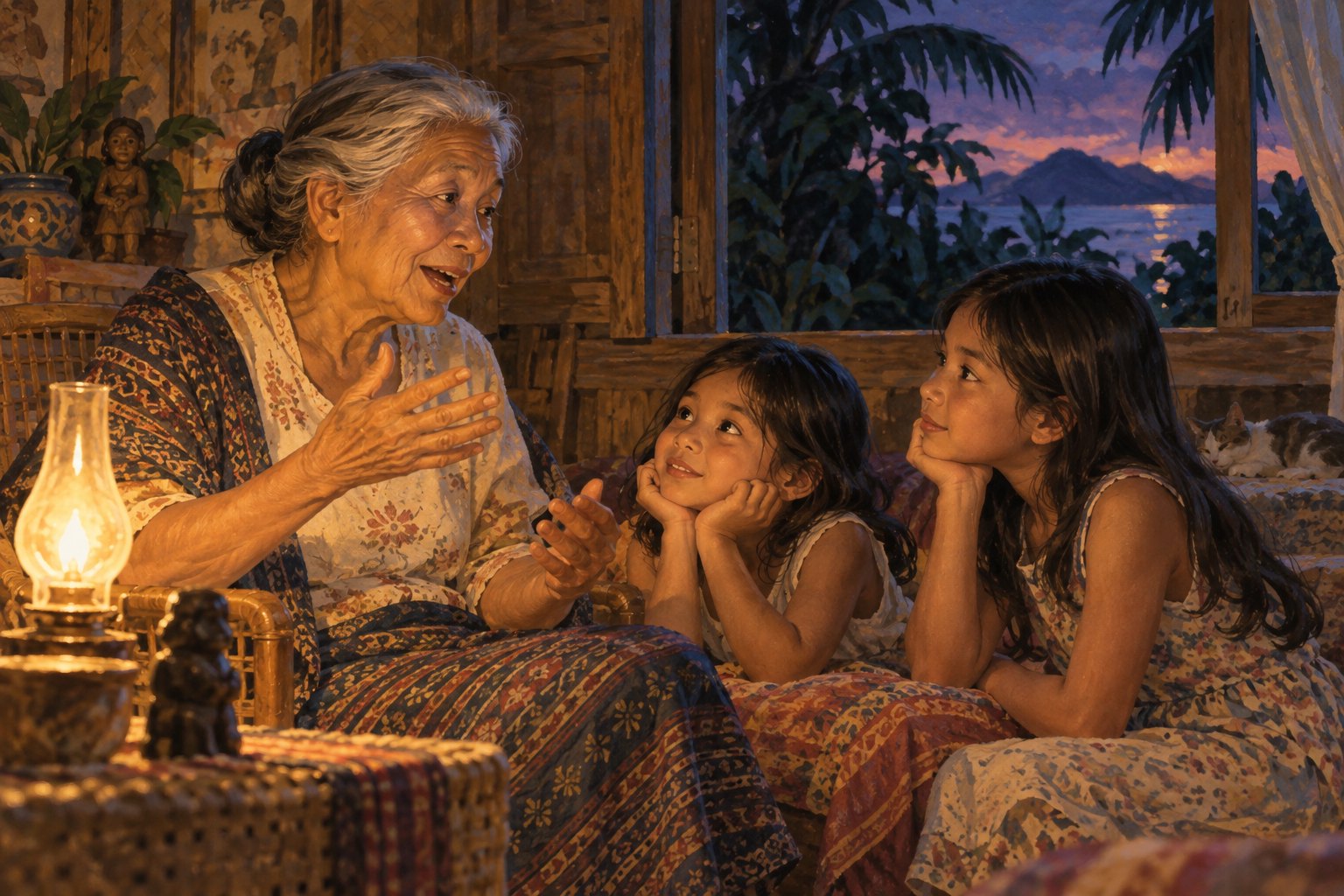
For Jo and Raissa, meeting beings they have heard about gives the island a distinctive emotional possibility. The unfamiliar landscape contains elements of home. Recognizing a creature might provide understanding, but recognition need not provide safety. Knowing the story of something frightening can make encountering it worse.
The cast’s experiences should not be treated as a single account of Filipino childhood. They are individual memories. Their specificity is precisely what makes them useful: family storytelling can be affectionate, disciplinary, funny, unsettling, or several of those things at once.
For viewers encountering these creatures for the first time, that family connection offers a way into the material beyond learning names. The meaningful question becomes what these stories mean to the people who grew up hearing them.
The Manananggal should retain the power to frighten
The film’s Manananggal is voiced by Lea Salonga. Reuters describes the folkloric creature as capable of separating its body into two parts; DreamWorks presents it as a major threat on Nakali. Those details establish why a figure remembered from childhood can command so much attention in a fantasy adventure.
From a critical perspective, the challenge is tonal. Turning a frightening legend into family entertainment requires decisions about intensity, humor, and visual detail. The important measure is whether those decisions preserve the emotional force of the encounter. A creature can remain disturbing without requiring graphic imagery.
Fear also gives the friendship something to work against. People reveal themselves through what they dismiss, what they recognize, and whose warnings they trust. The most rewarding character analysis would follow those choices closely rather than assume that every creature exists to illustrate a tidy lesson.
Likewise, identifying a folkloric figure does not establish an Easter egg. A being central to the story deserves attention as a character or threat in its own right, with its dramatic function considered alongside its cultural origin.
Remembering someone should leave room for change
The trailer’s promise, “I will never forget you,” captures the premise’s emotional appeal. It is a beautiful promise partly because nobody can guarantee perfect memory. Details fade. People revise their understanding of the past. Maintaining a relationship requires new attention as well as old affection.
My deeper reading of Forgotten Island begins there: personal memory and inherited stories both require participation. A friendship continues through contact, care, and the willingness to recognize change. A family story continues when someone finds a reason to tell it again.
Readers interested in the tension between inheritance and an independent future may also appreciate our analysis of family and cultural change in Angh. The contexts differ substantially, but both invite thought about what a younger generation carries forward.
The compelling possibility in Jo and Raissa’s story is that remembering can become an act of generosity. Each friend can acknowledge what the other made possible without demanding that she remain the same forever. Filipino folklore gives that question a world to inhabit—and the voices of earlier generations to echo through it.
Original content by this site's editorial team. Published: September 26, 2026 at 21:03:47 PDT (Los Angeles time)