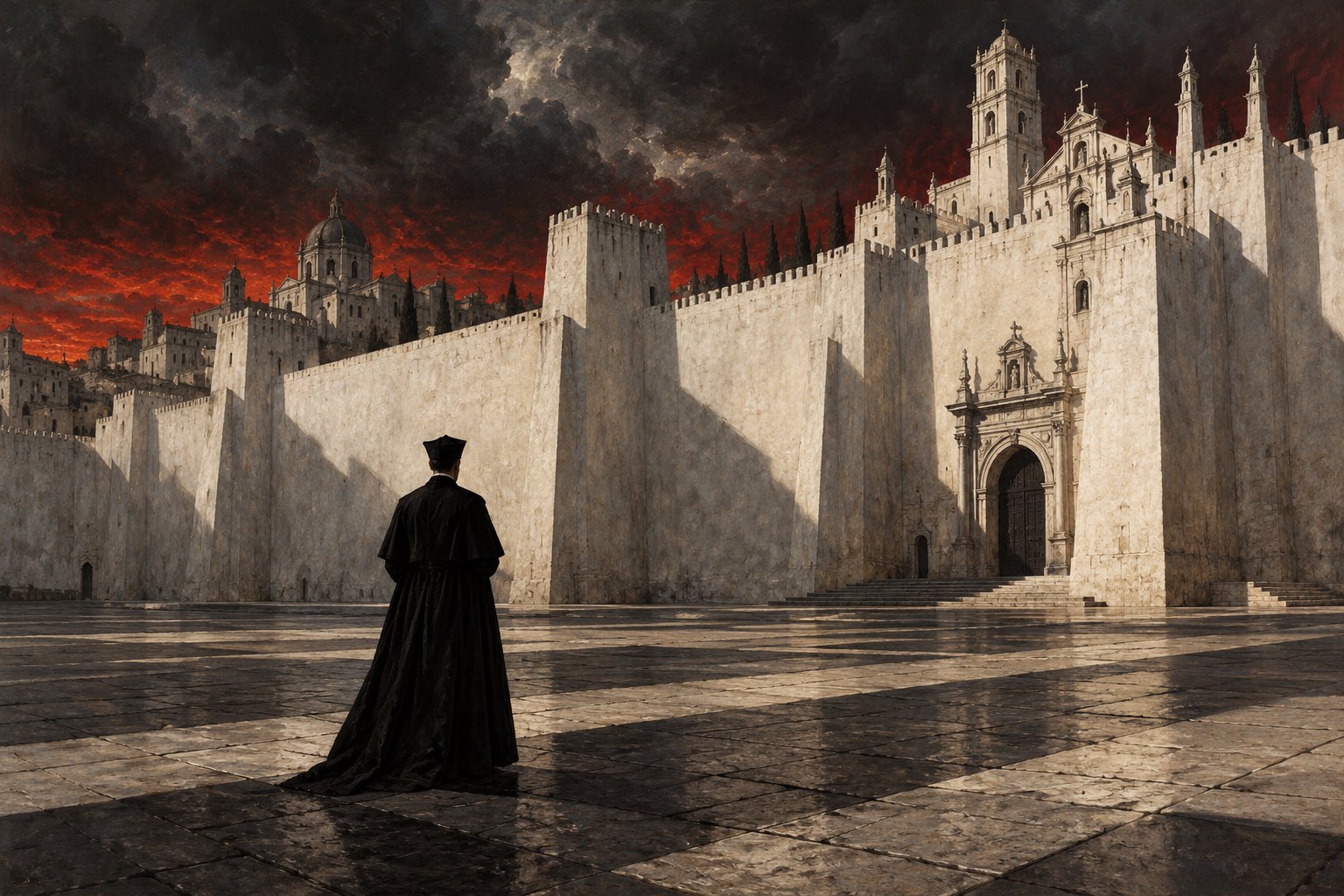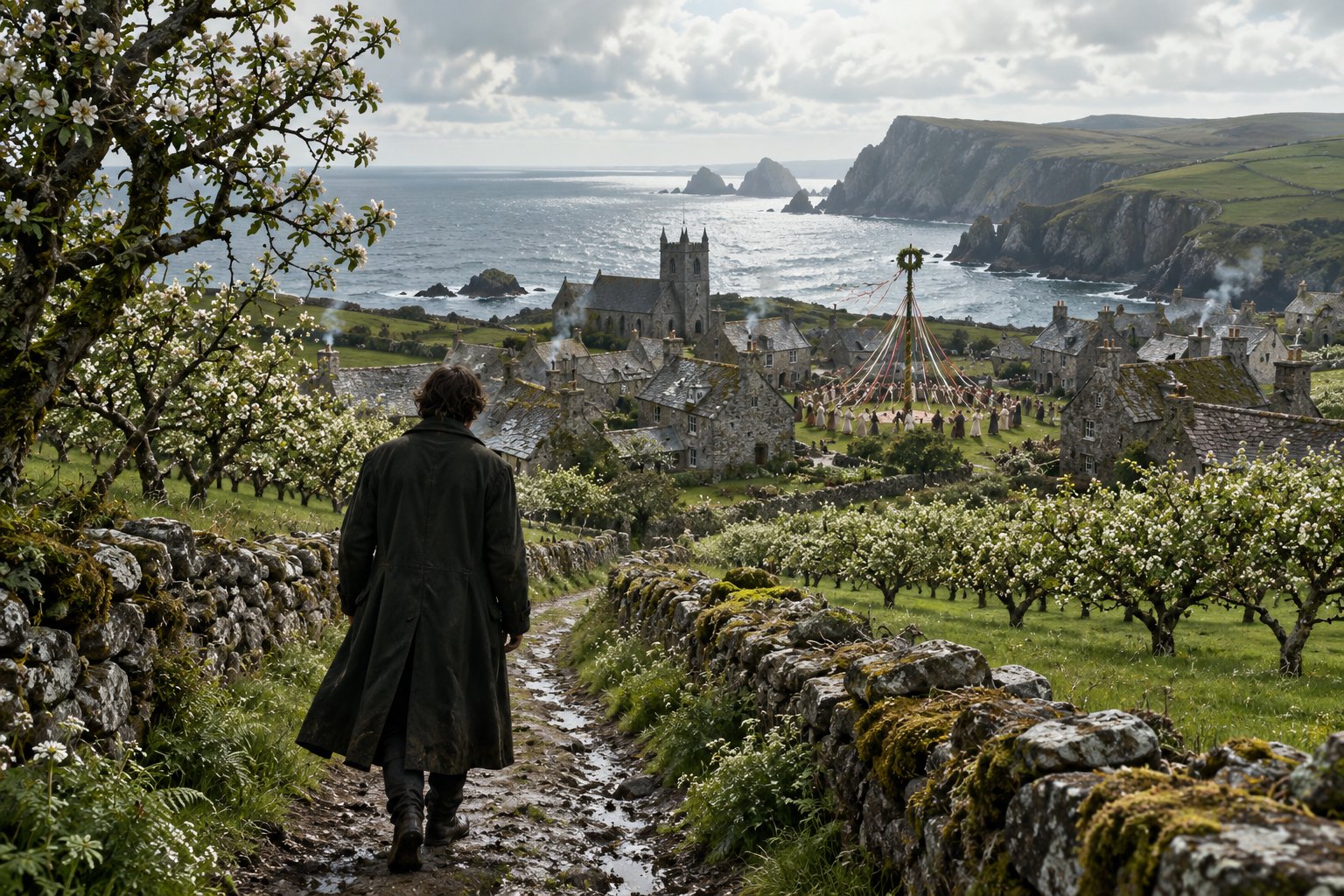
Folk horror on film turns familiar sources of comfort—land, tradition, seasonal celebration, community—into reasons to feel unsafe. Robin Hardy’s The Wicker Man (1973), written by Anthony Shaffer, gives that transformation a particularly cruel shape. A policeman arrives on an island to find a missing child. The people he questions already understand his place in their story. He is the last person to learn it.
For me, the film’s enduring achievement is how thoroughly it makes terror a matter of perspective. Summerisle looks lively, sociable, and capable of pleasure. Sergeant Neil Howie looks stiff and judgmental. Yet the person least comfortable in this community is also the person trying to protect a human life. The film makes our irritation with him part of its trap.
Spoiler warning: This review discusses the complete plot and ending of the original 1973 film, including the identity of the intended sacrifice.
Howie’s investigation: being right does not mean being safe
Edward Woodward plays Howie, a devout Christian police sergeant who travels to Summerisle after receiving an anonymous letter about the disappearance of Rowan Morrison. What should be a sequence of interviews becomes an exhausting struggle to establish basic facts. The islanders’ accounts resist the assumptions on which his work depends.
Woodward’s rigidity is essential. Howie brings both professional authority and religious certainty to the island, and he often speaks as though the two should command identical respect. His objections to the inhabitants’ sexual openness make him an awkward guest long before he understands the danger.
That awkwardness creates a useful distinction for the viewer. Howie can be intolerant about other people’s beliefs while remaining correct that a child’s disappearance demands investigation. Disliking his manner does not invalidate his responsibility. The film becomes more disturbing when we stop treating sympathy as a reward reserved for agreeable characters.
His vulnerability is procedural as well as personal. An investigator expects evidence to narrow the possibilities. Here, each apparent discovery moves him along a route prepared by others. He believes he is overcoming resistance; the islanders need him to experience precisely that feeling of progress.
Lord Summerisle makes control look like hospitality
Christopher Lee’s Lord Summerisle supplies the ease Howie lacks. He can discuss the island’s customs without embarrassment, treating the visitor’s indignation as a slightly tiresome misunderstanding. Lee’s relaxed bearing is unnerving because it allows power to appear generous.
The contrast is almost a social comedy. Howie demands explanations; Summerisle has the leisure to provide them on his own terms. The invitation to “Cut some capers, man” captures the pressure beneath the merriment. Participation is presented as an obvious pleasure. Refusal marks the outsider as deficient.
Summerisle also explains that the island’s religious order developed under his grandfather alongside its agricultural prosperity. That history complicates the impression of an untouched ancient culture. Tradition has been organized, taught, and connected to a promise that the land will provide.
My reading is that Summerisle’s authority depends on keeping those connections intact. A failed harvest threatens livelihoods, but it also challenges the story that makes his leadership seem natural. Ritual offers a response that preserves the system’s credibility by demanding something from a victim.
This relationship between belief and permission to harm has a useful companion in our review of religious authority and persecution in The Devils. In both discussions, the crucial question is what people allow themselves to do once violence acquires a sacred justification.
Rowan Morrison turns the rescue story inside out
Rowan is more than the missing person who starts the plot. She becomes the figure around whom Howie organizes his moral understanding of the island. If she is threatened, then his discomfort has a clear purpose: he must endure this place long enough to save her.
When he finally reaches her during the May Day proceedings, the apparent rescue seems to validate that understanding. Instead, it completes the deception. Rowan leads him into the final trap, and the distinction between endangered child and cooperating islander collapses.
The revelation is especially painful because Howie’s protective instinct is not exposed as false. It has been exploited. His willingness to act for someone vulnerable gives the community a reliable way to direct him.
We should also resist treating Rowan’s participation as evidence that she possesses an adult understanding of the killing. The film gives us her behavior, not a comprehensive account of her conscience. What is visible is a community in which children already have roles in sustaining the adults’ shared story.
Why the songs and orchards matter
The music is central to the film’s unsettling appeal. Singing allows the islanders to share a mood without stopping to explain it. Howie can question an individual, but he cannot interrogate the atmosphere of an entire village as easily.
For the audience, this creates a productive discomfort. The songs and celebrations have energy; watching them can be enjoyable. Hardy lets that enjoyment coexist with suspicion. The community’s capacity for beauty does not prevent its capacity for cruelty.
The agricultural setting gives the ritual a material pressure. Fruit is a livelihood as well as a symbol. Once the harvest fails, the islanders seek an action that will make uncertainty feel manageable. A sacrifice supplies a task, a ceremony, and the promise of an answer.
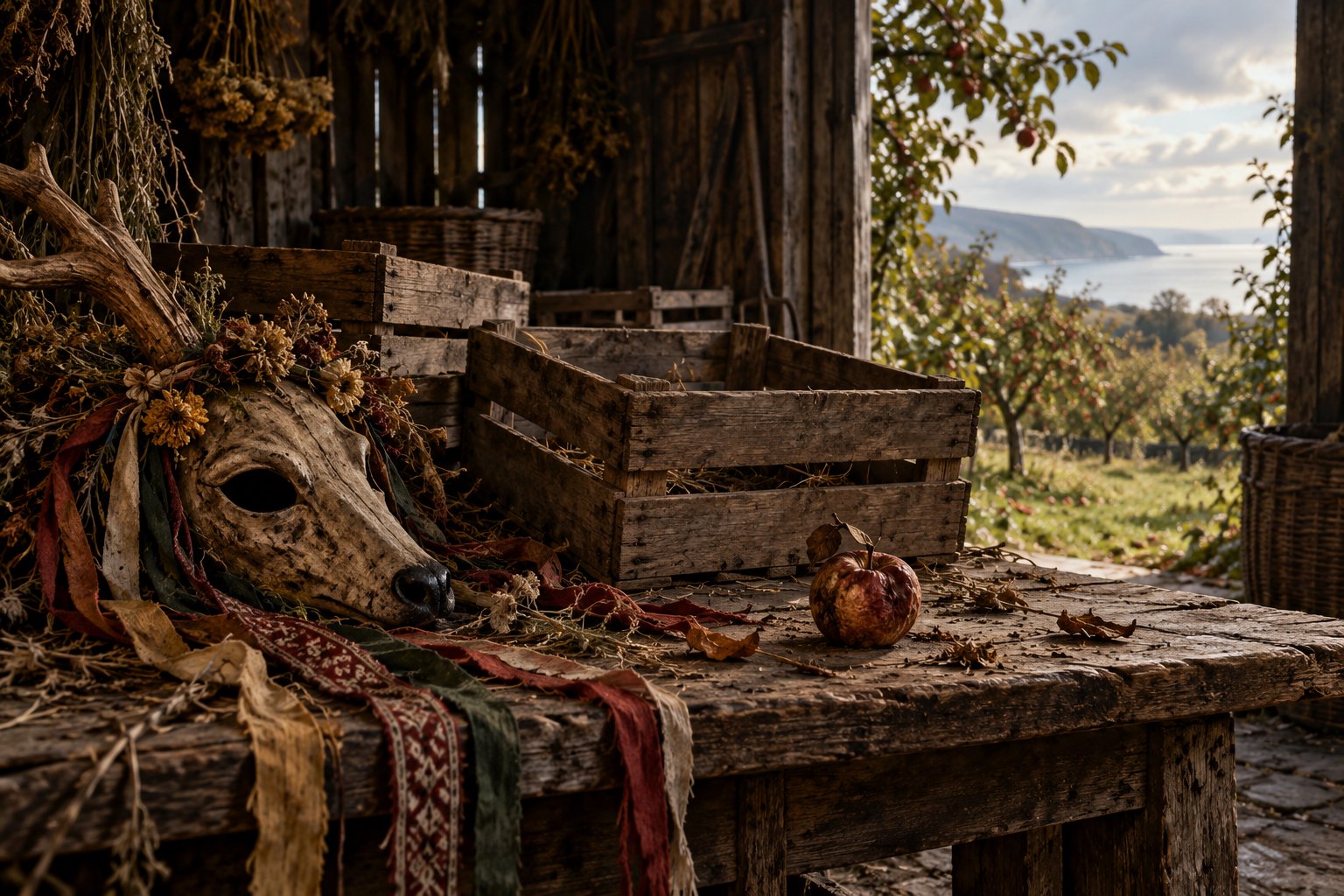
This is why the setting does more than provide picturesque isolation. The inhabitants’ dependence on the land helps explain the urgency of their belief without excusing their decision. Fear becomes dangerous when a community agrees that someone else’s body can solve it.
The ending exposes the limits of both men’s certainty
Howie discovers that he was selected as the sacrifice. His arrival, authority, virginity, and role as the fool fit the islanders’ requirements. The qualities he understands as parts of his identity have been converted into ritual qualifications.
His final resistance includes a warning to Summerisle: “Next year your people will kill you on May Day!” The line introduces a future the ceremony cannot settle. If the crops fail again, the demand for an explanation will return. Summerisle can direct the present violence without necessarily controlling its next target.
The film ends without showing another harvest. Howie’s prediction remains a warning, not a confirmed sequel to the events we witness. Nor does the burning establish that the islanders’ gods exist or that their offering will accomplish anything. What the ending demonstrates beyond dispute is their willingness to kill.
Woodward gives that distinction terrible force. Howie’s faith remains available to him, but his official position cannot protect him. His terror is personal and immediate while the crowd experiences the same event as collective reassurance.
A deeper reading: belonging becomes the weapon
The Wicker Man is strongest when understood as a film about unequal access to knowledge. Howie thinks he is choosing his next move. Everyone around him knows the larger design. His decisions matter emotionally even as their practical consequences have been anticipated.
That makes it an illuminating example of how a character’s hardest choice reveals a film’s theme. Howie cannot simply abandon the possibility that Rowan needs him. The islanders turn that obligation into a means of capture.
My verdict is that the film earns its extraordinary ending through this patient manipulation of allegiance. Its theatrical dialogue and musical interruptions may frustrate viewers expecting a conventional chase, but those elements teach us how Summerisle works. People belong by performing together.
The deepest horror is the ease with which that shared performance accommodates murder. The crowd does not need to stop celebrating to become dangerous. Howie’s death can enter the community’s calendar as an act of hope, while the person whose life is taken disappears beneath the meaning everyone else assigns to him.
Original content by this site's editorial team. Published: October 22, 2026 at 04:52:43 PDT (Los Angeles time)