Fiona Lowe, Chad Lowe’s daughter, has a posthumous cameo in Chris Pratt’s new movie, Way of the Warrior Kid, arriving about two months after her death at 13. The appearance brings an unusually personal dimension to a film about a child learning to face a difficult world. Its significance does not depend on the size of her role: a brief appearance can hold an emotional weight that the surrounding story never anticipated.
Page Six reports that Fiona and her older sister, Mabel, are listed as “Bus Kid” in the film’s credits. That identifies a small contribution, rather than a central character or a separately announced memorial sequence. The distinction matters when discussing what viewers can expect. [Page Six’s reporting](https://proxy.audy.io/v/s-cGFnZXNpeC5jb20/2026/11/28/entertainment/chad-lowes-daughter-fiona-makes-cameo-in-chris-pratts-movie/)
This is spoiler-light commentary on the reported appearance and the film’s established premise, rather than a scene-by-scene review. No unverified dialogue, account of Fiona’s performance, or claim about the ending is necessary to understand why this moment has drawn attention.
Where Fiona’s appearance fits
For readers trying to identify the movie, Way of the Warrior Kid is the Chris Pratt drama released on Apple TV on November 25, 2026. McG directs, with Jude Hill playing Marc and Linda Cardellini playing his mother, Sarah. Marc struggles with bullying, schoolwork, physical education, and friendship. His injured uncle Jake, played by Pratt, spends the summer recovering with the family and introduces a training program intended to help his nephew develop courage. Apple’s description also makes clear that Jake has difficulties of his own. [Apple’s official film information](https://www.apple.com/tv-pr/originals/way-of-the-warrior-kid/)
The reported credit does not, by itself, establish Fiona’s exact screen time, whether she speaks, or what happens around her appearance. It would be misleading to supply a timestamp or describe a meaningful exchange without confirming it. Likewise, calling the cameo a deliberate farewell would imply an intention that the available reporting does not establish.
What can be said is simpler: Fiona participated in a movie that audiences can now encounter after her death. The passage of time has changed the context in which that participation is seen.
Marc’s perspective: being seen before being improved
The film’s premise invites a useful character question. What does help look like to a child who feels inadequate in several parts of everyday life? From Marc’s perspective, academic difficulty, athletic embarrassment, and social isolation are not separate genre ingredients. Together, they can make school feel like a place where every activity offers another opportunity to fall short.
My view is that this kind of story becomes interesting when it recognizes the difference between helping a child acquire skills and making him feel that he must earn acceptance through improvement. Training can provide a dramatic structure, with visible goals and setbacks. Belonging is harder to measure. A child may need encouragement before he has anything impressive to show for it.
That is an interpretive standard for the film, rather than a claim that any particular scene fulfills it. The central relationship asks viewers to consider whether an adult notices the child beneath the problem he hopes to solve.
Our discussion of how personal relationships shape the meaning of success in Hershey approaches a related question: achievement gains dramatic value through what it means to people, rather than through accomplishment alone.
Jake’s perspective: a mentor who also needs help
Jake’s injury gives the premise an important complication. He enters Marc’s life with experience and authority, but he is also recuperating. That creates the possibility of a relationship in which the adult offers guidance while remaining visibly vulnerable.
For me, that is more compelling than an entirely invulnerable mentor. A character who understands discipline may still struggle with dependence, frustration, or his own expectations. The official description establishes Jake’s personal difficulties without resolving them; any fuller judgment about how Pratt expresses those tensions would require close attention to the finished performance.
The dramatic opportunity lies in reciprocity. Marc can learn from Jake without becoming a miniature version of him. Jake can provide structure without possessing every answer. A persuasive mentorship story allows both characters to remain individuals, with different needs and different measures of progress.
Fiona’s appearance should not be recruited as evidence for that interpretation. The fictional relationship and the real person appearing briefly within the movie belong to different kinds of discussion. Keeping that boundary clear makes room for both thoughtful criticism and basic respect.
Why an ordinary screen moment can matter

Movies preserve more than the performances around which their publicity is built. They also preserve the presence of people who appear briefly, sometimes without a named character. Later events can change how an audience experiences those images, even though the images themselves remain the same.
That helps explain why a cameo can become emotionally significant without becoming narratively important. Viewers who recognize Fiona may bring knowledge to the moment that other viewers do not possess. Neither response changes her role in the plot. It changes the attention brought to her presence.
There is no need to imagine what her family feels while watching, or to treat a public appearance as access to private grief. Acknowledging that she is there is enough. The quietness of that acknowledgment may be more fitting than searching the surrounding scene for an accidental prophecy or hidden message.
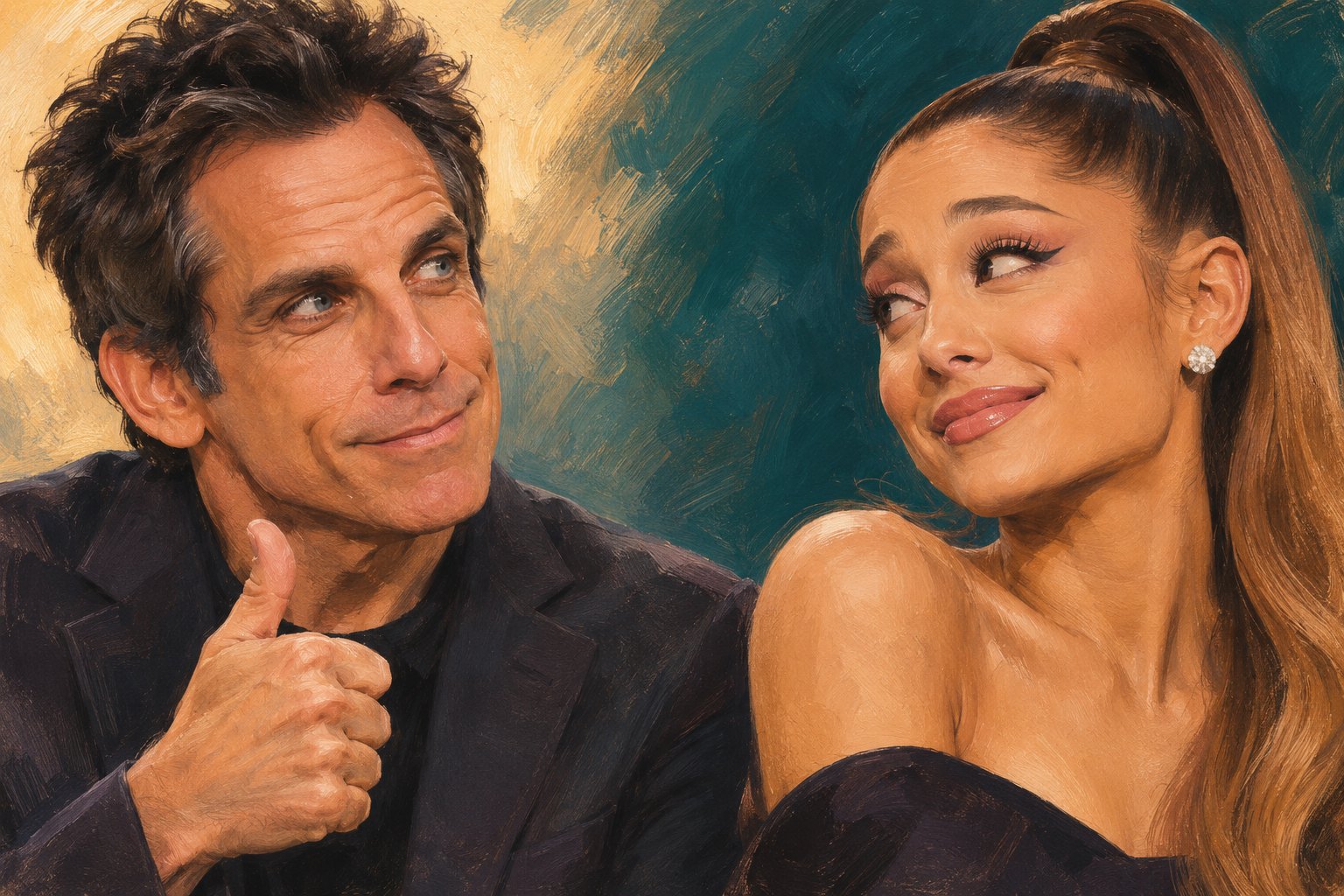
This also changes how celebrity-related film coverage should frame its claims. As our commentary on what Ben Stiller’s praise of Ariana Grande establishes about Focker-in-Law considers, news surrounding a movie and evidence of its artistic achievement answer different questions.
A humane interpretation leaves some things unresolved
The deepest question raised by Fiona’s cameo concerns what audiences ask a movie to hold. A fictional story can organize difficulty into an intelligible sequence: a problem, a relationship, an effort, a change. Real lives do not owe viewers that clarity. A young person’s death cannot responsibly become proof of a film’s lesson about courage, resilience, or family.
My reading is that the appearance matters precisely because it does not need to deliver a lesson. Fiona can be remembered as someone who participated in this movie, without her small contribution being transformed into a symbol designed to explain everything around it.
Way of the Warrior Kid still deserves to be assessed through its characters, performances, and treatment of a vulnerable child. Fiona’s cameo invites another kind of attention alongside that assessment: an awareness that the people preserved on screen have lives beyond the stories they help tell. A brief appearance can remain brief and still matter deeply.
Original content by this site's editorial team. Published: November 28, 2026 at 18:57:27 PST (Los Angeles time)