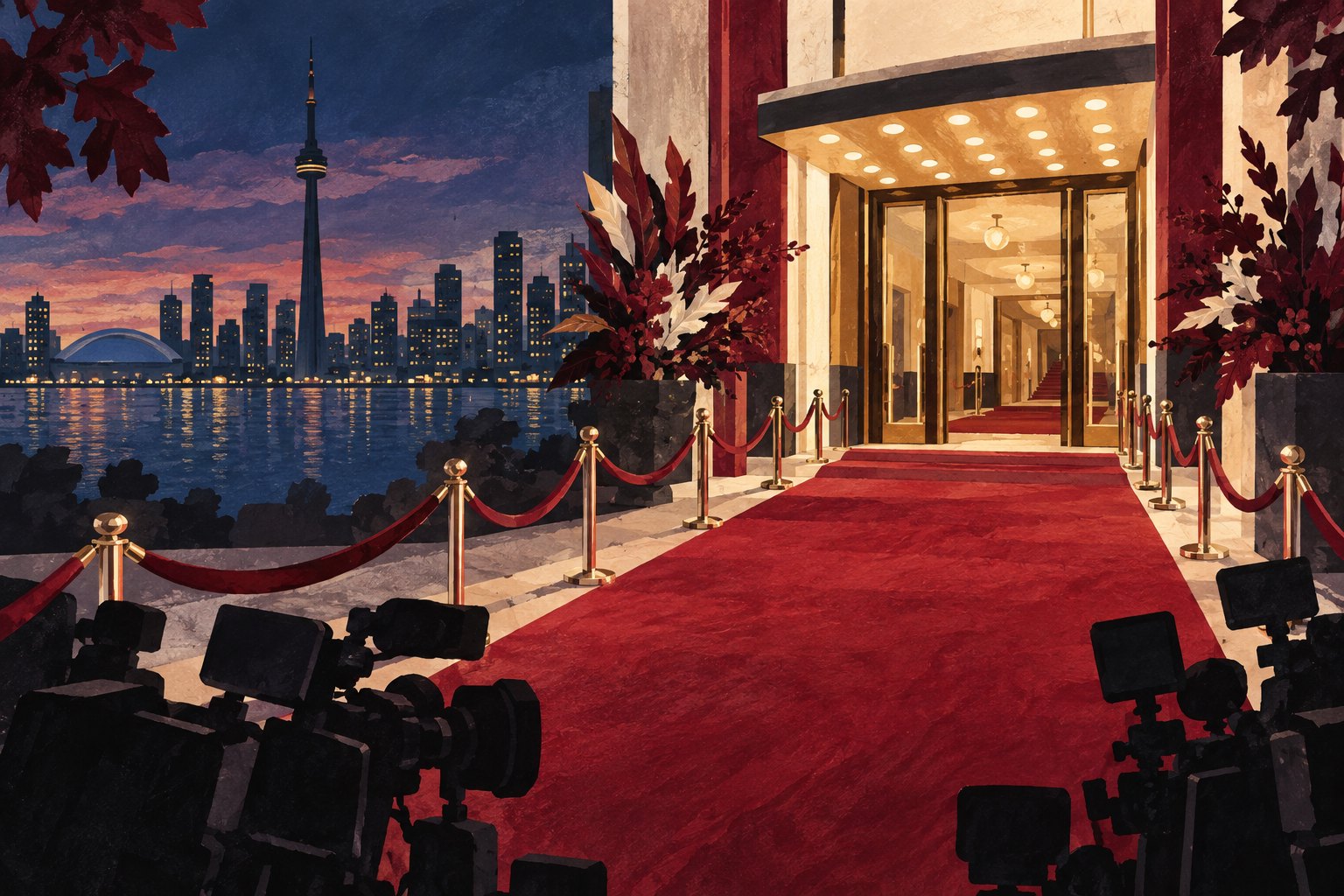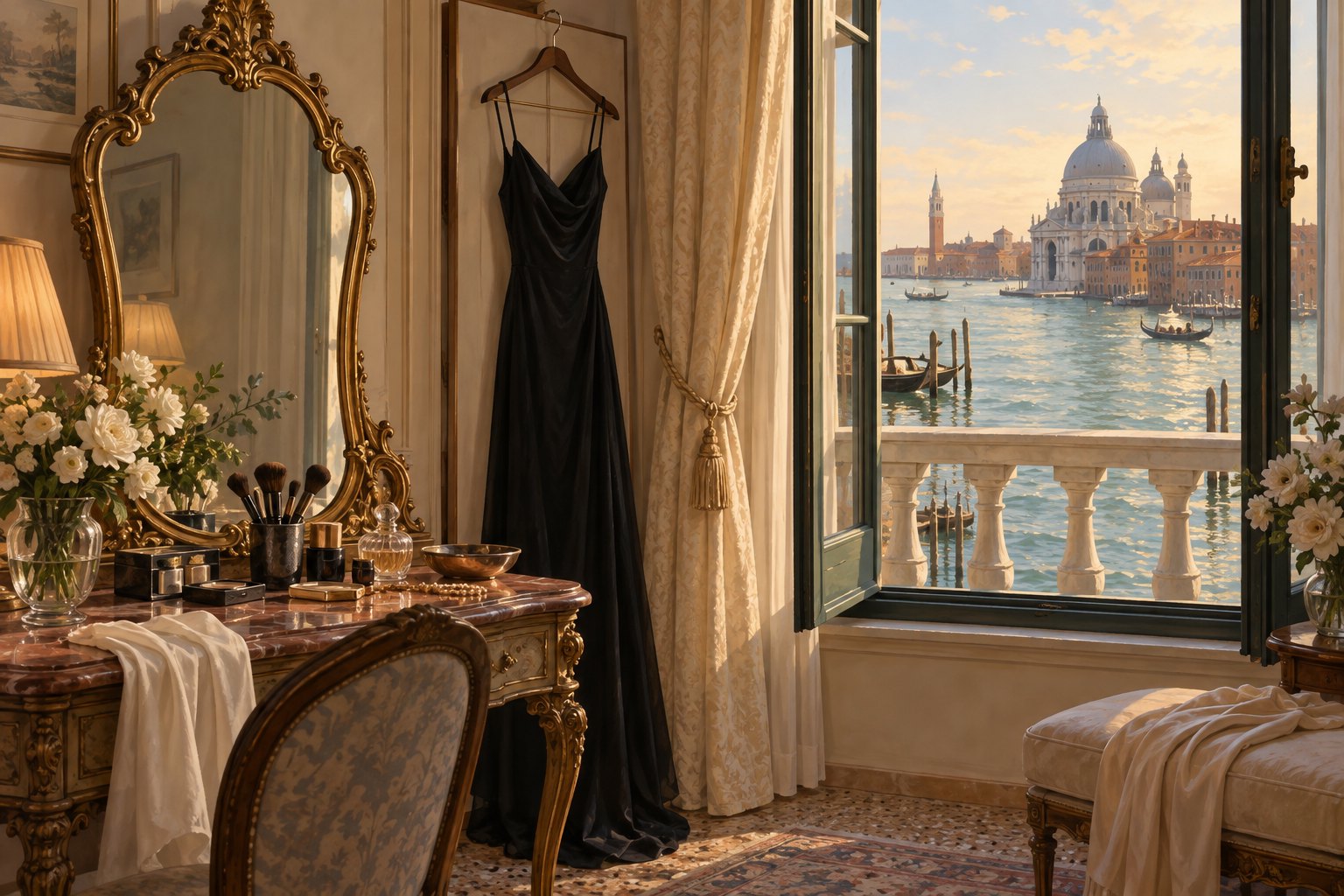
Emily Lind’s preparation for the Venice Film Festival is the subject of a Coveteur getting-ready feature, placing the moments before a public appearance at the center of the story. The appeal is immediate: a finished festival image gives us an arrival, while the preparation promises a sense of how that arrival took shape. For movie lovers, that shift opens an interesting conversation about the relationship between a performer and the image audiences carry into a screening.
This is festival and screen-culture commentary, with no plot spoilers. The feature’s premise establishes Lind and Venice as its subjects; it does not, by itself, establish a particular premiere, film role, outfit credit, or beauty routine. Those details deserve reporting rather than guesswork. What the premise does invite is a closer reading of the getting-ready format—and why its storytelling matters alongside film criticism.
Why the Preparation Can Be More Compelling Than the Arrival
A red-carpet photograph compresses an occasion into a single result. Clothing, posture, lighting, and expression arrive together, leaving little room for the decisions behind them. A preparation story reverses that relationship. It makes the result something to anticipate and turns the process into the attraction.
That structure has a familiar dramatic rhythm: an approaching occasion, a series of choices, and a threshold to cross. Even without a fictional conflict, it creates forward movement. We know there will be an arrival; our curiosity concerns the transformation along the way. The strongest version of this format makes small decisions interesting without inflating them into life-changing events.
Applied to Lind’s Venice coverage, this is a useful way to understand the invitation contained in the premise. The reader is being offered proximity to preparation. That proximity can be enjoyable in its own right, without becoming evidence that we now understand the subject’s private personality.
Access Is a Perspective, Not a Complete Portrait
Getting-ready coverage occupies an appealing middle ground between a formal portrait and a personal diary. Its subject is a public occasion, but its setting and sequence can suggest intimacy. The crucial word is suggest: an image can feel relaxed while still being selected, framed, and presented for an audience.
That does not make the encounter worthless or insincere. A thoughtful portrait always has boundaries. The more useful question is what the chosen perspective lets us notice. Does it explain a decision? Does it give the subject room to articulate a preference? Does it acknowledge the work involved in producing the finished appearance?
For readers interested in Lind, those questions are more revealing than attempts to diagnose confidence, anxiety, or ambition from a photograph. A still image records an expression at a moment. It cannot reliably explain the feeling behind it. Enjoying someone’s public presence does not require turning every gesture into a psychological clue.
Style Can Tell a Story Without Explaining a Person
Festival dressing is especially inviting to interpretation because visual choices seem to offer an immediate vocabulary. A sharply defined silhouette can suggest formality; softer lines can produce a different impression. Color, texture, and proportion direct attention before anyone speaks. These are observations about how images work, not claims about what Lind wore.
The distinction matters because a convincing interpretation begins with something visible and stays proportionate to the evidence. Describing a garment’s shape is different from claiming it announces a career reinvention. Noticing a contrast between an outfit and its surroundings is different from declaring that the wearer intended a particular message.
My view is that the most satisfying fashion commentary explains an effect before assigning a meaning. It can describe where the eye travels, how a composition balances, or what changes when a person moves. That gives readers something concrete to evaluate. Grand claims about a star’s new identity often give them much less.
The Actor and the Character Need Separate Readings
For a film publication, Lind’s Venice preparation also raises a question about attention. A public appearance encourages us to recognize the performer. A dramatic performance asks us to follow a character whose motives, knowledge, and circumstances may be entirely different.
Carrying a festival image into a movie is understandable. Letting it determine the review is less useful. Ease before photographers cannot establish the quality of a scene, just as a reserved public appearance cannot tell us whether an actor is expressive on screen. Performance needs to be assessed through timing, listening, movement, dialogue, and the relationship between scenes.
A character-centered review starts with specific questions: What does this person want? What do they misunderstand? What changes when another character refuses them? Those questions keep interpretation attached to the work. Our character-first guide to festival viewing offers a related approach to choosing what deserves attention once the screening begins.
The distinction also informs our commentary on acting craft and public recognition. Visibility can draw an audience toward a performer; criticism still has to explain what the performer accomplishes within a particular story.
What to Look for in a Getting-Ready Feature
Readers approaching Lind’s Venice feature can bring the same attentive curiosity they bring to a film. Three distinctions make that reading more rewarding:
- Explanation versus decoration: A detail becomes informative when it helps explain a choice, rather than merely filling the frame.
- A stated preference versus an inferred motive: What a subject says about a decision carries different weight from what a viewer imagines it means.
- A process versus a reveal: The preparation has value when it shows how an appearance develops, beyond simply delaying the finished picture.
These are standards for reading the format, rather than claims about particular moments in Lind’s feature. They also leave room for pleasure. Looking closely need not mean treating every glamorous image with suspicion. It means being precise about what makes the image engaging.
The More Interesting Transformation
The deeper appeal of Emily Lind getting ready for Venice lies in the passage between preparing to be seen and becoming publicly visible. A preparation story can make that passage feel tangible. It reminds us that an apparently instantaneous image has a before, even when we cannot know every part of it.
For me, that is where this kind of festival coverage earns its place beside movie commentary. It can sharpen our awareness of framing, presentation, and the stories images encourage us to construct. The next step is to carry that awareness into the theater while allowing the character on screen to establish a separate life. Lind’s public image may invite our attention; the performance must give that attention somewhere to go.
Original content by this site's editorial team. Published: September 15, 2026 at 19:12:04 PDT (Los Angeles time)