Elena Maganini, the film and television editor associated with Dexter and Henry: Portrait of a Serial Killer, has died at 70, according to Variety. Her death invites renewed attention to a filmmaking craft that viewers often experience without consciously noticing: the arrangement of moments that determines when we trust a character, when we recoil, and how long an uncomfortable impression stays with us.
Returning to Henry offers a particularly revealing way to remember her work. Directed by John McNaughton and edited by Maganini, the film makes proximity to its central character feel dangerous. Its disturbing power emerges through the relationship between ordinary behavior and extraordinary cruelty. The editing gives those behaviors room to coexist without providing an explanation that makes them reassuring.
Major spoilers follow, including the ending. This critical discussion addresses murder and sexual violence.
Remembering an editor without inventing the cutting-room story
An editor’s contribution deserves specific attention, but a finished film cannot tell us who proposed every transition or how each decision developed. Maganini’s editing credit is confirmed in Arrow’s edition booklet. The observations here concern the work visible in the finished film, rather than undocumented claims about her intentions. [Arrow’s cast and crew booklet](https://s1.thcdn.com/design-assets/documents/arrowfilms/49652_6_HENRY_PORTRAIT_OF_A_SERIAL_KILLER_60PP_BOOKLET_WEB_CROPPED.pdf)
That distinction makes appreciation more meaningful. We can examine the relationship between scenes, the withholding of information, and the emotional consequences of a pause. These are essential elements of characterization, alongside writing and performance. Our discussion of how memorable screen characters take shape provides another entry point into that collaboration.
Henry: familiarity without reassurance
Michael Rooker’s Henry is frightening partly because he can occupy a scene so quietly. He does not need to announce himself as a monster. His presence becomes familiar through the time we spend beside him, even while his actions make that familiarity repellent.
The film repeatedly denies viewers the comfortable assumption that spending time with someone means understanding him. Henry’s account of killing his mother contains conflicting details. Becky listens for an explanation of the person in front of her; the audience encounters a story that cannot reliably provide one. His apparent confession creates intimacy without establishing truth.
In my reading, this is where the film’s rhythm becomes especially effective. A conversation can resemble the beginning of psychological understanding, yet the surrounding narrative refuses to turn disclosure into a cure. Learning what Henry says about himself does not give Becky—or us—a dependable guide to what he will do.
The result is an unusually hostile form of character study. The film supplies access while withholding security. Its domestic stretches matter because they let the viewer experience the temptation to settle into Henry’s company. Subsequent violence exposes how little that feeling of familiarity was worth.
Otis: the accomplice who becomes an audience
Tom Towles’s Otis gives the film a different, more demonstrative relationship to violence. Where Henry can appear contained, Otis’s appetite becomes conspicuous. Their companionship develops into a relationship in which cruelty can be shared, performed, and watched again.
The home-invasion sequence makes that last possibility central. Henry and Otis record their attack on a family. The film eventually reveals that the footage is being replayed for their entertainment. That change in context makes the act of watching part of the scene’s subject.
McNaughton has discussed the importance of delaying the revelation that the killers are watching a recording. In his account, revealing their reactions earlier changes the audience’s relationship to the violence. This is a concrete example of how the placement of information can alter a scene’s meaning. [John McNaughton’s interview about the sequence](https://www.lwlies.com/interviews/john-mcnaughton-on-henry-portrait-of-a-serial-killer)
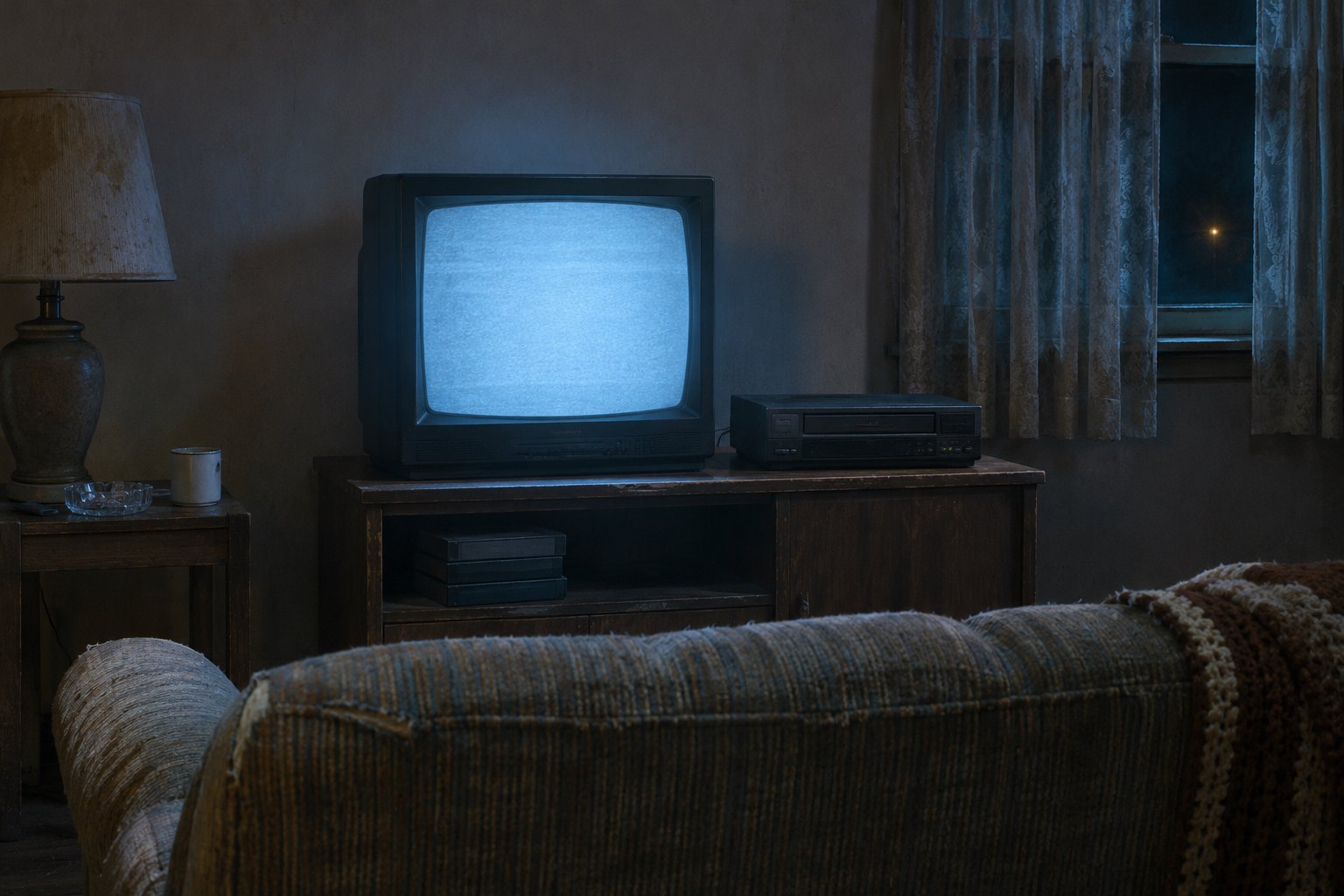
The image above is a symbolic illustration, not a frame from the film. Its empty viewing space points toward the sequence’s uncomfortable question: what changes when violence becomes something someone can replay?
For Otis, the recording extends possession of the event. For the viewer, the revelation demands a reassessment of the images already consumed. I find the sequence powerful because its formal shift changes our position without changing what has happened to the victims. The horror persists beyond the act itself.
Becky: hope becomes the film’s most painful perspective
Tracy Arnold’s Becky, Otis’s sister, gives the story its most vulnerable emotional perspective. Her desire for affection and safety makes Henry’s relative restraint around her consequential. In a threatening environment, even limited consideration can acquire enormous significance.
The crucial word is relative. Henry’s behavior beside Otis can encourage a comparison that makes him seem protective. When Henry intervenes against Otis’s assault on Becky and ultimately kills him, the narrative makes an escape with Henry possible. It does not establish that Henry is safe.
Becky’s declaration, “I love you, Henry,” expresses the future she wants to believe in. Henry’s answer—“I guess I love you too”—offers a response whose uncertainty is impossible to overlook. The exchange is brief enough to sound ordinary, which makes its emotional imbalance more painful. [The film’s dialogue exchange](https://clip.cafe/henry-portrait-of-a-serial-killer-1986/l-love-henry/)
Arnold’s presence keeps that imbalance from becoming merely a clever warning for the audience. Becky has needs that exist independently of Henry’s violence. Her hope deserves attention even when the film gives us reasons to distrust its object. Watching her simply as someone who should recognize danger would flatten the circumstances that make his apparent protection appealing.
The ending makes absence do the work
After Henry and Becky leave together and stop at a motel, Henry departs alone. He abandons her bloodstained suitcase beside the road. The ending strongly implies that he has killed her; it withholds the killing itself.
That omission is devastating. Becky disappears from the shared future she has imagined, and the viewer must connect the remaining evidence. The suitcase turns an ordinary object associated with movement and possibility into the sign of a life extinguished.
Our analysis of why escape remains unresolved in The Graduate considers a very different final journey. Both films invite attention to what happens after characters appear to get away. In Henry, departure provides no protection against the person accompanying Becky.
What Maganini’s work invites us to notice
My judgment is that Henry remains a formidable, deeply punishing film because its structure repeatedly tests the viewer’s desire for reassurance. Confession suggests understanding. Intervention suggests protection. Shared travel suggests a future. Each possibility proves inadequate.
Its deeper terror lies in the distance between recognizing familiar human behavior and knowing another person’s limits. Becky’s hope, Otis’s spectatorship, and Henry’s inscrutability give that distance three distinct forms. Editing holds their perspectives in relation while denying the audience a comfortable place outside them.
Remembering Maganini through this film means attending to that precise work: how scenes accumulate, how a revelation changes an earlier image, and how an absent character can dominate an ending. Her contribution belongs to the experience of watching—the uneasy intervals and irreversible transitions through which a performance becomes a story.
Original content by this site's editorial team. Published: November 2, 2026 at 20:03:25 PST (Los Angeles time)