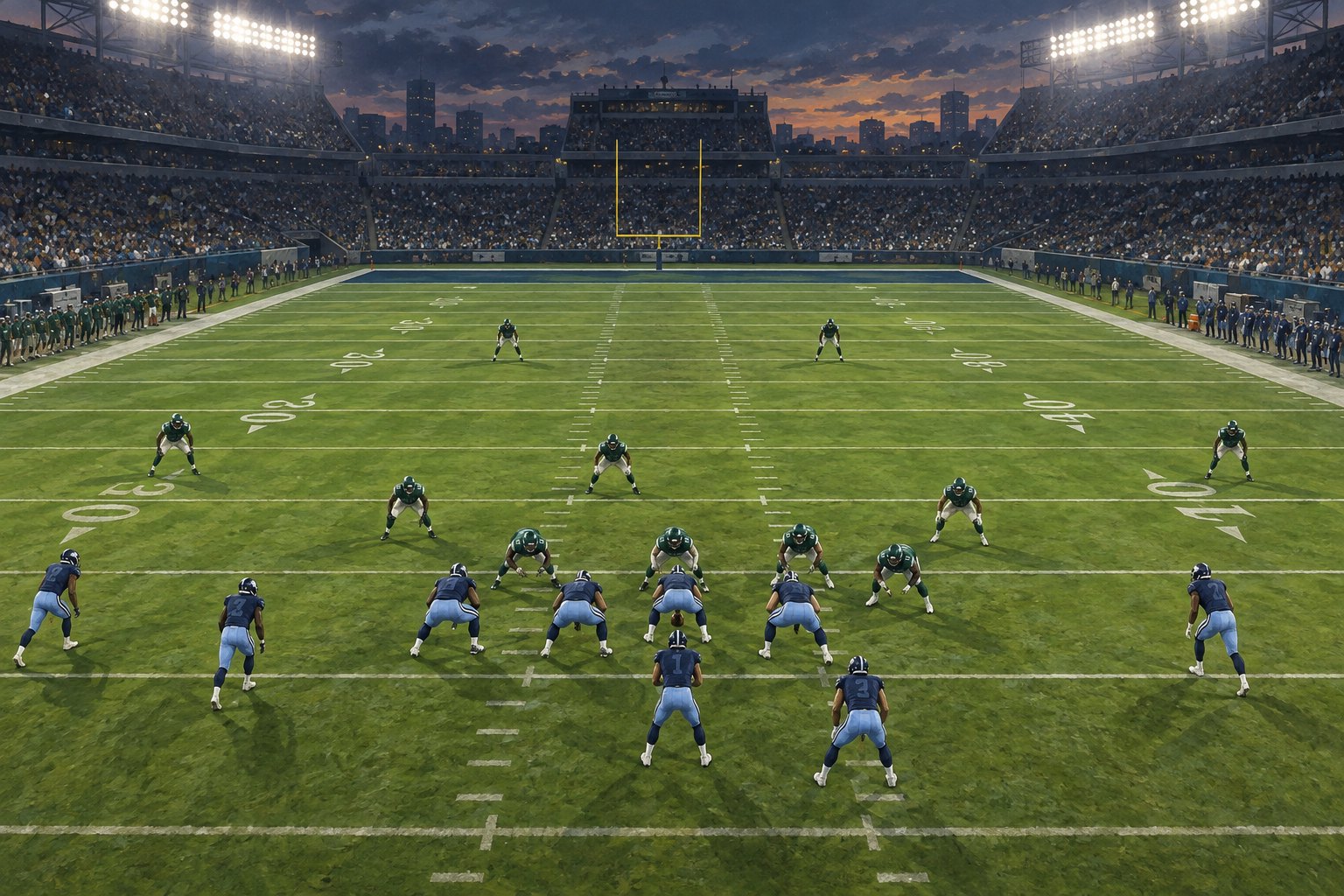
The Eagles–Titans defensive discussion turns on an expectation: Philadelphia should make life difficult for Tennessee. Bleeding Green Nation’s headline, “Expected more from this defense,” expresses dissatisfaction with that standard. The useful next question is what “more” should look like. More pressure? Better positioning? Fewer opportunities for an ordinary offensive play to become something dangerous?
Here, film review means studying football footage. The critical task is to examine decisions, movement, and consequences. This commentary considers the expectation behind the Eagles–Titans debate; the tactical examples below explain how to evaluate a defense without claiming that any particular breakdown occurred in this matchup.
Make the expectation specific
My view is that the most meaningful defensive standard is repeatability. Spectacular plays can demonstrate extraordinary ability, but a dependable unit also handles the less memorable work: protecting space, recognizing developing threats, and arriving where teammates expect support.
That gives the criticism of Philadelphia a practical test. An evaluation should establish what the defense intended to concede, what it intended to prevent, and whether Tennessee could obtain something more valuable than that intended concession. A short completion, for example, can be compatible with a sound defensive plan. Its significance changes if the receiver has room to keep running.
Expecting perfection would make every successful offensive snap evidence of failure. Expecting coordination is more reasonable. It asks whether Philadelphia’s defenders give one another a workable chance to finish the play.
Read the play through each defender’s responsibilities
A useful review changes perspective before assigning blame. The player nearest the ball at the end of a snap may be responding to a problem that began elsewhere. Following that player backward through the sequence can reveal a very different story from the final freeze-frame.
The defensive front: movement needs a purpose
For a defensive lineman, getting into the backfield is only part of the picture. Where does that movement send the ball carrier? Does it preserve the shape of the defense? Does another defender have a realistic path to make the stop?
In a hypothetical run, a lineman might occupy two blockers while a teammate makes the tackle. The visible finish belongs to one player, but the opportunity belongs to both. Conversely, an aggressive charge might look impressive while opening a lane. Reviewing Philadelphia fairly requires attention to these relationships, not merely to who appears closest to the action.
The linebackers: decisions under competing demands
A linebacker’s first steps are especially revealing because the position often requires sorting several threats quickly. A step toward the line can help against a run while making it harder to recover into passing space. A cautious response can preserve one responsibility while delaying another.
The analytical question is what information became available and when. Labeling a player hesitant is easy. Showing that the relevant cue was visible, that the player had a viable response, and that the delay affected the outcome is much stronger criticism.
The secondary: the finish has a history
Defensive backs often enter the broadcast frame just as a play becomes consequential. That can make them look solely responsible for an outcome whose causes stretch across the field.
A fair assessment follows their starting positions, changes in direction, and relationship to nearby help. A difficult tackle might reflect poor technique, a bad approach angle, an earlier coverage problem, or an excellent offensive move. Those explanations lead to different judgments and different corrections.
The camera can make blame look simpler than it is
Football footage rewards the same habit as close screen analysis: looking beyond the most obvious subject. A broadcast naturally directs attention toward the ball. Defensive understanding often requires seeing players who are moving away from it, maintaining leverage, or protecting space that never gets attacked.
Our discussion of how framing shapes screen authority explores a related viewing problem. What an image makes prominent can influence what the audience considers important. In football, a tight frame may show the consequence while leaving the cause outside the picture.
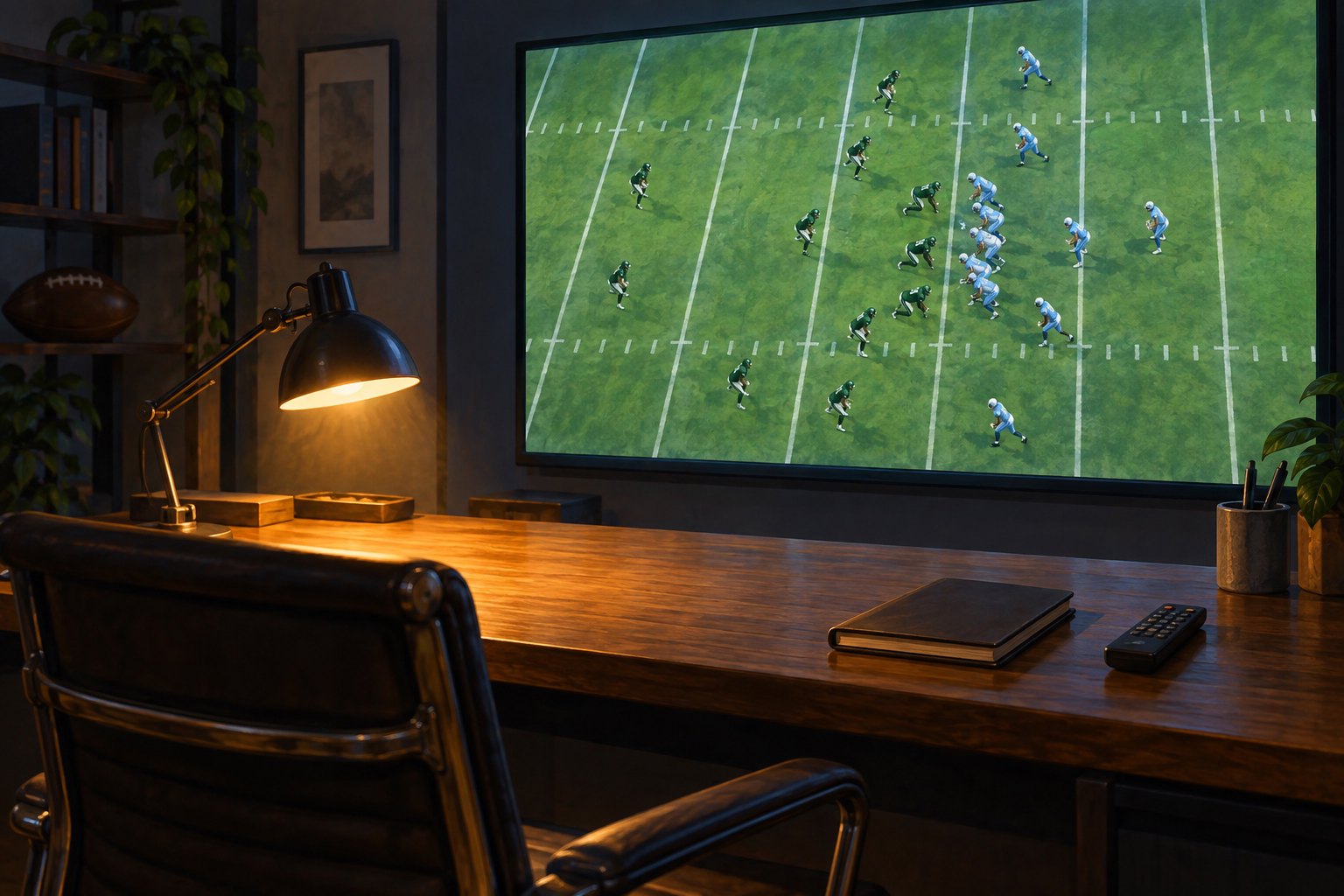
For an Eagles–Titans review, the answer is to follow the whole sequence whenever the available angle permits it. Watch the alignment before the snap, the initial reactions, and the movement that produces the final confrontation. When the footage cannot establish an assignment, uncertainty belongs in the assessment.
Separate Tennessee’s execution from Philadelphia’s mistakes
There is another perspective a defense-centered review needs: the opponent’s. Tennessee’s offense has its own decisions to make and advantages to create. Treating every offensive success as a defensive giveaway strips the contest of half its agency.
Consider a hypothetical completed pass into a narrow opening. If the defense limits the space and the offense executes precisely, that can be a competitive success for the offense without exposing a fundamental defensive defect. If the opening is large and repeatedly accessible, the defensive questions become more pressing.
This distinction matters because “expected more” can otherwise become impossible to satisfy. A fair standard credits an opponent for difficult execution while scrutinizing opportunities the defense makes unnecessarily easy.
Look for patterns before prescribing changes
A forceful reaction to one sequence is understandable. A personnel or schematic recommendation needs a wider foundation. Before deciding what Philadelphia should change, a reviewer should organize the evidence around a few concrete questions:
- Does the problem recur? Similar outcomes across comparable situations carry more weight than an isolated mistake.
- Where does the sequence first go wrong? The final missed opportunity may be downstream of an earlier error.
- What do successful snaps show? They can reveal whether the same approach works when executed differently.
- What would the proposed correction expose? Committing another defender to one threat changes the resources available elsewhere.
This is also why an excerpt should be treated carefully. Our commentary on the limits of judging a larger work from a preview addresses a comparable evidence problem. A selected passage can support a specific observation while leaving broader conclusions unsettled.
The deeper issue is trust between defenders
The strongest interpretation of expecting more from the Eagles is expecting their defensive actions to fit together. One player’s positioning should make another player’s decision clearer. Pressure should work with coverage. Pursuit should narrow the ball carrier’s options.
From that perspective, defensive quality is collective even when individual performances attract the attention. The question is whether a player can fulfill a responsibility with reasonable confidence that help will arrive where the structure requires it.
That is the standard I would bring to Eagles–Titans film study: identify the responsibility, trace the consequence, and test whether the pattern repeats. Disappointment starts the conversation. Explaining exactly how Philadelphia could make Tennessee’s next decision harder gives the criticism its value.
Original content by this site's editorial team. Published: September 26, 2026 at 03:22:21 PDT (Los Angeles time)