Dominic Sessa is leading Shades of Paradise, the Weston Razooli project described in Deadline’s casting report as an adventure crime epic. That combination supplies the immediate reason to pay attention: adventure invites an audience to enjoy movement, discovery, and risk, while crime introduces questions about responsibility and consequences. Bringing those pleasures together can produce compelling cinema, provided the people inside the spectacle remain more than passengers.
The casting news establishes a lead actor and a creative association, but it does not by itself establish the quality of the movie. This is a spoiler-free critical preview, not a review of the finished film. A faithful character breakdown, memorable dialogue, and an interpretation of the ending require evidence from the film itself. For now, the useful discussion concerns what this particular combination asks of Sessa, Razooli, and the relationship between performance and scale.
What the casting announcement actually tells us
The essential news is straightforward: Sessa leads Shades of Paradise, a project associated with Razooli and framed through adventure and crime. Those are meaningful starting points. They identify the performer at the center of the announcement and suggest the broad territory in which the movie will operate.
They do not establish whether Sessa’s character is sympathetic, reliable, remorseful, or even the principal viewpoint through which events unfold. Leading a film and serving as its moral center are different jobs. An actor can dominate a story while playing someone whose interpretation of events the audience should question.
Likewise, the word epic signals ambition without proving a particular runtime, budget, geographical reach, or narrative structure. It should create curiosity rather than function as an advance verdict. This preview does not establish a release date or viewing platform; readers looking for availability should distinguish the casting announcement from a release announcement.
Adventure and crime pull the audience in different directions
The most interesting element of the project’s description is the friction between its genres. Adventure often builds pleasure around forward motion. A new destination, unfamiliar encounter, or difficult passage promises that continuing will be worthwhile. Crime can complicate that momentum by making the next step a consequence of an earlier choice.
For Shades of Paradise, the critical opportunity would be to make those impulses inseparable. Movement could feel exhilarating while the reasons for moving become increasingly uncomfortable. That is a possible strength of the genre combination, not a claim about the movie’s actual events.
My preference is for stories in which excitement changes our understanding of a character. A tense sequence becomes more rewarding when the way someone responds reveals a priority that ordinary conversation could conceal. Do they seek control, approval, safety, or escape? The answer need not arrive through an explanatory speech. It can emerge through whose needs they notice under pressure.
The corresponding risk is that adventure supplies attractive scenery while crime supplies arbitrary danger. A film can contain both elements without making them interact. The stronger test is whether its pleasures and its consequences belong to the same dramatic argument.
Why Sessa’s character will need more than momentum
Putting Sessa at the head of the announcement naturally directs attention toward his performance. Yet casting alone cannot tell us what emotional register the role demands. The useful question is how much room the finished film gives him to make decisions legible.
In a story built around danger, a lead performance can become a sequence of reactions: surprise, fear, relief, renewed alarm. Those responses may carry individual scenes, but they do not necessarily create a character. What gives them shape is a recognizable pattern of judgment, including the moments when that pattern breaks.
A character might understand a situation accurately and still make a destructive choice. Alternatively, someone might act with confidence while fundamentally misunderstanding the people around them. These are general dramatic possibilities, not descriptions of Sessa’s role. They illustrate why a character-centered review must examine the relationship between knowledge, intention, and action.

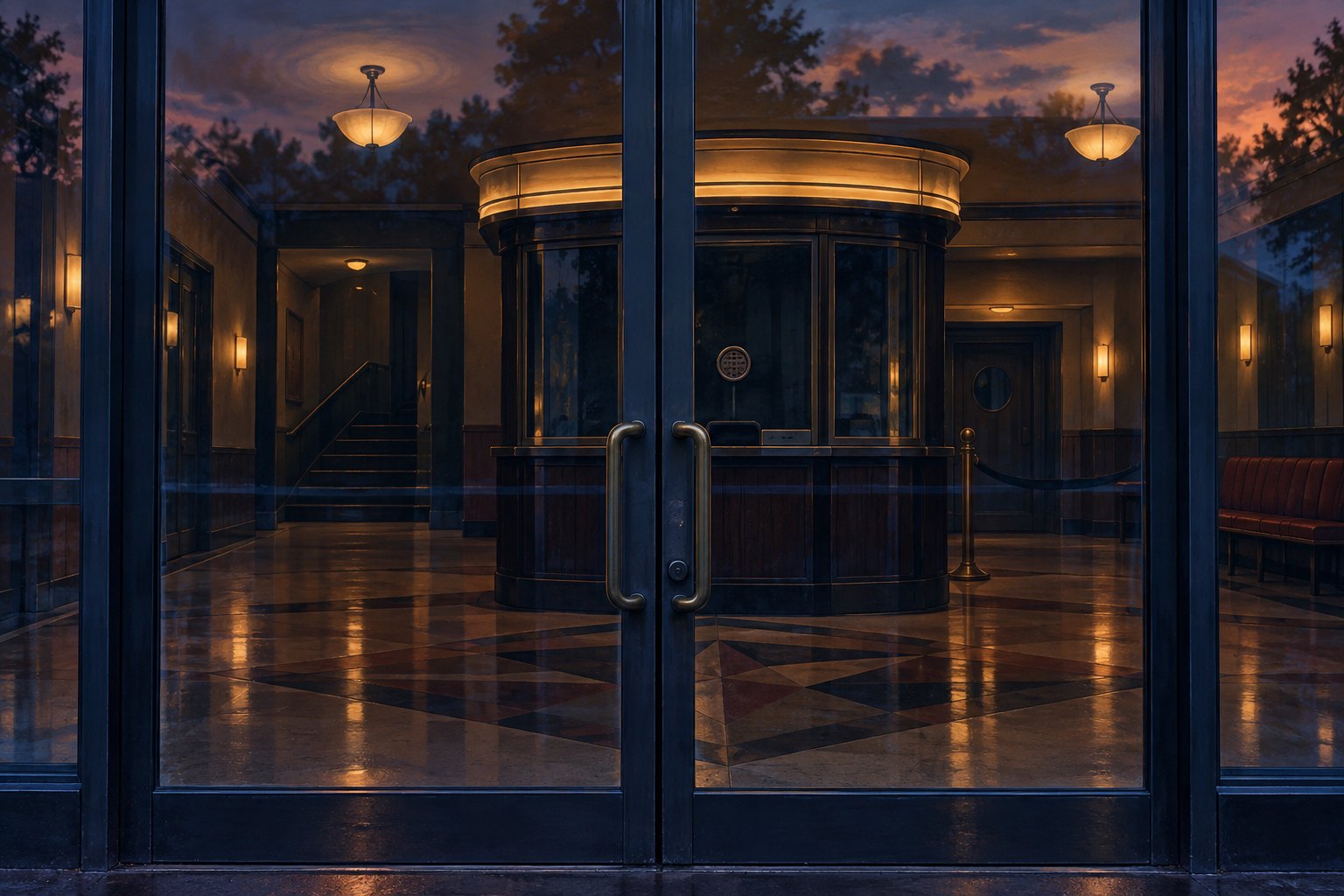
Understanding a character’s perspective also does not require accepting their excuses. A compelling crime performance can make a decision emotionally intelligible while leaving its cost unmistakable. For Sessa’s eventual performance, that distinction would be more revealing than simply deciding whether the character is likable. The accompanying illustration represents that question of choice; it does not depict a scene from the film.
What would make the scale feel earned?
For Razooli’s project, the description of an epic raises a practical storytelling question: what expands as the movie progresses? Physical space is one answer, but emotional exposure, damaged relationships, and the reach of a decision can also create a sense of magnitude.
I find scale most persuasive when later events change the meaning of earlier ones. An apparently minor exchange can become consequential once we understand what someone withheld. A confident gesture can look different after its effect on another person becomes clear. That kind of expansion depends on accumulated detail.
Dialogue matters here, although no lines from Shades of Paradise are quoted in this preview. As our commentary on how a single spoken word can reshape a movie explores, a line gains force through the relationship surrounding it. A memorable quotation is evidence of a dramatic moment, not a substitute for explaining that moment.
The same principle applies to supporting characters. They need interests that extend beyond helping or obstructing the lead. Otherwise, an expansive movie can feel strangely small: everything exists to demonstrate one person’s importance, and no encounter meaningfully challenges their perspective.
What to look for when more of the film is available
Further footage will be most useful when it shows how the film organizes attention. A trailer can advertise pace and atmosphere; a sustained scene can reveal who controls an exchange, what remains unspoken, and whether the camera permits competing perspectives.
- Watch decisions: Does the lead initiate events, or primarily respond to them?
- Watch consequences: Do risky actions alter relationships as well as circumstances?
- Watch tonal transitions: Can excitement give way to discomfort without making either emotion feel disposable?
- Watch other people: Are supporting characters allowed reactions that complicate the lead’s version of events?
These questions also inform our discussion of how character perspective shapes stories of obsession and deception. Genre tells us something about the experience being offered; perspective determines how we inhabit it.
The deeper promise is a conflict between freedom and responsibility
The strongest reason to follow Shades of Paradise is the possibility that its adventure and crime elements will test each other. Adventure can make freedom feel immediate and irresistible. Crime can ask whose freedom is being purchased, and who absorbs the cost. That tension gives a lead actor substantial dramatic territory if the writing makes it concrete.
This remains an interpretation of the project’s announced genre combination, not a statement of its message. Sessa’s casting gives the announcement a focal point; the eventual film must give that focal point a fully realized human perspective. The meaningful measure of its ambition will be whether we leave remembering the choices that shaped the journey as clearly as the journey itself.
Original content by this site's editorial team. Published: September 29, 2026 at 02:32:03 PDT (Los Angeles time)