
Digger, starring Tom Cruise, faces a reported $150 million loss, according to Deadline’s headline assessment. That figure describes an anticipated financial outcome, not a completed accounting. Yet the commercial failure also creates an unusually pointed backdrop for the film’s central character problem: what happens when everyone keeps looking to a powerful man whose decisions helped create the emergency?
The most revealing angle is the relationship between that man and the people still willing to follow him. Digger Rockwell’s authority depends on more than his own conviction. It also depends on others treating his continued involvement as inevitable. Read through that relationship, the film’s premise becomes a study of how failure can leave someone’s power surprisingly intact.
Spoiler note: This character analysis discusses the publicly described premise and reported dialogue. It does not reveal the ending or assess unverified scenes.
The financial setback is clear; its causes require more care
TheWrap reported an opening weekend of approximately $8 million domestically and $20 million worldwide. Those figures support the description of a severe theatrical disappointment. They do not, by themselves, explain whether individual viewers rejected the subject, the marketing, the comedy, or the prospect of seeing Cruise in this particular role. [TheWrap’s opening-weekend report](https://www.thewrap.com/creative-content/movies/verity-digger-box-office-bomb/).
That distinction matters because a disappointing release quickly attracts a tidy explanation. An audience supposedly refused a challenge; a star supposedly lost his appeal; an ambitious filmmaker supposedly went too far. Each may be an argument worth investigating. None follows automatically from the receipts.
Our earlier examination of Digger’s projected financial loss addresses the business question. Here, the more useful critical question concerns the distribution of trust inside the story. Who gets another chance to lead after making a consequential mistake—and why?
The president’s confidence contains the real trap
A line attributed to John Goodman’s president in The Irish Times’ trailer coverage captures the relationship with extraordinary economy: “Digger got us all into this mess and Digger’s going to dig us out again.” The statement acknowledges culpability and immediately converts it into a reason for renewed dependence. [The Irish Times’ trailer coverage](https://www.irishtimes.com/culture/film/2026/07/13/digger-tom-cruise-is-unrecognisable-in-this-new-climate-disaster-comedy/).
From the president’s perspective, that confidence can be read as a way to make a frightening situation feel manageable. A crisis with a recognizable person at its center offers an apparent point of control. The same person can receive the blame, issue the promises, and become the focus of everyone’s expectations.
But the sentence skips a vital step: establishing that Digger deserves renewed authority. Responsibility for causing a problem does not establish the competence to solve it. The president’s formulation folds those separate judgments into one reassuring story.
My reading is that this is a more unsettling character dynamic than simple gullibility. A leader can recognize another man’s failure and still find continued reliance on him politically or emotionally convenient. Admitting that the entire arrangement requires reconsideration is harder than demanding one spectacular act of repair.
Digger’s language makes dependence sound natural
In its review, the Associated Press reports Digger defending oil as “the mother’s milk of Earth.” The phrase turns an extractive industry into an image of nourishment. Instead of arguing only about practical use, it invites listeners to imagine a relationship as basic and intimate as feeding. [The Associated Press review](https://apnews.com/article/6088efba9dbcf35346dbbd3a976caccb).
As rhetoric, that is a revealing maneuver: a commercial interest borrows the emotional authority of care. It encourages the audience within the story to feel that separation would be unnatural before the practical argument has even begun.
The useful viewing question is what such language allows a character to avoid. Does he answer an objection, or replace it with an emotionally loaded image? Does he identify a workable solution, or invite everyone to feel disloyal for questioning him? These distinctions help separate a persuasive personality from a persuasive case.
They also make the supporting characters essential. A grand speech gains dramatic meaning through the responses it produces. Agreement, hesitation, deference, and resistance tell us whether a speaker is changing minds or simply occupying a room where disagreement has become difficult.
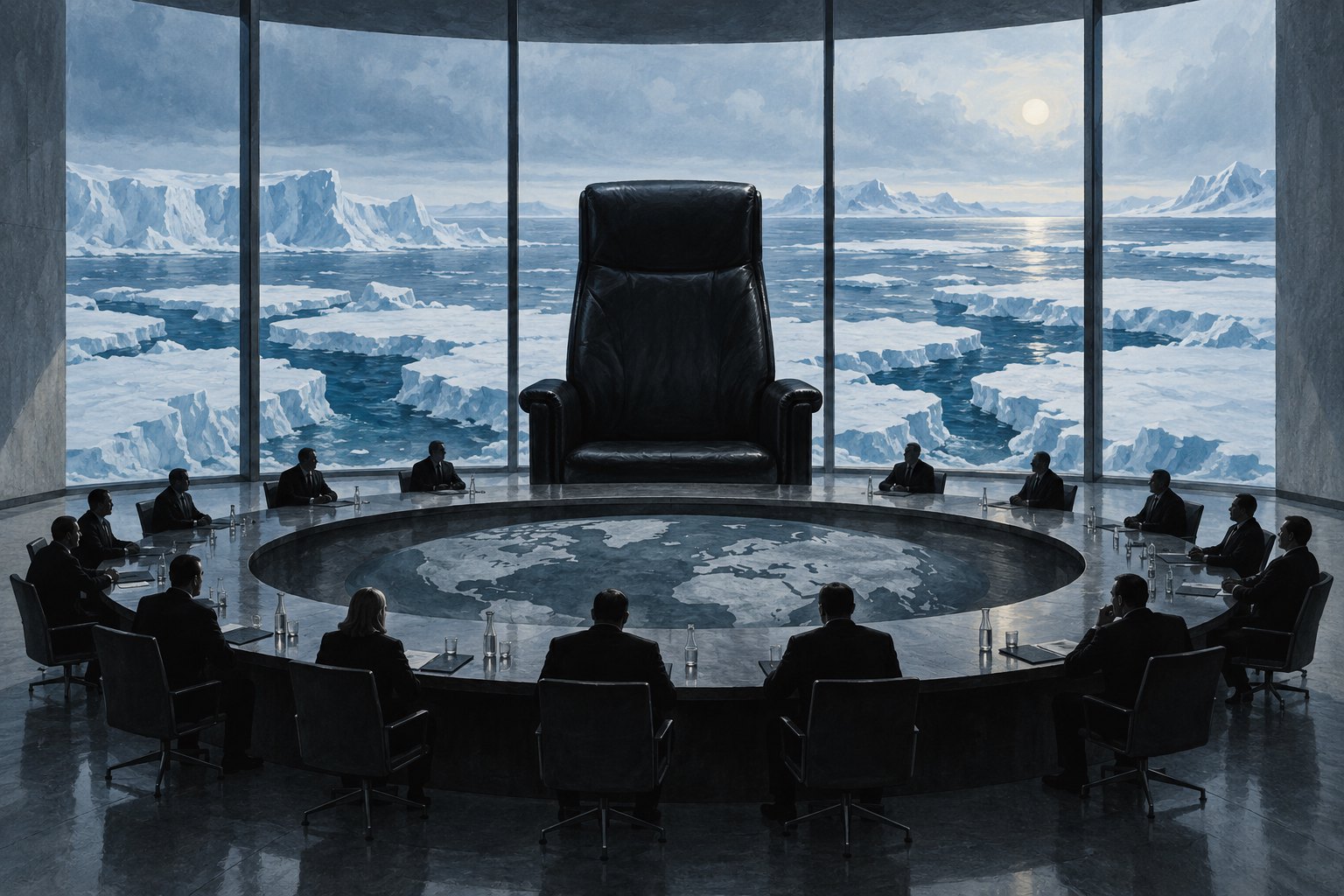
Being needed can become a substitute for being right
The official premise describes a powerful man trying to establish himself as humanity’s savior before a disaster he unleashed destroys everything. That framing explicitly joins a public emergency to a private need for vindication. Saving others and proving something about himself occupy the same mission. [The official film synopsis](https://www.diggerfilm.com/).
Those objectives can overlap, but they can also pull apart. Someone committed to an outcome should, in principle, accept a better solution offered by somebody else. Someone committed to being recognized as the indispensable problem-solver has another interest to protect: remaining at the center.
This is an interpretation of the premise, not a claim about an unverified choice in the ending. It offers a concrete way to watch the character. Pay attention to the difference between accepting assistance and accepting displacement. A person may welcome help enthusiastically while resisting the possibility that another person should take charge.
For the surrounding characters, the corresponding test is whether they can imagine success without their familiar leader receiving the credit. Dependence becomes especially durable when everyone’s understanding of a successful outcome includes restoring the same hierarchy.
The satire needs consequences beyond its central personality
A character can embody an interesting contradiction without the film around him fully developing it. For this reading of Digger to become dramatically persuasive, the surrounding people must matter as more than witnesses to an oversized personality. Their responses need to expose the costs of loyalty, convenience, and deferred judgment.
That is a demanding standard for satire. Making a powerful man look ridiculous is relatively straightforward. Showing why other people continue accommodating him requires attention to their fears and incentives. The latter can implicate an audience more deeply because it moves the problem beyond one exceptional villain.
This is also why the argument that Digger is a misunderstood masterpiece needs evidence from the filmmaking. A provocative subject establishes potential. Character behavior, dramatic progression, and the treatment of consequences determine how much of that potential reaches the screen.
A deeper reading: accountability means allowing someone else to lead
The strongest interpretive possibility here concerns the terms of redemption. A familiar rescue narrative lets a compromised protagonist recover moral standing through one extraordinary achievement. A harder story asks whether repair requires surrendering authority, accepting limits, or helping without becoming the hero.
That distinction gives Digger a question worth carrying beyond its financial headlines. The people around a failed leader face their own responsibility: they must decide whether demanding that he fix everything actually holds him accountable or simply renews his mandate.
The reported loss makes the film’s commercial predicament stark. Its character premise points toward something less easily totaled: the damage caused when being indispensable becomes more important than being trustworthy. The revealing moment in such a story is not necessarily the biggest promise of salvation. It is the moment someone can finally imagine a solution that does not require the same man at its center.
Original content by this site's editorial team. Published: October 5, 2026 at 01:15:05 PDT (Los Angeles time)