Brad Pitt’s new movie has acquired an irresistible provocation: is its swaggering hero a progressive role model hiding inside a tough-guy fantasy? The film is The Further Mis-Adventures of Cliff Booth, and CNN’s description of it as a “woke bait-and-switch” turns on that apparent contradiction. Yet the more interesting question is why kindness should count as a surprise when the man practicing it also happens to look comfortable in a fight.
My reading is that the bait-and-switch label identifies an expectation worth challenging, but makes the challenge sound more deceptive than it needs to be. Confidence and consideration can belong to the same character. A movie does not betray its promise of masculine glamour by giving its leading man someone to care about.
Spoiler notice: This commentary discusses reported character details and dialogue. It evaluates the film’s central moral proposition rather than offering a firsthand assessment of every performance or scene.
The expectation attached to Cliff Booth
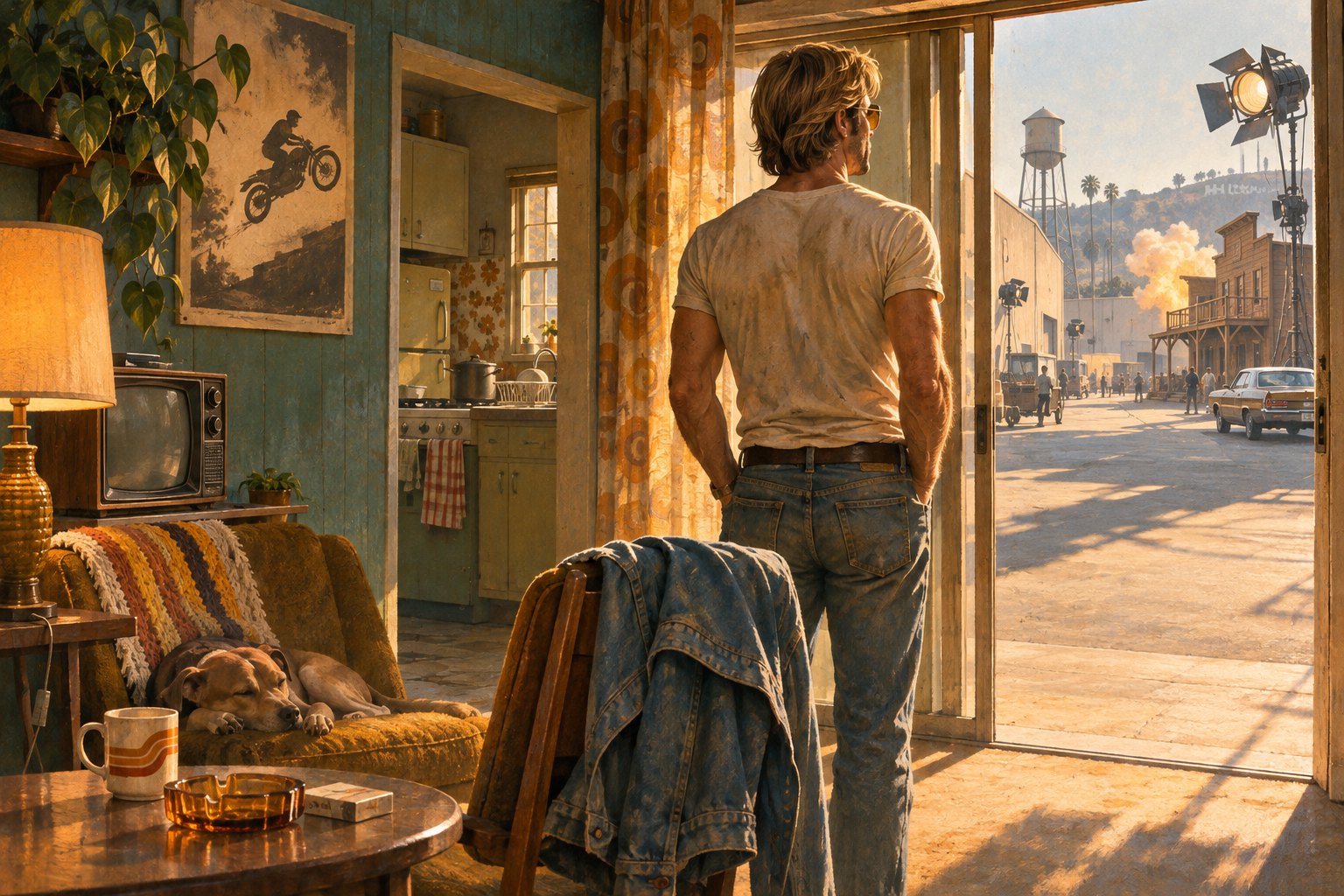
Netflix describes the film as the story of a sometime stuntman taking odd jobs and dangerous favors in 1977 Los Angeles. Pitt returns as Cliff, with David Fincher directing Quentin Tarantino’s screenplay. That combination establishes a powerful invitation before any argument about the character’s politics begins: spend time with a movie star playing a man whose resourcefulness makes trouble look manageable.
The appeal is easy to understand. Competence offers relief. Where most people would hesitate, negotiate, or panic, the fantasy hero knows what to do. Watching him can briefly make the world feel less chaotic. The danger comes when that pleasure encourages us to treat every decision he makes as equally sound.
Calling the film a bait-and-switch suggests viewers have been promised one moral experience and handed another. But a shift in emphasis is not automatically a broken promise. If the pleasure remains spending time with Cliff, revealing his tenderness can deepen that pleasure. The alleged surprise tells us something about the narrow range of behavior audiences sometimes expect from a masculine screen idol.
Caregiving changes the scale of strength
In David Mack’s CNN account, Cliff looks after his elderly father and his father’s cat. These are small details beside a dangerous favor, but they offer a useful way to reconsider the character. Care involves noticing needs that may bring little excitement or recognition.
For the person receiving care, physical confidence matters only insofar as it becomes reliability. Someone can be fearless in public and unavailable at home. Someone can win an argument and still fail to notice that another person needs help. The ordinary work of attention therefore tests a different capacity from the one action movies usually celebrate.
This is where the film’s reported portrait becomes most interesting to me. A protective impulse gains substance when it extends beyond a dramatic emergency. The question is whether another person can depend on the hero when there is no enemy to defeat and no audience to impress.

That distinction also changes what aging means in a masculine fantasy. A body that cannot perform as it once did has not exhausted its usefulness. Patience, judgment, and practical assistance remain valuable. Our examination of why the film’s 1977 setting matters considers its historical frame; here, the more intimate concern is how a man measures his worth beyond physical capability.
“I’m not that deep” is an invitation to look closer
“I’m not that deep,” Cliff says, according to CNN’s account. It is an appealing little retreat from self-importance. The line lets him resist becoming the sort of man who must explain his philosophy before anyone can enjoy his company.
As a character statement, though, it deserves scrutiny. People are not always the best interpreters of their own behavior. A person who refuses to explain himself may be modest, evasive, private, or simply uninterested in analysis. The useful critical response is to examine the decisions that surround the declaration.
This is also a better route into the “woke” argument than trying to assign Cliff a political identity. Does he listen? Can someone disagree with him without suffering for it? Does assistance preserve another person’s choices? Those questions identify conduct. A broad ideological label can conceal the distinctions between them.
The film’s reported emphasis on respecting women’s boundaries is relevant here. Respect becomes meaningful when it accepts an answer the respectful person did not want. Consideration that exists only when rewarded with affection is a bargain. The more demanding ideal is a man whose confidence survives another person’s independence.
A protector still needs limits
The strongest objection to celebrating a charismatic protector is not that generosity makes him insufficiently tough. It is that audiences may give him too much authority because they like his intentions.
Protection creates an unequal relationship, even when it begins with a real need. One person has the means to intervene; another must trust how those means will be used. A satisfying moral portrait therefore needs more than a trustworthy expression and a reassuring reputation. It needs room for the protected person to remain a person, with preferences and judgments of their own.
This is a broader question than whether Cliff belongs on the correct side of a cultural argument. Benevolent power is still power. A viewer can admire an act of assistance while remaining alert to who sets its terms. Our earlier discussion of Cliff Booth’s appeal as an irresistible fixer explores the complications of his usefulness. The additional test here is whether care allows anyone else to retain control.
That does not make the fantasy worthless. Movies often give recognizable virtues an exaggerated body. Courage becomes extraordinary endurance; loyalty becomes impossible persistence. The critical task is to separate the behavior worth carrying into ordinary life from the exceptional power that makes the story entertaining.
The deeper meaning of the supposed switch
The most productive interpretation of this debate is that masculine aspiration need not stop at invulnerability. Being difficult to hurt is one ambition. Being safe to depend on is another, and arguably a more demanding one.
A movie star can make that second ambition attractive without delivering a lecture. Glamour directs attention; character gives that attention somewhere to go. When consideration becomes part of what makes a hero desirable, the fantasy expands the audience’s sense of what strength might look like.
My judgment is that “bait-and-switch” undersells this possibility. It treats decency as an unexpected ingredient slipped into an otherwise satisfying package. The better question is whether the film makes responsibility feel integral to its hero’s appeal. Cliff’s toughness may draw the eye, but the more revealing measure is what happens when another person needs him to be patient, attentive, or willing to step back.
The lasting idea is modest enough to survive outside a movie: confidence should make room for other people. If Cliff Booth makes that look desirable, the achievement needs no ideological surprise ending.
Original content by this site's editorial team. Published: November 25, 2026 at 12:23:38 PST (Los Angeles time)