Spoilers: This article discusses the Dancing With the Stars Season 35 finale results.
Ezra Frech and Daniella Karagach won the Len Goodman Mirrorball Trophy in the Dancing With the Stars Season 35 finale, with Amber Glenn and Pasha Pashkov finishing runner-up. But the result comes with an important distinction: the winning couple shared the top judges’ total with two other partnerships. This was a finale in which perfect scores could establish excellence without settling the championship.
For viewers catching up, the essential distinction is between the judges’ leaderboard and the final outcome. Below are the reported scoring totals, followed by an analysis of the finale’s structure and musical choices. The critical observations concern what those choices suggest; they do not presume to explain individual voters’ decisions.
The finale scores: three perfect totals, one champion
ABC’s post-finale coverage reported these cumulative judges’ scores across the three competitive rounds:
- Ezra Frech and Daniella Karagach: 90 out of 90; Season 35 winners.
- Amber Glenn and Pasha Pashkov: 90 out of 90; runners-up.
- Maura Higgins and Mark Ballas: 90 out of 90.
- Connor Wood and Rylee Arnold: 82 out of 90.
- Tatyana Ali and Jan Ravnik: 82 out of 90.
These totals describe the judges’ assessment, not a complete finishing-order list. The championship combined judges’ scores with live viewer votes. Consequently, a shared score did not require a shared final placement.
The distinction matters especially for Glenn. Finishing runner-up after earning the maximum available points is not evidence that the judges found her finale deficient. Likewise, Frech’s victory does not establish that the panel rated his three performances above those of every rival. The scoring record supports a narrower, more useful conclusion: three partnerships reached the same numerical ceiling.
Why the three rounds tell different stories
Each finalist faced Judges’ Choice, an Instant Dance Challenge, and a freestyle. ABC’s official finale announcement described the instant round as a challenge in which the contestants would learn their dance style and music only minutes before performing. Together, the rounds posed three different questions: what can you refine, what can you adapt to, and what do you want to express?
As television structure, that progression offers more substance than simply asking for three bigger routines. A prepared dance gives viewers time to evaluate control and polish. A last-minute assignment puts responsiveness under pressure. A freestyle shifts attention toward the partnership’s choices about mood, music, and identity.
Those distinctions also provide a better way to revisit the episode. Instead of treating every performance as interchangeable evidence in an argument about who deserved to win, consider what each round demanded. The same dancer can reveal different strengths under different conditions.
Our breakdown of performance evidence in the Jets’ six-sack victory approaches a related problem: an outcome tells you what happened, while closer analysis asks how it happened. Here, a perfect total is the starting point for discussion rather than a substitute for it.
Frech and Glenn: the trophy and the performance are separate judgments
Frech and Karagach’s freestyle used Linkin Park’s “Numb,” while Glenn and Pashkov’s paired Madonna’s “Like a Prayer” and “Music.” Those selections, announced by ABC, offered distinctly different musical settings for a final competitive statement.
My reading of the choices is that “Numb” invites a performance built around tension and release. The Madonna pairing offers a route from emotional intensity toward collective celebration. That is an interpretation of the music’s dramatic possibilities, not a claim about the dancers’ private intentions or a reconstruction of every movement.
For Frech, the result gives his partnership the season’s official ending. For Glenn, the perfect total preserves a separate achievement that second place cannot erase. A useful critical response makes room for both facts. Viewers can prefer Glenn’s dancing and acknowledge Frech’s championship without inventing a contradiction between them.
There is also a limit to what the result can explain. Without a verified public vote breakdown, claims about the winning margin or a particular audience group deciding the competition would be speculation. Emotional attachment may be part of how viewers experience the show, but identifying exactly why people voted requires evidence.
The professional partners belong at the center
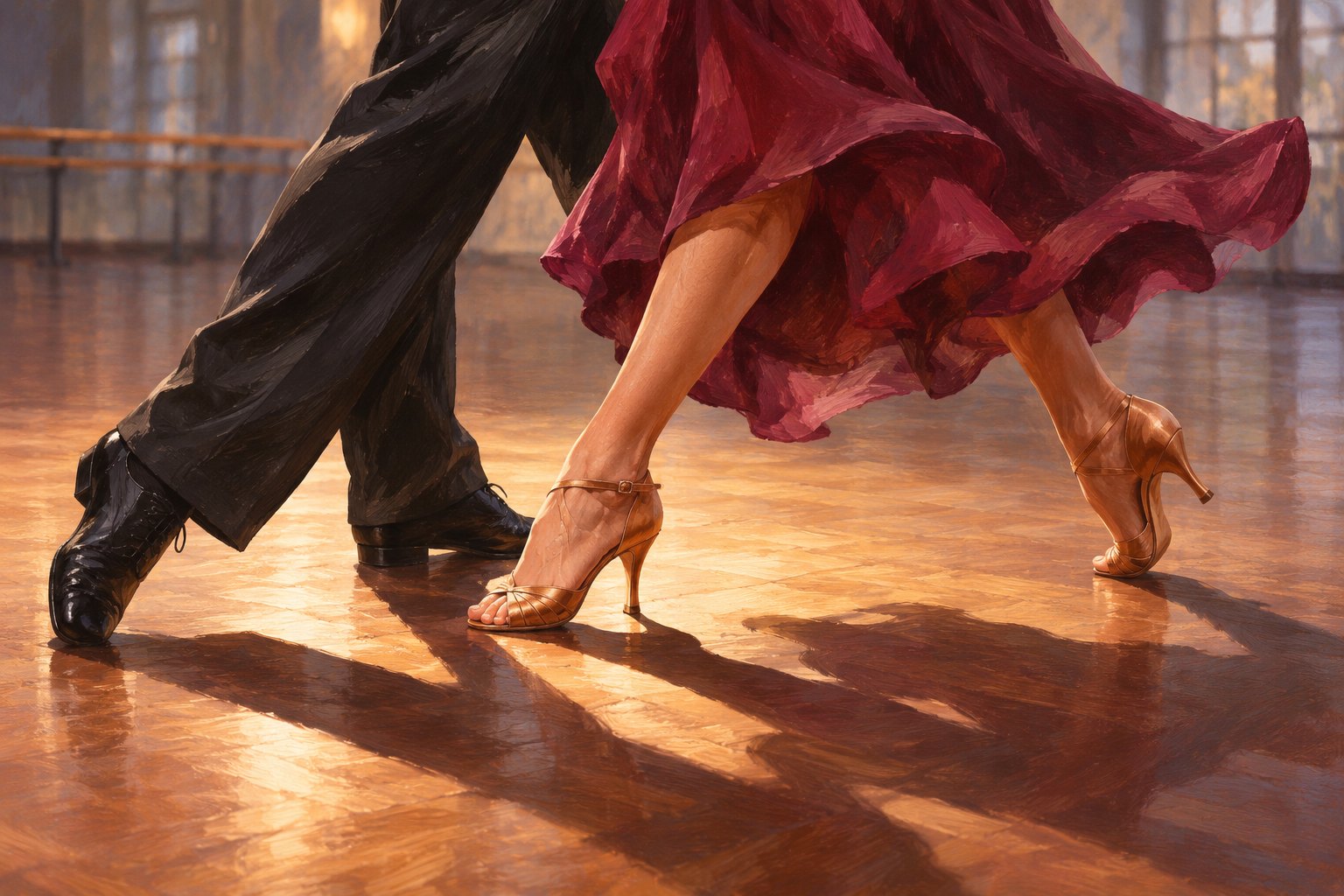
The trophy discussion can make a paired competition sound like a series of solo achievements. Keeping Karagach, Pashkov, Ballas, Arnold, and Ravnik in the conversation restores an essential part of the performance: the relationship through which movement becomes readable.
On a rewatch, look at transitions as closely as climaxes. Notice how partners establish distance, find each other after a separation, and move into the next phrase. These are useful viewing questions, not claims that a particular couple made a specific mistake. They direct attention toward the coordination that a spectacular ending can overshadow.
There is a broader creative principle here. Confidence becomes visible through practice, feedback, and collaboration. Our commentary on film students finding confidence through professional exchange considers that relationship between access and growth. In the ballroom, the final performance gives that relationship a public form: two people must make shared decisions legible in real time.
The freestyle songs bring film history into the ballroom
The finale also offered a natural point of entry for movie fans. The announced freestyle selections included Gene Kelly’s “Singin’ in the Rain” for Wood and Arnold, Marilyn Monroe’s “Diamonds Are a Girl’s Best Friend” for Higgins and Ballas, and Judy Garland’s “Over the Rainbow” for Ali and Ravnik.
These are overt musical references rather than hidden Easter eggs. Their value lies in the associations they bring. A familiar screen song can establish glamour, longing, or buoyancy before a routine has fully developed. The creative challenge is to turn that recognition into something specific to the performers.
Wood’s pairing of Kelly with Rihanna’s “Umbrella” suggests a conversation across entertainment eras. Higgins’ combination of Monroe with traditional Irish songs creates room for a shift in register. Ali’s pairing of Garland with Cab Calloway’s “Minnie the Moocher” places contrasting musical personalities beside each other. Those combinations are worth considering as dramatic choices, beyond whether the songs are familiar favorites.
What the Season 35 ending means
My central takeaway is that this finale resists being reduced to one hierarchy. Frech and Karagach won the championship. Three couples achieved perfect judges’ totals. The final routines also offered individual musical statements whose appeal cannot be fully expressed by either placement or points.
That is the productive tension in a televised dance competition: it measures performances while inviting personal attachment to them. A trophy supplies closure, but it cannot dictate which partnership a viewer finds most compelling. Season 35’s ending leaves room to celebrate its champions and keep discussing the dances that made the competition worth watching.
Original content by this site's editorial team. Published: November 24, 2026 at 20:44:35 PST (Los Angeles time)