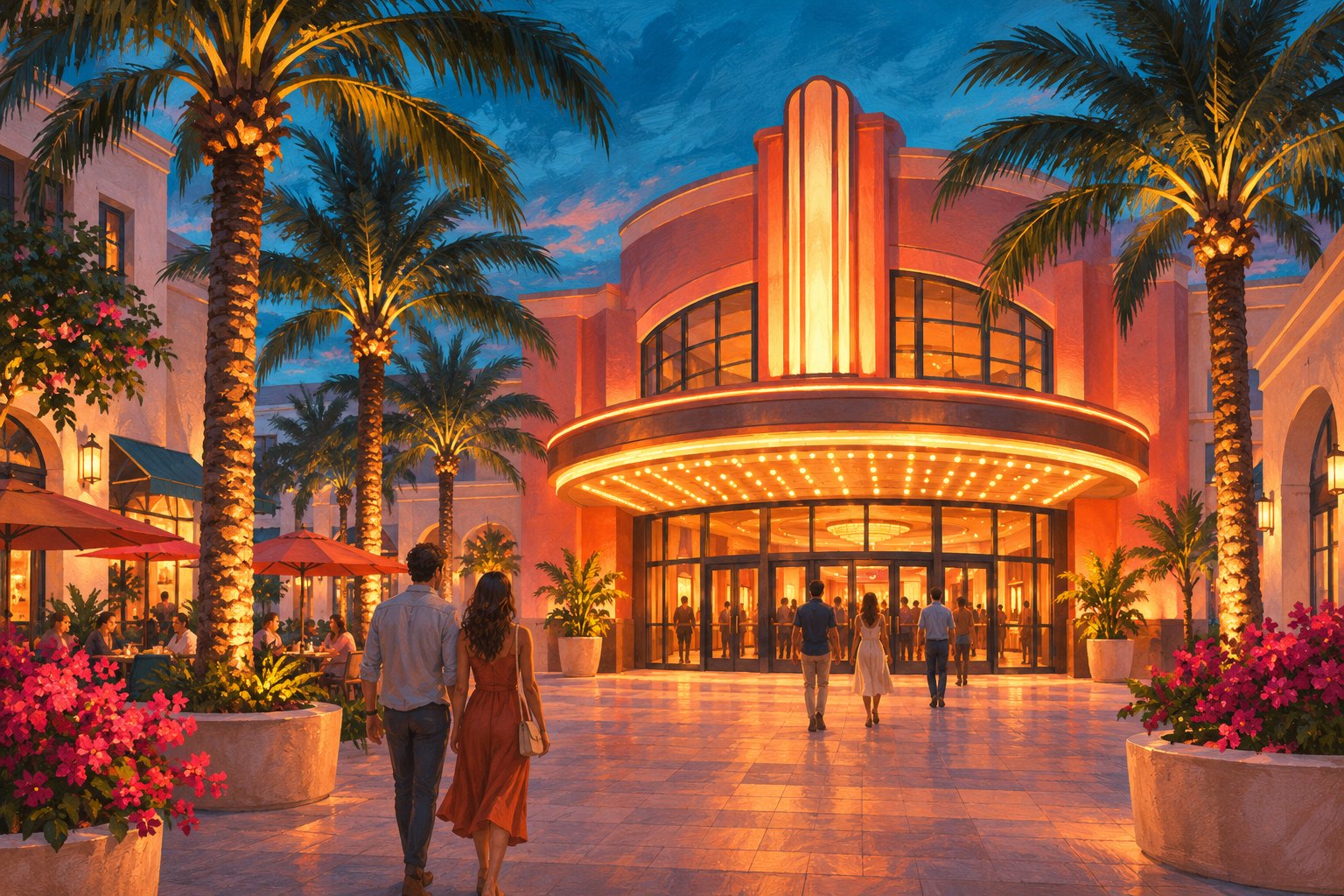
A movie theater is set to return to CityPlace in downtown West Palm Beach, according to WPTV. For people interested in watching films downtown, that is the central news: moviegoing is part of CityPlace’s future again. The prospect is welcome, although a reported return should not be mistaken for an invitation to buy tickets or make opening-night plans.
The more interesting question is what kind of moviegoing experience that return could provide. A theater can give a downtown district a shared destination, somewhere people arrive with different expectations and leave arguing about the same ending. Whether CityPlace gains that kind of gathering place will depend on decisions that extend well beyond putting a screen inside a building.
What the CityPlace news establishes
The essential point of WPTV’s report is that a movie theater is expected to return to CityPlace. This article does not establish an opening date, ticket prices, an operating schedule, or a film lineup. Readers planning a visit will need those practical details before treating the news as a bookable outing.
That distinction matters because the word return carries emotional weight. It invites memories of earlier visits and expectations about what might come back. It does not, by itself, establish that a future theater will reproduce a previous venue’s appearance, programming, amenities, or atmosphere.
Our editorial view is that the strongest version of this return would make watching a movie downtown feel like an easy, repeatable pleasure. An impressive first visit would be welcome. A theater people choose on an ordinary evening would have a more lasting place in local life.
Why the room matters to the movie
Film criticism usually begins with what is on screen: a performance, a cut, a line delivered at exactly the wrong moment for a character and exactly the right moment for the audience. Yet the conditions of viewing shape how clearly those choices register. A dark room, an uninterrupted stretch of time, and intelligible dialogue can help a film hold our attention.
Consider a familiar dramatic situation rather than a particular movie: one character apologizes while another remains silent. The scene’s meaning may sit in the listener’s face. Does the silence suggest forgiveness, exhaustion, or a refusal to believe another promise? If attention wanders during that pause, the next exchange can feel less complicated than the filmmaker intended.
A good theatrical presentation gives that pause room to work. It also makes the relationship between people and their surroundings easier to notice: the distance between two chairs, a figure isolated at the edge of a frame, a doorway that someone hesitates to cross. These details are central to the kind of attentive viewing explored in our discussion of how atmosphere can carry a film’s storytelling.
For a future CityPlace theater, the implication is practical. Sharp projection, balanced sound, comfortable sightlines, and reasonable control of distractions deserve as much attention as the entrance. Attractive surroundings can start an evening well; the auditorium has to sustain it.

A downtown cinema should reward more than one kind of viewer
The clearest opportunity for CityPlace is variety. A parent arranging a daytime outing, a couple choosing an evening show, and a film enthusiast hoping to catch a smaller release have different needs. A useful cinema gives several kinds of audience a reason to check what is playing.
That does not require every screening to be adventurous. Popular new movie releases are a perfectly good reason to go to the movies. The question is whether a schedule also leaves space for discovery, with choices that make a theater worth revisiting even when the biggest release does not appeal.
Programming that creates curiosity
As an editorial wish list, occasional repertory screenings, documentaries, independent films, and discussions would add interest to a CityPlace cinema. These are possibilities, not announced features. Their value would lie in offering a distinct reason to attend, especially when a film benefits from conversation afterward.
A discussion should also have a purpose. A thoughtful moderator can help viewers distinguish what a movie depicts from what it asks them to believe. Our commentary on what makes a community film discussion useful considers that responsibility. The same principle applies to a downtown screening: conversation works best when it deepens the encounter with the film.
Repeat visits depend on ordinary details
Programming cannot compensate for an experience that is difficult to navigate. Clear booking information, understandable pricing, useful access information, and dependable presentation all affect whether people return. These details may generate less excitement than a grand opening, but they shape the decision to come back the following week.
Accessibility belongs in that assessment from the beginning. Prospective patrons should be able to find specific information about accessible seating, routes into the auditorium, and available captioning or assistive listening options. A general promise of comfort is less useful than information that lets someone plan confidently.
What to check before planning a CityPlace movie night
As further details become available, readers can evaluate the theater through a few concrete questions. These are planning considerations, not claims about services already confirmed:
- Opening and booking: Is there a confirmed opening date, and are actual showtimes available?
- Total cost: What does the visit cost once any booking fees, transportation, parking, and optional concessions are included?
- Film selection: Does the schedule offer the titles and screening times that fit your interests?
- Access: Is there clear information about seating, captioning, listening assistance, and getting into the venue?
- Presentation: Do the picture, dialogue clarity, sightlines, and auditorium conditions support the films being shown?
Different viewers will weigh those questions differently. Someone making a special trip may prioritize a particular film or screening format. A nearby resident may care more about convenient times and a price that permits frequent visits. Both are reasonable measures of whether the theater serves its audience.
The real promise is a shared evening
The deeper appeal of a CityPlace cinema is the possibility of giving a film a place in the life of downtown. A screening has a beginning and an ending that everyone in the room experiences together. Afterward, the story can continue in conversation: why a character stayed, whether an apology was sincere, or why the final image felt unsettling.
That shared experience does not guarantee agreement, and agreement is hardly the point. One viewer may find a performance moving while another finds it guarded. Talking through that difference can reveal something neither person noticed alone.
CityPlace’s reported theater return is worth watching for that possibility. The meaningful test will come when people can sit down, see and hear a movie well, and decide that the experience deserves another evening. A successful return would give downtown West Palm Beach a place where films become part of an ongoing conversation.
Original content by this site's editorial team. Published: November 19, 2026 at 17:44:23 PST (Los Angeles time)