China’s Golden Rooster and Hundred Flowers Film Festival raises a question that matters well beyond an awards ceremony: what should recognition help us see in a movie? For viewers discovering Chinese cinema, the most rewarding answer involves performances, storytelling choices, and the experiences a film makes visible. The spotlight gets our attention. Looking closely gives that attention a purpose.
The Hollywood Reporter has devoted a five-takeaway feature to the festival. The discussion here is an independent, spoiler-free critical perspective on the event’s significance for viewers, rather than a recap of its reported conclusions or a review of an individual selection. These five questions offer a way to move from festival interest toward a more thoughtful encounter with the movies.
1. What does recognition actually tell us about a film?
A festival places movies within a public conversation about value. That conversation becomes more useful when we ask what kind of achievement is being discussed. Acting, writing, visual storytelling, and overall dramatic construction overlap, but they are not interchangeable. A compelling performance can hold together an uneven film; a beautifully structured screenplay can work through deliberately understated acting.
When approaching coverage of the Golden Rooster and Hundred Flowers Film Festival, keep the particular achievement in view. If a performance attracts your interest, watch how it develops across the entire story. If the writing is the attraction, notice how early decisions establish later consequences. Recognition becomes an invitation to investigate something specific.
Our discussion of what an awards spotlight can tell viewers about a film makes a related distinction: prominence and personal response answer different questions. You can understand why a film earns admiration while remaining unconvinced by its ending or emotional logic.
My critical preference is for recognition that starts an argument worth having. A useful response explains which choices worked, where the film lost its footing, and why another viewer might reasonably disagree.
2. Can we look past the performer and understand the character?
Festival attention can make a familiar face the easiest point of entry. Once the movie begins, however, the more interesting subject is the person that performer creates. What does the character want? What are they unwilling to admit? Which relationships change the way they speak, move, or occupy a room?
A character-centered approach is especially helpful when encountering an actor whose public reputation is unfamiliar. You do not need a complete career retrospective to notice a shift from confidence to hesitation. Begin with observable behavior, then ask how the film gives that behavior meaning.
Watch the moments before and after an emphatic speech. A pause may suggest calculation, embarrassment, or the effort required to remain composed. Its meaning depends on the surrounding scene. Equally, a restrained performance should not receive automatic credit for depth: the restraint needs to reveal something that the story supports.
The same principle applies to memorable dialogue. A line matters because of who says it, what the listener understands, and what happens afterward. Quoting dialogue without that context can turn characterization into a slogan. For films encountered through this festival, the strongest performance analysis would connect the words to the character’s choices and their consequences.
3. How much cultural explanation does a viewer need?
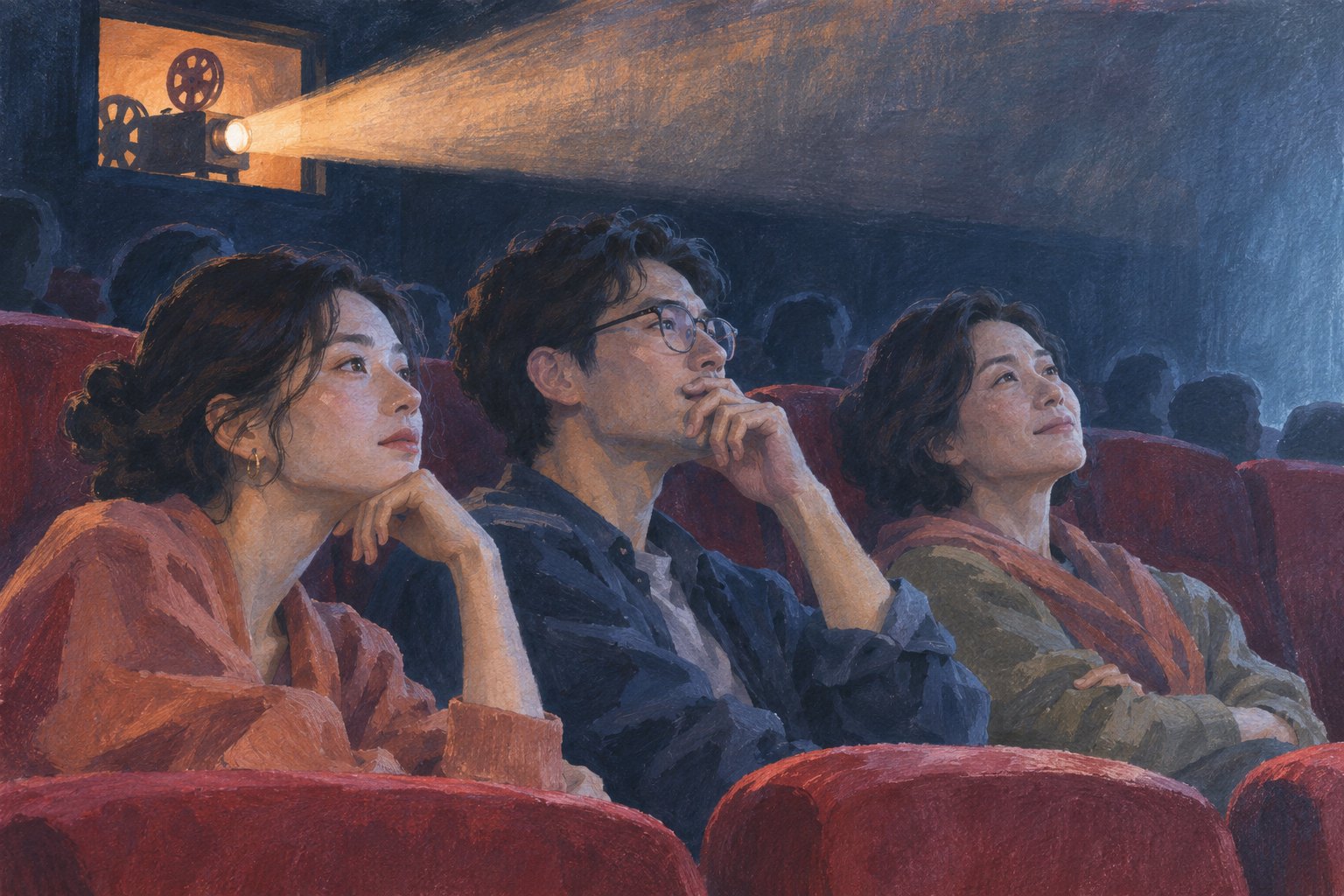
For an American viewer approaching Chinese cinema through the Golden Rooster and Hundred Flowers Film Festival, unfamiliarity can be productive. It encourages attention to details that a more familiar movie might allow us to overlook: who interrupts whom, how affection is expressed indirectly, or why an apparently ordinary obligation carries dramatic weight.
There are two unhelpful shortcuts. One treats every unfamiliar detail as an obstacle requiring an explanation. The other assumes that a recognizable emotion makes all cultural context irrelevant. Both can flatten the experience of watching.
A better starting point is to separate understanding an action from fully understanding its significance. You may recognize that a character is avoiding a confrontation while remaining uncertain about the social cost of speaking openly. That uncertainty gives you a precise question to explore afterward.
Context should sharpen criticism. It should help explain why a decision matters, while leaving room to assess whether the movie dramatizes that decision convincingly. Cultural specificity and emotional accessibility can reinforce each other when a film makes its characters’ pressures tangible.
No individual title should be expected to summarize Chinese life or represent every strand of Chinese filmmaking. The festival is most valuable as an opening toward multiple artistic perspectives. Each film deserves the chance to establish its own concerns.
4. Which filmmaking choices shape our judgment of a character?
A character does not reach us through acting alone. Framing determines what we can observe. Editing determines when we receive information. Sound can draw attention toward a threat, a memory, or an ordinary detail that suddenly feels important. Together, these choices influence whom we trust and how quickly we judge.
Consider a general viewing exercise: during a confrontation, notice whose reaction receives the final shot. Holding on the speaker can emphasize conviction. Cutting to the listener can expose the damage that conviction causes. Neither choice has a fixed meaning, but each changes the scene’s center of gravity.
This makes craft a useful route into films that first attract attention through a festival. Instead of asking only whether a scene looks impressive, ask what its construction allows you to understand. Does the camera preserve a character’s privacy? Does a cut interrupt an uncomfortable moment before it can fully register?
Our examination of how editing shapes performance and storytelling offers a complementary perspective. The finished sequence is the object of criticism: its timing, clarity, and emotional effect matter more to the viewer than the scale of the work behind it.
5. What would make the festival a lasting discovery?
The most meaningful outcome for an interested viewer may be a film they continue thinking about after the event leaves the headlines. That requires turning broad curiosity into a deliberate viewing choice.
Start with a specific attraction: a dramatic premise, an actor’s approach, a filmmaker’s visual style, or a question the story appears to raise. Then distinguish a festival mention from a confirmed opportunity to watch. Availability, subtitles, and the version being offered all deserve checking before planning a screening.
Afterward, write down one scene that changed your understanding of a character. Identify the decision, gesture, or formal choice responsible. This small exercise produces a more revealing response than immediately assigning a score. It also gives you a useful basis for choosing the next film: another work by the same filmmaker, perhaps, or a different treatment of a similar conflict.
My view is that the Golden Rooster and Hundred Flowers Film Festival becomes most interesting when its attention leads to this kind of sustained engagement. Public recognition identifies works to consider; criticism explains what happens when we actually encounter them. The deeper reward is discovering how a particular film changes our sympathy, complicates our assumptions, or makes another person’s choices harder—and more worthwhile—to understand.
Original content by this site's editorial team. Published: November 15, 2026 at 02:05:16 PST (Los Angeles time)