Chicago’s queer-led Dare To Dream Film Festival is saying no to AI art, according to Block Club Chicago. That position brings a question usually buried beneath reviews of performances and cinematography into the foreground: how much should the making of an image matter to our experience of watching it?
My view is that a festival can reasonably make human authorship part of its curatorial identity. For viewers, the value of that choice extends beyond whether an image looks convincing. It concerns whose decisions a screening supports, whose experience shapes a story, and who can explain the work when the lights come up.
The reporting establishes the festival’s Chicago setting, queer leadership, and opposition to AI art. It does not, by itself, establish the precise boundaries of a submission policy or how individual production tools are treated. Those distinctions matter. This is commentary on the festival’s reported stance, rather than a review of its lineup or an account of rules that have not been verified here.
A Festival’s Position Is Part of Its Programming
A film festival selects more than titles. Its choices create a relationship between filmmakers and an audience. Programming can privilege a region, a form, an experience, or a way of working. A position against AI art can operate in that same space: as a statement about which creative practices an institution wants to give attention.
Seen this way, Dare To Dream’s stance does not require settling every philosophical argument about whether generated images can qualify as art. The more immediate issue is whether a festival should be able to reserve its platform for a particular understanding of artistic participation. I think it should, provided that understanding is communicated clearly.
That also changes how viewers should approach the event. A curatorial principle offers context; it cannot substitute for watching closely. As our discussion of festival discovery beyond an institutional connection argues, an affiliation can start a conversation about a film without finishing the critical assessment.
Why Queer Leadership Makes Authorship Worth Discussing
The festival’s queer leadership makes questions of perspective especially relevant, although it would be wrong to assign its organizers motives they have not expressed in verified statements. The connection explored here is interpretive: representation involves more than the presence of recognizable identities on a screen.
A character can be visibly included yet remain dramatically empty. We might know how that person dresses, who they desire, or how others categorize them while learning almost nothing about their private judgments. Meaningful characterization gives someone the capacity to surprise us, misunderstand a situation, act selfishly, or want incompatible things.
For queer storytelling, an emphasis on authorship can direct attention toward who chooses those contradictions. Who decides whether a moment is funny, humiliating, ordinary, or dangerous? Who recognizes when a supposedly affirming scene reduces a person to an example? These are creative decisions with consequences for the audience’s understanding.
No identity automatically guarantees insight. Queer filmmakers can make conventional work, and filmmakers can portray experiences beyond their own with care. The strongest argument for protecting human creative participation is that it preserves a relationship among observation, collaboration, and responsibility. Someone has made a choice that another person can question.
What Human Creative Choices Look Like on Screen
The practical test belongs inside the scene. Consider a hypothetical conversation in which one character tells another something difficult. A director might hold the camera on the listener, allowing an almost invisible reaction to complicate the spoken words. An editor might delay a cut until the silence becomes uncomfortable. A performer might begin to smile, reconsider, and look away.
This is an illustrative example, not a description of a film screening at Dare To Dream. Its point is that character emerges through relationships between choices. The line of dialogue provides one piece of information; timing, framing, and performance can make us understand it differently.
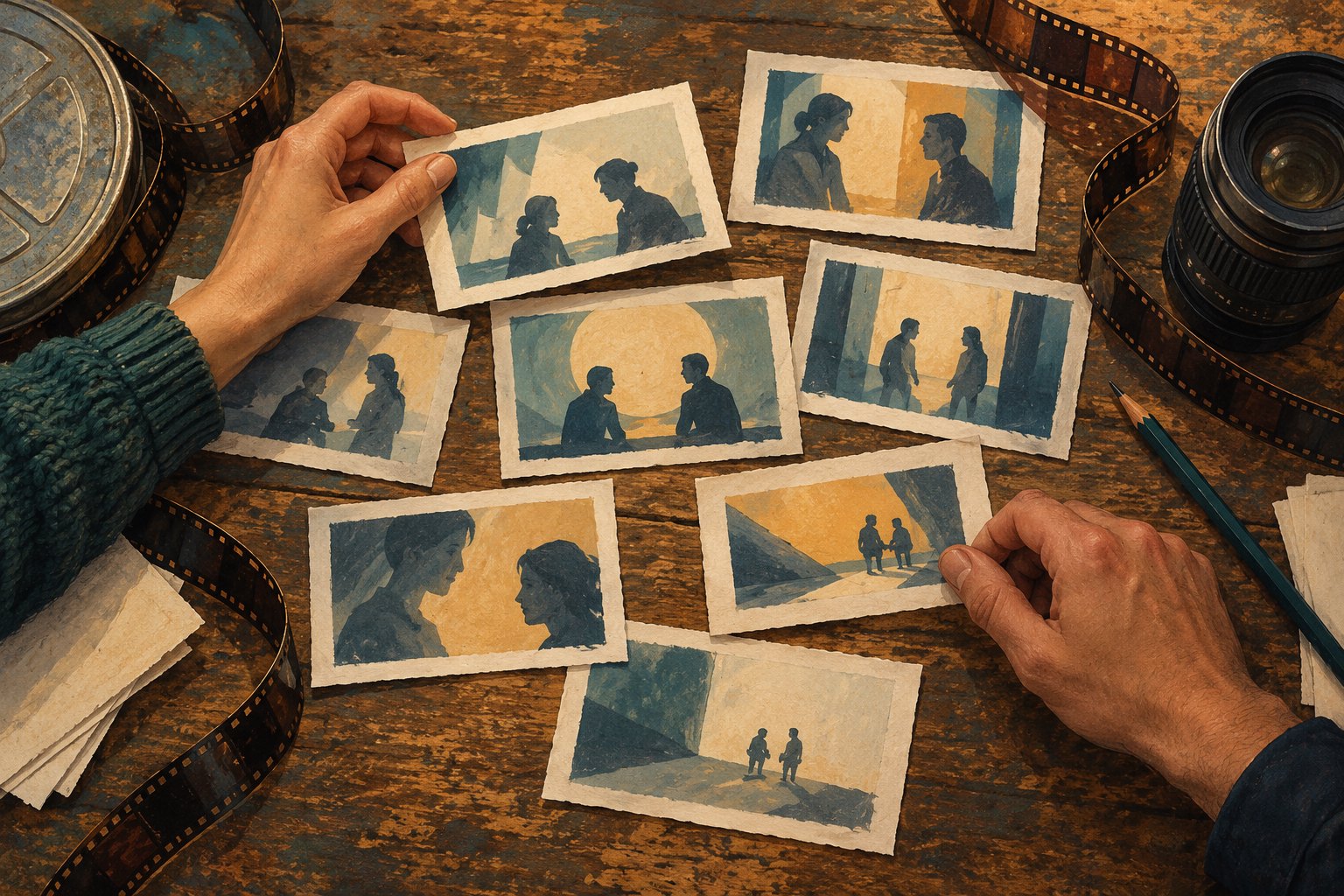
Human authorship also includes disagreement. An actor may resist the obvious emotional reading. A cinematographer may discover that a less flattering composition better expresses a character’s isolation. A collaborator may notice that an intended joke humiliates the wrong person. The finished film can carry the results of those encounters even when viewers never hear about them.
That is a useful lens for evaluating the festival’s principle. Does the work make room for particularity, friction, and discovery? The related distinction between a beautiful cinematic world and a moving story matters here: visual appeal is one achievement, while emotional understanding requires its own evidence.
A Clear Boundary Needs Clear Definitions
The phrase AI art communicates a position, but it does not answer every practical question a filmmaker might have. A useful policy would explain which uses fall within its scope and what information applicants must provide. Without that detail, audiences should avoid turning a broad stance into claims about every digital process involved in production.
There are different questions to ask about generating a performance, altering recorded material, or using software for an administrative task. Naming those distinctions does not establish how Dare To Dream handles them. It identifies what readers would need to know before describing the festival’s requirements precisely.
For filmmakers considering any festival with such a position, three questions would be productive:
- Which creative uses does the policy explicitly exclude?
- What disclosures are expected from a production and its collaborators?
- How can an applicant resolve uncertainty before submitting?
Clarity protects the principle by making it usable. It also prevents a debate about artistic values from becoming an exercise in guessing what organizers intended.
The Fair Challenge: Access and Artistic Quality
A serious defense of the festival’s stance should acknowledge a competing argument. Some creators may see generative tools as a way to attempt images they otherwise lack the money, equipment, or collaborators to produce. That aspiration deserves consideration. Lowering a production barrier can matter to someone whose story has few other routes to a screen.
Still, access involves more than obtaining an image. It also includes opportunities to develop skills, form working relationships, earn credit, and have creative decisions taken seriously. A festival may reasonably choose to support those forms of participation through the work it presents. Whether that choice succeeds depends on the opportunities it actually creates, not simply the force of its public position.
Nor should opposition to AI become an exemption from criticism. A human-made film can be shallow, derivative, or dramatically inert. Audiences should still ask whether characters possess distinct desires, whether the images express a perspective, and whether the ending earns its emotional effect. Respect for the process and honest judgment of the result can coexist.
What Dare To Dream’s Stance Invites Audiences to Notice
The most compelling interpretation of Dare To Dream’s position is that it asks viewers to pay attention to authorship as part of cinematic meaning. A film is an encounter with choices: someone selected this face, held this silence, preserved this awkward gesture, and decided that this experience deserved our time.
For a queer-led festival, that emphasis can make space for stories whose value lies in their specificity rather than their immediate familiarity. That is an argument for the stance, not a claim that every selected film fulfills it. The work must still demonstrate what its makers have seen and what they can help us see.
Dare To Dream’s reported rejection of AI art makes its creative boundary the starting point of a worthwhile conversation. The deeper question arrives during the screening: what becomes possible when we give particular people, their judgment, and their ways of seeing sustained attention?
Original content by this site's editorial team. Published: October 21, 2026 at 18:32:57 PDT (Los Angeles time)