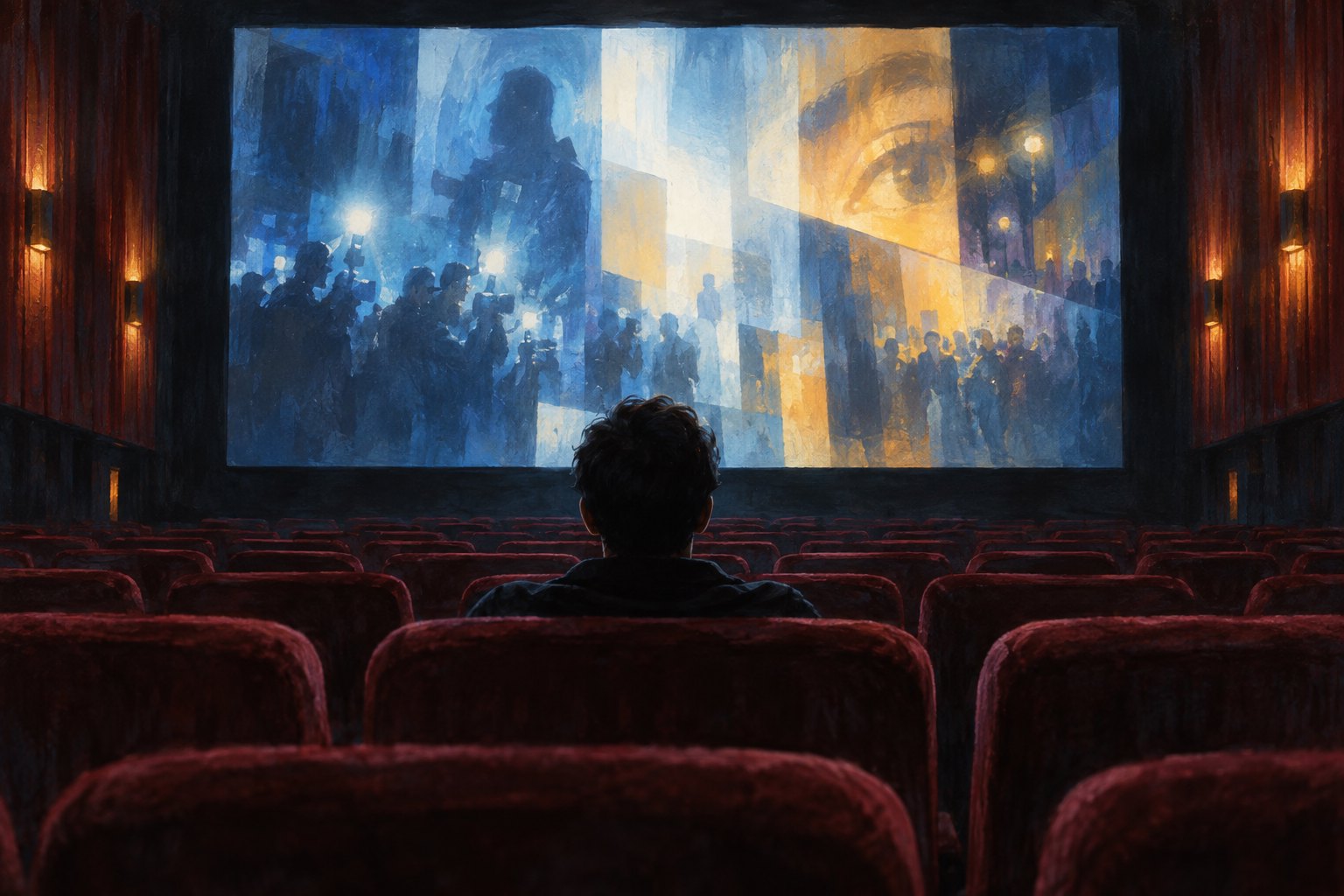
Charli xcx’s Music, Fashion, Film Tour puts three ways of constructing a public identity into its name. Consequence’s Brooklyn review presents the performance as a spectacle that unsettles the boundary between reality and presentation, and its coverage includes a setlist. For film-minded readers, that framing raises an appealing question: how does a pop performance become a story about the person at its center?
This is critical commentary on that premise, rather than an eyewitness concert review. The available reporting establishes the Brooklyn setting and the review’s broad framing; it does not establish individual stage moments, costumes, dialogue, or the songs performed. A verified song sequence cannot be reproduced here. What can be examined is the relationship the tour’s title proposes—and the standards that make a cinematic reading useful.
Three art forms, three different relationships with the audience
Music, fashion, and film can all convey personality, but they ask us to pay attention differently. Music unfolds through rhythm, repetition, and changes in intensity. Clothing communicates through silhouette, texture, and the movement of a body. Film selects a viewpoint, then controls how long we inhabit it. Bringing those forms together creates the possibility of tension as well as harmony.
The title’s most interesting implication, to my mind, is that none of these forms has to serve merely as decoration for another. A costume can complicate a song’s emotional register. An image can invite distance when a vocal performance invites intimacy. The resulting friction may reveal something that a perfectly coordinated presentation would smooth away.
That is an interpretive possibility, not a description of a confirmed Brooklyn sequence. The distinction matters because calling an event cinematic should identify how it organizes perception. Large screens, dramatic lighting, or an expensive-looking image would not, by themselves, establish a relationship with film storytelling.
Charli as performer, persona, and the center of attention
A character-focused approach begins with perspective. In a movie, we might ask what a protagonist wants, what information she possesses, and how other characters misunderstand her. With a concert, those questions require adjustment: the person onstage is a working performer, and the public persona we interpret is not unrestricted access to her private life.
For Charli’s tour, the productive question is how the presentation positions its central figure. Does a particular moment invite identification, admiration, uncertainty, or distance? Those responses can coexist. A performer may command attention while remaining emotionally difficult to read, just as a screen character can dominate a scene without explaining herself.
I find that ambiguity more interesting than the familiar hunt for the supposedly unguarded person behind the image. An audience can have a sincere emotional response to an obviously constructed performance. Knowing that a gesture has been rehearsed does not automatically empty it of feeling; in cinema, repetition and precise timing are often what allow feeling to reach us.
Still, interpreting a persona should never become an excuse to invent motives. A claim about what Charli is expressing needs support from something observable—a lyric in context, a gesture, a transition, or an established visual pattern. Without those details, a reading remains a question to pursue.
When fashion does the work of characterization
The inclusion of fashion in the tour’s name invites more than a catalog of outfits. In film, clothing can tell us how someone wants to be seen, what environment she belongs to, or how successfully she controls her appearance. Its dramatic value often emerges through context: the same garment can look protective in one scene and exposed in another.
A similarly useful approach to stage clothing considers movement and duration. How does a silhouette change when its wearer stands still? What happens to reflective material under changing light? Does the clothing help an audience read the performer’s body, or make that body harder to distinguish from the surrounding image? These are concrete questions that connect fashion to performance.
Our discussion of how framing shapes our reading of festival fashion explores a related problem: an arresting appearance invites interpretation, but the image alone cannot prove everything we might want to say about the person wearing it.
Why a setlist matters—and what it leaves out
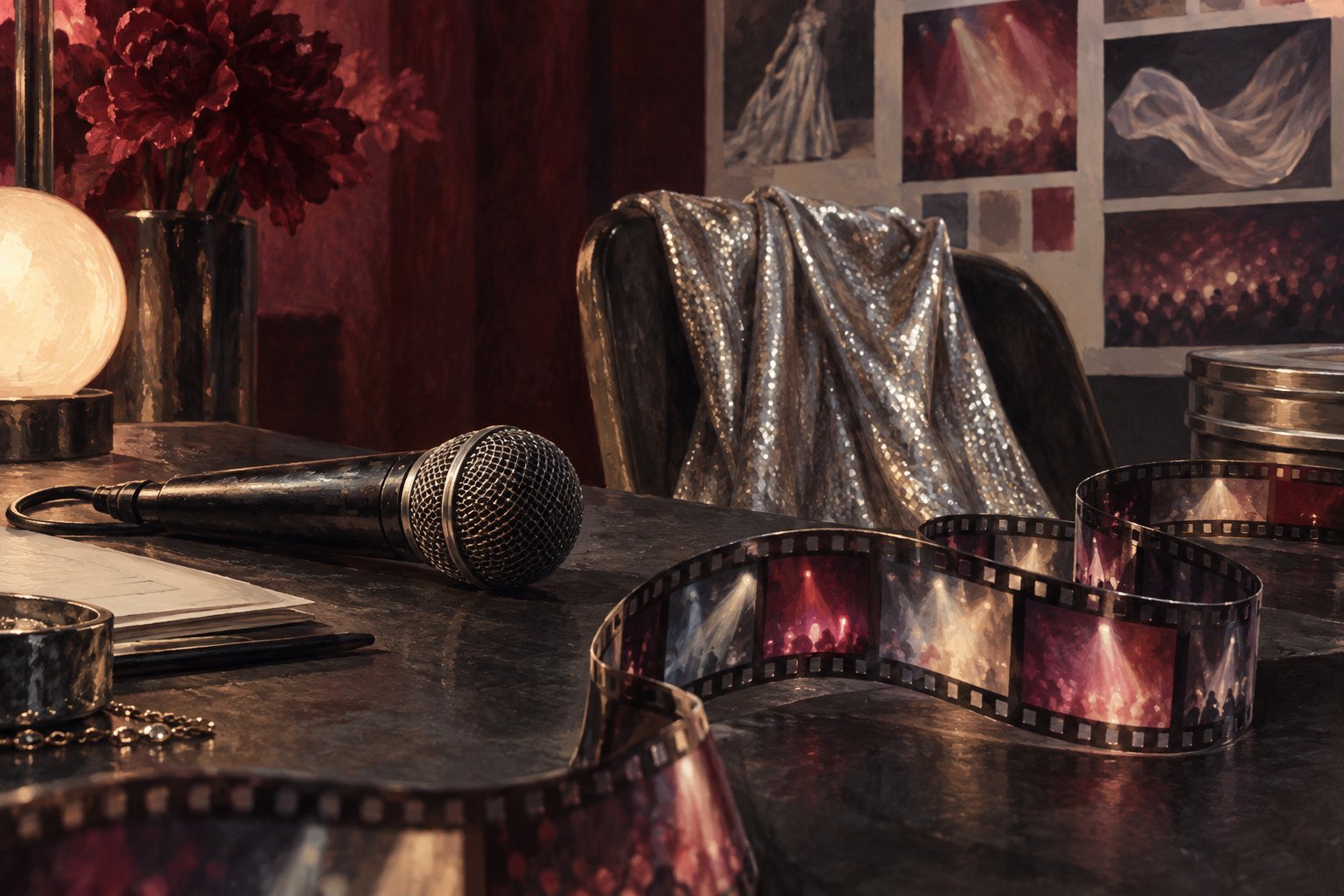
A setlist supplies the musical order of an evening. For a tour whose title explicitly invokes film, that order offers a potential starting point for analyzing structure. An opening can establish a mood; a later return to similar material can reinforce it or change its meaning. Placement affects interpretation even when the individual songs remain familiar.
But a list of titles is an incomplete record. It cannot fully capture pauses, arrangements, transitions, or the relationship between sound and imagery. Two performances with the same song order could create different experiences through those choices. Reading a setlist as though it were a complete screenplay risks overlooking the performance itself.
For anyone seeking the Brooklyn sequence, the specific limitation here is straightforward: no verified track-by-track list is available in the reporting accessible for this commentary. Naming likely favorites would substitute expectation for documentation. Consequence identifies its coverage as including a setlist, but that alone does not verify any individual song or encore.
How much should a viewer know beforehand?
A detailed concert account can reveal more than music selections. It may disclose the order of surprises, the timing of an image, or the moment when an apparent pattern changes. Readers who value discovery should consider whether they want a general assessment or a complete description before attending or watching a documented performance.
The same principle informs our examination of how advance reactions can shape a first viewing. Expectations direct attention. Once told that a moment is the emotional centerpiece, viewers may spend the surrounding material waiting for it instead of discovering their own point of connection.
The deeper question: who controls the image?
The Music, Fashion, Film Tour’s premise offers a compelling subject for film commentary because all three forms influence how a person becomes legible to an audience. Sound can suggest closeness, clothing can establish an identity, and framing can direct our scrutiny. Their combination raises questions about who controls the image and how much interpretive freedom remains with the viewer.
My judgment is that this is the most promising way to approach the Brooklyn coverage: look for a relationship between spectacle and perspective. The strongest evidence would show how a formal choice changes our understanding of Charli’s onstage persona, rather than simply confirming that the presentation is visually elaborate.
A convincing cinematic performance need not offer a conventional plot or reveal a hidden, definitive self. It can make the act of looking feel unstable and emotionally consequential. That is the possibility suggested by the tour’s name and the Brooklyn review’s framing. Whether individual moments fulfill it depends on the documented performance—on what the audience actually sees and hears.
Original content by this site's editorial team. Published: September 15, 2026 at 22:21:02 PDT (Los Angeles time)