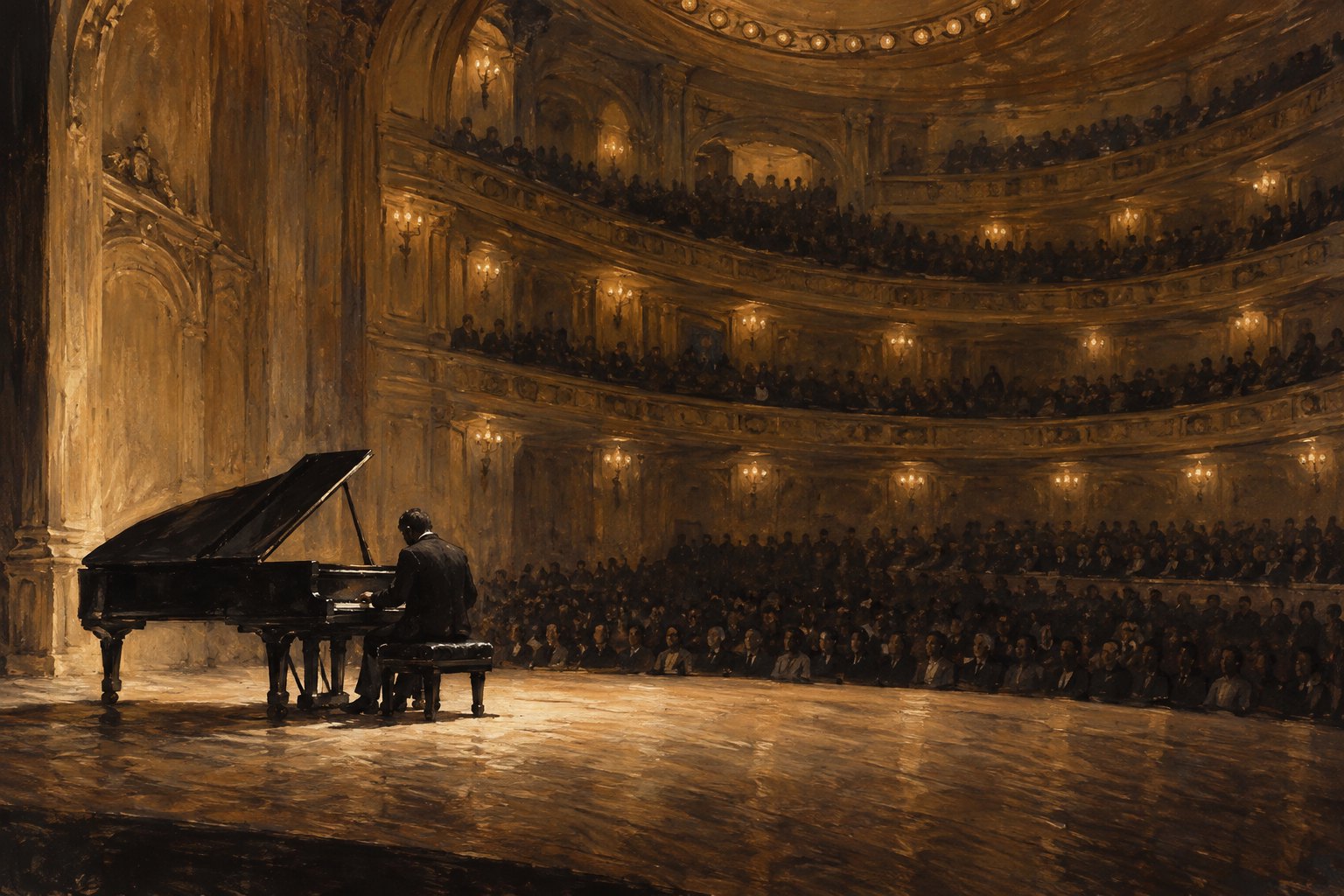
Cameron Winter at Carnegie Hall has an immediately compelling dramatic premise: one performer, a piano, and a room full of people listening. The attraction is more specific than access to a concert. A solo performance asks us to attend to the relationship between a musician’s physical presence and the voices he creates through songs. Those things can feel inseparable without being identical.
Variety’s enthusiastic review presents the film as an unusually absorbing musical experience. That is a critic’s verdict, not an automatic consensus. This article offers an interpretation of the film’s documented performance and formal approach rather than a firsthand screening assessment. Performance spoilers follow, including discussion of the closing song.
A concert becomes a character study
Paul Thomas Anderson directed the film, which records Winter’s December 11, 2025, Carnegie Hall performance. Film at Lincoln Center identifies Winter as both a solo musician and the frontman of Geese, describes his accompaniment on a Steinway grand piano, and confirms that the production used 16mm and 35mm film. Its program also describes images that bring viewers close to Winter and others that establish the surrounding auditorium. [Film at Lincoln Center’s program](https://www.filmlinc.org/nyff2026/films/cameron-winter-at-carnegie/)
These are useful foundations for interpretation because they establish the film’s central relationship: an individual performing inside a much larger public space. The musician supplies the action, but the room determines its scale. A gesture that would barely register from a balcony can become significant when a camera makes it visible.
For a character-focused reading, Winter is the person to follow, but he should not be treated like a fictional protagonist with a conveniently explained objective. We cannot infer his private thoughts from posture or expression. What we can consider is the practical situation of solo performance: he must sustain musical continuity while remaining available to the uncertainty of each phrase.
That distinction makes the subject more interesting. Calling a performer vulnerable is easy. Examining the work through which a performer creates an impression of vulnerability is more revealing. Apparent openness may require concentration, control, and an exact sense of when to hold something back.
The singer is not every person in the songs
A concert film offers at least two kinds of character: the musician we see and the speakers we hear within the music. A song’s narrator may plead, accuse, remember, or contradict himself. None of those actions necessarily constitutes a statement about the singer’s life.
This matters especially when words sound intimate. The temptation is to turn emotional conviction into biographical evidence: he sounds wounded, therefore we have witnessed a confession. Yet conviction is also an artistic achievement. A performer can inhabit a feeling without providing a factual account of its origin.
For viewers, a more productive question is who the song appears to address. Is its speaker trying to persuade another person, reassure himself, or make sense of something that resists explanation? Those possibilities invite close listening without pretending that ambiguous lyrics contain a single answer waiting to be decoded.
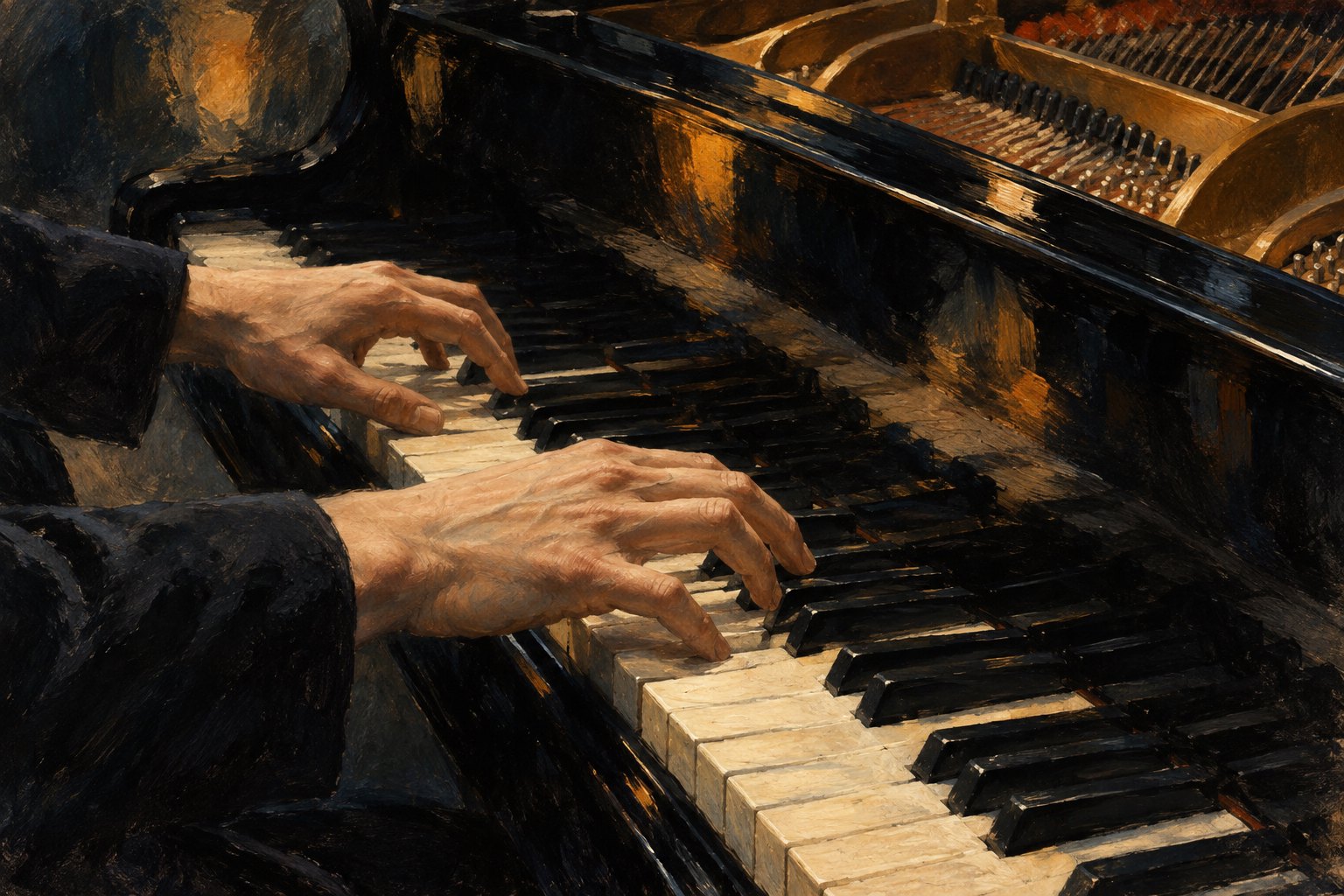
The same distinction applies to the visible body. Hands, breath, and facial tension can reveal the effort of making music. They cannot independently establish the truth of a lyric. Our discussion of performance, visibility, and the camera in The Influencer Project considers a different situation, but raises a related question: how much does seeing someone actually entitle us to know?
Two short lines, two different kinds of address
Variety’s review identifies “$0” among the performances and reports its declaration, “God is actually real.” It also identifies “Take It With You” as the closing number. The brief phrase “Take it with you” offers a very different form of address. These performance details and quotations are reported in the [reproduced Variety review](https://unitedstate24.com/cameron-winter-at-carnegie-hall-review-rapturous-solo-concert-film/).
Consider the first statement as language rather than a settled explanation of the song. Its force comes partly from “actually,” a conversational word that implies resistance, surprise, or a correction. The sentence does more than announce belief. It suggests a speaker arriving at a claim after some other possibility has been entertained.
That does not establish Winter’s personal religious position, nor does it resolve the song’s meaning. It gives the listener a dramatic question: what makes this speaker need to assert certainty? Repetition, emphasis, and musical context can change the answer even when the words remain fixed.
The closing phrase works through an imperative. Someone is asking another person to carry something away. Read in isolation, the request could express generosity, impatience, self-protection, or an inability to tolerate a reminder. Its emotional potential comes from the gap between the plainness of the instruction and the complicated relationship it might contain.
My reading is that these two forms of address offer a useful way into the concert’s emotional possibilities: the desire to declare something true and the desire to make something leave. They need not form a continuous story. Their contrast is enough to suggest how one singer can give voice to incompatible needs.
What the camera can add to listening
The documented movement between intimate views and the larger hall matters because proximity changes our role. From a distance, we observe a public performance. Up close, we may feel as though we are attending to one person’s private concentration. Neither position gives complete access; each organizes attention differently.
A close view can encourage us to search a face for meaning. A wider view can remind us that the performance is being offered to many people at once. The interesting possibility lies in moving between those experiences without reducing the musician to either a remote icon or an object of inspection.
Film stock alone cannot guarantee intimacy. Nor does a restrained visual approach automatically prove that a director has served the music well. The relevant question is whether the images help listeners notice relationships within the performance: between effort and ease, a sustained sound and a waiting room, an individual phrase and the passage surrounding it.
That is also a useful principle for choosing unfamiliar music films. As our guide to approaching a festival lineup suggests, a film’s artistic proposition can be a better starting point than name recognition. Here, that proposition is unusually clear: look closely enough at a solo performance to discover what listening alone might leave unseen.
A deeper reading: intimacy without ownership
The most promising interpretation of Cameron Winter at Carnegie Hall is that musical intimacy does not depend on solving the musician. A viewer may recognize longing or conviction in a performance while remaining uncertain about the person producing it. That uncertainty need not weaken the connection.
Indeed, it may protect what makes the encounter valuable. Songs allow feelings to become shareable without requiring their creator to surrender a complete personal explanation. Cinema can bring us closer to that process, provided we remember that closeness is a perspective rather than possession.
The film’s documented setup therefore offers something more substantial than the spectacle of a singer commanding a prestigious room. It invites attention to the act of making an inward experience public. The strongest reason to seek it out is that possibility: hearing a voice reach other people while allowing the person behind it to remain partly unknown.
Original content by this site's editorial team. Published: October 2, 2026 at 01:17:38 PDT (Los Angeles time)