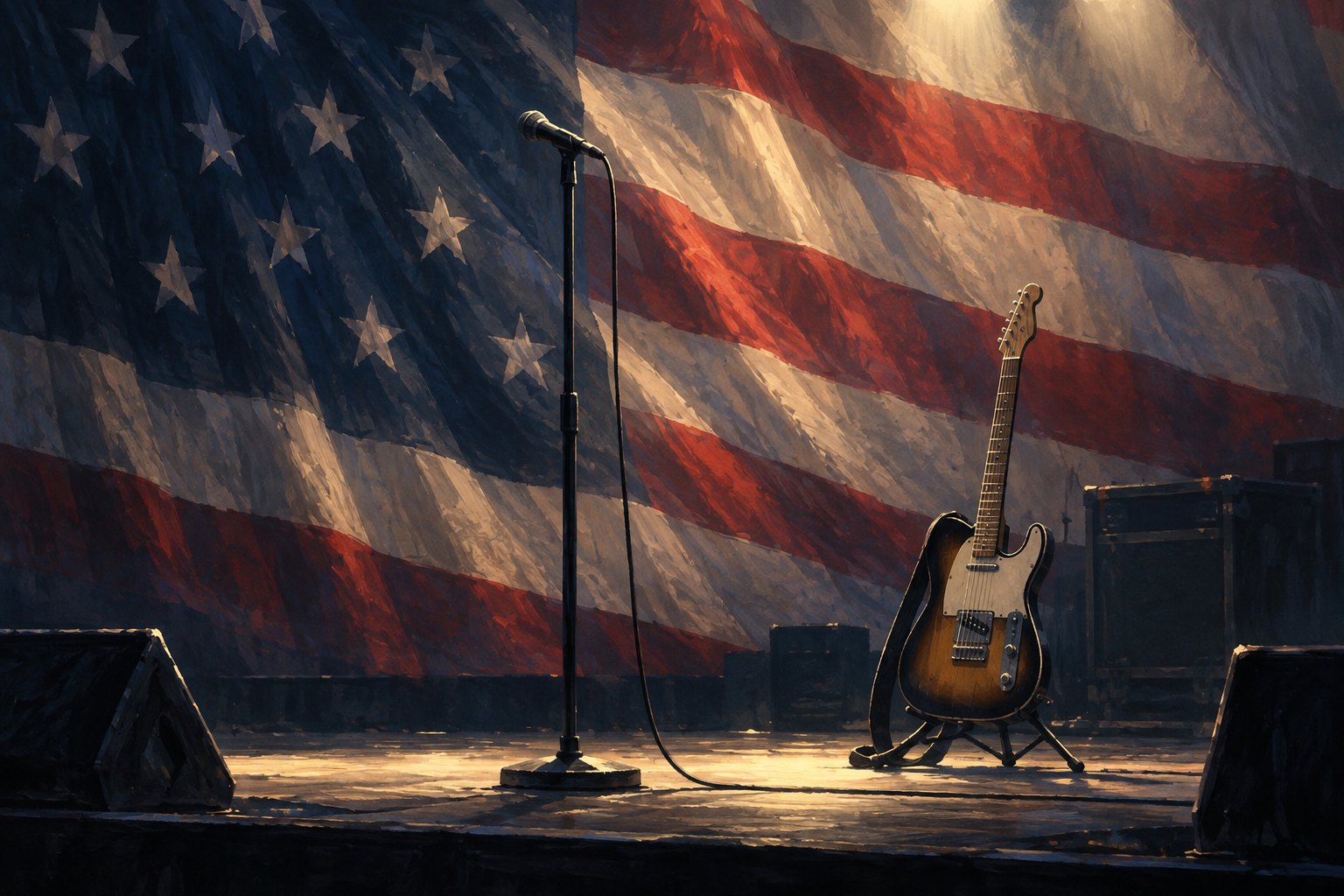
Bruce Springsteen’s new concert film arrives with an unusually explicit statement of intent. Rolling Stone’s interview headline quotes him saying, “Our Purpose Was to Reclaim the Flag.” That phrase identifies a subject beyond the performance itself: the relationship between an artist, a national symbol, and the people listening. It establishes Springsteen’s stated purpose; whether the movie communicates that purpose through compelling cinema is a separate critical question. [Rolling Stone interview](https://au.rollingstone.com/music/music-features/bruce-springsteen-new-concert-film-interview-reclaim-flag-100838/)
This is spoiler-free thematic commentary, not a review based on a complete viewing. It examines the implications of Springsteen’s statement without attributing unverified scenes, dialogue, camera choices, or audience reactions to the film. The quotation is an interview statement, not a line being presented as dialogue from the movie.
What Springsteen’s Statement Tells Us
The most revealing word in the quotation is “purpose.” Springsteen is describing an intention, rather than simply announcing that a performance has been recorded. For a film viewer, that distinction matters. A concert can be preserved as an event, but a concert movie also becomes an arrangement of attention: whose face we see, which sounds come forward, and how long a moment is allowed to last.
“Reclaim” also gives the statement a narrative structure. It implies that the speaker believes a familiar symbol needs to be understood differently. That is an account of Springsteen’s framing, not a conclusion the viewer must accept. A useful film analysis would examine how the performance develops that framing, including whether its emotional and visual evidence is more specific than its declaration.
The flag consequently becomes a question of representation. Its appearance, if used onscreen, would not explain its meaning by itself. Scale, context, neighboring images, and the music accompanying it could all affect interpretation. A symbol can be instantly recognizable while remaining open to sharply different readings.
The Performer as the Central Screen Presence
A character-focused reading of a concert film needs a different approach from a review of a fictional drama. Springsteen is a real performer appearing as himself. His screen presence should not be treated as permission to invent private thoughts, personal conflicts, or a convenient redemption arc.
Instead, the critic can distinguish among the person performing, the public persona viewers recognize, and any narrative voice within an individual song. Those perspectives may overlap, but they are not automatically identical. Treating every sung first-person statement as literal autobiography would flatten the storytelling before the camera has even entered the discussion.
For this project, the productive question is how Springsteen’s declared intention relates to his presence as a musician. Does a particular performance make an abstract idea emotionally legible? Does the camera allow the physical work of singing and playing to register? These are questions for viewing, rather than findings that can be extracted from an interview headline.
Our discussion of celebrity presence and cinematic insight in Drake’s FOMO addresses a related distinction: recognizing a famous person immediately does not mean a film has shown us something new about that person.
The Audience Is More Than a Reaction Shot
Springsteen’s use of “our” makes the collective dimension worth considering, although the short quotation alone does not establish everyone included in that pronoun. A concert movie can place an individual performer within a larger network of musicians, workers, and listeners. How it represents those relationships affects the story it tells.
Audience footage deserves particular care. A cheering crowd establishes a response within a particular setting; it does not establish agreement among everyone watching later. Nor can a single close-up explain what a listener is thinking. Tears, stillness, singing, and applause acquire meaning through context, and editing can make that context appear more definitive than it is.
For a viewer, the practical distinction is between witnessing participation and being given an interpretation of participation. A sustained shot may let us observe behavior. A rapid sequence of reactions may direct us toward a collective emotion. Either approach can be effective, but they perform different storytelling functions.
How the Camera Turns a Concert Into a Film
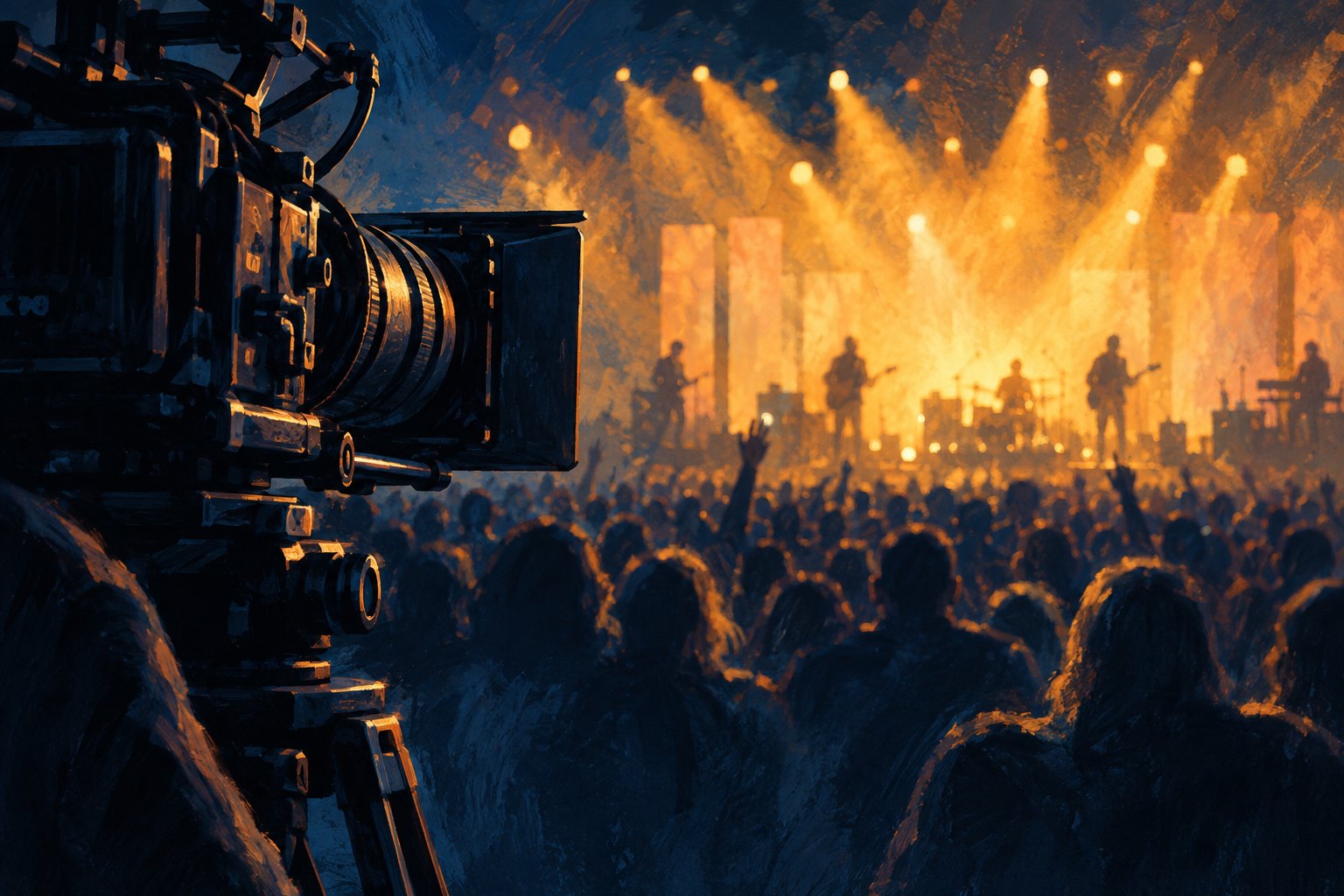
The camera is an additional storyteller. A viewer in a venue chooses where to look, within the limits of a seat and a sightline. A film viewer receives a sequence of choices made by the filmmakers. That change can reveal details that were difficult to see in person, while also determining which relationships remain visible.
A close-up can emphasize breath, concentration, or exertion. A wider composition can show musical coordination and the distance between stage and audience. Neither automatically produces greater intimacy. A close-up held without useful context can be less revealing than a wide shot that shows a performer responding to someone else.
Sound creates similar choices. The balance between voice, instruments, and crowd can make a performance feel concentrated or expansive. Transitions also matter: applause, silence, and the pause before another song can shape a sense of continuity. These are concrete features to assess when evaluating how the finished film carries Springsteen’s stated purpose.
The relationship between performance and screen storytelling also informs our cinematic reading of Charli xcx’s Music, Fashion, Film Tour. In both contexts, an announced concept becomes critically useful when it can be connected to observable artistic choices.
What to Watch for Beyond the Headline
A focused viewing can separate three kinds of evidence without interrupting the pleasure of the music:
- Statements: What does the performer explicitly say, and in what context?
- Performance: What do delivery, musical interaction, and pacing contribute beyond those words?
- Film form: What do framing, editing, and sound invite the viewer to notice or connect?
Keeping these distinctions in mind prevents an interview quotation from becoming a substitute for the movie. It also allows viewers with different interpretations of the same symbol to discuss specific moments rather than assume that every emotional response means the same thing.
The Deeper Question: Intention and Interpretation
The central interpretive tension is the distance between an artist’s purpose and a viewer’s experience. Springsteen can explain what he intended. A film can preserve and organize the performance associated with that intention. The audience still encounters it through personal memories, musical expectations, and an independent response to what appears onscreen.
That makes the quotation a useful starting point, but an incomplete verdict. A full review would need to show how particular performances and filmmaking decisions develop, complicate, or leave that intention unexplored. Until then, the meaningful question is precise: how does a concert film turn a statement about a shared symbol into an experience that viewers can examine for themselves?
Original content by this site's editorial team. Published: September 16, 2026 at 02:07:09 PDT (Los Angeles time)