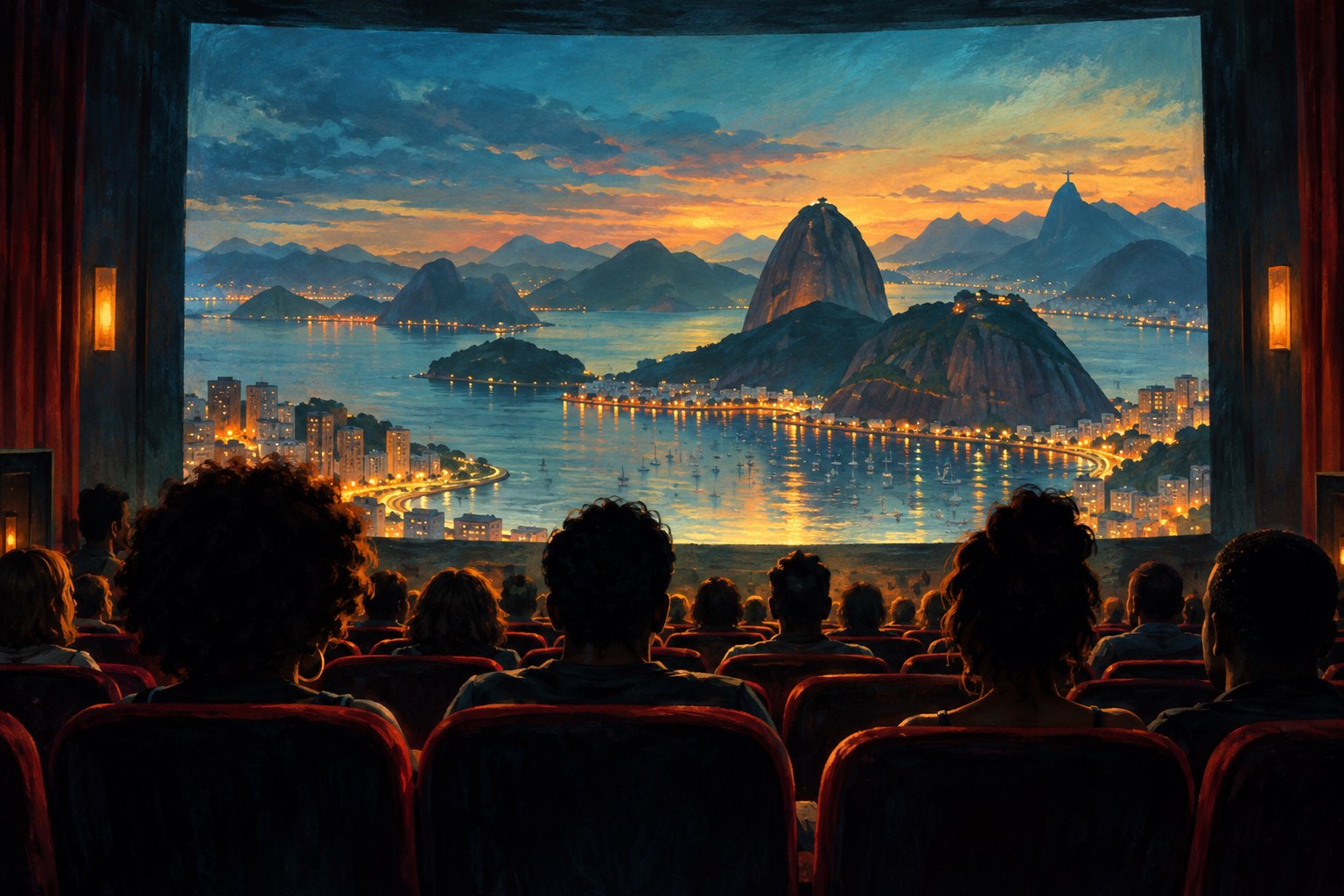
Brazilian cinema’s future is the concern at the center of Variety’s reporting on the presidential elections from the Rio Film Festival. The setting gives that concern particular force: a festival brings finished movies before audiences, while an election invites questions about the conditions under which the next movies will be made.
For viewers, the stakes reach beyond industry prestige. They involve which experiences become stories, whose perspective organizes those stories, and whether filmmakers can sustain careers long enough to develop distinctive voices. Our editorial view is that a healthy national cinema needs both creative independence and dependable opportunities to work. Public celebration alone cannot provide either.
This is commentary on the issue raised by the festival report, rather than a review of an individual film. It contains no plot spoilers.
Why a film festival makes uncertainty visible
A festival presents cinema in its most persuasive form: the work exists, an audience gathers, and conversation becomes possible. That immediate experience can make the process behind it disappear. The viewer sees a performance, not the negotiations that secured rehearsal time; a location, not the schedule that made shooting there feasible.
Watching a festival through the lens of an election reverses that perspective. The completed film becomes evidence of a process that must be repeated if a film culture is to continue. The relevant question becomes whether another team will have a fair opportunity to begin.
That is why the Rio setting matters to this debate. A program of finished films and anxiety about future production can coexist without contradiction. One describes what has reached the screen. The other concerns what might never reach it.
Festivals also concentrate attention. Our discussion of Elsinore’s festival opening and the relationship between life and art considers how a prominent screening can frame a work’s meaning. In Rio, the electoral context raises an additional question: how does that attention translate into lasting support for the act of filmmaking?
What risk means before a camera starts rolling
The phrase cinema at risk deserves specificity. A threat to artistic expression, uncertainty about financing, and difficulty finding an audience are related problems, but they require different evidence and different responses. Treating them as interchangeable can make a serious argument less useful.
Consider production continuity. In a hypothetical project, an uncertain payment schedule could prevent a producer from committing to crew contracts or locations. Nothing has been formally prohibited, yet the film may remain impossible to organize. The loss would appear first as work that never begins.
Creative independence raises a different question: can a filmmaker make something that displeases the people controlling access to resources? A system can support considerable activity while discouraging uncomfortable subjects. Conversely, freedom to choose a subject means little to a team with no workable route to production.
These are mechanisms to examine when evaluating the Brazilian debate, not claims that every mechanism has been established in the current election coverage. The distinction matters. A warning about the future should prompt scrutiny of concrete decisions rather than acquire the status of an already completed outcome.
The characters audiences could lose
The most revealing way to understand these stakes is through character perspective. Every film distributes attention. Someone gets an interior life; someone else remains a figure glimpsed through a doorway. Someone makes decisions; someone exists mainly to explain the protagonist’s choices.
Those distinctions are artistic, but the opportunity to make them depends on who gets to direct, write, perform, and complete a film. A narrower range of working filmmakers can mean fewer ways of noticing the same country.
Imagine a domestic drama organized around the person doing household labor rather than the person who owns the house. Or a comedy that treats a small community’s habits as familiar lived experience rather than an outsider’s discovery. These are hypothetical examples, not descriptions of Rio festival selections. They demonstrate how a change in viewpoint can transform a movie without changing its basic setting.
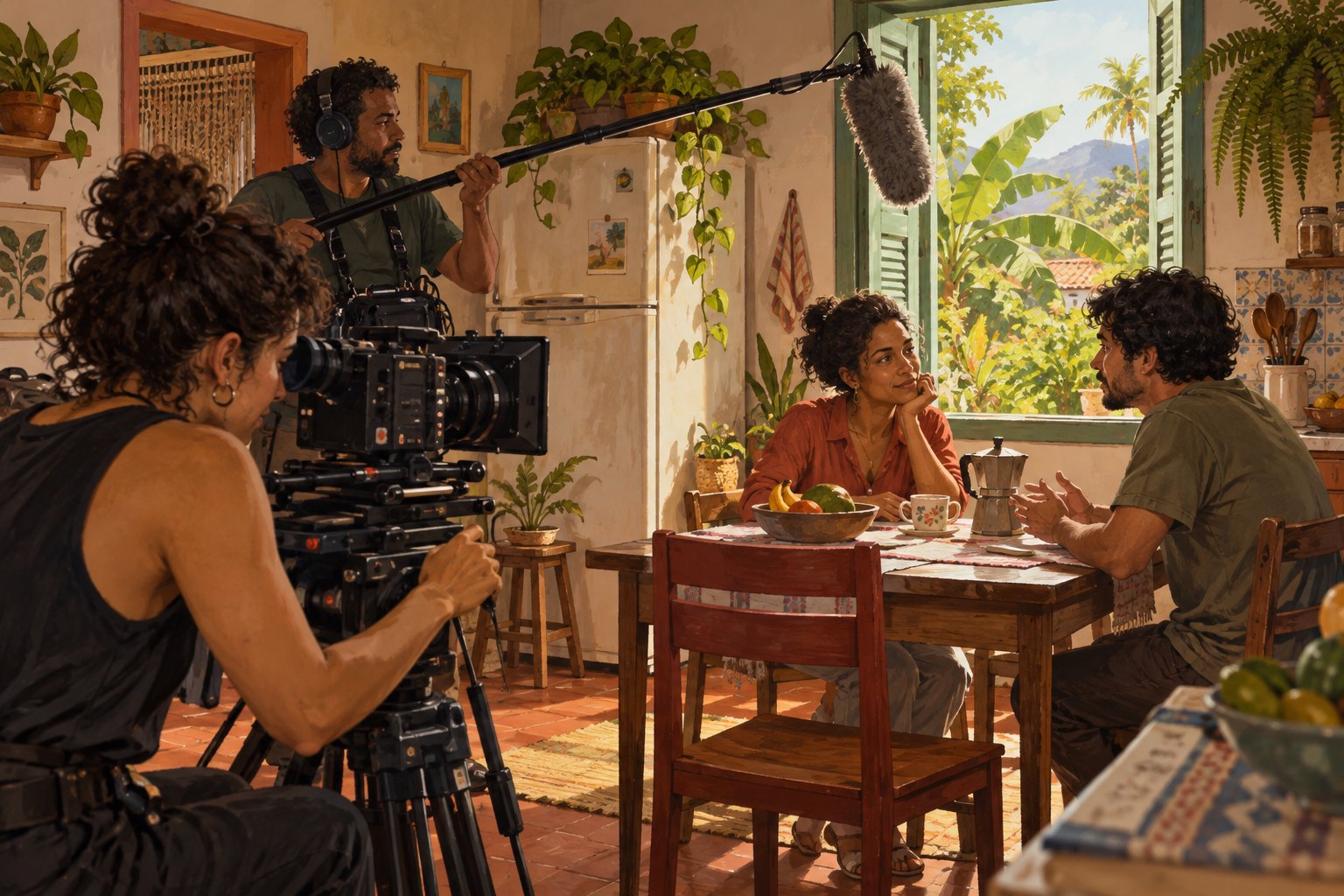
For us, this is the strongest audience-centered argument for a broad Brazilian cinema: viewers deserve characters who are allowed to be contradictory, funny, selfish, tender, and difficult. No individual film should carry the obligation to represent an entire nation.
Nor should political importance automatically become an artistic verdict. A worthy subject can receive shallow treatment. A seemingly modest story can reveal an extraordinary amount through blocking, silence, or a performer’s hesitation. Protecting creative opportunity makes those discoveries possible; criticism still has to evaluate the results.
Support should leave room for disagreement
Our position is that cultural support works best when its principles can survive a change of government. Filmmakers need understandable criteria, credible decision-making, and room to challenge prevailing assumptions. Support that depends on continuing political approval creates an unstable foundation for independent work.
That principle also demands accountability. Asking who receives support, how decisions are made, and which audiences benefit is legitimate. The distinction lies between evaluating a program and deciding that an unwelcome perspective should have no place in it.
The same separation informs our analysis of production permission and artistic judgment in a politically contentious movie. Permission to make a film does not establish its quality. Disliking its politics does not, by itself, settle whether its production should be possible.
What viewers should look for next
The most useful follow-up to election-centered film coverage would connect political commitments to practical consequences. Four questions can help readers assess that coverage:
- Can projects plan? Look for evidence about predictable decisions and usable production schedules, rather than announcements alone.
- Who has access? Ask whether emerging filmmakers and different regions have meaningful opportunities alongside established names.
- Can the work remain independent? Examine selection criteria and safeguards for disagreement.
- Can audiences find the films? Production matters, but so do exhibition, distribution, accessibility, and preservation.
These questions avoid reducing the discussion to a contest between optimism and catastrophe. They also make clear why a celebrated premiere cannot answer every concern about the wider field. Visibility is valuable; its benefits still need to reach beyond the screening room.
The deeper stake: a country’s right to remain complicated
The Rio Film Festival’s electoral moment invites a larger interpretation of what national cinema does. Movies allow a country to encounter versions of itself that resist a single official account. A romance, thriller, family drama, or comedy can make room for experiences that public rhetoric compresses into categories.
That capacity depends on multiplicity. One acclaimed filmmaker cannot supply every missing perspective, and one successful film cannot guarantee the next filmmaker’s opportunity. The strongest defense of Brazilian cinema therefore concerns the breadth and continuity of the work.
What deserves protection is the possibility of another unexpected character, another difficult point of view, another film that changes how an audience reads a familiar room. The election question matters because the future of cinema is partly decided before there is anything to watch.
Original content by this site's editorial team. Published: October 9, 2026 at 06:17:45 PDT (Los Angeles time)